

5 Sci-Fi Movies That Received A Perfect Rating From Roger Ebert
In 2012, Roger Ebert addressed the charge that he handed out "too many stars." In his piece, the critic recounted how he had looked himself up on Metacritic and found that, on average, he did indeed "grade 8.9 points higher than other critics." "Wow. What a pushover," he wrote in response, before offering several explanations, including this simple line: "I like movies too much." The man's career stands as testament to that statement. Ebert might be indirectly responsible for the dreaded Rotten Tomatoes binary, but on the whole, his legacy represents a deep love of movies.
When it came to sci-fi, he had a special place in his heart for the genre. In his teens, he founded his own science fiction magazine called "Stymie" and wrote letters to other magazines of the time, including "Amazing Stories," to which Ebert offered this advice as a 15-year-old (via IndieWire): "By all means keep the book reviews! I don't read them for advice on which books to buy — I have them before they are reviewed, but I just simply get a kick out of finding someone else's opinion on a book I've read."
Later, we would all get a kick out of reading his opinion on sci-fi movies, like when he absolutely hated the divisive '90s blockbuster "Armageddon." But there were just as many positive reviews, with multiple sci-fi features earning a "perfect" four-stars from the former Chicago Sun-Times critic. We've compiled five such reviews, and we hope you get a kick out of them.
Dark City

In 1998, Roger Ebert gave a perfect score to Fritz Lang's "Metropolis." But you might have expected as much given the film's reputation. Far more interesting is Ebert's take on "Dark City," which was released the same year as the critic's retrospective "Metropolis" review and, like Lang's film, earned itself a perfect score. Interestingly enough, Ebert even viewed Alex Proyas' "Dark City" as resembling "its great silent predecessor" in the way in which it "ask[ed] what it is that makes us human, and why it cannot be changed by decree."
Indeed, "Dark City" remains one of the smartest sci-fi films ever made. Very much of the simulation theory oeuvre of the late-'90s/early 2000s, epitomized by "The Matrix," it stars Rufus Sewell as John Murdoch, a man who awakens in a hotel only to discover he's wanted for multiple murders. Due to a bad case of amnesia, however, he can't remember any of them. Murdoch soon discovers that his reality is being controlled by mysterious beings known as Strangers, who manipulate the memories of all who reside within their twisted experiment.
Ebert seemed fascinated by what he saw as the film's central question: "If we are the sum of all that has happened to us, then what are we when nothing has happened to us?" In his review, he also revealed that he and other "moviegoers" went through "Dark City" "a shot at a time for four days at the Hawaii Film festival" to "debate the meaning of the film." Anything that lent itself to such fastidious analysis was going to earn points with Ebert. But even Proyas likely didn't expect him to herald his movie as "one of the great modern films" and claim that it "did what 'The Matrix' wanted to do, earlier and with more feeling."
A.I. Artificial Intelligence
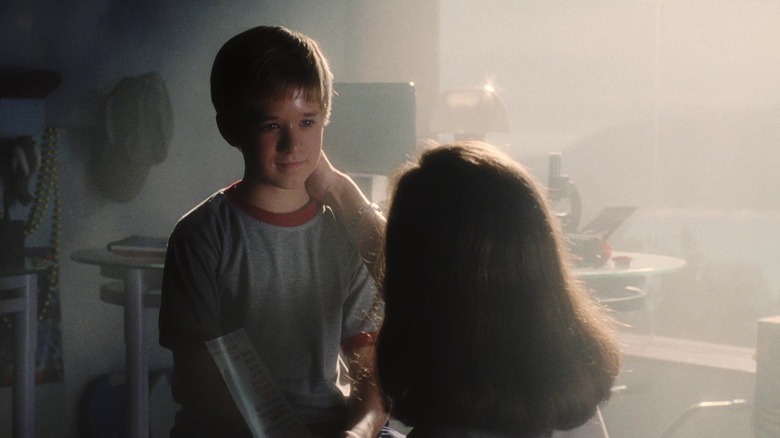
Every film has a difficult road to the screen, but "A.I. Artificial Intelligence" took so long to make that its original director passed away. Stanley Kubrick bought the rights to Brian Aldiss' short story "Supertoys Last All Summer Long" in the early '70s before spending years ignoring the project. It wasn't until the '90s when he handed it to Steven Spielberg, who dutifully brought the film to the big screen in 2001.
Today, "A.I. Artificial Intelligence" remains Spielberg's most underrated sci-fi movie, but one man who certainly didn't overlook the film was Roger Ebert. That is, he eventually came to love the film after originally bestowing three stars upon it in 2001. In his retrospective four-star review, written a decade later, he found enough in its story of a love-hungry android boy to give it the remaining star.
In his original review, Ebert wrote that the film "goes for an ending that wants us to cry, but had me asking questions just when I should have been finding answers." It seems the critic initially wanted "A.I" to grapple with the fact that human beings are "expert at projecting human emotions into non-human subjects," and didn't feel as if it did so. In his later review, however, he "became aware of something more," writing, "'A. I.' is not about humans at all. It is about the dilemma of artificial intelligence. A thinking machine cannot think. All it can do is run programs that may be sophisticated enough for it to fool us by seeming to think."
That couldn't be more relevant today as an AI garbage future looms. So, if you were similarly lukewarm on the movie upon its release, now might be the time to follow in Ebert's footsteps and give it a rewatch.
Blade Runner
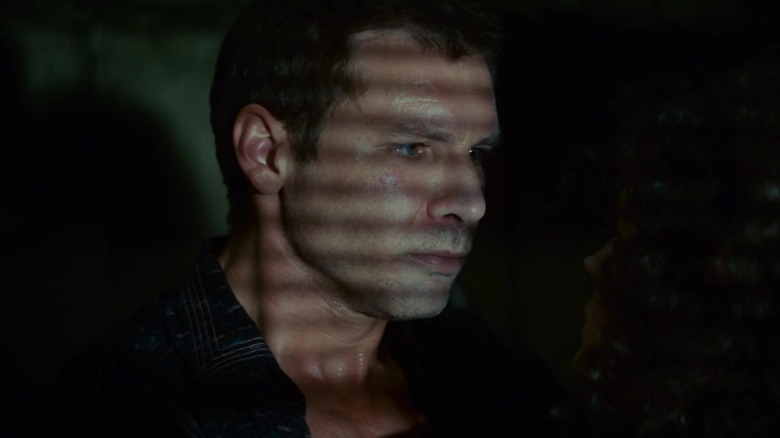
Another example of Roger Ebert revisiting a film and finding it to be better than he remembered, "Blade Runner" managed to squeeze into the list of "perfect" Ebert scores 25 years after it debuted.
Nobody is going to argue with a four-star review of Ridley Scott's masterpiece. (If you don't "get" "Blade Runner" by now, then may God have mercy on your soul.) The story of Harrison Ford's Rick Deckard hunting Rutger Hauer's Roy Batty and his band of replicants has become ingrained in our collective perception of sci-fi history and aesthetics for its wonderfully immersive production design and interrogation of the concept of humanity. But when it first debuted, the film became a certified sci-fi flop, and Ebert was far from its harshest critic. Sheila Benson of Los Angeles Times (via the American Film Institute) described its script as "frail and unhelpful." Ebert was more complimentary, but he ultimately felt that the movie "allows the special effects technology to overwhelm its story."
But he returned to the film in 2007, reviewing Scott's "Final Cut" version. While you might think the critic was won over by the changes Scott had made to previous cuts, he simply admitted that he was wrong the first time. "I have been assured that my problems in the past with 'Blade Runner' represent a failure of my own taste and imagination," he wrote. In his retrospective review, the critic simply praised "Blade Runner" as "a seminal film" that established "a pervasive view of the future that has influenced science fiction films ever since." 25 years after his original review, then, Ebert rightly conferred that final star upon the movie, adding it to the pantheon of perfect Ebert movies long after it had been unjustly robbed of the privilege.
Alien
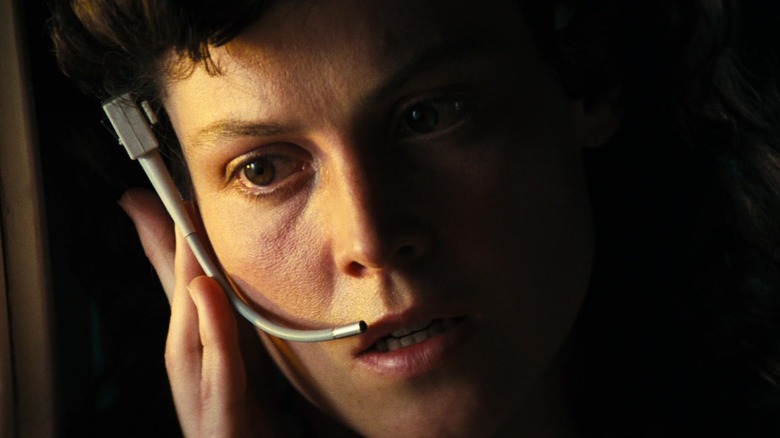
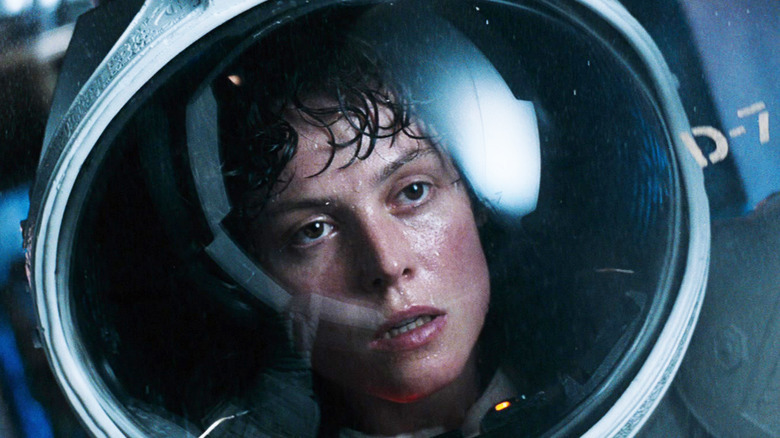
"Alien" is the greatest alien movie ever made. Ridley Scott's timeless space horror film works on so many levels, so much so that it's still not quite clear how the director pulled it off. It can be enjoyed as a simple space slasher, but there's so much more behind its expertly-crafted imagery, with Scott exploring some deep-seated societal fears about technology coming to dominate the human body and the tech revolution in general. It's scary, mesmerizing, haunting, and meaningful in a nebulous and endlessly intriguing way.
Roger Ebert certainly thought so — at least, eventually. On their 1980 show "Invasion of the Outer Space Movies," Gene Siskel and Ebert dismissed "Alien," with the latter calling it "basically just an intergalactic haunted house thriller." Once again, however, the critic was willing to revisit his own opinion, and in 2003, he gave "Alien" a full four stars.
By that point, it seems Ebert had picked up on the depth of Scott's movie. He began by pointing out that "at its most fundamental level, 'Alien' is a movie about things that can jump out of the dark and kill you." But he went on to say the film was also "a great original" that "sidesteps Lucas' space opera ['Star Wars'] to tell a story in the genre of traditional 'hard' science fiction." He even agreed that the film should be known as "the most influential of modern action pictures," and seems to have been at least partly convinced to embrace "Alien" by the state of modern filmmaking at the time, which had "studied [the film's] thrills but not its thinking." Ultimately, however, he acknowledged how "Alien" "vibrates with a dark and frightening intensity," finally delivering the "perfect" review that Scott's film deserved.
Solaris (1972)

Roger Ebert's 2003 take on Andrei Tarkovsky's "Solaris" (not the fascinating George Clooney sci-fi flop) sees the critic re-evaluate his own opinion of several decades prior. "At first I balked," he writes of his original viewing at the 1972 Chicago Film Festival. "It was long and slow and the dialogue seemed deliberately dry. But then the overall shape of the film floated into view." In his first review, Ebert was moved to give the film three stars based on its "images of startling beauty," "developments that questioned the fundamental being of the characters themselves" and "an ending that teasingly suggested that everything in the film needed to be seen in a new light."
As it turns out, Ebert was willing to apply that very ethos to his original review, revisiting "Solaris" in a 2003 analysis that seemed more like an attempt to reckon with Tarkovsky's legacy. Ebert spends much of his later "Solaris" review praising the director for trying to "create art that was great and deep" and for holding to "a romantic view of the individual able to transform reality through his own spiritual and philosophical strength." He also defended Tarkovsky's mercilessly long runtimes, urging readers to view extra-long sequences as opportunities "to consolidate what has gone before, and process it in terms of our own reflections."
All of which applies to "Solaris," which, in retrospect, Ebert deemed worthy of the fourth star. He was right. The celebrated film about a psychologist sent to a space station in orbit around the planet Solaris is both moving and disturbing. As Donatas Banionis' Kris Kelvin experiences the recrudescence of repressed memories, Tarkovsky uses the opportunity to explore complicated questions about the nature of existence. When Ebert faced his own repressed memory of the movie, he decided it was actually perfect.