

15 Best Martial Arts Movies Of All Time, Ranked
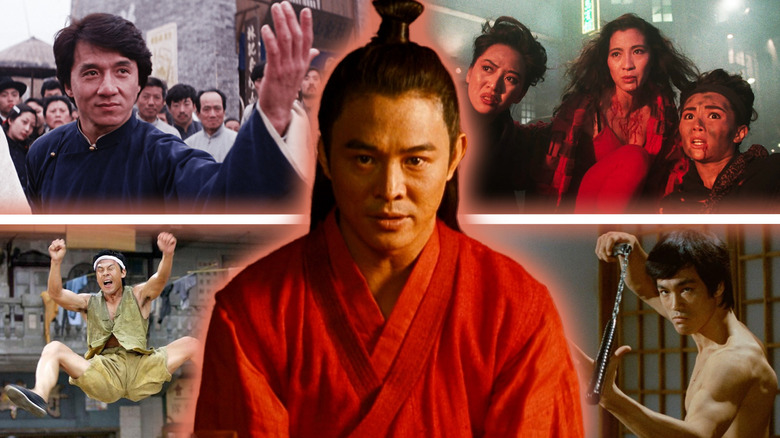
One of the most unabashedly entertaining film genres around are martial arts movies, which have really proliferated since the 1960s. From period piece epics to gritty modern takes on the genre, audiences worldwide have been thrilled by tightly choreographed melee combat for generations. The genre has also delivered some of cinema's most enduring and widely recognized icons, with actors like Bruce Lee and Jackie Chan expertly fronting the action. These movies also showcase a variety of cultures and distinct fighting styles while staying accessible to viewers all over the globe.
Whether it's the Hong Kong flicks that introduced the genre to the international mainstream or action comedies that deliver slapstick gags alongside the punches, there's a lot to love here. With that in mind, we've narrowed it down to our favorites, both important to the genre and standing the test of time with their memorable action set pieces.
These are the best martial arts movies of all time ranked, all primed and ready for your next binge.
15. Dragons Forever
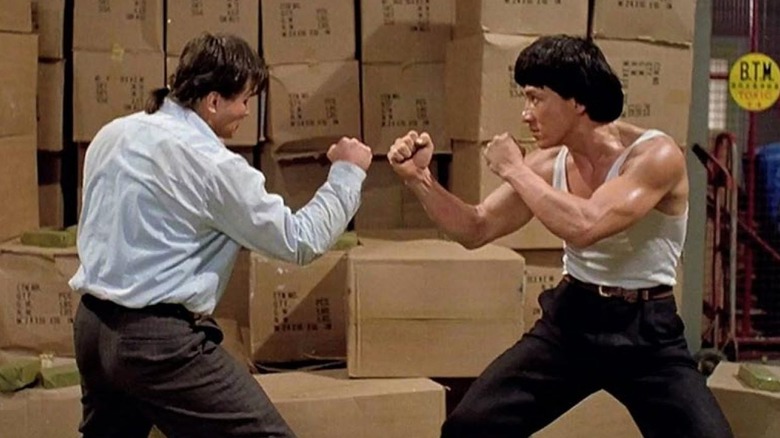
Sammo Hung had directed and starred alongside Jackie Chan and Yuen Biao in a number of action comedies, but he saved the best for last with 1988's "Dragons Forever." Chan stars as lawyer Jackie Lung, who inadvertently uncovers a narcotics empire with Wong Fei-hung (Hung) and Tung Tak-hiao (Biao) in tow. When the trio become involved with women poised to expose the illicit operation, this triggers a showdown in the syndicate's drug factory. While battling through waves of goons, Lung takes on drug lord Hua Hsien-Wu (Yuen Wah) and his scientist (Benny Urquidez) who moonlights as a martial arts expert.
When it comes to Chan and Hung's collaborations, it's a toss-up between "Dragons Forever" and "Wheels on Meals" as to which is superior. What gives "Dragons Forever" a slight edge is a more consistently coherent story, less distractingly goofy tone, and an absolute knockout of a climax. Some of the best fights that Chan ever committed to film were between him and Urquidez and "Dragons Forever" stands as the peak of that on-screen pugilistic pairing. Hung would direct Chan one last time, in the sublime "Mr. Nice Guy," but even that didn't reach the same heights as "Dragons Forever."
14. Fist of Legend
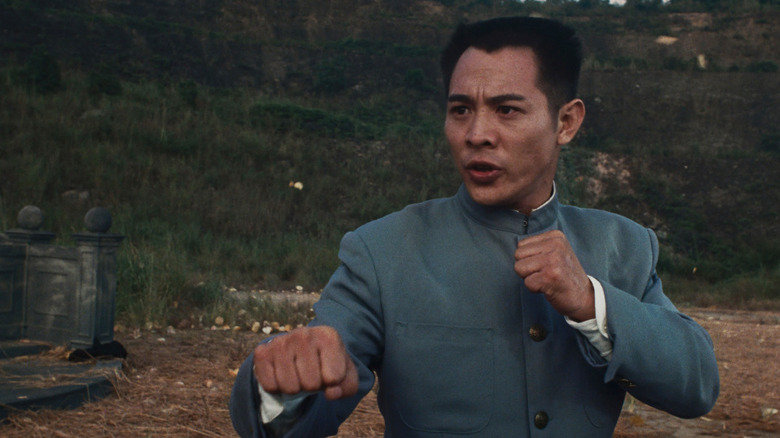
"Fist of Fury" is one of the most iconic Bruce Lee movies, and it received a worthy remake in 1994 under the title "Fist of Legend." Starring Jet Li in the protagonist role of Chen Zhen, the story moves its time period to 1937 as Japan expands its brutal occupation of China. Returning to Shanghai to avenge his mentor, Chen becomes targeted by the Japanese military for besting one of their martial arts champions. This feud makes Chen an inspirational figure as tension between Japan and China grows, threatening to escalate the violence further.
In addition to starring in the remake, Li produced the project as something of a passion project for him. That level of personal investment elevates the whole picture, making it one of the best action movies of the '90s. The fighting is more straightforwardly staged than Li's more stylish movies while the emotional stakes remain visibly high. One of several Jet Li movies to make this list, "Fist of Legend" sets a high bar for the fan-favorite martial arts actor.
13. The Raid 2
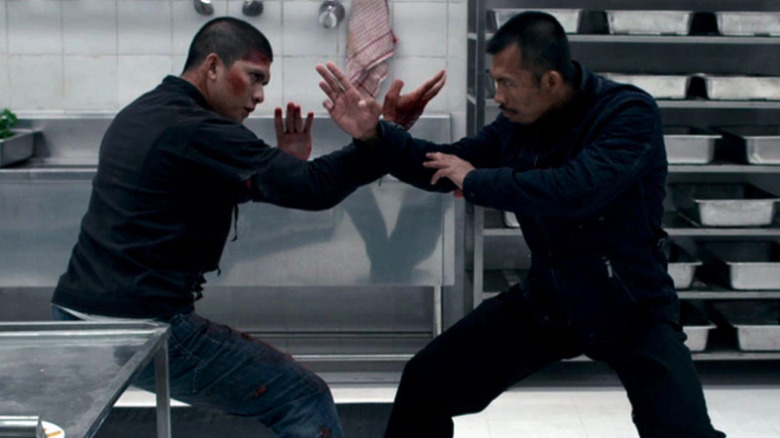
Welsh filmmaker Gareth Evans' third Indonesian martial arts film, "The Raid 2," stands as his best. The 2014 sequel to "The Raid: Redemption" opens with returning protagonist Rama (Iko Uwais) agreeing to go undercover to investigate one of Indonesia's largest crime syndicates. Infiltrating a maximum-security prison and earning the trust of mobster Uco (Arifin Putra), Rama watches as the hot-headed heir usurps his father's outfit upon their release. In his new leadership role, Uco launches an all-out war for control of the criminal underworld, with Rama caught in the middle.
Whereas "The Raid" kept its brutal action contained within a high-rise packed with murderous crooks, its sequel expands the action to all of Jakarta. The expanded scope makes the proceedings no less intense, from a vicious prison uprising to kick off the movie to back-to-back duels with Uco's elite killers that provide an action-packed climax. At the same time, Gareth Evans keeps the action from going over-the-top, capturing a viscerally grounded quality to the spectacle. A blood-soaked crime saga that doubles down on its lethal personalities and grueling fights, "The Raid 2" is Evans at his best.
12. Ip Man 3
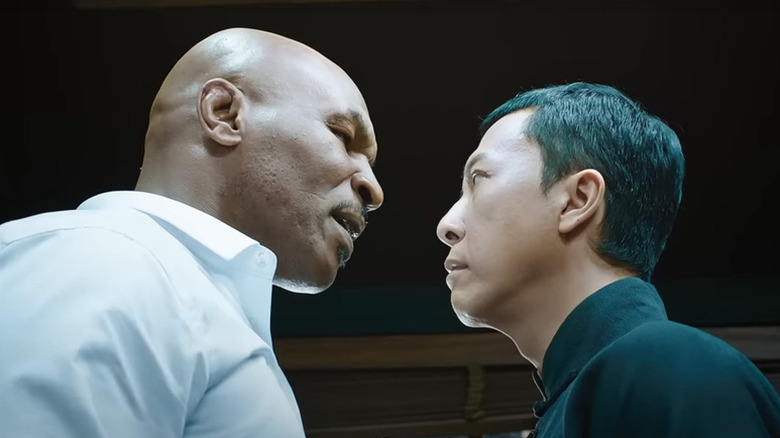
Across four movies starting in 2008, Donnie Yen played Wing Chun grandmaster Ip Man, a mentor to Bruce Lee. The pinnacle of the series is 2015's "Ip Man 3," set in 1959 Hong Kong as Ip's peaceful life is disrupted by a local triad syndicate. This growing feud pits Ip against martial arts prodigy Cheung Tin-chi (Zhang Jin) who is hired to take down the respectable grandmaster. In between the gangland fights, Ip has to care for his ailing wife Cheung Wing-sing (Lynn Hung) after she's diagnosed with a terminal illness.
"Ip Man 3" is the least sensational and overtly jingoistic entry in the series, avoiding things like the controversy that plagued "Ip Man 4", thanks to its flagrant distortion of history. This isn't to say that the 2015 movie doesn't play fast and loose with the facts, but it's less blatant and has a story rooted in more emotional honesty. At the end of the day, the movie also features a standout fight scene between Donnie Yen and Mike Tyson that's worth the price of admission alone. Containing some of the series' best battles and strongest family arc, "Ip Man 3" represents the grandmaster saga at its finest.
11. Hero (2002)
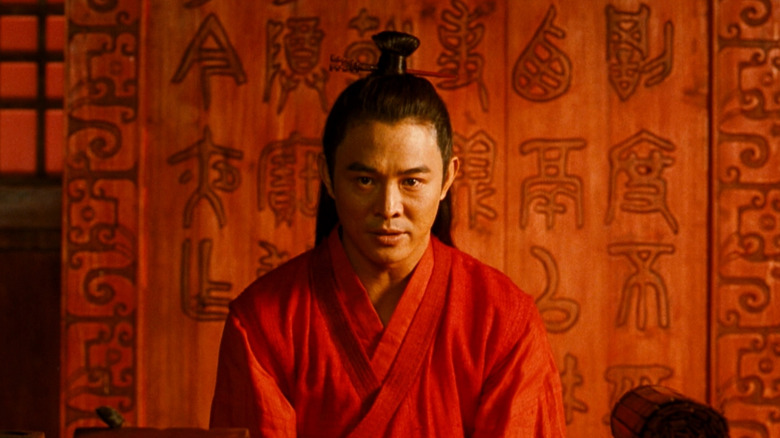
Within all the martial arts movie sub-genres, none are more balletically graceful as wuxia kung fu films. Featuring an operatic scope and loads of gravity-defying wire-supported fight sequences, Jet Li helped popularize wuxia that later gained global recognition with "Crouching Tiger, Hidden Dragon." Among Li's finest wuxia movies was the 2002 epic "Hero," starring as a nameless warrior regaling a king (Chen Daoming) about his presumed exploits slaying would-be assassins. These stories are depicted as the wily regent begins to decide the truth for himself as he hears these anecdotes.
"Hero" features a beautiful incorporation of classic wuxia elements, not the least being numerous wire-work driven fight scenes. Each of the major sequences throughout the movie have a clear color scheme evoking their individual themes while giving the film an almost dream-like aesthetic. "Hero" also features the long-awaited rematch between Jet Li and Donnie Yen, a full decade after the silver screen legends first traded blows on-screen. This combination of balletic beauty and emotional-infused fracas make for one of the most visually sumptuous wuxia tales in cinematic history.
10. The 36th Chamber of Shaolin
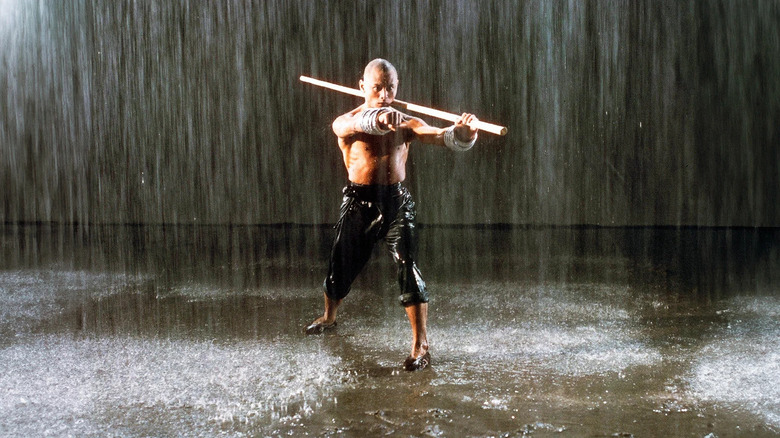
The prime purveyor of pugilistic pleasure in the '70s was Shaw Brothers Studio, based out of Hong Kong. The highlight of the studio's output is "The 36th Chamber of Shaolin," released in 1978, set during the 17th century Qi Dynasty. The story follows San Te (Gordon Liu), an outsider who is reluctantly accepted to train in martial arts at the Shaolin temple. Despite being ostracized, San Te advances through the temple's 35 chambers, determined to create a 36th chamber to teach martial arts to fellow common people.
With each chamber encompassing a different tenet of martial arts to master, "The 36th Chamber of Shaolin" provides a full-bodied look at kung fu. Liu is a fantastic tour guide into this dazzling world of martial arts, from the movie's rigorous training sequences to its hard-knuckled duels. The movie solidified Shaw Brothers Studios' high-kicking bonafides and Liu as one of its most prolific stars. One of the most influential martial arts movies of all time, "The 36th Chamber of Shaolin" is a perfect jumping-on point for Shaw Brothers' numerous flicks.
9. The Heroic Trio
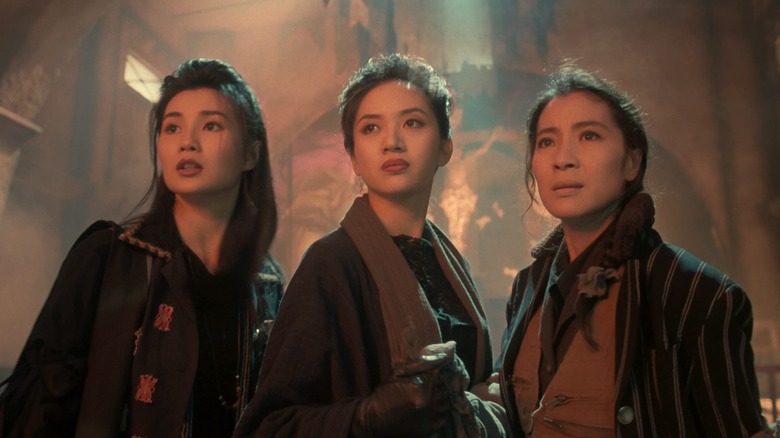
Before "Hero," Maggie Cheung starred in the 1993 fantasy action movie "The Heroic Trio" alongside Michelle Yeoh and Anita Mui. The three women play Chat, Ching, and Tung respectively, each with their own signature abilities, coming together when the Evil Master (Yen Shi-Kwan) begins stealing babies. With the authorities unable to stop the subterranean supervillain, the trio venture underground to stop him and his fiendish assassin Kau (Anthony Wong). Along the way, the women overcome their differences as they each reach their own modicum of personal redemption.
With its eye-catching stunts, engaging core cast, and action set pieces with a supernatural flair, "The Heroic Trio" is unlike anything else on this list. Yeoh and Cheung are particular standouts, complementing each other well as their respective characters come together. The movie received a direct sequel later the same year, "Executioners," but with a much darker and less freewheeling tone. Wacky and providing a fresh change in perspective from a historically male-dominated genre, "The Heroic Trio" is among its main cast's best work.
8. The Street Fighter (1974)
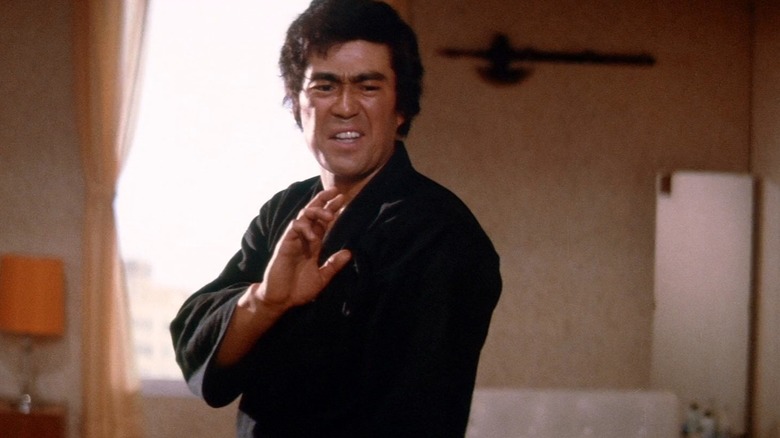
One of the most prolific Japanese action stars in the '70s and '80s was the late martial arts legend Sonny Chiba. The arguable pinnacle of Chiba's prolific career is the 1974 movie "The Street Fighter," with Chiba starring as expert fighter Takuma Tsurugi. After refusing a kidnapping job, Tsurugi incurs the wrath of the yakuza and Hong Kong triads, making him a wanted man. This vendetta escalates when Tsurugi defends Sarai (Yutaka Nakajima), the woman he was approached to kidnap, with formidable fighters with their own grudges against Tsurugi hired to bring him down.
"The Street Fighter" is one of the most overtly sadistic martial arts movies from the '70s, which certainly makes the film stand out. This is emphasized by Tsurugi himself, with Chiba playing the sullen protagonist as ruthless as many of the crooks he goes up against, though not without honor. That helps inform the bone-crunching action packed throughout the movie, rather than just providing a parade of mindless carnage. An excellent example of why Sonny Chiba was such a strong presence in Japanese cinema, "The Street Fighter" takes no prisoners and we wouldn't have it any other way.
7. Armour of God
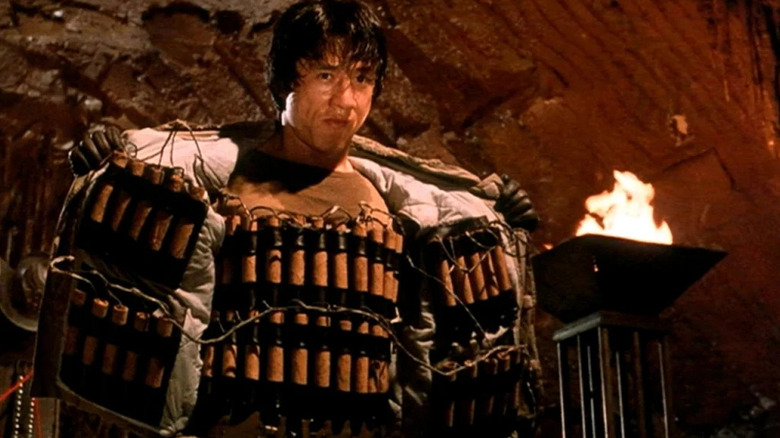
Jackie Chan doesn't get enough credit as a director in addition to his usual acting roles, helming some of the best movies in his filmography. A major highlight among Chan's directorial projects is the 1986 action-adventure comedy "Armour of God," which was originally released in North America under the title "Operation Condor 2." Chan stars as a treasure hunter nicknamed Asian Hawk who is recruited to recover a legendary set of armor for a European cult. When the sinister organization inevitably betrays Hawk, the quest becomes a rescue operation, with loads of chaotic brawls.
Jackie Chan's "Armour of God" was visibly inspired by Indiana Jones, complete with his character fleeing from an indigenous tribe in the movie's prologue. The movie's martial arts bonafides really come into focus by its final act, complete with a showdown against the cult in their cavernous hideout. Even before this, Chan gets time to shine with plenty of acrobatic derring-do, with the movie's European filming locations offering a nice contrast to his usual work. Confidently directed and containing some of Chan's most impressive stuntwork in his distinguished career, "Armour of God" is a freewheeling good time.
6. Fist of Fury
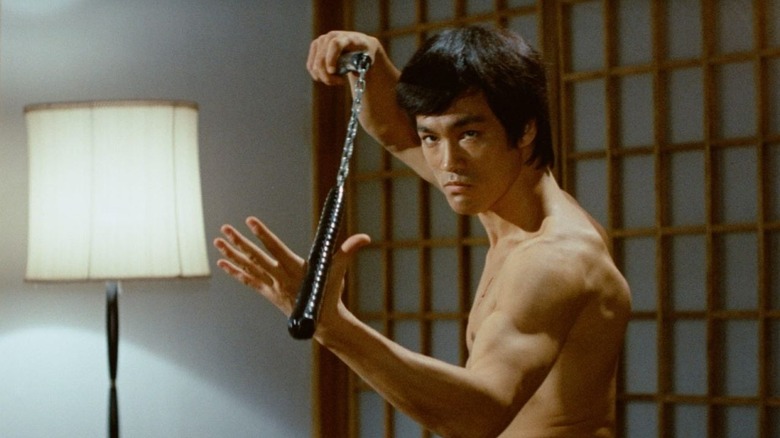
The impact that Bruce Lee had on catapulting martial arts movies into the international mainstream cannot be understated. Among the best Bruce Lee movies is 1972's "Fist of Fury," set in 1908 Shanghai, with Lee playing martial arts student Chen Zhen. Returning to the Chinese city to marry his fiancee and mourn his late master, Chen finds the community controlled by foreign interests that openly discriminate against the Chinese. This violently comes to a head with a local Japanese dojo, with an escalating feud against Chen's martial arts school.
"Fist of Fury," originally released in North America under the title "The Chinese Connection," has some of the most ambitious fights in Lee's tragically short-lived career. Every time Chen single-handedly dismantles the rival dojo, the sequences play out like a cathartic payback. But for all the hard-hitting derring-do, there is a clear sense of consequence to the story, cementing Chen's fate as it proceeds. A fantastic gateway into Bruce Lee's wider filmography, "Fist of Fury" thrillingly presents the iconic action star as a one-man army.
5. Drunken Master II
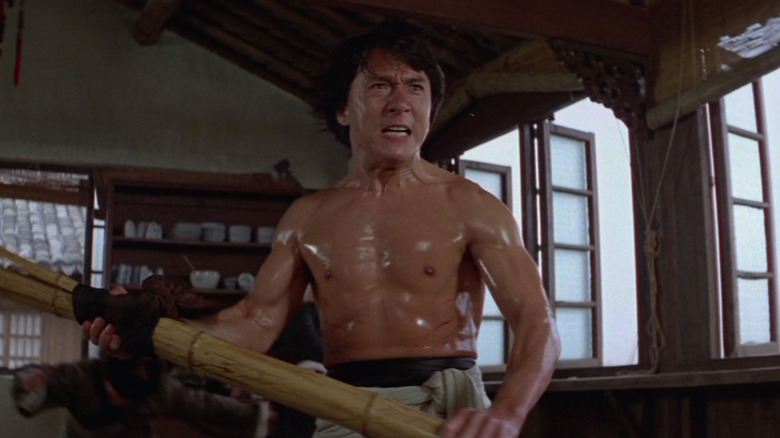
The 1978 movie "Drunken Master" helped propel Jackie Chan to stardom in Hong Kong, with Chan returning to the role 16 years later for the sequel "Drunken Master II." Set in early 20th century China, Wong Fei-hung (Chan) tries to avoid drinking to appease his stern father Wong Kei-ying (Ti Lung). However, the Wong family becomes tied up in the British consulate's scheme to steal Chinese artifacts and smuggle them out of the country. In order to face his formidable foes, Wong Fei-hung has to resort to drinking to tap into his full fighting potential as a drunken boxer.
"Drunken Master II" is an all-around improvement over the first movie and a fuller showcase for Chan's martial arts talents. On top of his usual acrobatics, Chan employs a variety of different fighting styles including, of course, plenty of drunken boxing. This results in some of Jackie Chan's greatest fight scenes, including a massive showdown against an axe gang and the movie's fiery climax. Proving Chan hadn't lost a step since its 1978 predecessor, "Drunken Master II" is a wonderful celebration of Chinese martial arts.
4. Iron Monkey
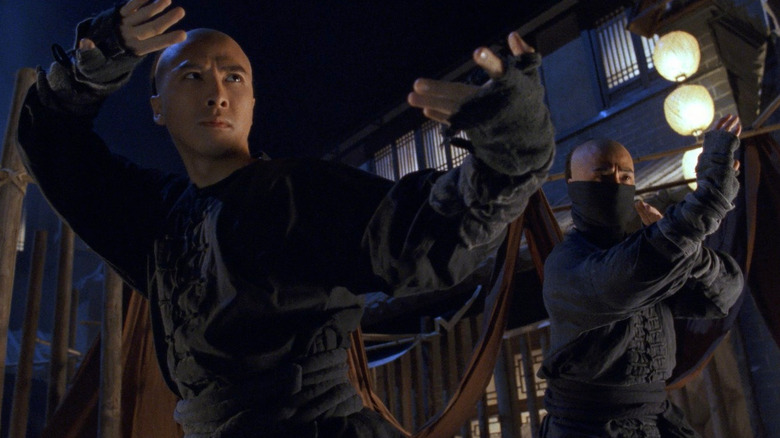
Hong Kong filmmaker Yuen Woo-ping is one of the most celebrated martial arts choreographers in the history of the genre on film. In addition to choreographing many of the movies on this list, Yuen Woo-ping directed numerous movies himself, the best of which being 1993's "Iron Monkey." The movie centers on 19th century physician Yang Tianchun (Yu Rongguang), who secretly moonlights as a vigilante known as Iron Monkey defending the locals from their tyrannical governor. Traveling martial artist Wong Kei-ying (Donnie Yen) is coerced by the governor into stopping Iron Monkey, with the duo's budding alliance confronted by an even greater threat.
"Iron Monkey" provides Hong Kong cinema with its own thrilling Robin Hood-esque folk hero, with its protagonist stealing from the rich and giving to the poor. This is punctuated steadily with plenty of fast-paced fights that genuinely escalate as the movie progresses. But between all the brawls, the story is anchored by strong performances from Yu Yongguang and Donnie Yen, including a surprising amount of humor. A fantastic heroic role for Yen long before he played Ip Man, "Iron Monkey" is one of the most joyously fun martial arts films ever.
3. Once Upon a Time in China II
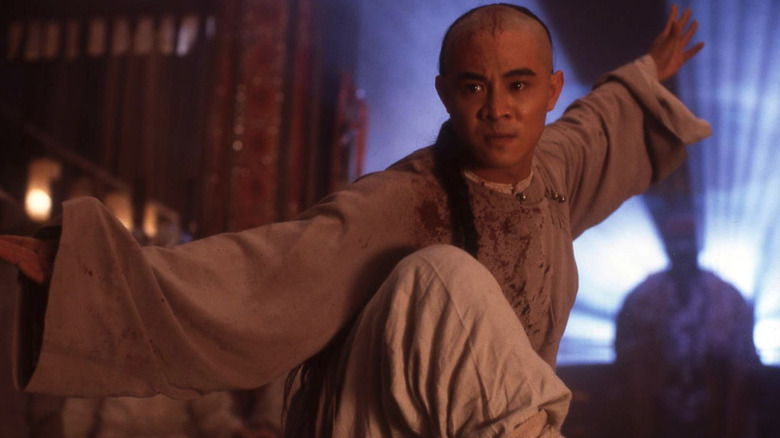
The first two "Once Upon a Time in China" movies are easily among the best Jet Li movies, but the series' sophomore entry has a slight edge. The 1992 sequel has returning protagonist Wong Fei-hung (Li) travel to Canton in 1895, which is rocked with unrest following the end of China's first war against Japan. This includes the violent rise of a cult known as the White Lotus Sect, which military officer Nap-lan Yun-seut (Donnie Yen) uses to advance his agenda in controlling the region. With Wong Fei-hung protecting innocents caught up in the conflict, he and Nap-lan eventually come to blows for the fate of Canton.
As fantastic as the first movie in the series is, "Once Upon a Time in China II" has the prominent addition of Donnie Yen. That gives the sequel's fight sequences a leg up on its predecessor, particularly in its big finale. All the operatic stakes from the first movie are still on hand and returning filmmaker Tsui Hark crafts one of the best action follow-ups of all time. An absolute marvel, "Once Upon a Time in China II" ups the wuxia scope to lasting effect.
2. Kung Fu Hustle
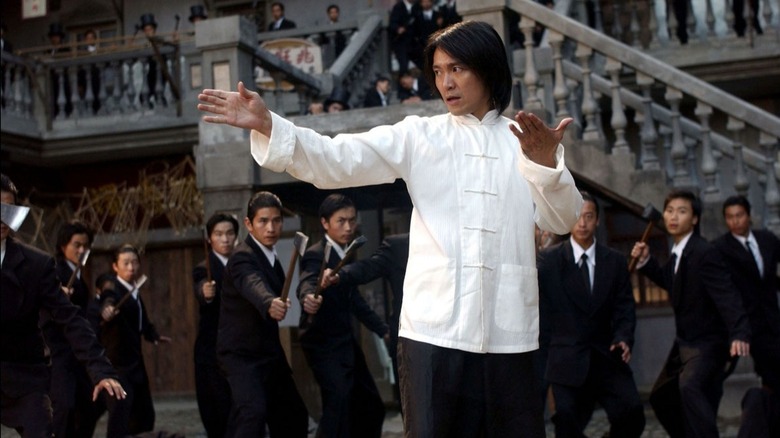
While many of the movies listed here don't take themselves too seriously, the 2004 action comedy "Kung Fu Hustle" takes this to the next level. Produced, directed, and co-written by Stephen Chow, the movie also stars Chow as aspiring mobster ne'er-do-well Sing. When a Shanghai neighborhood is targeted by the villainous Axe Gang, Sing initially tries to help the crooks run out the residents. Eventually recognizing the error of his ways, Sing becomes the community's last hope in defending themselves from the gang and its formidable new leader (Leung Siu-lung).
One of the best movies of the 2000s, "Kung Fu Hustle" is Chow's magnum opus, doubling down on the martial arts elements he memorably employed in the preceding "Shaolin Soccer." The comedic bits are dialed up to "Looney Tunes" levels, complete with cartoonish CG, but never to the point where they take audiences out of the experience. The fights also stand as Chow's most ambitiously triumphant, from an opening brawl where the neighborhood's initial defenders rise up to its effects-heavy finale. An effervescent celebration of Chow's filmmaking influences, "Kung Fu Hustle" balances action and comedy masterfully in its execution.
1. Enter the Dragon
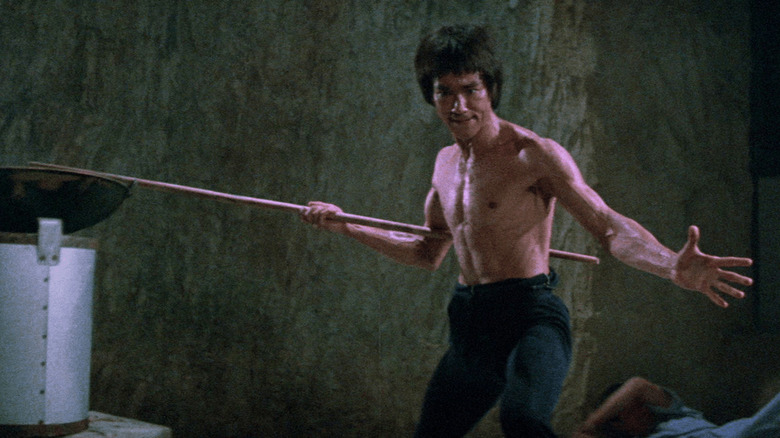
Premiering posthumously, Bruce Lee's final completed film is 1973's "Enter the Dragon," the first martial arts movie produced by a major Hollywood studio. In addition to providing uncredited rewrites to the script and choreographing its fight sequences, Lee stars as protagonist, as amusingly simply named Lee. Working with the British government, Lee joins a martial arts tournament thrown on a remote island by the enigmatic crime lord Han (Shih Kien). Teaming up with some of the other competitors, Lee exposes Han's operation before facing the crook's private army.
More than just paving the way for future big-budget martial arts movies, "Enter the Dragon" stands as an enduring high-watermark of the genre. The movie mixes Lee's own martial arts philosophy with some of the best action scenes ever, including its spellbinding climactic brawl. The film proved to be enormously influential to the genre overall, both in subsequent movies and video games, particularly those centered around martial arts tournaments like Capcom's "Street Fighter." A timeless template for the genre, "Enter the Dragon" maintains its importance and influence precisely because of how well it holds up.