

10 Best '60s Movies Nobody Talks About Anymore
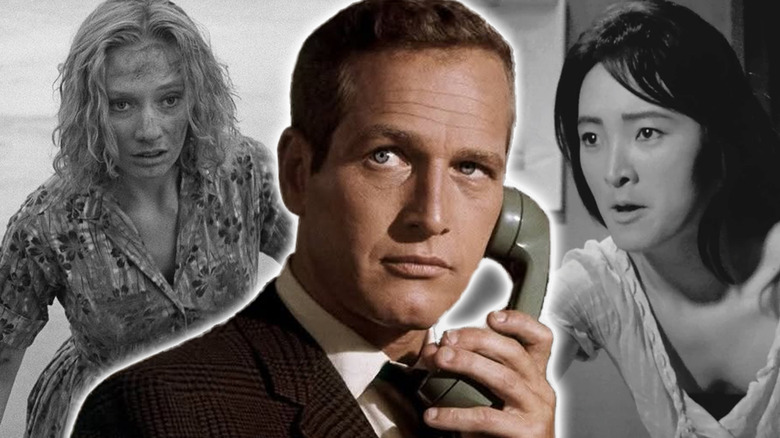
The 1960s featured a global cultural revolution that ditched more conservative social conventions for a more vibrantly exuberant perspective on the world. These qualities were reflected in the decade's films, which embraced the possibilities of color cinematography and imaginative art design. These counter-culture elements also spread into cinematic storytelling itself, providing revisionist and postmodern approaches to popular genres reflecting a heightened verisimilitude and more salient social commentary. With that in mind, there are a lot of '60s movies that everyone should watch at least once.
Given the sheer breadth of movies released worldwide from 1960 to 1969, there are always going to be overlooked gems that fall through the cracks. That's why we've gathered some of the greatest underrated and forgotten '60s movies from a variety of genres and international backgrounds. From hauntingly surreal thrillers to revisionist Westerns, '60s cinema reflected the ongoing cultural upheaval that helped make the movies of today possible.
These are the 10 best '60s movies nobody talks about anymore and are each worth checking out.
The Housemaid (1960)
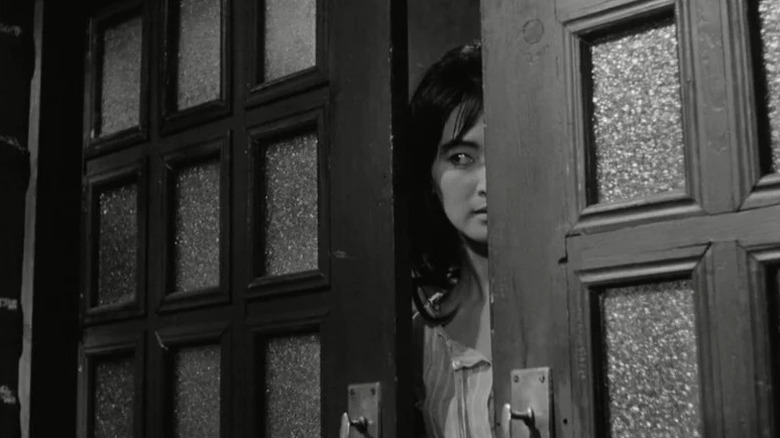
Not to be confused with the 2025 psychological thriller of the same name directed by Paul Feig and starring Sydney Sweeney, 1960's "The Housemaid" is a South Korean film. The movie centers on piano teacher Kim Dong-sik (Kim Jin-kyu) as he hires a housemaid, Myung-sook (Lee Eun-shim), to help with his household, while his wife advances into her pregnancy. Myung-sook steadily exhibits disturbing behavior before manipulating Dong-sik into a torrid affair while tormenting his family, including his two children. This builds to a shocking tragedy that completely obliterates the Kim family, deviously orchestrated by Myung-sook in a cautionary morality tale.
South Korean Oscar winner Bong Joon Ho named "The Housemaid" as one of his favorite films, and in viewing the movie, it's easy to see why. The movie couches a clear social commentary within a tautly staged story, and like several of Bong's stories, an entire family bears the suffering. These thrills are powered by a standout performance from Lee Eun-shim, unsettlingly calculating and captivating all at once as the titular antagonist. One of the best suspense movies of all time, "The Housemaid" is still a discomforting watch over 60 years later and a milestone in Korean cinema.
Carnival of Souls (1962)
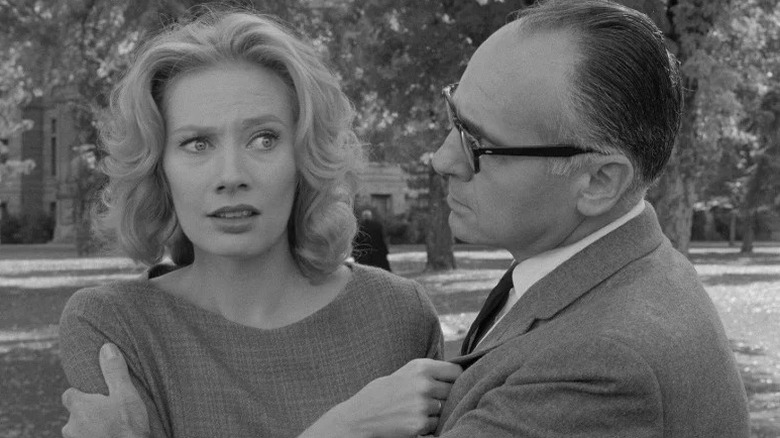
From Roger Corman's line of Edgar Allan Poe adaptations to George A. Romero's "Night of the Living Dead," low-budget horror movies thrived in the '60s. One such movie that likely has flown under a lot of people's radar is the 1962 chiller "Carnival of Souls." The movie opens with protagonist Mary Henry (Candace Hilligoss) involved in a car accident but seemingly miraculously surviving the incident. As Mary tries to move on with her life, relocating to Salt Lake City, she is stalked by a ghoulish figure (Herk Harvey) and experiences increasingly disturbing paranormal occurrences.
Any savvy "Twilight Zone" fan can probably deduce what the big twist to "Carnival of Souls" is relatively early on, but that doesn't diminish its quality. Harvey's ghostly stalker is an unsettling sight whenever he appears on screen and the movie's 80-minute runtime keeps the suspense steadily mounting. This is elevated by several truly memorable set pieces, including a mesmerized Mary playing a church organ while experiencing ghastly visions. "Carnival of Souls" retains its essential creepiness over 60 years later and certainly deserves wider recognition for its frightening story.
Woman in the Dunes
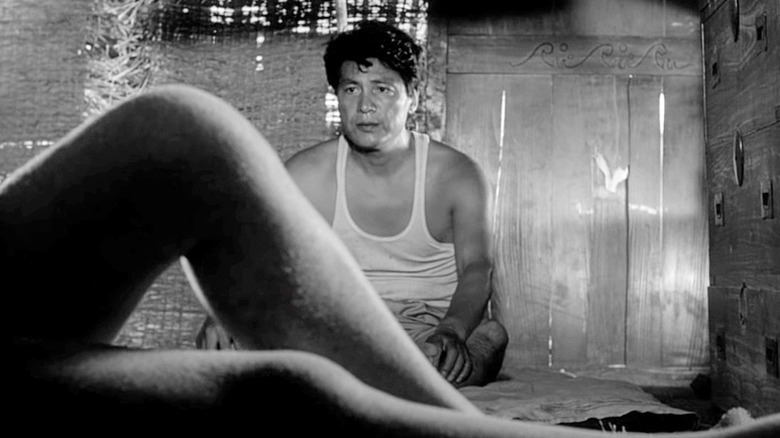
Japanese author Kōbō Abe adapted his 1962 novel for the screen, writing the screenplay for the psychological thriller "Woman in the Dunes." Directed by Hiroshi Teshigahara, the 1964 movie follows amateur entomologist Niki Junpei (Eiji Okada), who leaves Tokyo for an impromptu trip to a remote coastal village. What was intended to be a day trip becomes a nightmarish ordeal when the villagers trap Junpei in a hut inside a pit at the bottom of a sand dune. As Junpei searches for a way to escape, he grows close to his sole housemate, a nameless widow (Kyōko Kishida) also trapped in the pit.
"Woman in the Dunes" is an existential masterpiece, weighing the merits of domesticity and purpose in a surreal parable. Junpei is restless when he first arrives in the movie's main setting, and while held against his will, he discovers something to live for in captivity. At the same time, the movie never forgets how twisted its central premise is, something made all the more clear by its moody black-and-white cinematography. A folk thriller with cynical implications and, true to its title, plenty of sand, "Woman in the Dunes" sticks with viewers after its twisted final scene.
Kwaidan

Horror anthologies were big worldwide in the '60s, including flicks like the Italian "Black Sabbath" and Roger Corman's "Tales of Terror." The best Japanese horror anthology of the decade is the 1964 movie "Kwaidan" directed by Masaki Kobayashi, based on a 1904 collection of folklore. Among the quartet of stories included in the movie are a pair of woodcutters encountering a vengeful spirit in a blizzard to a blind musician entertaining the dead. While the level of sinister scares vary from vignette to vignette, each of the stories contain a distinctly melancholy quality.
"Kwaidan" offers four Japanese ghost stories, each with universally relatable themes and appeal as they each thoroughly chill audiences. The common themes throughout the stories involve regret, loneliness, and duty, all featuring a supernatural sense of consequence. Beyond the different tones, "Kwaidan" also excels at strikingly different cinematography in every story, often informed by each vignette's use of color. One of the best horror movies to ever come out of Japan, "Kwaidan" weaves its haunting folktales to gloomy effect.
Harper
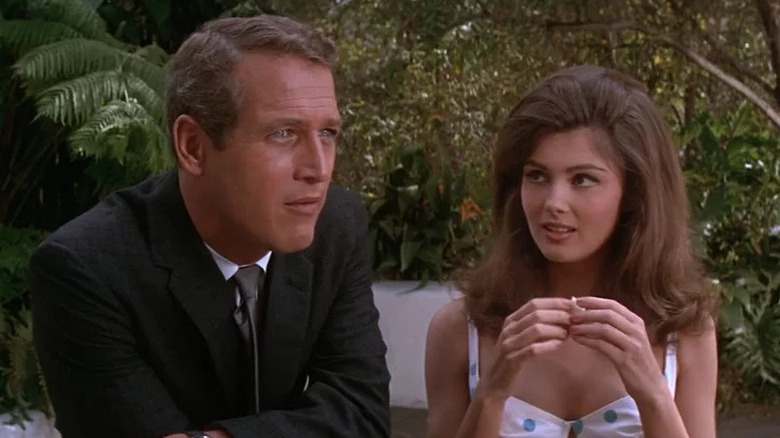
Before "Cool Hand Luke" and "Butch Cassidy and the Sundance Kid," 1966's "Harper" helped establish Paul Newman as a poster boy for counter-culture cool. Based on the 1949 crime novel "The Moving Target" by Ross Macdonald, Newman stars as private investigator Lew Harper who is investigating the sudden disappearance of millionaire Ralph Sampson. Realizing that Sampson was kidnapped, Harper delves deep into a winding criminal conspiracy with a growing body count. As Harper's investigation continues, he becomes increasingly unsure of who he can trust as each discovery yields disturbing new questions.
"Harper" turns the greater Los Angeles area into a neo-noir playground, from seedy nightclubs and alleys to the city's surrounding mountains and abandoned coastal tankers. Along the way, Harper contends with everyone from religious cults to overeager bouncers, with plenty of gunplay and fisticuffs to keep audiences riveted. Newman digs into his private eye role with visible aplomb, making the venerable archetype his own and hip again for the '60s generation. Deserving of being counted among the best Paul Newman movies, "Harper" reaffirmed its lead actor's self-assured screen persona in a memorably hardboiled story.
Seconds (1966)
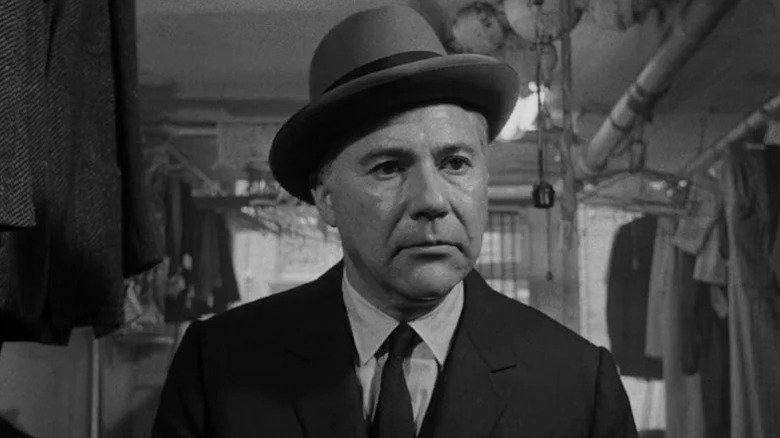
Prolific filmmaker John Frankenheimer helmed the 1966 adaptation of the sci-fi thriller novel "Seconds" by David Ely, skewering middle-life crises and attempts to escape domesticity to reclaim one's glory days. The movie opens with middle-aged Arthur Hamilton (John Randolph) growing increasingly disenfranchised with his life, accepting a mysterious offer at a chance for rebirth. This offer leads Hamilton to undergo a radical procedure, physically transforming him into the younger and more virile Tony Wilson (Rock Hudson). As part of this new life, Tony joins a community of fellow patients who similarly have received new identities and physical forms, only to chafe against their strict rules.
"Seconds" is Frankenheimer's terrifying masterpiece, presenting a sort of Big Brother controlled community like "The Prisoner" with its own menacing flair. The movie serves as a prescient indictment of surveillance communities and youth-chasing wellness and cosmetic beauty procedures, with messaging that's just as cogent now. Hudson gives a performance unlike he ever had before or since, perforating his usual handsome, clear-cut image for a much less self-assured character. A thriller that gets steadily more frightening as it advances, "Seconds" is a story directly borne from the "Twilight Zone" generation.
How to Steal a Million
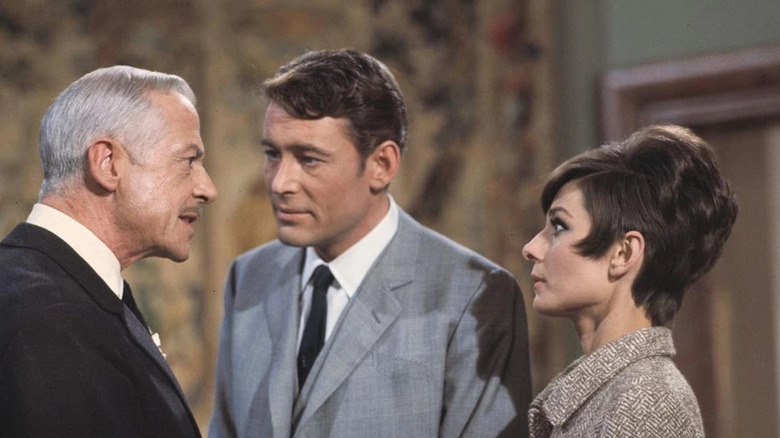
By the '60s, Audrey Hepburn was completely in her element, bringing a touch of sophistication to capers like "Charade." This quality helped fuel the lightweight heist comedy "How to Steal a Million," with Hepburn starring as socialite Nicole Bonnet, whose father Charles (Hugh Griffith) is an art forger. Charles' extensive collection of fake artwork attracts the attention of gentleman art thief Simon Dermott (Peter O'Toole), who quickly falls for Nicole. In order to prevent Charles' high-profile forged sculpture from attracting unwanted attention, Nicole and Simon team up to steal it from an art museum.
For classically trained O'Toole, still relatively fresh off of "Lawrence of Arabia," "How to Steal a Million" is as screwball as he gets. Hepburn, who is thoroughly in her creative wheelhouse, helps him with that tonal shift while subverting heist movie expectations. The movie also makes good use of its French setting, providing audiences with a romanticized portrait of Paris in the '60s. One of the best Audrey Hepburn movies and certainly among her most underrated, "How to Steal a Million" skewers the spate of heist flicks popular in the '50s and '60s.
Hombre
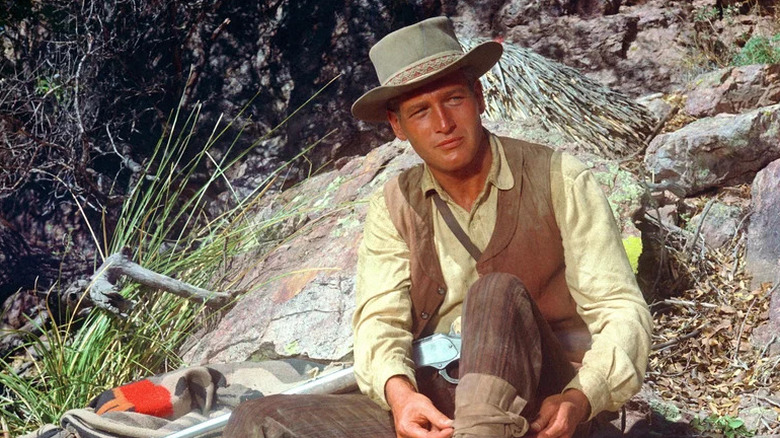
Paul Newman made some of his greatest Westerns ever with director Martin Ritt, with their creative partnership spanning six movies. The duo's last collaboration together was the 1967 revisionist Western "Hombre," based on the novel of the same name by prolific writer Elmore Leonard. Newman stars as John Russell, who was kidnapped and raised by the Apache as a boy and bristles at the prospect of reintegrating into white culture as an adult. Russell becomes involved when a murderous gang raids a stagecoach that he's riding on, setting out to rescue a kidnapped passenger from the entourage.
"Hombre" is easily the toughest and meanest Western that Newman ever starred in, mirroring similar gritty stories told by spaghetti Westerns overseas. Newman's emotionally distant and amoral protagonist reflects those qualities, making him an antihero with his own sense of honor drawn into a larger conflict. With this approach, Newman demonstrates his underrated range, not relying on his usual winking charm but depicting a much more stoic and ruthless character. Everyone remembers Newman for starring as the charismatic and intelligent Butch Cassidy, but two years prior, he played a much more hardened and no-nonsense gunslinger to great effect in "Hombre."
The Swimmer (1968)
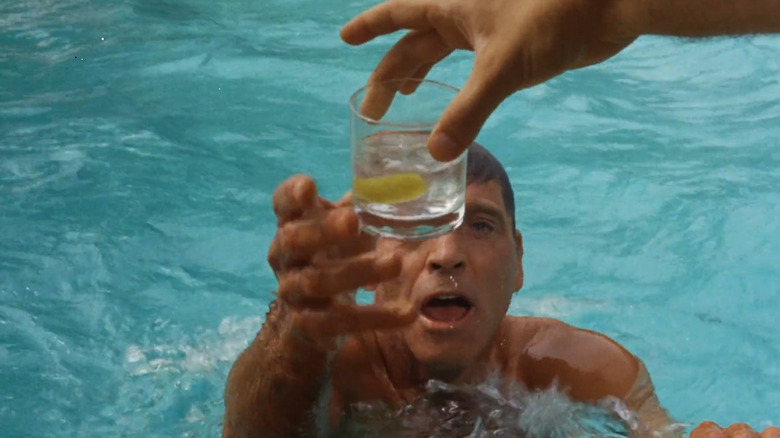
One of Burt Lancaster's perfect movies according to Rotten Tomatoes is the 1968 surrealist suburban drama "The Swimmer." Lancaster stars as disillusioned family man Ned Merrill who lives in an affluent community in Connecticut, spending evenings getting drunk at his neighbors pool parties. While at one such party, Merrill realizes that the path home features pools at his various neighbors' homes and decides to swim in each of them. This domestic odyssey underscores Merrill's ongoing midlife crisis, his delusions about his family life, his contentious relationship with his neighbors, and clearly unchecked inner demons.
"The Swimmer" is a takedown of white picket fence suburban Americana and the white-collar figures that populate it. As Merrill's journey progresses, it quickly becomes clear that he's not alright and his unresolved inner turmoil has taken a toll on him and his family. Unwilling to address these visible issues, Merrill just keeps swimming, even as his path home grows more emotionally harrowing with each impromptu dip. An actualized daydream that becomes a suburban nightmare, "The Swimmer" is Lancaster at his dramatic best, right down to its ambiguous final scene.
The Cremator
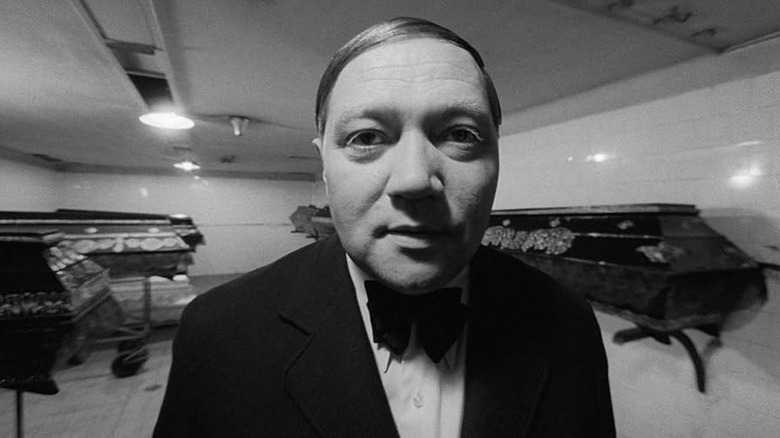
Easily the darkest movie on this list is the absurdist horror comedy "The Cremator," a Czechoslovakian film released in 1969. Set on the eve of World War II as Nazi Germany seizes control of Czechoslovakia, the movie follows unassuming Karel Kopfrkingl (Rudolf Hrušínský), who operates a crematorium. As Kopfrkingl becomes enthralled with the Nazis' messaging, he begins committing murders, feeling his victims are being liberated from their current forms to allow for reincarnation. As Kopfrkingl claims more victims and becomes involved with the Nazis' death camps, his delusions lead him to believe that he is the reincarnated Buddha.
Just by that plot synopsis alone, it's clear that "The Cremator" is both a disturbingly bizarre tour of a fractured psyche and not everyone's cup of tea. The movie's black-and-white cinematography helps capture the unsettling mood, accentuated further by its frequent use of fisheye lens to capture distorted close-ups and abrupt edits. As ridiculous as the plot elements become, fueled by Kopfrkingl's deteriorating mind, the horrific implications of the atrocities around him contextualizes his descent. A macabre morality tale that has to be seen to be believed, there is nothing else like "The Cremator" and it'll stick with audiences forever after seeing it.