

10 Best Alternate History TV Shows, Ranked
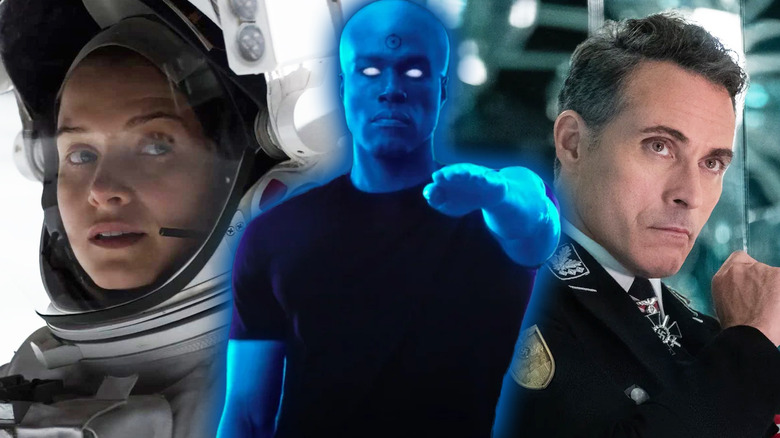
At a time when Hollywood studios are looking for stories that are somehow both fresh and instantly recognizable to distraction-prone consumers, why don't we see them produce more alternate history dramas? The subgenre is hardly wanting for source material — since at least the publication of the early 19th-century French novel "Napoleon and the Conquest of the World" (which apocryphally imagined the diminutive dictator victorious in his ambitious military campaign), writers have returned to this well countless times. Some of these stories have already been adapted into prestige dramas that have garnered critical acclaim.
As proven below by the best the subgenre has been able to offer on TV so far, alternate histories are as under-explored as they are promising on the small screen. They have the unique capacity to challenge viewers, inviting them in with historical figures and events they recognize before altering them in exciting ways that, ideally, inspire a deeper understanding of history than a more-accurate period drama would. Though we await a future filled with such transportive tales, these shows should satisfy your chronological cravings in the meantime.
Here are the best alternate history TV shows, ranked.
10. Hollywood
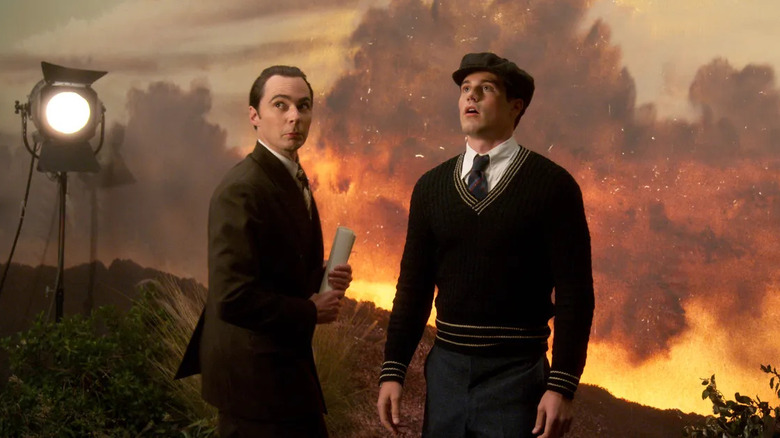
The inclusion of "Hollywood" on this list will doubtless be controversial for many of our readers, at least at first glance. This entertainment industry period drama — created by "Glee" and "Monster" collaborators Ryan Murphy and Ian Brennan — was not a breakout hit by any means, nor was it as popular as their Fox musical dramedy or as inflammatory as their Netflix true crime horror anthology. Critics weren't too hot on it either. It holds middling scores on both Rotten Tomatoes and Metacritic, a lukewarm reception reflected in /Film's ranking of Murphy's television work.
Indeed, "Hollywood" being here can be attributed in part to the lack of even middling alternate history shows out there — a testament to the subgenre's unexplored potential. At the same time, however, it earns a place on this list in our opinion due to its imaginative use of alternative history tropes. While many of the series below fall into the science fiction, war, or political thriller genres, "Hollywood" is unique in its focus on emotional conflict, non-violent social movements, and the imagined evolution of an industry based on the values that seem to guide its aesthetics rather than its actual production.
Set in the aftermath of World War II, the series explores a version of Hollywood where artists from historically marginalized communities are able to take control of their stories. Murphy favorite Darren Criss plays a key role as a Filipino-American filmmaker who controversially helms a project written by a Black screenwriter, played by Jeremy Pope; Jake Picking, meanwhile, plays a version of Rock Hudson who is able to come out of the closet earlier in his career.
The series will play like refreshing representation for some and questionable wish-fulfillment for others. But at just seven episodes, it's more than worth watching for the production design and stacked ensemble cast alone.
9. Noughts + Crosses

"Noughts + Crosses" presents an intriguing, narratively dangerous premise that could have easily ventured into disastrous, tone-deaf territory. The fact that it's even watchable without cringing is a feat in and of itself — that its first season is also genuinely moving, challenging, and provocative in a way that most alternate history series are afraid to be is a testament to the creators' storytelling craft and the gravity of the ideas at play here.
Based on the series of young adult novels by Malorie Blackman, "Noughts + Crosses" confronts the audience with the contemporary impact of British imperialism by inverting historical power imbalances. In this world, a 14th-century African Empire emerged and dominated Europe, dividing the nations in what is undoubtedly supposed to be a direct mirror of the "scramble for Africa" in the 19th century (in which several European countries invaded and colonized most of Africa, though they never got Ethiopia).
The first of the series' two seasons handles this premise extremely well. It focuses on the strained relationship between the daughter of the Albion (British) Prime Minister (a woman of African descent, played by Masali Baduza) and a lower-class army cadet (a man of British descent, played by Jack Rowan), the two discovering new tensions as they become conscious of how their skin color and ethnicity dictate their destinies.
Admittedly, their love story does drive the second season a bit too far into YA territory, and pulled punches leave the premise feeling undermined and even, at times, unserious. When it works, it's because the inverted power dynamics force the audience to reconsider the legacy of European imperialism, not as the imperfect yet settled historical foundation of contemporary society, but as a deeply corrosive and unjust legacy of violence so appalling it passes as dystopian.
8. 1983
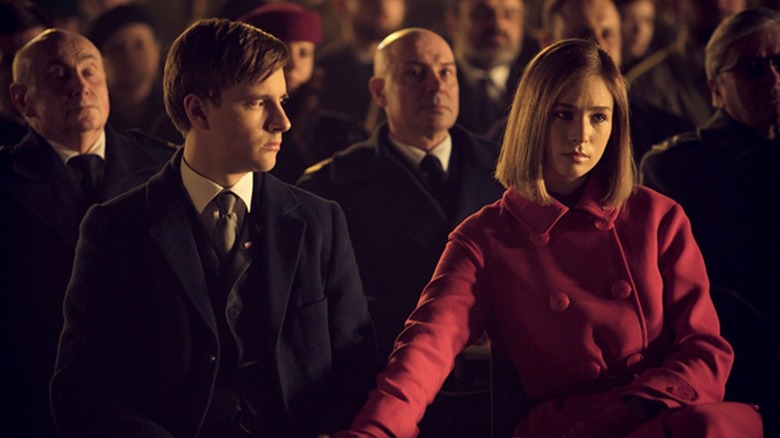
Unfortunately, the fact that the Polish political thriller "1983" was written for an audience intimately familiar with their own national history is what makes the series simultaneously compelling and, for international viewers, significantly more inaccessible than other entries on this list. In fact, many viewers with only a casual awareness of the Cold War might find it difficult to appreciate those moments in the show's fictional timeline that diverge from real history — and how they posit an ideological conundrum with universally relevant implications.
In the real world, 1983 was the year in which external pressure and internal political resistance created the first cracks in the Polish People's Republic, a satellite state of the Soviet Union under authoritarian rule. The activities of the Solidarity movement (an independent trade union that existed in defiance of the communist government and was, as you might have guessed, covertly backed by Ronald Reagan and the CIA) are largely credited with undermining the PPR's rule — and, by extension, helping to catalyze the fall of the Soviet Union and the end of the Cold War.
In Netflix's "1983," as imagined by Joshua Long and Maciej Musiał, the progress of Solidarity is thwarted by a horrific terrorist attack linked to their political allies. The series picks up 20 years after this pivotal moment in Poland's alternate history — the PPR remains in power, the Eastern Bloc perseveres behind the Iron Curtain, and some of those who would have been Poland's liberators now work to maintain the state. All that threatens their power now is the discovery of a conspiracy that would fundamentally change the way its citizens understand the attack that defined their civic destiny.
It's not hard to see how the themes of "1983" would resonate with American audiences in particular. It's a dark, demanding series without a clear ending, but will nonetheless captivate readers interested in this era of history.
7. SS-GB
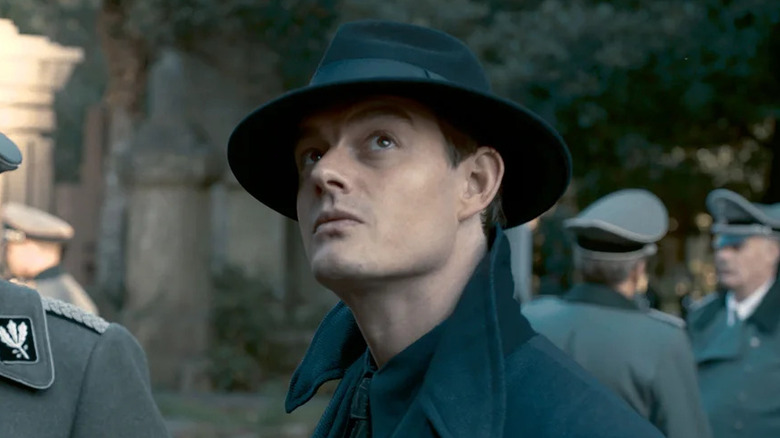
Though the alternate history subgenre isn't as prominent as others, the premise of "What if Nazi Germany won World War II?" is probably one of the most revisited premises in all of speculative fiction. From the 1964 film "It Happened Here" to episodes of the CW's "Arrow" shared-universe, it engages the imaginations of history buffs and superhero fanatics alike. There are two series based on this premise on this very list — the first of them is "SS-GB."
In this 2017 BBC miniseries, Sam Riley plays a 1940s Scotland Yard homicide detective, who attempts to carry out his duties apolitically in Nazi-occupied London. The series takes place in the direct aftermath of an unsuccessful Battle of Britain and the nation's fall to Germany. Unlike most shows on this list, "SS-GB" keeps the key historical divergence within a year of the start of the main plot — none of the characters, least of all Riley's, has been able to truly settle into the new national order. He attempts to coax himself into a safe state of resignation, but can't shake his own moral code or his grief over the loss of his wife during the invasion. The series is a noir tale of neutrality, with an informal dramatic lineage that stretches back to "Casablanca."
"SS-GB" was adapted by Len Deighton from his own 1978 novel. It's self-contained and only five episodes long — perfect for viewers who are a little wary of spending too much time in such a bleak world.
6. Fringe
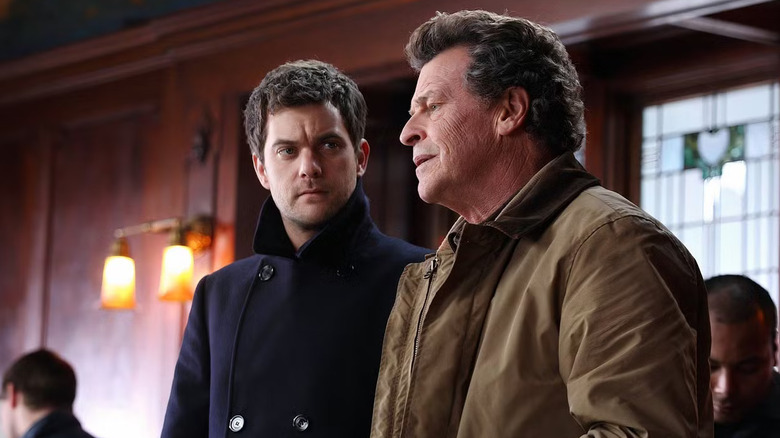
Sadly, "Fringe" is best known as a sci-fi show no one really talks about anymore. To describe it as ahead of its time would be an understatement. The Fox series — created by J.J. Abrams, Alex Kurtzman, and Roberto Orci ("Star Trek Into Darkness," "The Amazing Spider-Man 2") — premiered in 2008, throwing viewers into a high-sci-fi world of multiverses long before comic book movies would provide a popular shorthand for understanding them. The idea that there were other worlds that existed parallel to our own was the kind of "Fringe" science the series aimed to explore.
Like all sci-fi shows released at the time, it's initially sold to the audience as a police procedural. Anna Torv ("The Last of Us") plays the audience's point-of-view character, a seemingly average FBI agent brought into a covert task force that investigates supernatural phenomena. The series offers all the freak-of-the-week action you'd expect from a premise like that, especially in early seasons. However, by the end of its second season, "Fringe" was largely committed to exploring its key parallel universe (referred to as the "Over There") that has its own alternate chronology. An Abrams mystery box thriller to its core (with plenty of Kurtzman and Orci magic blood nonsense to boot), it's a one-of-a-kind viewing experience that benefits from the audience knowing as little as possible going in.
We'll avoid spoiling the plot twists that come from the collision between mainstream and alternate histories. But for those who want a tease of what they can expect, "Fringe" rewrites the fall of the Soviet Union, the 9/11 attacks, and the makeup of the American government. (And they also did the Eric Stoltz/"Back to the Future" joke way before "The Flash.")
5. The Man in the High Castle
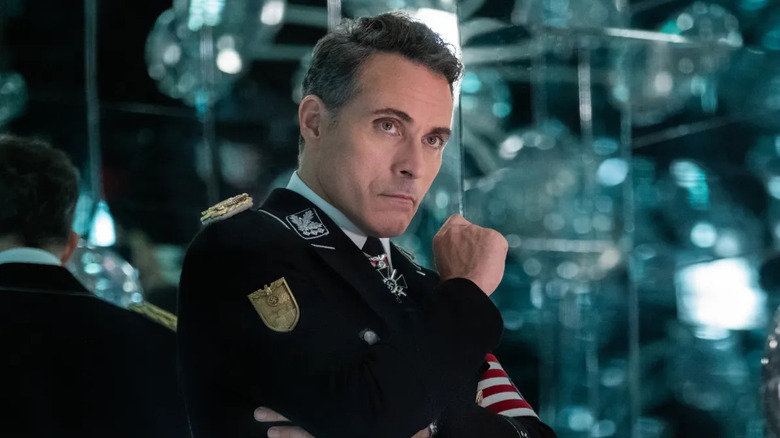
Of all the alternate history series on this list, "The Man in the High Castle" is arguably the most well-known as being a quintessential representation of the subgenre. Other series — some of them being of better quality, in our opinion — have struggled to make the same impact, often failing to center the alternate history premise enough in the marketing, so much so that they read as simple historical dramas. The success of this series is also due to its reliable World War II-twist and, to a lesser extent, the name-recognition of "Blade Runner" author Philip K. Dick, who penned the novel that serves as the series' source material.
For those unfamiliar, "The Man in the High Castle" is a horrifying dystopian political thriller set roughly two decades after Axis powers won World War II. Nazi Germany (having won the nuclear arms race and reduced Washington, D.C. to a quasi-uninhabitable wasteland) has expanded its empire across multiple continents, including North America. The U.S. is divided between Germany and Imperial Japan, with the majority of the nation going to the former. Now in the '60s, with the global population all but accustomed to a genocidal world order, an embattled resistance movement discovers evidence of a history where the Allies won the war.
That "The Man in the High Castle" embraces science fiction should be no surprise to fans of PKD, even if some viewers find literal multiversal intrigue less compelling than exploring a grounded alternate history. Then again, the sci-fi angle works as a metaphor for the struggle of oppressed societies to break their deliberately constricted idea of what their world could be, so that they might fight for a future they can now imagine.
4. Counterpart
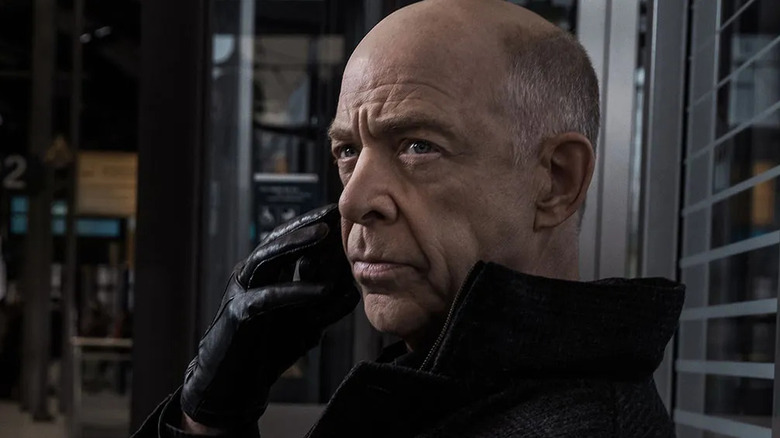
If the explicit sci-fi aspect of "The Man in the High Castle" doesn't bother you, you should consider giving the first two seasons of "Counterpart" a chance. The Starz thriller was sadly cancelled before it could come to a proper conclusion. Even so, its writing, presentation, and leading performances — particularly from double-leading-man J.K. Simmons — will excite and intrigue you in a way other series on this list won't.
"Counterpart" is, essentially, a Cold War spy thriller that uses multiversal mechanics to magnify the political and emotional stakes of the conflict. In present-day, "real-world" Berlin, humble United Nations analyst Howard Silk (Simmons) has been unwittingly employed as a communications intermediary between his world and another neither he nor the public at large are aware of — a parallel Earth that was discovered by scientists during the Cold War. Though these Earths initially cooperated with one another in an attempt to use this phenomenon to advance the scientific development of both worlds, paranoia and mass tragedy gave way to lasting, unresolved hostilities. Silk's obliviousness to his own function (reminiscent of Apple TV's "Severance") is shattered when he comes face to face with a version of himself from the other world — a lethal covert operator hunting interdimensional assassins.
Despite its early cancellation in 2019, "Counterpart" was beloved almost unanimously by critics and audiences. Given how much audiences enjoy "Severance" and shows of that ilk, it likely would've fared better just a few years later on a more supportive network. Fortunately, creator Justin Marks rallied to create the critically acclaimed period drama "Shōgun" for FX.
3. The Plot Against America
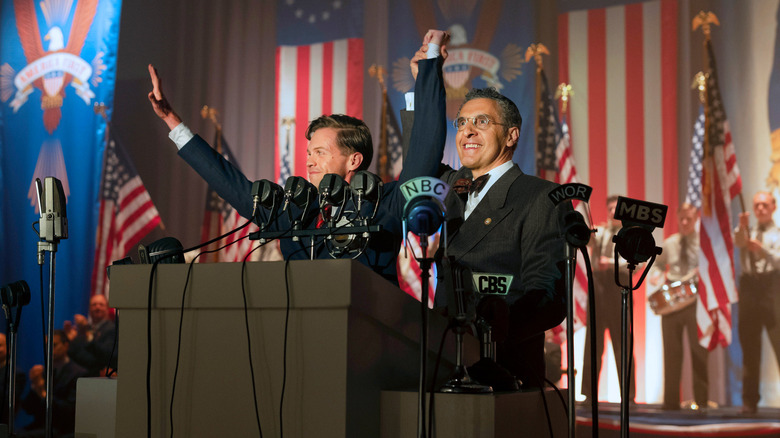
David Simon and Ed Burns are indisputably two of the prescient television writers of all time. Their 2000s crime drama "The Wire" helped change the way small-screen stories were told and heralded the rise of HBO and the Golden Age of TV that lasted for the following two decades. More than that, the series depicted and diagnosed social dilemmas that would be ignored for the majority of that time — sadly, "The Wire" endures, in large part, because no series has been as correct about institutional corruption, dysfunction, and decay. That's worth mentioning as the pretext of any serious discussion about "The Plot Against America," a chilling HBO miniseries that feels more plausible now than it did in 2020.
Released at the height of the COVID-19 pandemic, during the waning months of the first administration of Donald Trump, the series adapts Philip Roth's 2004 novel about the hypothetical fascist regime of U.S. President Charles Lindbergh (played in the series by Ben Cole). Though he never ran for office in real life, Roth paints him as a celebrity candidate with the potential to spearhead a horrifyingly effective populist political platform. Historically, Lindbergh was an outspoken xenophobe and antisemite, who staunchly opposed American involvement in World War II and argued for diplomatic compromise with Nazi Germany.
Simon accepted the project after the first Trump victory in 2016. The parallels between his Lindbergh and the current leader of the free world are as obvious as they are uncomfortably organic — "America First" is, historically, a rallying dog-whistle shared by them both. But what makes it truly essential viewing is how carefully it maps the rise of domestic fascism, the trajectory of which will be all-too-recognizable for American audiences.
2. For All Mankind
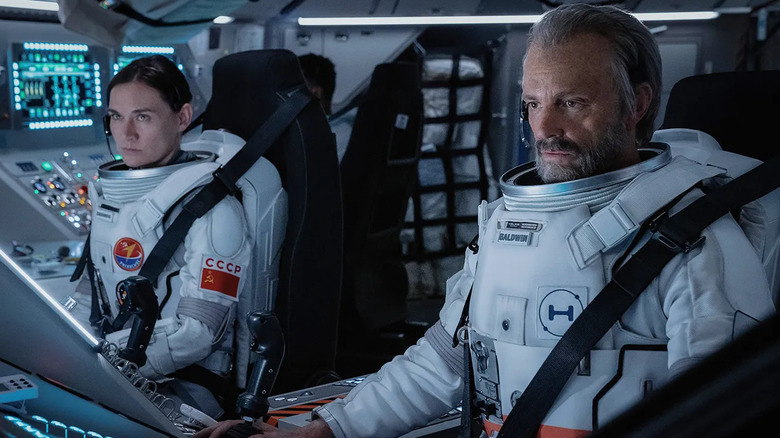
No series on this list gets as much out of its alternate history premise as "For All Mankind." The show's marketing is, unfortunately, pretty confusing to anyone who might be interested in what it has to offer. It's not a grounded sci-fi space story or a historical drama about astronauts, but it's a sociological epic about human advancement through relentless competition. That story just so happens to begin in the stars.
The series opens in 1969. Americans huddle around their TVs, waiting to see the first human to take one small step out of a spaceship, onto the surface of Earth's untouched Moon. He does so, but the astronaut commemorates the moment in Russian, before planting the flag of the Soviet Union for all mankind to see.
Russia's victory in the space race doesn't lead to some apocalyptic, war-torn future. Through the journey of several fictional NASA astronauts racing to meet their Cold War adversaries in the cosmos, told across several decades through large time jumps between seasons, "For All Mankind" makes the argument that this defeat could have led to a better tomorrow. Sustained competition between the states serves as the catalyst for progress, ranging from expedited technological advancement to the early integration of marginalized groups into positions of prominence.
Whether you find it credulous or not, "For All Mankind" displays a level of imagination that far surpasses other entries on this list — not least of all because it tells an alternate history tale that actually inspires one to imagine a different future.
1. Watchmen
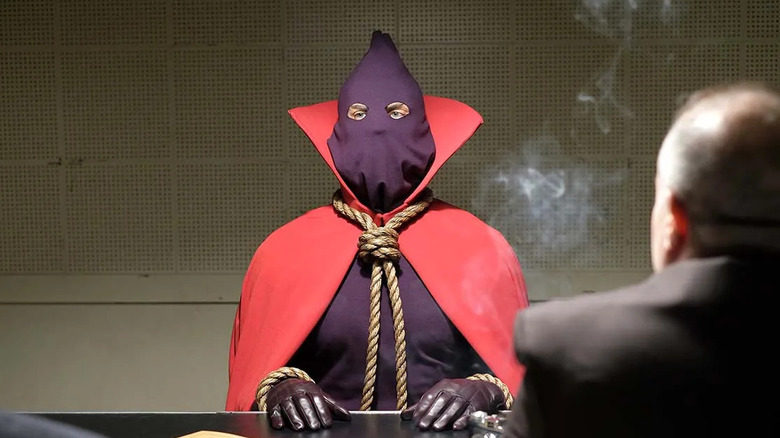
The original "Watchmen" comic book series by Alan Moore is, without question, one of the greatest alternate history stories ever told. Long before Amazon and "The Boys" set their sights on a reimagined past, Moore created a world where the dawn of superheroes shaped the trajectory of the world. Richard Nixon essentially forced them to become government agents, then used the god-like power of Dr. Manhattan to "win" the war in Vietnam. Nixon then abolished term limits and led America into an increasingly hostile Cold War with Russia where nuclear annihilation was imminent.
Damon Lindelof's HBO miniseries picks up this history and expands it. He explores both the consequences of America's permanent occupation of Vietnam (now the 51st state in the union) and the contemporary implications of the original series' finale. The shaky world peace won by Ozymandias' conspiracy has ushered in a fragile, superficially progressive age in America (led by seven-term-president Robert Redford — yes, that Robert Redford).
Though Moore himself was predictably not a fan, HBO's "Watchmen" has been widely embraced by the comics' fanbase and prestige television audiences at large for its challenging narrative. Lindelof's work stands apart from the remainder of the alternate history subgenre for its singularly genius use of the trope. History — in particular the history of American violence — is the ultimate antagonist of his "Watchmen," demanding to be reckoned with before any meaningfully progressive future can be achieved.