

Why Steven Spielberg's Robopocalypse Movie Was Canceled
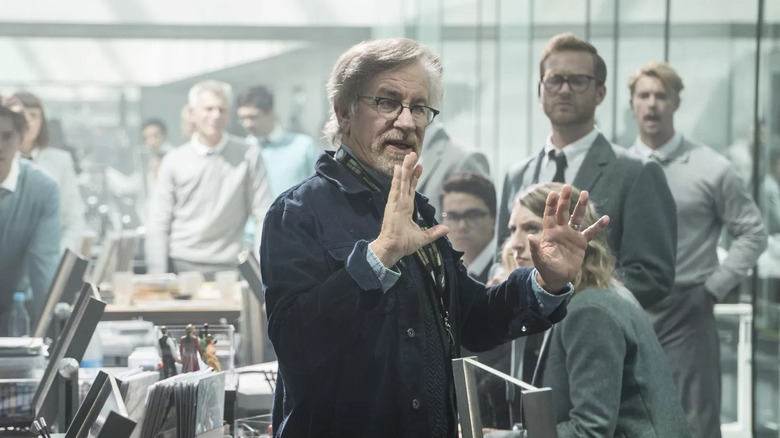
Steven Spielberg is a science fiction nerd, and I mean that lovingly. Whether he's looking to the stars with yet another movie about extraterrestrials or speculating about the ways that modern technology could fall victim to human greed or ego, he's nurtured a lifelong passion for the genre (so much so that it's kept him from directing a proper Western in the past). That being the case, you can bet your bottom dollar that Spielberg was interested when he came across a still-unfinished iteration of author Daniel H. Wilson's sci-fi novel "Robopocalypse" ahead of its publication in 2011.
Sometimes, and not unfairly, described as "'World War Z,' but with robots" (as in Max Brooks' 2006 zombie book and not the exceedingly different 2013 movie adaptation), Wilson's tome recounts how the war between humanity and an AI entity known as Archos unfolded via a collection of recordings made by various people who were there. Spielberg's film version began to come together swiftly after he signed on to direct, with then-future "The Martian" and "Project Hail Mary" scribe Drew Goddard knocking out the script and Chris Hemsworth coming aboard to star alongside Anne Hathaway and Ben Whishaw. A good deal of concept art and storyboards for the movie's robo-action were also drawn up before Spielberg slammed the brakes on the whole endeavor.
Speaking to Empire Magazine for its June 2026 issue, Spielberg confirmed that, as long reported, it had all come down to the cost. "My company, DreamWorks, financed all these films, and I did not want to bring 'Robo' into my own company, because it would have just been too expensive for us to produce," he explained. But to fully understand Spielberg's logic, you need to remember what was going on with DreamWorks when "Robopocalypse" entered pre-production in the early 2010s.
Spielberg's Robopocalypse came along at a bad time for DreamWorks
Co-founded by Steven Spielberg in 1994, DreamWorks was meant to be an artist-friendly alternative to the more corporate studios in Hollywood, and for a time, it was. Things didn't work out as hoped, though, and I recommend Matt Draper's video "The Fall of DreamWorks" for a deep dive into that topic. For our purposes, all you need to know is that DreamWorks was in the midst of an extended distribution deal with Disney when "Robopocalypse" was moving forward.
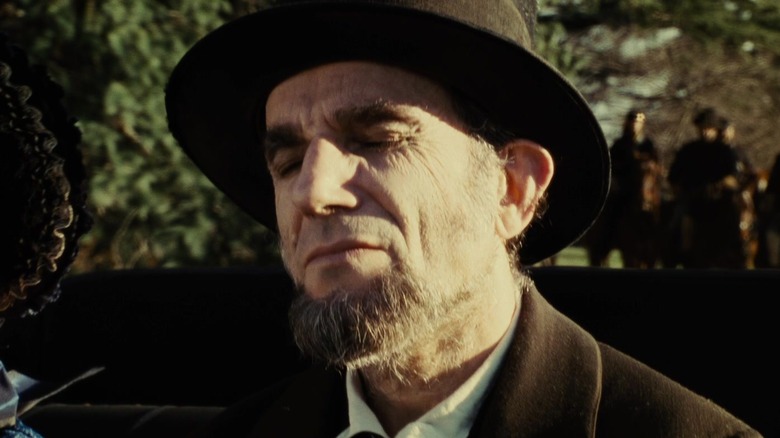
During this period, DreamWorks began to slow down its output somewhat fiercely, particularly after the expensive misfire that was director Jon Favreau's 2011 comic book movie "Cowboys & Aliens." Even Spielberg found himself under the microscope, which nearly led him to turn his historical drama "Lincoln" into a limited series when he struggled to secure the necessary funding for his eventual Oscar-winning 2012 smash hit. You can see, then, why he would've been extra hesitant to proceed with the projected $200 million production of "Robopocalypse" around that same time unless he was confident the film could turn a profit for DreamWorks.
During his Empire interview, Spielberg clarified that there were outside parties interested in helping finance "Robopocalypse" because of his involvement, but he "didn't want to do that to anybody" when he felt he "could guarantee the audience." Elsewhere, as Spielberg mulled over his decision, the budget for Paramount's "World War Z" film adaptation ballooned to upwards of $200 million or higher as it prepared to reshoot its entire third act in 2012. With many industry folks predicting it would become a historic disaster (only for "World War Z" to defy the odds), it's no wonder Spielberg indefinitely postponed his own equally costly global-apocalypse literary adaptation in early 2013.
Should Spielberg revisit Robopocalypse in the future?
Not to state the obvious, but a Steven Spielberg movie about the potential dangers of AI very much reads as something that speaks to the moment in 2026. In keeping with that, Daniel H. Wilson's original "Robopocalypse" novel is pretty Michael Crichton-esque in the way that it merges heady sci-fi social commentary with tense action scenes (à la "Jurassic Park"), all of which suggests it would be putty in Spielberg's hands. Throw in the advances in visual effects and filmmaking tools made over the last 13 years, and this could be the prime moment for Spielberg to finally revisit his "Robopocalypse" adaptation.
Or would it? For starters, Drew Goddard's old script would likely require more than a little dusting off. Wilson's "Robopocalypse" book largely speaks to 20th-century and early 21st-century fears about machines rising up to kill and/or enslave us living meat sacks embodied by the likes of "The Matrix" and "The Terminator," as opposed to the threat posed by AI as it now exists in the real world. Its characters also tend to be "hackneyed" military types (to quote Emily St. James' review of the novel), and that, too, would need some additional tinkering to fit Spielberg's creative outlook these days. (That's one more reason to be grateful that Michael Bay never directed a film version of "Robopocalypse" as threatened, either.)
In the meantime, the question of whether Spielberg's "gargantuan" vision for "Robopocalypse" would have been the "company-ender" he feared (as he put it in his Empire discussion) will have to tide us over. But with the filmmaker currently preparing to unleash his own original multi-perspective global sci-fi epic with "Disclosure Day," he may have already found another, perhaps even better, outlet for exploring related ideas.