

5 Forgotten '80s Sci-Fi TV Shows That Still Hold Up Today
In 1977, popular culture was deeply altered by the one-two punch of George Lucas' "Star Wars" and Steve Spielberg's "Close Encounters of the Third Kind." Both films were so massively successful that they altered Hollywood's view of the genre. There had been many successful sci-fi films in the past, of course — "Planet of the Apes" was a sensation the decade prior — but they were nothing compared to "Star Wars" and "Close Encounters." Sci-fi was suddenly a feasible money-making genre, and sci-fi projects flooded the market.
When Ronald Reagan was elected in 1980, it also changed the way movies and TV shows were marketed to kids. It was previously illegal to market directly to kids, but Reagan loosened a lot of those restrictions and eventually overturned those laws. As such, kids' sci-fi was everywhere in the 1980s, with most TV shows and movies designed specifically to hawk toys. Media regulations of the time required that most kids' shows be a certain percentage educational, but even the kids watching at the time saw the post-show educational sequences as token condescensions.
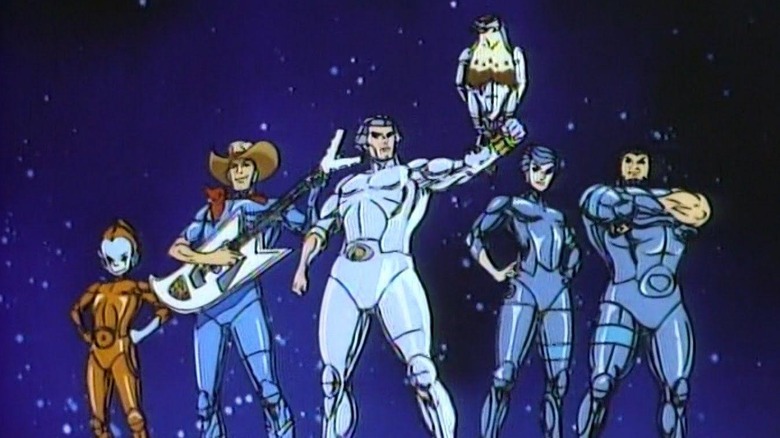
Through this malaise, however, sometimes showrunners slipped in a quality series, or at least a show based on cool, weird ideas. One can look at something like "SilverHawks" and see a cynical endeavor to sell toys, but one can also perhaps appreciate just how bonkers and wild its concept is. The shows on the list below, mostly made for kids, were ambitious, high-quality shows that possessed wild premises, great writing, or amazing, appealing characters. They are all products of their time, but perhaps a modern eye, here in the mid-2020s, can look back and see that certain ideas hold up.
Voyagers! (1982)
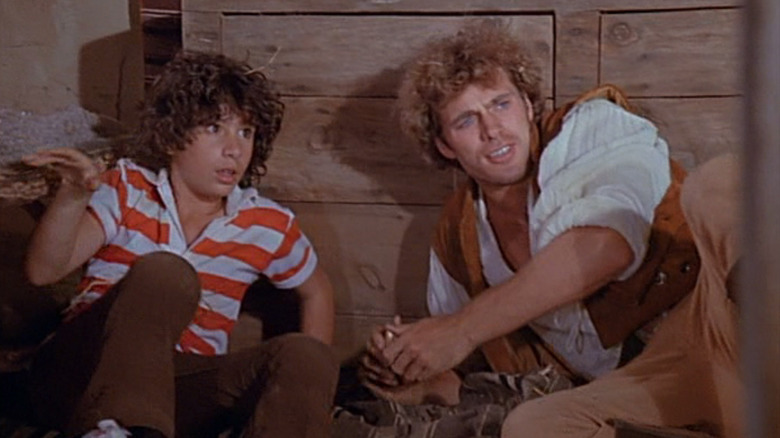
"Voyagers!" is a marvelous, pure-hearted show designed to teach kids about world history while also being an amusing, humorous, and adventurous time-travel series. The main character is Jeffrey (Meeno Peluce), a history buff who is living with his aunt and uncle after his parents' deaths. One afternoon, quite unexpectedly, he is visited by Phineas Bogg (the dash handsome Jon-Erik Hexum), a time-traveling Voyager from the future. He is equipped with a wrist-mounted Omni, which allows him to travel to any point in history, and he is summoned across the ages when something has gone wrong with the timeline. As a Voyager, he has to correct a historical event to restore the timeline.
Thanks to an accident, however, Jeffrey and Phineas are thrown into history without Phineas' guidebook. It will be up to Jeffrey to remember his history classes correctly to repair the timeline. Luckily, Jeffrey is a smart kid and can usually remember things right. Phineas, meanwhile, admits that he's not much of a Voyager, emerging as a girl-crazy meathead. Jeffrey treats Phineas like an irresponsible older brother or perhaps a goofy Golden Retriever.
"Voyagers!" is a dream for parents, as it teaches kids history without them really realizing it. Kids will like the show because the kid character is the one with all the agency ... and it's actually funny. Also, the tone is light and never condescending. It knows that kids are smart, and it appeals to their need for knowledge. Over the credits, the show implores you to visit your local library, and that makes me smile.
R.I.P. Jon-Erik Hexum, taken by an on-set accident way too soon.
Whiz Kids (1983)
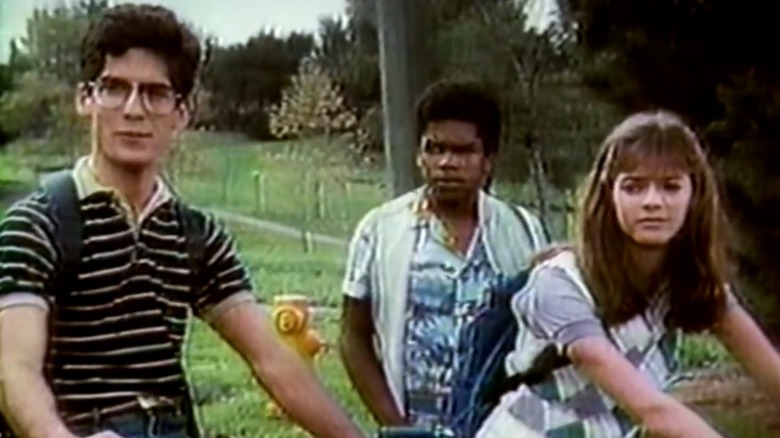
And speaking of smart kids with agency, the 1983 series "Whiz Kids" featured an entire cast of them. The main characters were all advanced computer experts (a novelty in 1983) who solved weekly mysteries on a freelance basis. The premise was that a 15-year-old named Richie (Matthew Lanborteaux) had access to all the computer tech his distant telecommunications engineer father had access to. Richie tinkers with the computers and builds RALF, a hyper-advanced scanning PC.
Richie is friends with Ham, Jeremy, and Alice (Todd Porter, Jeffrey Jacquet, and Andrea Elson), and they, in usual TV fashion, run into mysteries out in the world. Is that a KGB agent stalking us? What's the deal with the rash of shoplifting at the local market? Is a local public-access show having its ratings artificially throttled?
As in "WarGames," the kids can hack into government or corporate computer systems and sniff around, looking for evidence of malfeasance. Naturally, in the corporate world, there's plenty of malfeasance to be found. Are the kids hacking into corporate computers illegally? Why, yes, they are. Does that make these nerds and fresh-faced teens into punk, antiestablishment warriors? Also, yes. Did adult critics wring their hands about how "Whiz Kids" was a potentially bad influence? They did. But that's how you know the show is good. It's also ahead of its time, uncovering the potential crimes committed in the then-recent computer revolution.
Richie is the brains of the operation, but the other kids are open-minded, cool, and friendly, and they pull off fun schemes. Their police contact is played by A Martinez.
SilverHawks (1986)
As previously stated, many kid-friendly sci-fi shows of the 1980s were designed to be toyetic. The characters and vehicles were designed with toys in mind, and the stories often served merely to market them. In many ways, the 1980s TV landscape was a bleak wasteland of kid-milking machines and corporate greed. The shows didn't need to be good. They just needed to be addictive. This was certainly the case with "SilverHawks," which had a popular toy line from Kenner. The series was made by Rankin/Bass Entertainment, which had recently had a hit with their bizarre fantasy series "ThunderCats." "SilverHawks" was the sci-fi equivalent.
But if you strip away the cynicism of "SilverHawks," you're left with a fun, wild premise. It is the 29th century, and the galaxy is lousy with robotic mob bosses and space criminals, notably, the vicious Mon*Star (Earl Hammond). Mon*Star is in the employ of a Mob that rules the Limbo Galaxy. He has access to a transformation chamber that turns him into a doom robot. His sidekick, Yes-Man, is played by the legendary Bob McFadden.
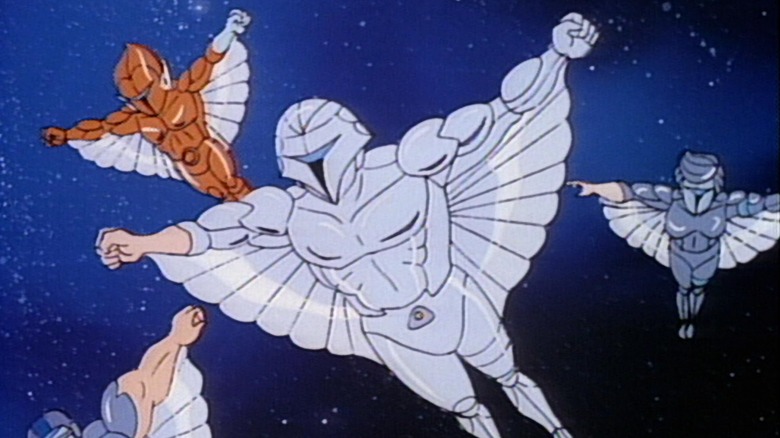
Standing in the Mob's way are the SilverHawks, a team of bionic space-faring cops who can soar bodily through space in metallic bird suits. There are noble cops, a bluegrass musician, and a mysterious alien mime on the team. They shoot lasers from their shoulders and can fly at incredible speeds like the Silver Surfer.
The notion of "space cops" isn't exactly novel, but the way "SilverHawks" was visualized was. The studio may have been inspired by toys, but the actual visuals are bizarre and wild enough to make "SilverHawks" stand apart from some of its peers.
Captain Power and the Soldiers of the Future (1987)
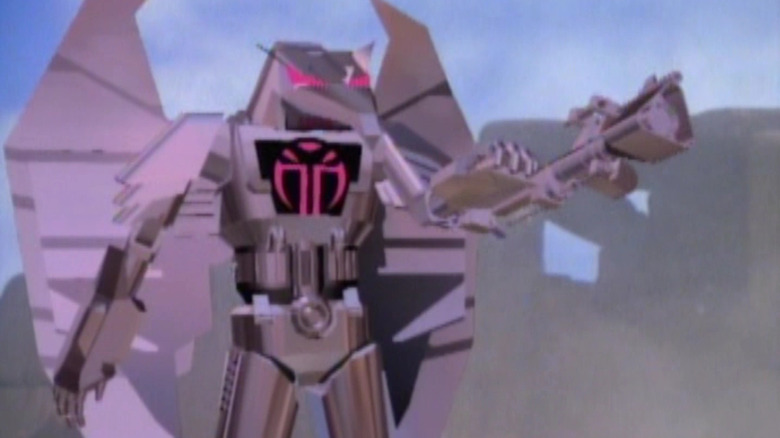
Also inspired by toys, "Captain Power and the Soldiers of the Future" was perhaps most noted for its fun, interactive Mattel toys that could be purchased alongside the show. The series featured a few flashing lights that would activate toys in kids' living rooms, allowing them to shoot at bad guys alongside the heroes.
But "Captain Power" was no light kiddie adventure. Indeed, the show might be most noted for how bleak and downbeat it is. It takes place in a post-apocalyptic 22nd century, after the human population has been cowed by an uprising of intelligent machines. The titular soldiers of the future are rogue mercenaries trying to overthrow machine totalitarianism. If the machines catch them, they are assimilated into their hive like the Borg. The lighting was low, the human was scant, and the sense of desperation was always high. Characters would die. "Captain Power" also had a weirdly impressive look that hovered in a matrix between the Power Rangers and the future scenes from "The Terminator." The early CGI was impressive at the time, even if it was rudimentary.
Sadly, the dour tone likely led to "Captain Power" being canceled after only one season. Kids didn't like the dramatic, tragic stories, and adults certainly didn't want to buy the toys. Famed sci-fi writer J. Michael Straczynski, creator of "Babylon 5," wrote for the series and confessed in an old interview that he drew from the harrowing real-life death of a friend to write certain "Captain Power" scenes. For a kiddie show about toys and lasers, "Captain Power" is remarkably dramatic.
Probe (1988)
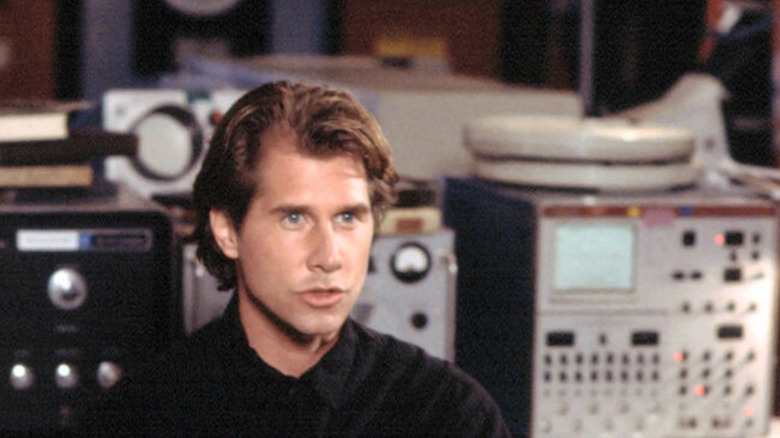
We have previously written about "Probe" in the pages of /Film, as it, like "Whiz Kids," was constructed for nerds [positive]. It was also created by celebrated sci-fi author Isaac Asimov and onetime "Star Trek: The Next Generation" producer Michael Wagner. The series was about a super-genius named Austin James (Parker Stevenson) who has a mimetic memory. He loves working in his lab and inventing new computer devices, and is the head of a think tank called Serendip. Austin, however, has grown impatient with less intelligent people (that is: most people) and has become a reclusive misanthrope.
He is brought out into the world by his new secretary and personal assistant, Mickey Castle (Ashley Crow), who has no compunction about bringing up Austin's terrible behavior. She is just as emotionally intelligent as Austin is book-smart. Naturally, they will become a Holmes-and-Watson style team of investigators. They are frequently called in by various law enforcement agencies to investigate particularly unusual murders.
"Probe" predates shows like "CSI" and "Bones," which are predicated on unusual murders and typically use extensive forensic science to examine a crime scene. The characters were great, however, and a lot of the show involved the infinitely patient Mickey trying to explain to Austin that he's being a jerk. It was a show about the mind vs. the heart, and it worked well. "Probe" was meant for a smart audience, and it rarely dumbed down any of the science.
Sadly, a smart audience never found "Probe," and it was canceled after only eight episodes. A pity, as it was just starting to show promise. There's a parallel universe where this series ran for 16 seasons, and I wish I could visit it.