

The Pitt Season 2's Extreme Realism Explains Why Some Fans Feel Disappointed
This article contains discussions of mental health and suicidal ideation, as well as spoilers for the Season 2 finale of "The Pitt," "9:00 P.M."
The hit HBO Max series "The Pitt" is intense. It follows the emergency department of the fictional Pittsburgh Trauma Medical Center over the course of a single shift, with each episode in a season correlating to an hour in that shift. The show can be anxiety-inducing and stifling, with the life-or-death stakes of its characters' every action made abundantly clear. Patients can die, sometimes in gruesome ways and for seemingly no reason.
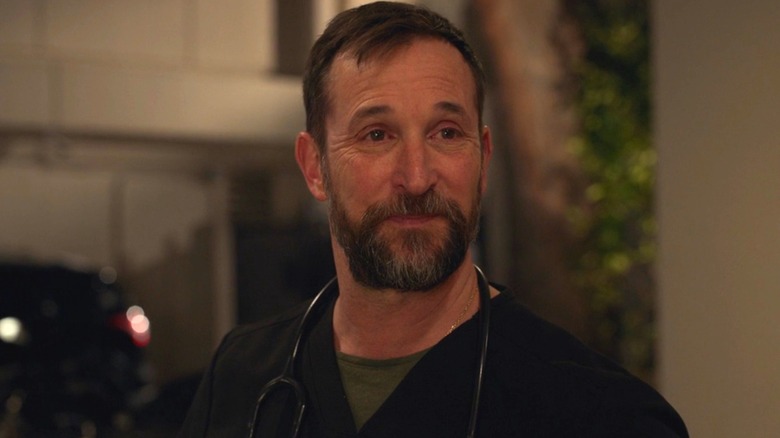
In the first season of "The Pitt," some of that misery was offset by the sheer competency of the titular emergency department's medical staff. Despite the horrific tragedy of the Pittfest shooting that took place in Season 1, the bright-eyed new students, capable residents, and steadfast nurses of "The Pitt" united under the leadership of Senior Emergency Attending Physician Dr. Michael "Robby" Robinavitch (Noah Wyle) to save as many lives as possible. Under his guidance (and calming, handsome visage), it seemed like anything was possibly. (Seriously, Dr. Robby was so comforting that it gave him something in common with Joshua Jackson's dashing Dr. Maxwell "Max" Bankman on the silly medical soap "Doctor Odyssey.")
Cut to Season 2, set 10 months later, and both those fresh-faced newbies and their seasoned peers are starting to feel the weight of working around so much death. Even Dr. Robby is completely burnt out and struggling with suicidal ideation, making him lash out at the younger doctors-in-training. The simple satisfactions of seeing the Pitt team save the day have become more complicated. It makes for richer storytelling, but that same realism was disappointing for fans who were looking for more of the same from Season 1.
The Pitt Season 2 depicts the realities of working in life-or-death situations
While it's understandable to want our fictional heroes to always be fully heroic, the reality of the situation is that burnout rates in emergency medical physicians are much higher than many other professions. Case in point: An investigation by the American Medical Association published in 2012 found that emergency medical professionals had a much higher rate of burnout than even other kinds of doctors, including higher rates of suicidal ideation and depersonalization ... and things have only gotten worse since then. This is a big part of why real-world medical professionals have proclaimed "The Pitt" the most medically accurate show on TV, as that accuracy extends to showing the toll this work has on the people who do it.
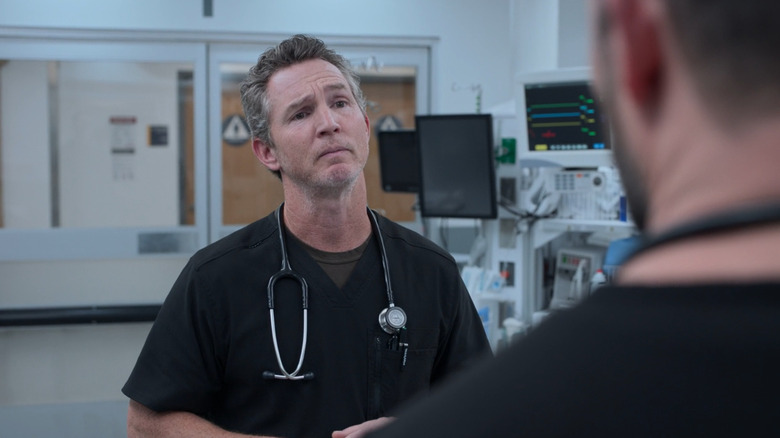
In the Season 2 finale, for example, Dr. Jack Abbot (Shawn Hatosy) finally confronts the clearly-troubled Dr. Robby, who has been lashing out and saying cryptic things all day, right before he's about to leave for a three-month sabbatical. Dr. Abbot gives an incredible speech about why he's never considered suicide himself, telling Robby:
"Because it comes for all of us, man. You and I know it more than most. We see it every shift, but we can't let ourselves succumb to it. Yes, life can suck. It can be unbearable and — and brutal, and ugly and heartbreaking. But it's also beautiful — and hilarious."
He notes that without Robby, a mother and her baby wouldn't have survived just moments before, but Robby isn't satisfied. "Nothing I've ever done will matter more than what I've done in this hospital, but it is killing me," he replies. Therein lies the core theme of "The Pitt" Season 2: How does one endure when constantly surrounded by grief and death?
Real camaraderie is what keeps The Pitt's emergency team afloat
There are a handful of characters on "The Pitt" whose arcs over the course of Season 2 seemed to frustrate fans on social media, from hated newbie Ogilvie (Lucas Iverson) and beloved senior resident Dr. Samira Mohan (Supriya Ganesh) both realizing that emergency medicine may not be for them to Dr. Al-Hashimi (Sepideh Moafi) secretly having seizures that make her role in emergency medicine potentially dangerous to patients. Nothing on "The Pitt" is easy because life isn't easy, and the show has illustrated its dedication to the reality of it all — the brutal, the terrible, and the heartbreaking, but also the beautiful and hilarious.
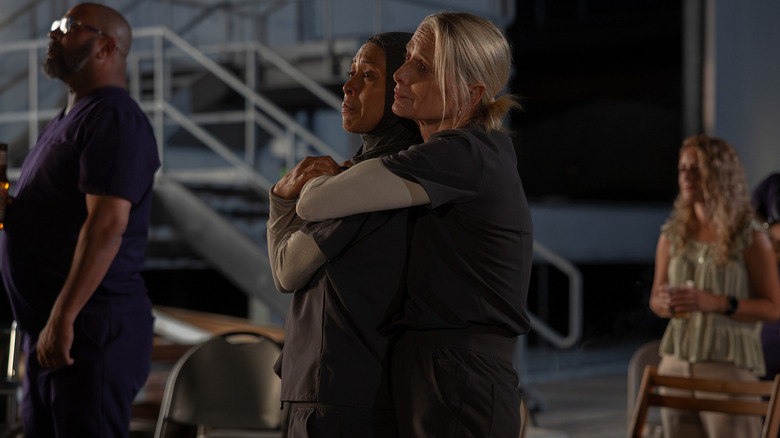
In the back half of the Season 2 finale, we get to see how different characters process their rough days, be it Dr. Whitaker (Gerran Howell) jamming out to funk with a woman and baby he adores or the hospital's daytime staff gathering on the roof to watch the Fourth of July fireworks, comforting one another with various gestures of affection. Heck, we even get to see the normally shy Dr. Mel King (Taylor Dearden) sing Alanis Morissette's "You Oughta Know" with the fiery Dr. Trinity Santos (Isa Briones) at karaoke in the finale's post-credits sequence, letting viewers go out on a lighter note. The characters have joked with one another throughout the season, and that levity helps them go on just as much as it prevents viewers from getting too bummed out.
Like the beloved 4077th of "M*A*S*H," the doctors and nurses of "The Pitt" lean on one another to survive their daily traumas, and while it's sometimes complicated and messy, it feels that much more genuine. "The Pitt" just keeps getting better, even if it's not always what audiences want it to be.