

The Boys Season 5 Review: The Best Superhero Show On TV Goes Out On Top
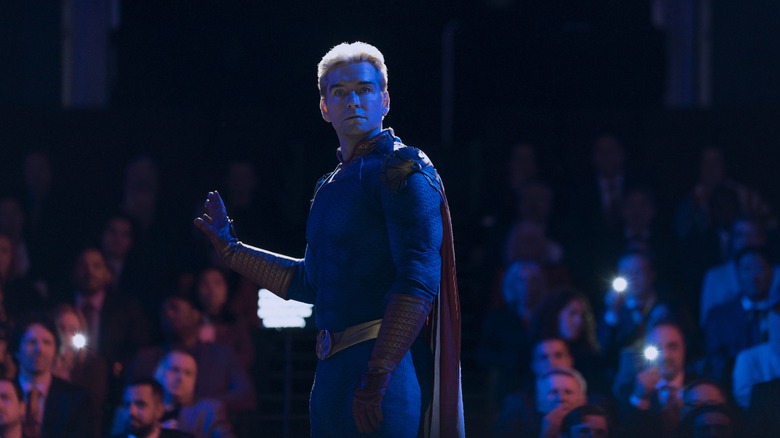
Like any worthy superhero, "The Boys" has always been there when we needed it most ... and, occasionally, even when we didn't. Debuting in the summer of 2019, season 1 of the Prime Video series arrived just in the nick of time. We couldn't have asked for a more ideal antidote to the Marvel Cinematic Universe in all of its safe, buttoned-up, yet undeniably crowd-pleasing charms. Not even multiple iterations of the DC franchise could offer up much of a rebuttal. But leave it to this underdog streaming show to punch far beyond its weight class and do what its big-screen brethren simply could not. Underneath the toilet humor and crass memes and indulgent gore, this was the one superhero property that dared to be honest about the corruptive power fantasy at its core.
Not that it's consistently been smooth sailing. The overly-bleak and cynical season 4 felt like the nadir of the series and, worse yet, suggested that it was all out of fresh ideas. But that's precisely why so much has been riding on the fifth and final season of "The Boys." At a time when postmodern deconstruction and subversive takes on popular IP extend as far as the eye can see, what could creator Eric Kripke hope to add to the conversation anymore?
As it turns out, plenty. Not only does "The Boys" find a proper exit for this funhouse mirror riff on sociopathic "Supes" in capes and tights, but it also acts as the last and definitive word on superhero media as a whole. After eight episodes (the first seven of which were provided for critics to review) spent tying together loose ends, bringing things full circle with season 1, and somehow paying off dozens of individual arcs simultaneously, the prospect of turning around and going back to never-ending, wheel-spinning shared universes later this year has never felt like more of a threat.
It's one thing to have the grace to end on its own terms, but to go out with a season as frequently hilarious, politically potent, and emotionally sincere as this one? Maybe we just needed a reminder that superhero storytelling can be both entertaining and meaningful at the same time. Season 5 is "The Boys" at its satirical best, mercilessly upending superhero conventions without losing sight of the deeply flawed and human characters at its core.
Every member of the ensemble gets their time to shine in The Boys season 5
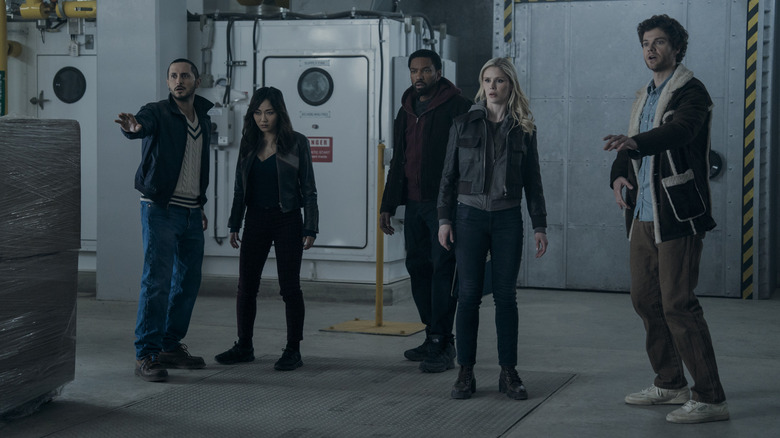
It should come as no surprise that a show as self-referential as this one comes right out and pokes fun at how difficult finales are — just one of many meta gags prevalent throughout the season, some of which left me gasping for air — but "The Boys" seems to embrace the pressure. The proof is on display and at the forefront of several episodes early on. The plot begins roughly a year after the events of the season 4, when the villainous Homelander (Antony Starr) essentially takes control of the United States and ushers in a fascist reign of terror. With the bad guys fully entrenched in every seat of power, rebels like Starlight (Erin Moriarty), the loose-cannon Butcher (Karl Urban), the imprisoned Hughie Campbell (Jack Quaid), and the rest of the Boys are forced underground to strike back however they can. The more heinous the acts they expose, however, the less it seems to make a difference to an uncaring public.
Sound familiar? If this basic setup feels reminiscent of the ongoing season of "Daredevil: Born Again," rest assured that "The Boys" improves upon it in almost every conceivable way. From bold narrative choices to risky format experiments to a bloodbath of character deaths, "The Boys" holds absolutely nothing back in its last go-around. As easy as it would've been to suffocate the story underneath an avalanche of snark, however, the creative team finds their way back to what made this so successful to begin with: the characters. While the main storyline occasionally relies too much on contrivances, it soars every time its driven by an intricate web of interpersonal drama and conflicting motivations. Every reckless act or subtext-laden conversation triggers a dozen more unforeseen side effects. Actions have actual consequences in the world of "The Boys," a refreshing change of pace compared to other franchises content to have their robotic heroes behave like action figures.
Every episode manages to highlight the strength of the ensemble, not just the charismatic Urban as Butcher or the brilliantly dead-eyed Starr as Homelander. While they've never been better in their respective roles, Eric Kripke and his writers find ample opportunities for the overall cast. Quaid once again defeats the nepo baby allegations, providing the show's moral center as its most earnest hero. Newcomer Daveed Diggs is the biggest and most welcome wild card as Oh Father, a new Supe who takes on an unexpectedly large role and plays to the rafters. But this season is Karen Fukuhara's time to shine, a coming-out party of sorts now that the once-mute Kimiko is able to speak and actually showcase the actor's full range of talent.
Fittingly enough, The Boys season 5 is all about reckoning with the gift and curse of immortality
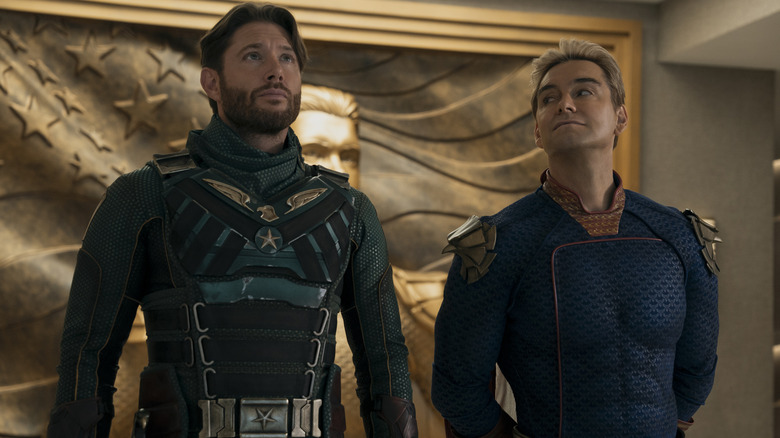
Would you believe me if I said "The Boys" represented the most hopeful superhero show in ages? There's something to be said for actually committing to the darkness of its premise and, in turn, allowing the well-earned moments of light to hit that much harder. The years-long antagonism between Hughie and Butcher serves this purpose perfectly, a tug-of-war between nihilism and idealism that builds to a truly inspired culmination here. Elsewhere, the political overtones of the series are inescapable. (Those viewers who somehow watch this and identify with the Homelanders of our reality are once again taken out behind the woodshed and mocked ruthlessly.) Where too many others hide behind the limits of the genre, "The Boys" takes direct aim at right-wing and religious extremism, dials it up to 11, and drags it to its logical endpoint in a world full of literal Übermensch beings.
But where "The Boys" most lives up to its already-high standards is thematically. Much of the action revolves around Homelander acquiring a plot device that would basically turn him immortal. For someone inflicted with the granddaddy of all god complexes (which somehow reaches even greater heights here), the existential threat he poses forces our eponymous Boys to increasingly drastic measures. But rather than leave this as a surface-level concern, the writers dig deeper and find the real stakes by confronting the idea of things coming to an end. The final stretch of episodes all but turn into a treatise of why "The Boys" needs to die ... even as, somewhat contradictorily, certain events open up a backdoor pilot for continued adventures. It's to Eric Kripke's credit that this only feels like a minor blemish, an awkward bit of throat-clearing in a season that otherwise keeps its eyes squarely on the prize.
Ultimately, it's both a relief and a pleasant surprise that "The Boys" goes out exactly how it arrived: as the best, most incisive, and radical superhero show on TV. Despite remaining relatively small-scale, the handheld action is as engaging and chaotic as fans have grown accustomed to. On a technical level, the blend of visual and gruesome practical effects is unrivaled on the small screen. But, more than anything else, the sharp-edged and adult-minded parody has it where it counts most. For the first time in years, "The Boys" brings some much-needed heart and soul to this grim conclusion — a quality that, dare I say it, reminds us why we love superheroes so much in the first place.
/Film Rating: 8 out of 10
The first two episodes of "The Boys" season 5 premieres April 8, 2026 on Prime Video.