

10 Most Powerful Weapons In The Star Trek Universe, Ranked
Six decades since its premiere, "Star Trek" still reigns as the greatest sci-fi franchise of all time, with imagination as the only limit to its storytelling scope. In addition to introducing plenty of memorable alien races, the franchise also features otherworldly weapons capable of apocalyptic levels of sheer carnage if ever unleashed. Ever since the Enterprise began to boldly go where no one had gone before, it encountered weapons that could completely reshape the balance of power in the galaxy. These armaments often require the franchise's fearless characters to step up and stop them from causing further harm, with civilization hanging in the balance.
Whether it's the growing number of television series or the franchise's fan-favorite films, "Star Trek" frequently raises the stakes with its weapons in the wrong hands. Many of these devices can completely tear apart reality as the characters know it, making stories' potential consequences that much more dire. Simply put, when weapons of this scale surface in the franchise, it's all hands on deck to prevent them from fulfilling their brutal purpose.
These are the 10 most powerful weapons in the "Star Trek" universe.
10. Xindi superweapon (Enterprise)
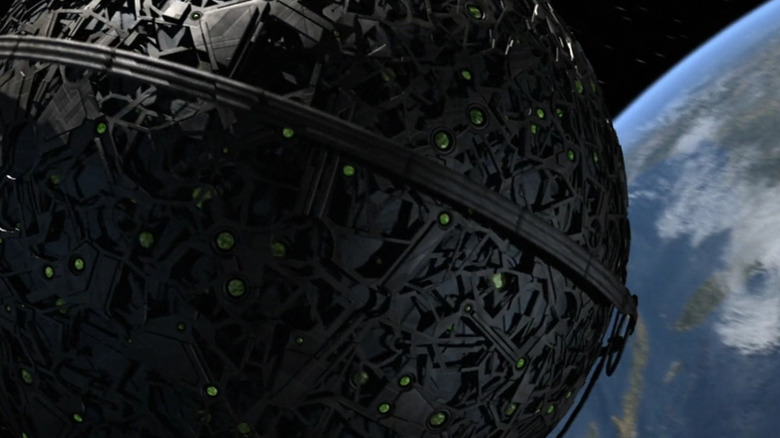
The centerpiece storyline for the prequel series "Star Trek: Enterprise" featured humanity going to war with a coalition of hostile races collectively known as the Xindi. This conflict is orchestrated by the Sphere-Builders, a futuristic race looking to alter history and make the galaxy vulnerable for conquest. To give the Xindi an edge, the Sphere-Builders assist them in creating a series of superweapons designed to devastate entire planets. Initial versions of the superweapon put humanity on the defensive and severely damage the Earth, with a planned final version intended to destroy the planet and scatter surviving humans.
As far as humanity and the precursor to the Federation is concerned, the Xindi introduce the first planet-killing weapon. The Sphere-Builder's interference makes the superweapon long before it would've been possible to create, putting Starfleet at a disadvantage. It was only through a special strike force led by Captain Jonathan Archer (Scott Bakula) that Earth was spared, seemingly ending the superweapon with the Xindi's threat. Even a prototype of the Xindi's weapon changed humanity's fate forever, hinting at how powerful it would've been at full potential.
9. Genesis Device (Star Trek II: The Wrath of Khan)
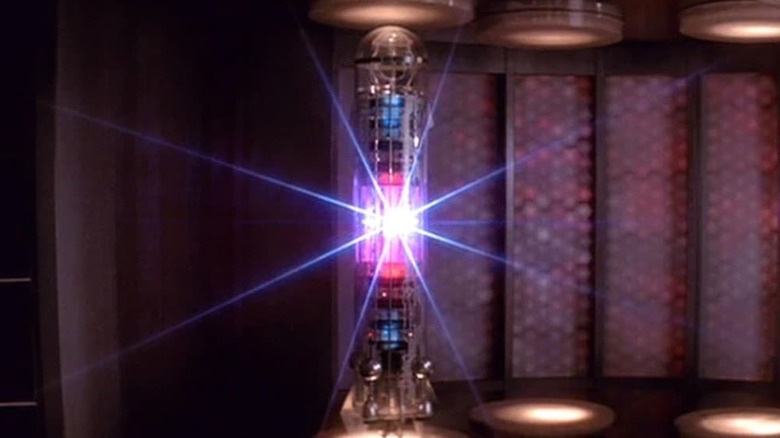
While not the most powerful, as its relative placement on this list suggests, the "Genesis Device" is one of the most iconic "Star Trek" weapons. Introduced in "Star Trek II: The Wrath of Khan," Genesis is an experimental device used to completely terraform a planet to make it rapidly capable of supporting abundant life. An unintended consequence of this is that any planet or region where Genesis is deployed is violently reshaped, wiping the slate clean for the incredibly fast terraforming process. A nebula in the 1982 movie explodes when Genesis is detonated inside of it, and a planet lush with evolving life forms in its place.
Though developed with the intention of proliferating life and creation, the Genesis Device became an instrument capable of untold destruction. "Star Trek III: The Search for Spock" reveals that David Marcus (Merritt Butrick) used protomatter in Genesis' development, with protomatter denounced by Starfleet as being too dangerously unstable for use. These warnings prove true, with the planet formed by Genesis quickly becoming explosively volatile within a matter of weeks, if not days. A somber reminder of the dangers of unchecked scientific advancement, the Genesis Device casts a shadow over the second and third "Star Trek" movies.
8. Trilithium missiles (Star Trek Generations)
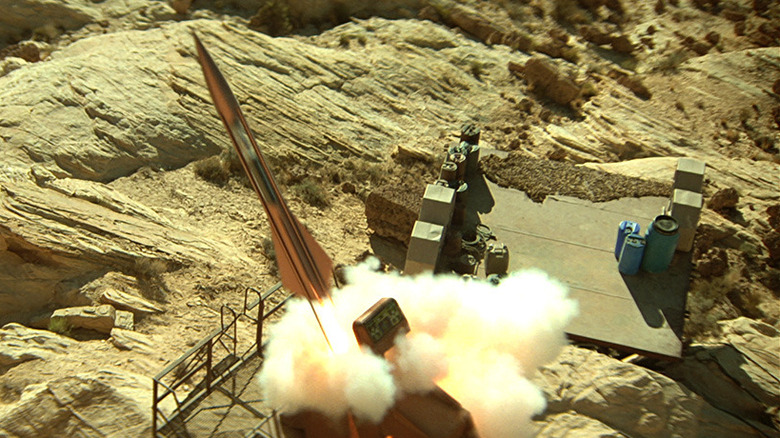
Soran (Malcolm McDowell) has a superweapon in the form of a missile with trilithium as its explosive payload. Through a quantum explosion triggered by the missile, trilithium is capable of causing whole stars to collapse, destroying any planets in their orbit. Before his defeat and death, Soran upgraded the trilithium missile further, adding a cloaking device to it to prevent the Enterprise from intercepting it. Trilithium later resurfaces in weapons in "Star Trek: Voyager" and "Star Trek: Deep Space Nine," playing a major role in the Dominion War in the latter.
Tolian Soran might dubiously rank among the worst "Star Trek" villains ever, but his use of trilithium into a devastating weapon made him a serious threat. Even when the weapons aren't targeting stars, "DS9" reveals that trilithium leaves a harmful fallout that renders planets uninhabitable for approximately 50 years. This makes Starfleet use of trilithium a controversial combat tactic, but one that it ultimately resorts to in dire situations. A weapon so potent that James T. Kirk (William Shatner) was willing to sacrifice his life to stop it, trilithium missiles hold a place of notoriety in the franchise.
7. Species 8472's bioweapons (Voyager)
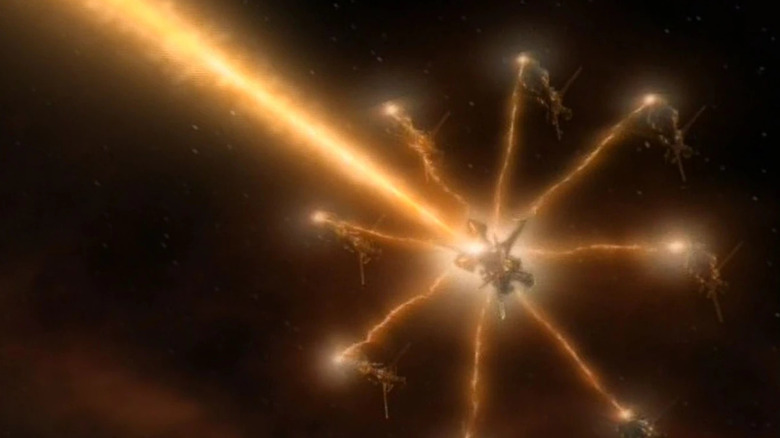
A much more practical and explosive bioweapon are the armaments used by Species 8472 in "Star Trek: Voyager." After being transported to the Delta Quadrant, Captain Kathryn Janeway (Kate Mulgrew) and her crew encounter the formidable Species 8472. Rather than navigating the cosmos in conventionally constructed spacecraft, this unusual race uses bio-organic vessels, which they board to travel through fluidic space. This doesn't make Species 8472 any weaker than other "Star Trek" races, however, especially when their ship's weapons are working in tandem with each other.
Species 8472's spacecraft can fire energy beams capable of destroying a Borg Cube with a single shot, with one vessel seen laying waste to over a dozen Borg ships. To put that into perspective, the combined might of Starfleet couldn't muster enough firepower to stop one Borg Cube in "Star Trek: The Next Generation." In the "Voyager" episode "Scorpion," a group of Species 8472 vessels interface their weapons, destroying a Borg planet after a single coordinated blast. Capable of regenerating rapidly and immune from assimilation, Species 8472's unusual weapons are among the strongest in the franchise.
6. Abronath (Star Trek Beyond)
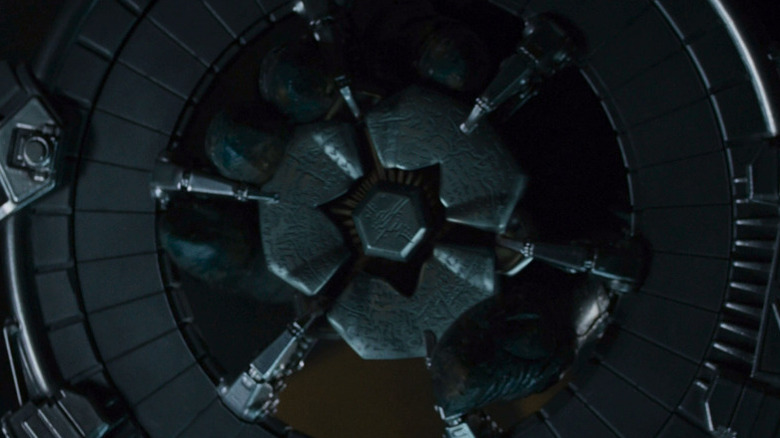
While the "Star Trek" Kelvin Timeline may have failed, ending its cinematic reboot of the franchise, it ended on a solid note with the 2016 movie "Star Trek Beyond." The movie has the monstrously transformed Krall (Idris Elba) plan to use an ancient bioweapon known as Abronath on the entire Federation. The weapon was created by the indigenous race of the distant planet of Altamid, who realized their creation's recklessly deadly potential and dismantled it. Krall reassembles it, intending to use it on a nearby Federation starbase before Kirk (Chris Pine) and his crew destroy it, but not before using it to kill Krall himself.
Abronath is far from the first bioweapon introduced in the "Star Trek" franchise but it is arguably the most dangerous of them all. The device can release a toxic substance that can cause any organic matter caught inside of it to deteriorate rapidly. The sheer rate that Abronath spreads makes it deadlier than the similar weapons, including the thalaron radiation device seen in "Star Trek: Nemesis." A weapon that could've wiped out the Federation if Krall had gotten his way, Abronath was discarded by its creators for a good reason.
5. Doomsday machine (The Original Series)
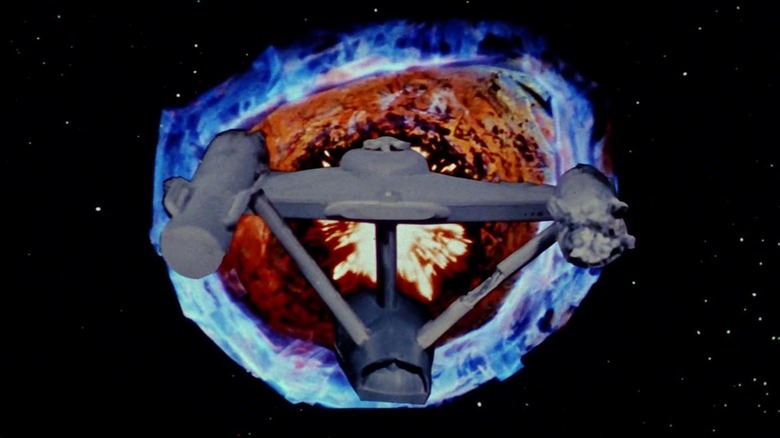
"Star Trek: The Original Series" saw the Enterprise encounter plenty of alien weapons capable of wiping out Starfleet if used dangerously. The most memorable of these "TOS" era weapons is the centerpiece of the aptly titled second season episode "The Doomsday Machine." The Enterprise discovers its sister ship the USS Constellation seemingly abandoned and barely operational, with its captain Matt Decker (William Windom) as its sole survivor. Kirk and his crew learned the Constellation fought a losing battle against an automated alien superweapon appearing like a blue conical vessel.
The doomsday machine's hull is made of solid neutronium, a substance resistant to conventional Starfleet weapons at the time, particularly phasers. As its primary means of attack, the ancient superweapon fires powerful antiproton beams out of its gaping maw which can tear planets apart. To fuel its core functions, the machine consumes the raw rubble of planets it destroys, powering its planet-killing beam. Before "Star Wars" introduced the Death Star, the "Star Trek" doomsday machine was the ultimate planet killer, destroyed only through some quick-thinking by Kirk and his crew.
4. Red matter (Star Trek)
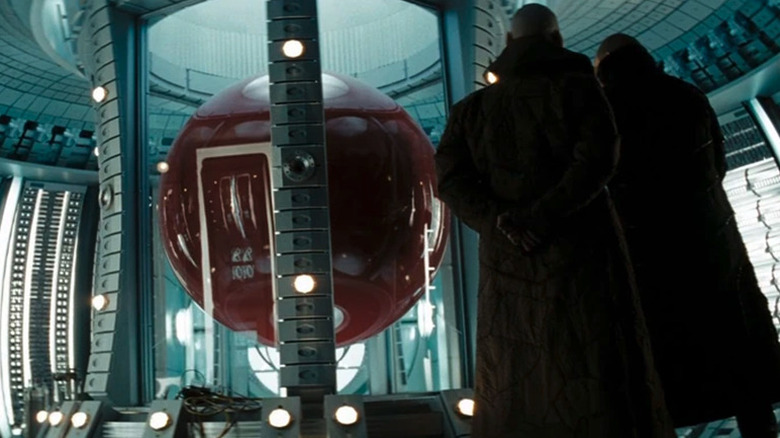
The 2009 "Star Trek" reboot reinvigorated the franchise with a perfect cast, including Leonard Nimoy reprising his role as Spock from the prime timeline. Spock inadvertently provides the plot device used for the reboot's divergent timeline with the introduction of red matter. An incredibly volatile substance, a small drop of red matter is capable of producing a singularity powerful enough to consume a star in the middle of its supernova. Spock uses red matter to stop Romulus' star from triggering a cataclysmic event affecting the entire galaxy, but he fails to use it in time to save Romulus itself.
After being sucked into the singularity with Spock, causing the timeline divergence, a vengeful Nero (Eric Bana) uses red matter to destroy this timeline's Vulcan in retaliation for losing Romulus. Later, the remaining store of red matter is used to destroy Nero's entire ship, consumed by a large singularity and ending their threat to the Federation in the Kelvin Timeline. The full potential of red matter is never quite articulated but considering a fraction of it can consume a whole supernova, its power is considerable. The most destructive thing the Federation has ever created to date, red matter can reshape the balance of power in an instant.
3. Multikinetic neutronic mine (Voyager)
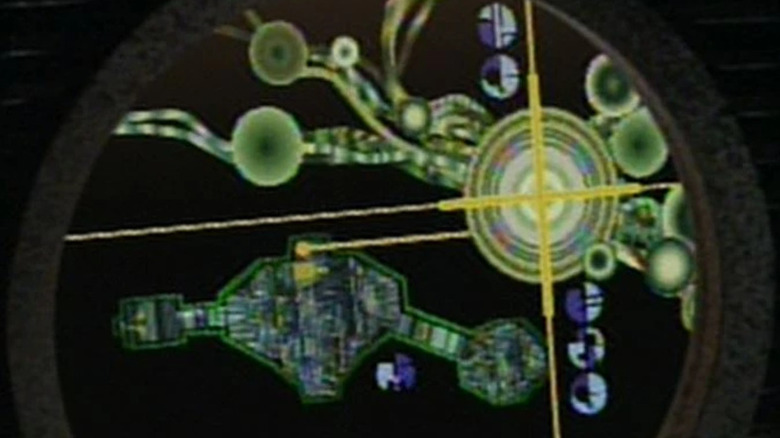
Faced against a threat like Species 8472, the Voyager is forced to temporarily team up with the Borg Collective to survive. In the episode "Scorpion," the Borg unveil their ultimate weapon, a multikinetic neutronic mine in an effort to stop Species 8472's advance into their territory. This isotonic bomb is capable of dispersing an explosive yield of nanoprobes across a five-lightyear radius, devastating multiple star systems at once. Janeway personally refused to resort to such desperate tactics, realizing innocent civilization would be caught in the expansive crossfire.
Capable of such destructive power, it's a wonder that the Borg never used the multikinetic neutronic mine in its repeated efforts to subjugate the Federation. A single one of these payloads could've brought Starfleet to its knees but, fortunately, the Borg evidently didn't deem its use necessary. Eventually, the bomb is modified to be fitted into converted photon torpedoes with a much more concentrated blast to mitigate collateral damage. A superweapon that's seemingly completely forgotten about, the multikinetic neutronic mine is the Borg's ace in the hole that's never played.
2. Annorax's weapon (Voyager)
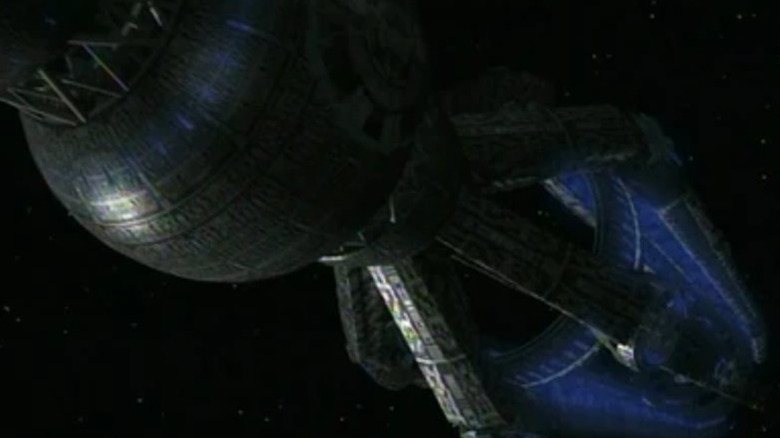
"Voyager" contained so many extinction-level weapons likely as a means to heighten already dire stakes for the crew as they made their long journey home. One of the most harrowing destructive devices that the Voyager encounters is a Krenim prototype time ship in the episode "Year of Hell." Developed by the Krenim scientist Annorax (Kurtwood Smith), the ship was intended to travel through history and erase any enemies to the Krenim Imperium from existence. These incursions and alterations to the timeline, however, triggered unintended consequences, including a plague that killed millions of Krenim.
Just the sheer implications of the Krenim time ship suggest disturbing levels of its strategic use as it was intended. Not only is the ship used to wipe out entire civilizations and alter history, but it's dangerously unstable in the temporal ripple effects that it causes. Recognizing its danger, after the timeline fluctuations cost him his wife, Annorax changes his own history by removing his creation from reality. A particularly insidious vessel with a sinister purpose, Annorax's invention provided "Star Trek: Voyager" with one of its most memorable episodes.
1. Q Continuum weapons (Voyager)

The Q Continuum are among the most powerful "Star Trek" characters, capable of bending reality to their will. That makes any weapon capable of threatening Q (John de Lancie) a truly terrifying instrument of destruction indeed. "Voyager" sees the Continuum descend into a devastating civil war over a divisive death of one of their own, putting their true purpose at odds. This internal conflict erupts in the episode "The Q and the Grey," with the Continuum taking on the appearance of American Civil War soldiers, albeit wielding more potent firearms.
While observing the unfolding civil war, the Voyager realizes the dozens of supernovae in the region are caused by the Continuum's weapons. That means errant shots contain the sheer destructive power of consuming entire portions of the galaxy without so much as a second thought. The apocalyptic development is a reminder how dangerous Q truly is, prompting the Voyager crew to end the hostilities as quickly as possible. Though his antagonistic nature varies constantly, Q is one of the best "Star Trek" villains of all time and the Continuum's arsenal highlights that they could end existence instantly.