

5 Reasons We're Worried About Stephen Colbert's Lord Of The Rings Movie
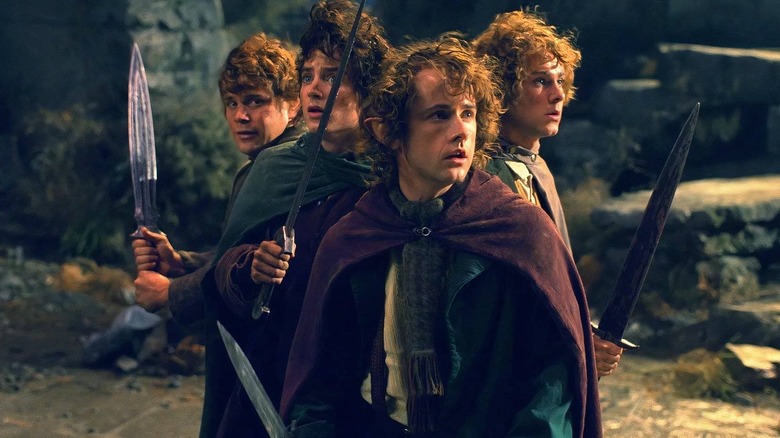
Well, that's one way to celebrate both Tolkien Reading Day and the canonical date (March 25) when the One Ring was finally destroyed over the course of "The Lord of the Rings." News broke late last night that Warner Bros. Discovery is moving ahead with a new film set in the legendary fantasy franchise – a sequel taking place after the events of the beloved original trilogy, at that. That's in stark contrast to what little we know of the studio's plans for this golden goose of a property. Prime Video's "The Rings of Power," of course, exists off in its own corner of the canon and has no tangible connections to either of Peter Jackson's trilogies. But there's also the sort-of prequel, sort-of sequel "The Hunt for Gollum" that's currently in development with star/director Andy Serkis, which itself comes after the release of the anime film "The War of the Rohirrim," set in the distant past of Middle-earth.
No, this new project marks a first for modern "The Lord of the Rings" in film ... and we have all sorts of questions about it. There's certainly reason for optimism, considering the talent involved (written by Philippa Boyens, Stephen Colbert, and Peter McGee) and the promised returns of fan-favorite Hobbits Sam Gamgee (Sean Astin), Merry (Dominic Monaghan), and Pippin (Billy Boyd). Still, the idea of another legacy sequel in an era chock-full of them is one thing. A legacy sequel hoping to add on to the legacy of a property as venerated as "The Lord of the Rings" is quite another.
Although much remains to be revealed, our instant reaction is one of concern. Is this really the best direction to take things next? Does the source material, such as it is, support an entire movie? Let's dig into it.
Are all future The Lord of the Rings movies going to be tied to original trilogy nostalgia?
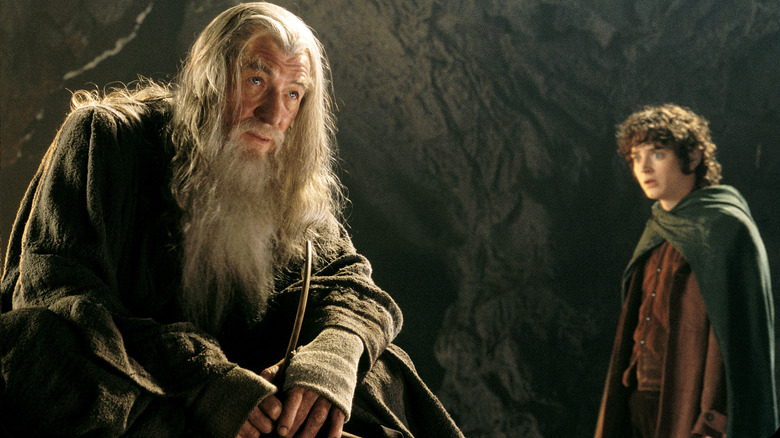
Let's start by addressing the oliphaunt in the room, shall we? Ever since it was first revealed that Warner Bros. Discovery and New Line Cinema were actively developing new "The Lord of the Rings" movies, it felt inevitable that they would try to benefit from the residual goodwill and nostalgia from director Peter Jackson's definitive adaptations. But what we've seen of these plans so far feels a bit excessive, even by those already-measured expectations.
After all, look no further than the title for this newest production — "The Lord of the Rings: Shadow of the Past." Although based on the title of a chapter from J.R.R. Tolkien's "The Fellowship of the Ring" novel, the idea of nostalgia and an inability to let go of the past is baked right into the very name. That's not necessarily a reason for concern, in and of itself, but when viewed as part of a larger pattern? That's destined to be a bit of an eyebrow-raiser. Between this and "The Hunt for Gollum," we'll now be two for two in terms of live-action films that will be completely indebted to the events of the original trilogy. And, while "The Hunt for Gollum" literally takes place during "The Fellowship of the Ring," it's safe to anticipate plenty of flashbacks in "Shadow of the Past" set during the time of the 2001 film.
Is this really the tone we want to set for our first post-trilogy "The Lord of the Rings" movies? Are all the future installments going to be dominated by nostalgia? Are we trapped in an endless recycling of the last generation's leftovers? We've seen this playbook before with "Star Wars," and that's worrisome.
How will the flashbacks/framing device work in this The Lord of the Rings: Shadow of the Past?
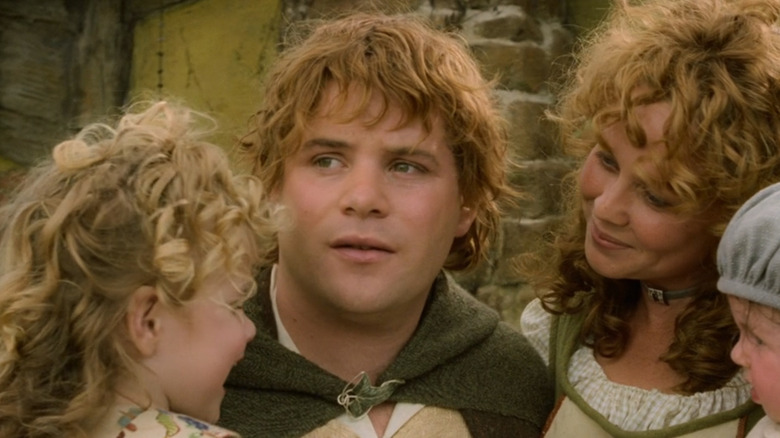
That brings us to the next question mark surrounding "Shadow of the Past." The official press release describes the new "The Lord of the Rings" film as, "Fourteen years after the passing of Frodo — Sam, Merry, and Pippin set out to retrace the first steps of their adventure. Meanwhile, Sam's daughter, Elanor, has discovered a long-buried secret and is determined to uncover why the War of the Ring was very nearly lost before it even began." That's ... a lot to take in. Combined with Stephen Colbert and Peter Jackson's video posted on social media revealing that they were inspired by chapters three through eight of "The Fellowship of the Ring" novel, this at least gives us a crucial hint of the broad structure of the movie.
In short, this will almost certainly involve the use of flashbacks and de-aging and other bits of trickery to make this all work. Although set well after the events of "The Return of the King," the entire point of the film will be about reminiscing over the Hobbits' earliest adventures during "Fellowship." As they retrace their steps with Sam's now grown-up daughter, it's easy to imagine a series of flashbacks adapting those specific chapters from J.R.R. Tolkien's original story — namely, their misadventures in the dangerous Old Forest in the Shire, their meeting with the mysterious Tom Bombadil, and their frightening encounter with undead Barrow-wights.
In other words, prepare for plenty of de-aging sequences or possibly even recasting altogether. Either option would invite a hefty amount of scrutiny, but there would be no getting around it for a premise like this. It's fair to be skeptical of how exactly this would be pulled off.
Does this The Lord of the Rings movie line up with J.R.R. Tolkien's abandoned sequel plans?
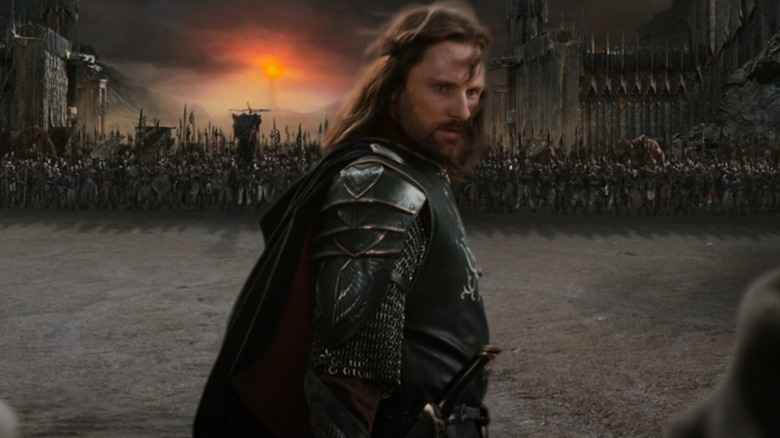
More than almost any other franchise out there, "The Lord of the Rings" adaptations will always have to answer to a rabid fanbase, obsessively concerned with staying faithful to the spirit and tone of the source material. But what happens when you run out of source material? "The Rings of Power" series is currently allowed to explore loose concepts taken from all three novels and, mainly, the appendices. Both "The Lord of the Rings" and "The Hobbit" trilogies focused primarily on adapting their namesakes. As with "The Hunt for Gollum," "Shadow of the Past" will be splitting the difference, attempting to bring to life select passages from the books while inventing all sorts of new material.
Inevitably, fans will have to ask themselves whether this is the direction J.R.R. Tolkien himself would've taken things ... and, well, the answer is pretty clear. Although he ultimately abandoned his nascent idea for a "The Lord of the Rings" sequel, titled "The New Shadow," the author initially envisioned a story where things in Middle-earth didn't improve as much as we would've thought following the Dark Lord Sauron's demise. A new (but familiar) evil takes root in the decades since, threatening to plunge the next generation into something darker and more sinister.
In that light, "Shadow of the Past" certainly doesn't seem to line up with that at all. Based on the synopsis, this takes place in a world that isn't under such dire or immediate threat. In fact, other than a tease of some "secret," the stakes seem unusually small-scale. It's not necessarily a negative to avoid stepping on Tolkien's unfinished sequel ... but basically inventing a new story from scratch? Good luck!
Does Stephen Colbert know that The Lord of the Rings fandom and screenwriting are two different things?
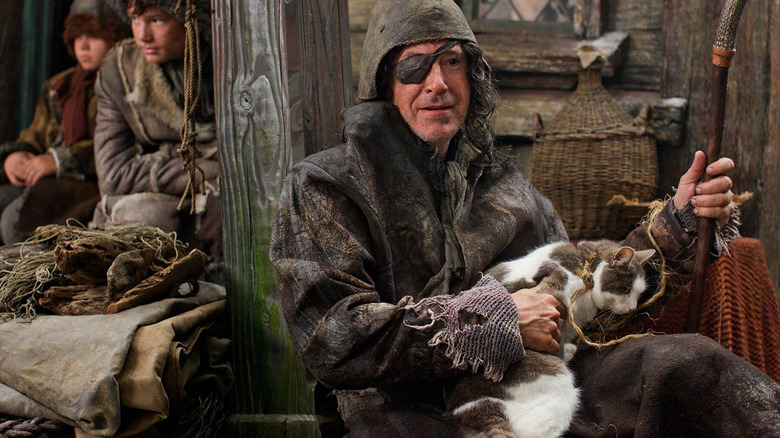
Look, we're fans of Stephen Colbert and few could ever argue with his "The Lord of the Rings" bona fides. The man clearly has a deep and abiding passion for J.R.R. Tolkien and his works, even setting aside his fun cameo in "The Hobbit: The Desolation of Smaug" and his increased presence in other nerdy franchises, most recently as the voice of the digital Dean of Students in "Star Trek: Starfleet Academy." He lives and breathes this stuff, so it's not exactly a surprise to find out that he was the one to figure out the pitch for "Shadow of the Past" and had the clout to bring this to both Peter Jackson and the Warner Bros. higher-ups.
With all that said, however, does any of this make Colbert qualified to be a credited screenwriter on a blockbuster-sized venture like this? His presence is clearly meant to add a certain amount of "fan cred" to the movie, while franchise veteran Philippa Boyens will bring an established familiarity with the property. (Peter McGee, meanwhile, is perhaps best known for what seems to be uncredited work on "Outer Banks," "The Righteous Gemstones," "Blue Bloods," and, uh, "Star Wars: The Rise of Skywalker.") But, as we wait for word on who might actually direct this project, is that enough to ease any fan concerns about having the right people for the job in charge of writing the script?
Speaking only for ourselves, being a die-hard fan of a franchise doesn't automatically qualify someone as a screenwriter. Colbert obviously has decades of experience in the trenches of writing late-night comedy and political talk shows, but a feature film? The jury is still out on this one.
Is Warner Bros. making more The Lord of the Rings movies for the right reasons?
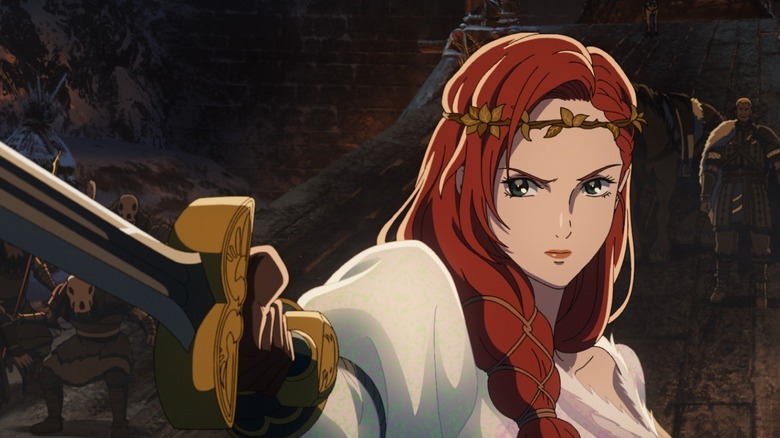
Show of hands: Who out there actually remembers that "The Lord of the Rings: The War of the Rohirrim" even exists? The visually dazzling, yet remarkably inessential prequel film largely came and went without much of a fuss in December of 2024, though it may be shocking to hear that was by design. It's been widely reported that the box office flop was largely greenlit to satisfy the needs of copyright law. Fast-tracking the anime experiment guaranteed New Line Cinema would retain its rights to the property for the time being, as the contract stipulates new films to be in development over a certain amount of time. That's not exactly a boon for creative imagination, is it?
Perhaps we're seeing history repeat once more. There's no official indication that "Shadow of the Past" has been in development for similar reasons, mind you, but can anyone blame skeptical fans for raising the issue? Obviously, both this and "The Hunt for Gollum" sound like relatively more exciting cinematic events than "The War of the Rohirrim" ever was. But is that enough to meet the standards of a new "The Lord of the Rings" film, either? "The Hobbit" has always been a beloved novel and a big-screen adaptation always made logical (and financial) sense. Ditto for "The Rings of Power," which is probably the next best thing to seeing "The Silmarillion" brought to life.
Would anyone say the same for a Gollum spin-off or a sequel story following our older Hobbits taking a trip down memory lane? Even in a sea of franchise IP, the brand name of "The Lord of the Rings" stands tall among the rest. Let's hope this doesn't dilute it any further.