

The Bride! Is The Perfect Companion Piece To Greta Gerwig's Barbie (Seriously)
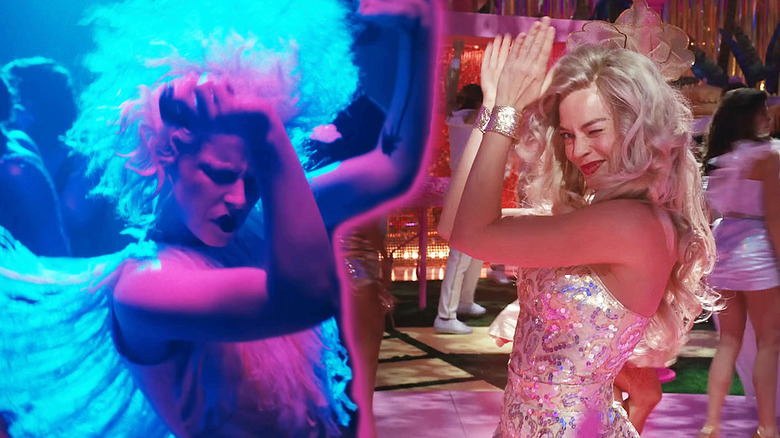
STOP! This is a brain attack! This article contains spoilers for "The Bride!" and "Barbie."
Maggie Gyllenhaal's "The Bride!" is a beautiful, messy monster movie that breathes new life into the undead and completely reframes the voice of the pinnacle of the monstrous femme. Set in an anachronistic version of Chicago in the 1930s by way of the New York City punk scene of the 1980s, mad scientist Dr. Euphronious (Annette Bening) revives a murdered moll (Jessie Buckley) to become a companion for Frankenstein's Monster (Christian Bale), who has been shuffling across the globe in abject misery, overwhelmed with loneliness.
While "The Bride of Frankenstein" is considered by many (myself included) to be the greatest film in the Universal Monsters canon, it took Gyllenhaal's film under the Warner Bros. banner to actually address the ethical conundrum inherent with this story. Giving Frankenstein "a bride" requires resurrecting a woman without her consent for the sole purpose of making another person feel fulfilled. How do you give a voice to a woman who was born to serve as a companion, a friend, a plaything, without stripping her story and autonomy away from her in the process?
Well, you do it the same way Greta Gerwig did with the uproarious, existential adventure, "Barbie."
"Barbie" is a movie about acknowledging the boxes society puts women in, and why we should never let those labels define us. "The Bride!" takes things a step further and blows the box to smithereens and shoves the debris down the throats of anyone who dared try to box us up in the first place. Barbie and The Bride are two of the most easily recognizable women in American pop culture, and equally the most misunderstood. It shouldn't surprise anyone that the films serve as companion pieces to each other.
What (or who) were they made for?
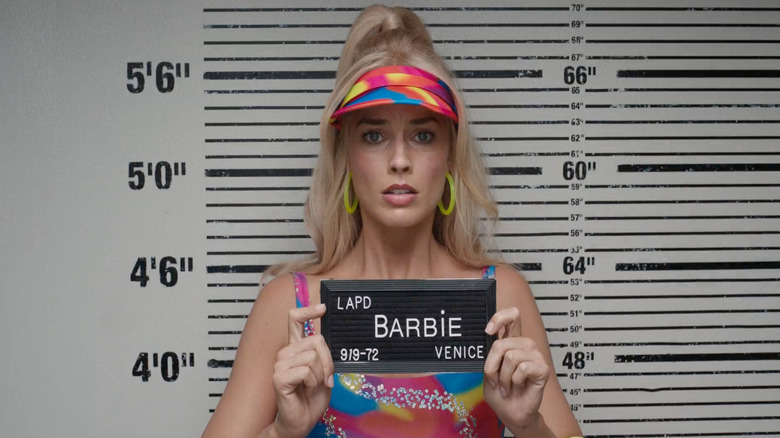
Barbie, as a character and as a cultural phenomenon, is so misunderstood that in 2023, I wrote a novella-length article breaking down her lore and dispelling the common misconceptions that have surrounded her for over 60 years. Often dismissed as a symbol of shallow beauty, Barbie modeled imagined futures like being an astronaut, doctor, or president — long before women held these roles in real life. The issue has never been Barbie herself, but a society that limits the potential of young women while demonizing a doll for refusing to reflect those limits. As M.G. Lord, author of "Forever Barbie: The Unauthorized Biography of a Real Doll," so rightfully explained, "Barbie is too complicated for either an encomium or an indictment."
The same could be said for the Bride of Frankenstein.
First introduced in the 1935 Universal Film of the same name, The Bride was a means for two men — Victor Frankenstein and Septimus Pretorius — to create life, but to also give the Creature a companion who could theoretically understand what it's like to be born of the dead. Frankenstein's monster is one of the most tragic stories in horror history, and the definitive example of a creature who was made monstrous by an unaccepting world. But his actions at the end of "The Bride of Frankenstein" undue that trajectory by deciding "we belong dead" when she screams in his face (girl, same) and kills them both as a response to that rejection.
The titular "Bride of Frankenstein" has roughly four minutes of screentime, spends it hissing and screaming at a man she does not want, and society has honored that explicit denial by merchandising her and Frankenstein's monster as a romantic pairing for nearly a century. Now, through Maggie Gyllenhaal's movie, has she been given the chance to speak ... and she has a lot to say.
Barbie and The Bride are doomed to be too much and never enough
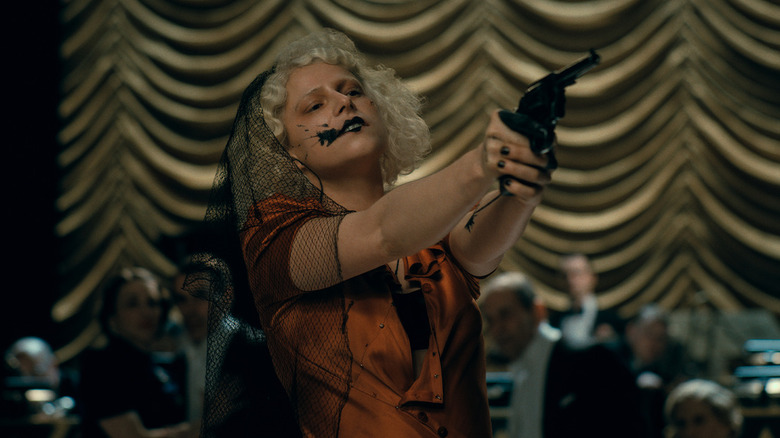
In the days since the review embargo lifted for "The Bride!," the feedback from critics and audiences alike has been nearly identical to the discourse that surrounded "Barbie" in 2023. To some viewers, the film is a maximalist mess with feminist themes that are too on the nose to be anything but cringe. To others, it's a validating masterpiece because it hammers home its point and refuses to deliver with subtlety. We can now add "The Bride!" to the long list of films plagued by one of the biggest problems in Hollywood that no one talks about — with misogyny and open partisanship permeating so much of our reality, how can we distinguish a good-faith critique from one driven by implicit bias or outright hostility toward women? And when a film is celebrated, how can we be sure that praise is genuine rather than a defensive reaction to the challenges it already faces?
Toward the end of "Barbie," the doll's creator, Ruth Handler (Rhea Perlman), instructs her to "feel," and our titular Barbie (Margot Robbie) is overwhelmed by the love and beauty of womanhood, even as the patriarchy constantly tries to tear it down. "The Bride!" imagines a woman resurrected with the righteous fury of countless women crushed by that same system (Jessie Buckley), sparking a revolution that urges others to embrace the fire within themselves.
Ruth Handler famously said "Barbie always represented the fact that a woman has choices," while Mary Shelley, the author of "Frankenstein" wrote, "I do not wish women to have power over men; but over themselves." If "Barbie" was Baby's First Radicalization, "The Bride!" is her badass older sister who buys her liquor and teaches her self-defense. Both films are loud, messy, and imperfect wake-up calls — but they exist because women refused to soften their visions, committing fully to telling these stories on their own terms.
"The Bride!" is currently playing in theaters everywhere.