

15 Best Sci-Fi Movies Of The 2020s (So Far), Ranked
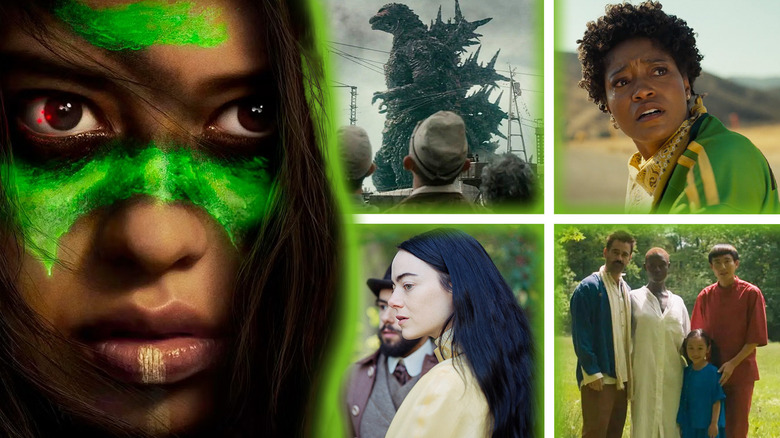
It's hard to believe we're in the 2020s, a decade that's served as the setting for so many classic science fiction stories. One of the best sci-fi movies of the 2010s — "Dawn of the Planet of the Apes" — is set in 2026, but fortunately, apes aren't that close to ruling over Earth. "Ghost in the Shell" envisioned a cyborg police force set in 2029, and "Children of Men," with its foreboding vision of a population on collapse, is set in 2027, so we'll see how that pans out.
But now, we're here in the 2020s. Some things were predicted with eerie prescience while others are still far-off fantasies. It doesn't matter much in the end, because now there's a whole new crop of science fiction films to guide us into the future.
From distant planets to other realities within the multiverse, the best sci-fi movies of the 2010s (so far) use a variety of science tropes to depict unique stories. Some are even set in the past, but above all else, they offer something we can all learn from and utilize today.
15. They Cloned Tyrone
It's understandable if you didn't hear about "They Cloned Tyrone"when it first came out. When Barbenheimer blew up, "They Cloned Tyrone" quietly made waves online, but it's never a bad time to learn about a funny sci-fi mystery that sadly continues to remain relevant.
The film sees drug dealer Fontaine (John Boyega) get shot, only to wake up completely fine. Alone with sex worker Yo-Yo (Teyonah Parris) and her pimp Slick Charles (Jamie Foxx), the three uncover a government conspiracy that involves cloning Black people and replacing them within the community. Unfortunately, the government conducting unethical projects on Black communities isn't limited solely to the realm of science fiction, as the Tuskegee experiments can attest.
"They Cloned Tyrone" uses elements from 1970s blaxploitation films to deliver on themes people still need to be aware about in the 2020s. While the subject matter can get dark, there's still a fun streak running through the film, as it's clear Boyega, Parris, and Foxx are having a blast with something that feels like both a throwback and stunningly new all the same.
14. Color Out of Space
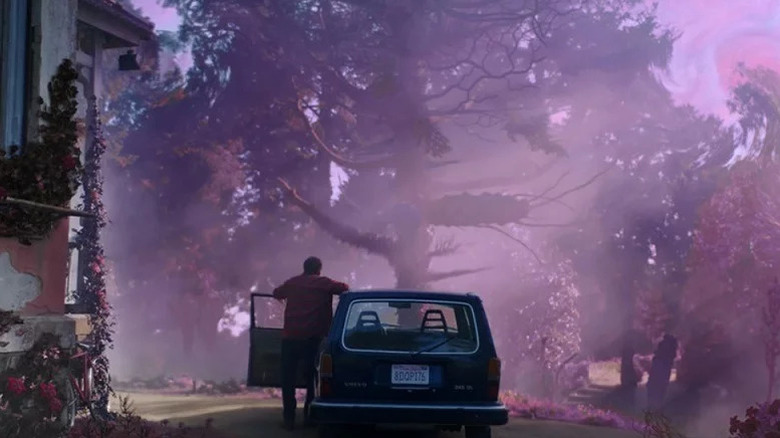
The works of H.P. Lovecraft can be tough to adapt. He made a career out of everything being "indescribable," which isn't exactly an easy translation into film where stuff needs to be perceivable. But if you need to describe something, you might as well throw everything against a wall and see what sticks, and that's what makes "Color Out of Space" so wonderful.
A strange meteor lands near the Gardner home, and then strange occurrences begin transpiring. Family patriarch Nathan (Nicolas Cage) finds strange insects, and time seems to move differently. Everything takes on a glorious yet haunting technicolor aesthetic, as everything begins getting consumed by the Color.
It's pure Lovecraftian horror with the Gardners getting assimilated by something they could never hope to understand, all while descending into insanity, which finds Nathan adopting every Cage-ism in the book. It's pure madness, yet you won't be able to look away from the gorgeous landscape, even as you know doom is approaching.
13. Crimes of the Future
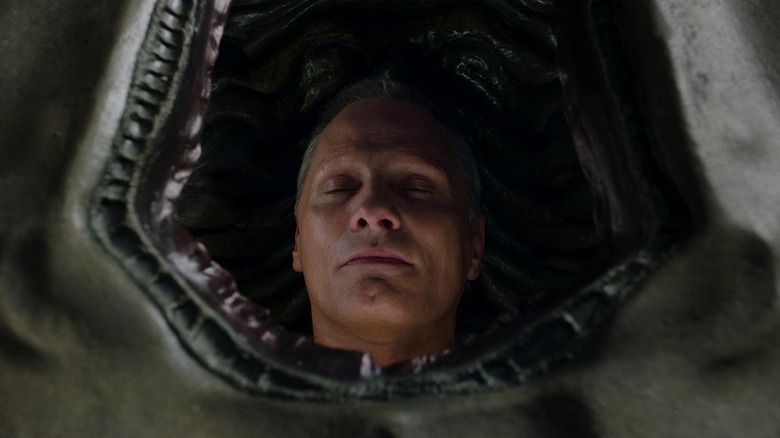
David Cronenberg is the master of body horror, and it was a delight to see him deliver another shocking yet oddly beautiful work within the subgenre with 2022's "Crimes of the Future." Taking place in a world where humans can no longer experience pain, performance artists Saul (Viggo Mortensen) and Caprice (Léa Seydoux) perform surgery as a form of high art. But Saul may just play a part in uncovering the next stage of human evolution.
"Crimes of the Future" has much to say about the state of the world, and his most fascinating commentary comes in how he examines how this affects our very bodies. Body horror has always been used to examine the fragility of humanity, and as the world continues growing sicker, how will we adapt? Needless to say, some will look for a way to monetize everything. But it may be adapt or die in the new world.
/Film praised "Crimes of the Future" in its review, giving it a 9/10. It may not be for everyone, but for all the sickos out there, it's great to see Cronenberg back in fighting form.
12. Arco
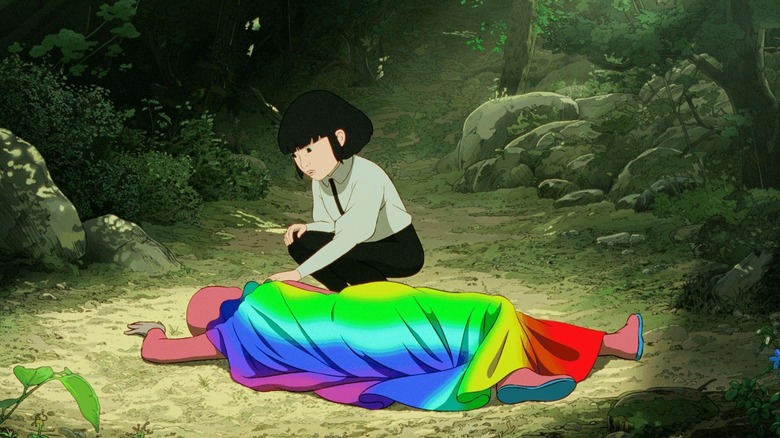
Particularly modern science fiction has a knack for depicting bleak futures. Dystopias and sci-fi tend to go hand-in-hand these days, and while it's important to be wary of the myriad dangers confronting the world, it's nice to see a film, especially one aimed at children, that presents hope for the future.
"Arco," one of the best animated movies of 2025, begins in the year 2932 when a young boy, the titular Arco (Juliano Krue Valdi) takes a family rainbow cape to travel back in time, but he can't quite control it. He winds up in 2075 as ecological disasters are the norm and befriends Iris (Romy Fay), who doesn't feel at home in her time with parents that barely have any time for her.
It's easy to get depressed at the 2075 storyline and how bleak everything looks, but with the brief glimpses we get of 2932, we can see that humanity has persevered. Through it all, humans can find a way forward, and that path will be forged by making friendships and understanding one another, even when we're separated through time and space.
11. Spider-Man: Across the Spider-Verse
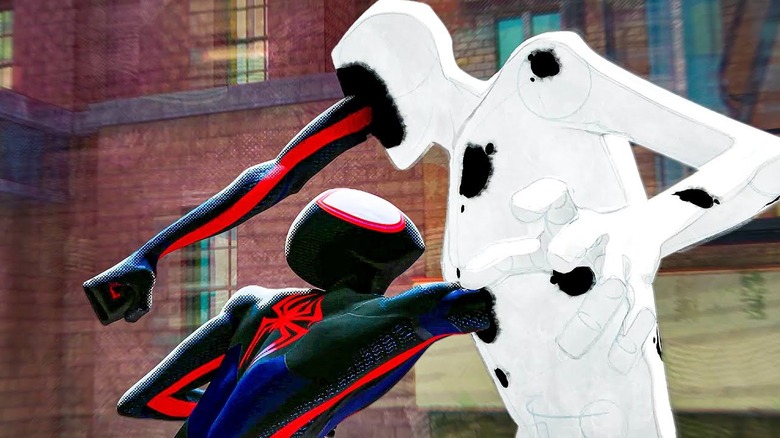
The Marvel Cinematic Universe has an entire Multiverse Saga, yet "Spider-Man: Across the Spider-Verse" succeeds where so many of those films have failed. The sequel picks up with Miles Morales (Shameik Moore) battling a new multiversal threat, Spot (Jason Schwartzman). But that's only part of his problems, as he also earns the ire of an entire legion of Spider-People determined to protect all of reality, and that means ensuring certain canon events come to fruition. That includes making sure Miles' father dies, because to be Spider-Man means to lose someone you care about.
"Across the Spider-Verse" doesn't just use the multiverse as an excuse to reference past Spider-Man media (but rest assured there's plenty of that). It uses the conceit to question the very art of storytelling.
As the audience, we know what "needs to happen" in every "Spider-Man" movie. But what if those things didn't need to happen? "Across the Spider-Verse" has gorgeous animation and hilarious quips, but it also changes what we can (and should) expect out of superhero movies. Why settle for the same old same old when we could get something truly revolutionary?
10. Prey
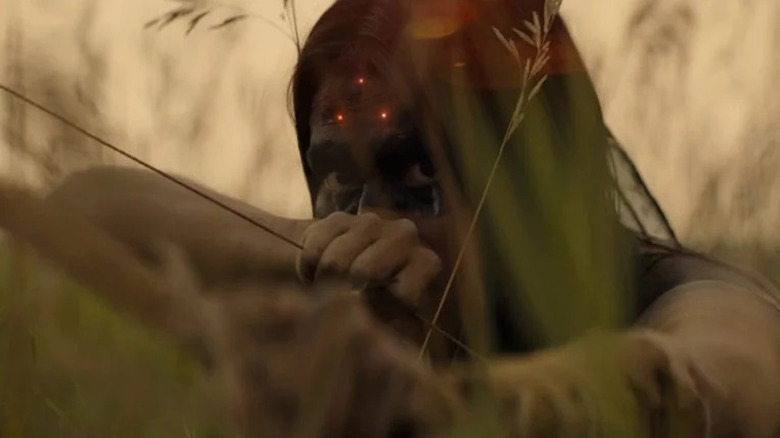
For a franchise as long-running as "Predator," you begin to feel like everything's been done. Then a revisionist western crossed with a monster movie comes in the form of "Prey," reminding you of how fresh it can feel even with a back-to-the-basics approach.
The "Predator" movies have always worked best as an anthology series, picking up with new characters fighting Yautja. With "Prey," we go back to 1719 and watch a Comanche woman, Naru (Amber Midthunder), take on a Predator, using her wits instead of strength to emerge victorious.
The cinematography is outstanding, and there are some great action scenes that aren't just bloated CGI fests that tend to plague modern action flicks. But what brings the whole thing together is the laser-focus on Naru's personal journey, who trained to be a healer but desires to be a hunter despite the status of women in her tribe. Naru is right up there with Dutch (Arnold Schwarzenegger) from the original "Predator" in terms of all-time great action heroes.
9. Dune
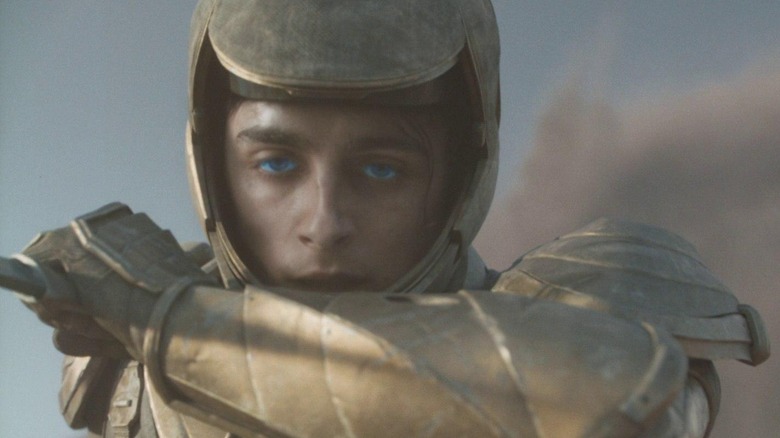
David Lynch's "Dune" is better than its reputation suggests, but for many, it remained a prime example of how Frank Herbert's novel was unfilmable. The universe was too expansive and odd for someone to adequately bring to the big screen in a satisfactory manner. Then Denis Villeneuve came along and realized the key was to break the book up into two movies. And astonishingly, it worked.
The space epic sees Paul Atreides (Timothée Chalamet), a young man with amazing abilities who's destined to change the fabric of the universe, assume his place on the spice world, Dune. However, political machinations threaten his family's very existence.
It's truly a masterwork of film adaptations. Villeneuve takes what works well in the book while tossing aside some of the more esoteric elements. It may only be half of the story, but the world-building is second-to-none. Thanks to the great work done in "Dune," the stage was set for something even more cinematic. But we'll get to that in a moment.
8. Everything Everywhere All at Once
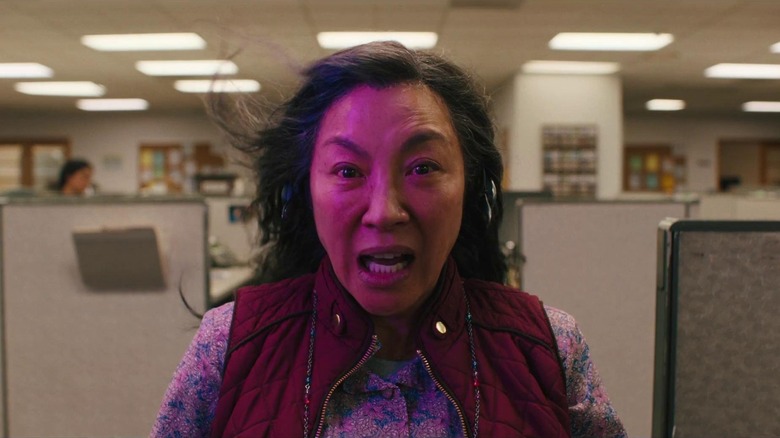
How does a movie about the multiverse, where characters turn into rocks, have hot dog fingers, and confront intergenerational trauma, become an Oscar darling? We don't know what exactly was in the water in 2022, but we're glad the mind-melding masterpiece "Everything Everywhere All at Once" managed to break out of its niche and attain widespread acclaim from the Academy of Motion Picture Arts and Sciences over some biopic about a historical figure.
While filing her taxes, Evelyn Wang (Michelle Yeoh) gets wrapped up in a reality-bending adventure where she has to save the multiverse from a powerful entity — a variant of her daughter, Joy (Stephanie Hsu). Along the way, there are expertly choreographed fights utilizing martial arts and surreal imagery that could've easily turned off casual audiences.
Maybe the world was just so broken in the aftermath of COVID-19, we needed something completely out of left field to break us out of our psychosis. "Everything Everywhere All at Once" shows that Hollywood hasn't run out of original ideas; we just need to let them find their audience.
7. Poor Things
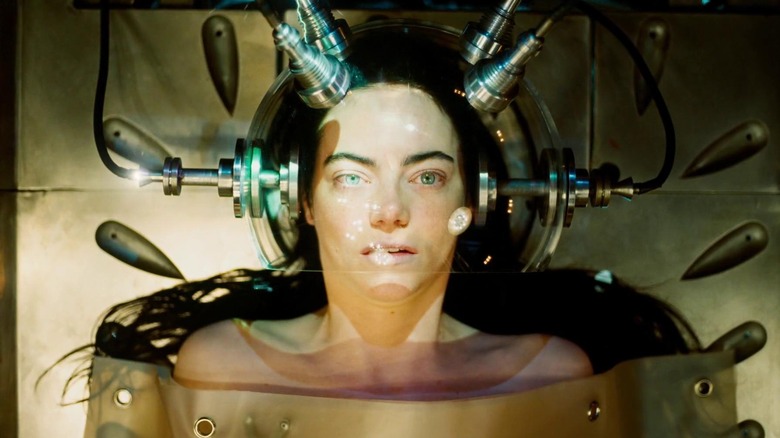
"Poor Things" is one of the more eclectic "Frankenstein" adaptations we've gotten in the 21st century. A young woman, Bella Baxter (Emma Stone), is brought back to life with the mind of a child. She escapes her creator's confines and explores the world, learning about all of life's great tragedies, like witnessing the poor toiling away in servitude, but also its great pleasures.
For Stone, "Poor Things" is all about female freedom. It's about a woman seeing the world for the first time in a grown body; therefore, she can form a unique perspective that isn't inherently guided by the patriarchy that's tried to control her throughout this new lease on life.
It's bolstered by a truly fearless performance from Stone. It's the kind of performance that's only possible when an actor and director are perfectly in sync, and Stone and filmmaker Yorgos Lanthimos have proven they understand each other's wild sensibilities perfectly in other films like "Kinds of Kindness" and "Bugonia," and we hope even odder offerings come from them in the future.
6. Godzilla Minus One
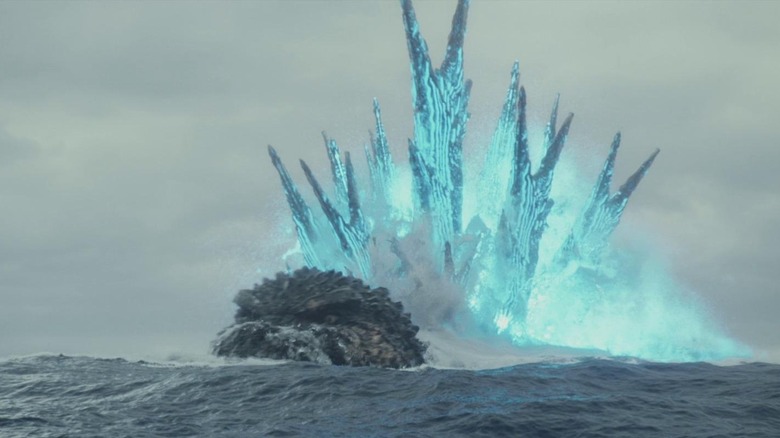
It's really fascinating to compare "Godzilla Minus One" to many American "Godzilla" films. Many Western audiences might be used to not really caring about the human characters, who primarily exist to spout off exposition between giant kaiju battles. But "Godzilla Minus One" offers the best of both worlds. Yes, the action is epic and honestly far more impressive than what other movies have done with 10 times the budget. But also, you care deeply for Kōichi Shikishima (Ryunosuke Kamiki), a kamikaze pilot seeking redemption after failing to give his life for his country.
"Godzilla Minus One" used a surprisingly small amount of VFX, meaning that anytime the monster's on screen, it makes an impact. Set in a post-World War II landscape, the film takes the creature back to its roots of representing the destruction Japan endured from America's atomic bombs. Ultimately, Godzilla is a metaphorical representation of the pain both the country and Kōichi have experienced, and while neither can rewrite the past, they can forge a new path forward by taking out Godzilla once and for all (or at least until the monster's needed for the sequel).
5. After Yang
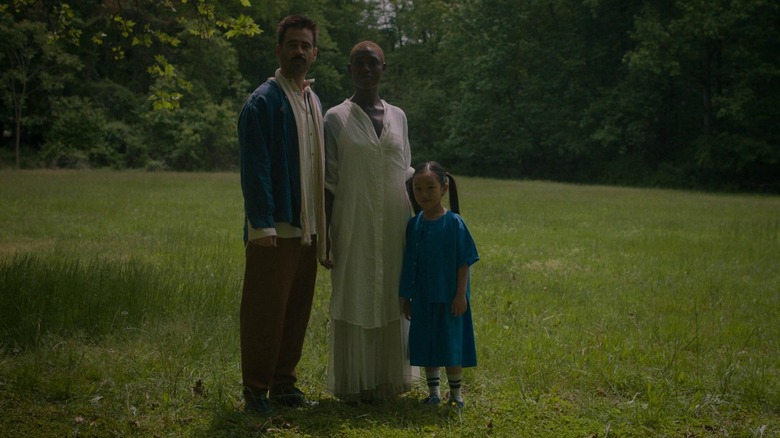
Science fiction is often synonymous with spectacle, but the thing that's easy to overlook is that these tales of androids and aliens can often be the most human stories at our disposal. That's what makes "After Yang" a revelation as one of the best sci-fi movies of the 2020s.
The film follows a family led by parents Jake (Colin Farrell) and Kyra (Jodie Turner-Smith). They have an adopted daughter, Mika (Malea Emma Tjandrawidjaja), as well as an android son, Yang (Justin H. Min), who breaks down and requires repairs. Mika reacts to Yang's unresponsiveness as though her flesh-and-blood brother has just died, forcing the audience to question what makes someone (or something) human.
It's a far more intimate sci-fi film that what many viewers might be used to. But it poses intricate questions about the nature regarding our relationship with technology. It can be easy to think Mika's overreacting to a robot breaking down, but how many of us have freaked out when our phones stop working? Even though technology is front and center, "After Yang" is mostly about the connections we forge with each other.
4. The Wild Robot
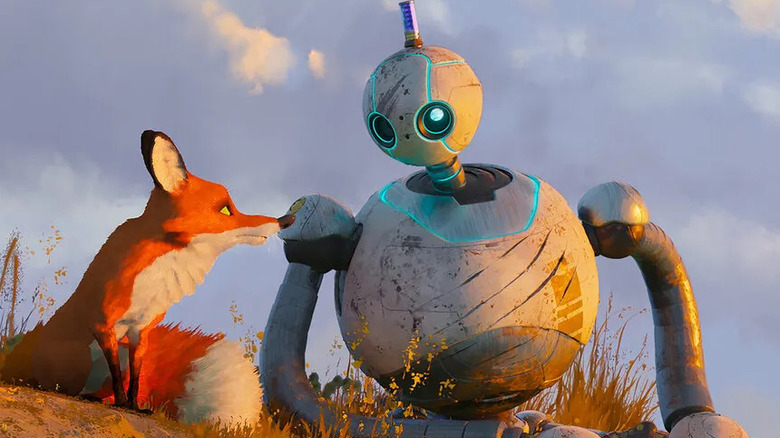
There's a special kind of joy in watching a film that's destined to be a seminal text for today's kids. "The Wild Robot" is a modern classic, with Roz (Lupita Nyong'o), a robot, becoming stranded on an island populated by wildlife. Roz takes in a young goose, Brightbill (Kit Connor), after accidentally crushing the rest of the eggs in his nest, sending him on a journey to learn how to fly despite being raised different from all of the other geese.
The characters are all either robots or animals, and yet, there's plenty for humans to latch onto. Anyone who's ever felt different can relate to Brightbill being upset that he doesn't act like all of the other geese. Even parents can relate to Roz once Brightbill sets out on his own, and she doesn't know what her purpose in life is any longer.
That's not even getting into how gorgeous "The Wild Robot" looks. DreamWorks has made some stunning films in the past, from "Puss in Boots: The Last Wish" to "Orion and the Dark," but this is something on a whole other level.
3. Nope
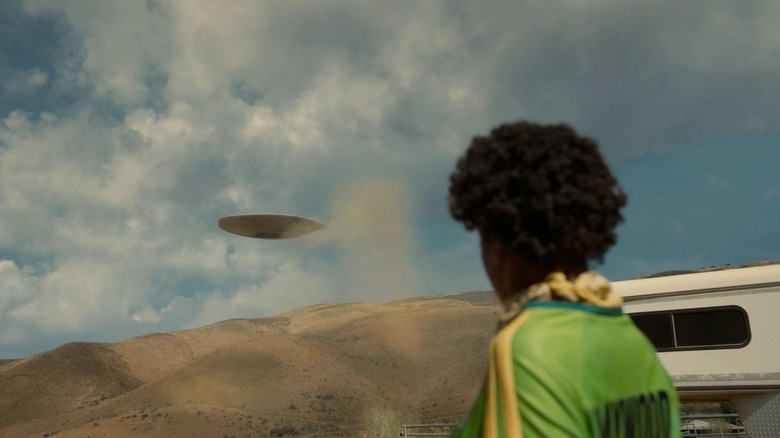
After examining white guilt in "Get Out" and classism in "Us," Jordan Peele went full on cosmic horror for what many would claim is his masterpiece: "Nope." It's a different kind of flying saucer movie with siblings OJ (Daniel Kaluuya) and Em (Keke Palmer) trying to figure out what a mysterious object flying over their farm really is. Turns out, it's not a spaceship but a sentient entity all its own that threatens to eat anything in its path.
OJ and Em are used to dealing with wild animals, because they train horses for a living. However, despite the fact Jupe (Steven Yeun) thought he could "train" the entity, known as Jean Jacket, as part of his show, it comes back to bite him. OJ and Em have the appropriate level of fear and awe of something they can't possibly hope to understand.
"Nope" delivers on spectacle while also criticizing our need to constantly watch something, even if it's horrific. We can't turn away from an oncoming train collision, and we can't turn away as Jean Jacket swallows up stands filled with spectators who thought they were in control of something otherworldly.
2. The Substance
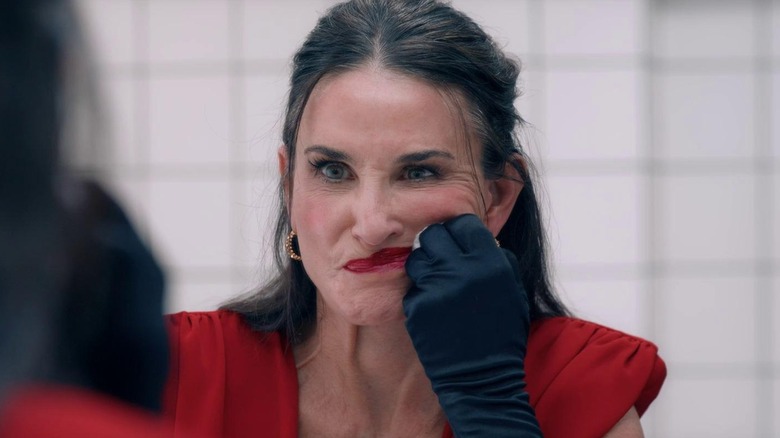
Hollywood's callousness toward women is well-documented, but "The Substance" takes that theme to even darker depths. Elisabeth Sparkle (Demi Moore) gets fired from her workout show, so to stay relevant, she takes a strange substance that creates a new, younger version of herself. But when the balance isn't maintained between the two sides having control, Elisabeth sees how much worse life can get.
Using body horror to dissect society's expectations on women's bodies is a natural fit. The meta commentary of casting Moore (an older but still incredibly beautiful and talented starlet) as Elisabeth and up-and-coming sensation Margaret Qualley as her alter-ego, Sue, is pure genius.
"The Substance" almost wasn't released, as a Universal executive was disgusted by the film and demanded the studio drop it. Fortunately, Mubi picked it up. It goes to show the folks in charge of money don't always know what great thing is in front of them, but it's haunting to think we could've missed out on one of the best sci-fi movies of the 2020s had "The Substance" not found distribution elsewhere.
1. Dune: Part Two
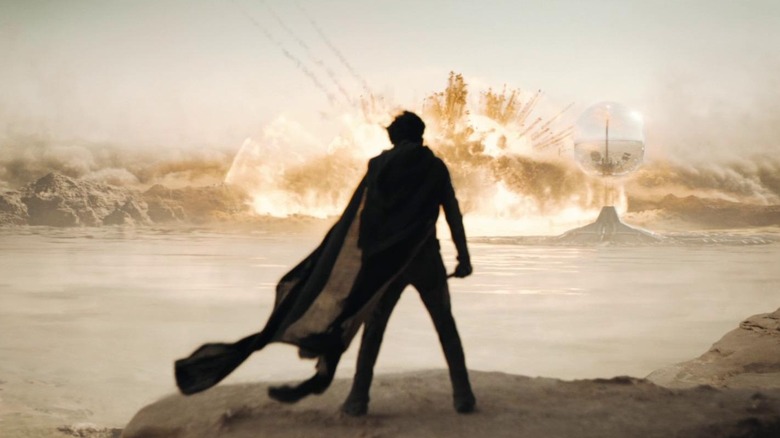
"Dune: Part Two" is the best sci-fi film of the 2020s so far, and honestly, it's going to take a lot for any other flick to unseat it. It's blockbuster cinema at its very finest, as we witness Paul's (Timothee Chalamet) transformation from genuinely trying to help the Fremen on Dune to accepting his place as a false messiah and utilizing religious zealotry to get the Fremen on his side and stand up to House Harkonnen.
From Paul and Chani (Zendaya) blowing up Harkonnen ships to the more intimate battle between Paul and Feyd-Rautha (Austin Butler), there's no shortage of noteworthy set pieces. There's also Paul's riveting speech as he assumes his place as the Muad'Dib, which is both breathtaking and chilling. The Fremen around him may kneel, but Chani's look tells us everything we need to know. Paul is going down a path she can't follow, and many are about to die with Paul's holy genocide on the horizon.
"Dune" set up the shot, but "Dune: Part Two" was the slam dunk that shattered the backboard. It brought "Dune" into the mainstream and proved this series could have mainstream appeal. "Star Wars" and superhero movies have faltered, but grand event films that capture the imagination are still possible. The future belongs to "Dune."