

Star Trek: Starfleet Academy Follows The Blueprint Of An Underrated Star Wars Show
Red alert: This article contains spoilers for episode 9 of "Star Trek: Starfleet Academy."
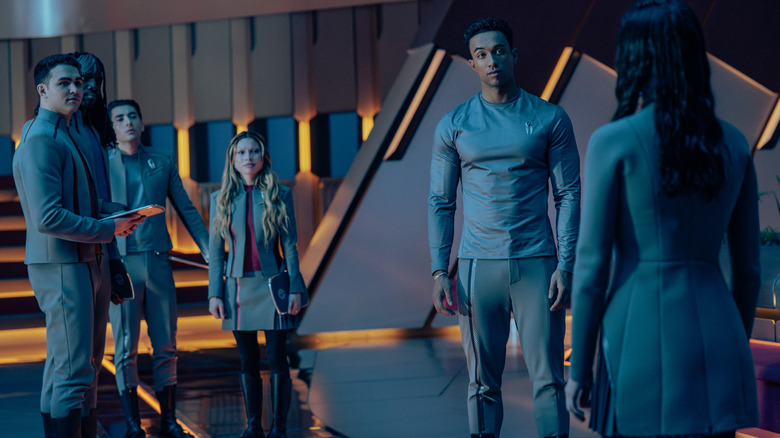
Kids grow up so fast, don't they? Throughout the YA-leaning "Star Trek: Starfleet Academy," we've watched this class of incredibly different cadets learn to set their differences aside (or, better yet, embrace them) and become a close-knit group of friends before we even know it. As the first generation to come of age after the debilitating Burn that decimated the galaxy (a parallel that feels awfully relevant to those of us who grew up under the shadow of 9/11 and economic recessions and multiple forever wars), these are the kids faced with an impossible task. Here's that irreparable, fundamentally broken, and shattered universe you never asked for, kiddos! Oh, and just one more thing ... it's your job to fix it.
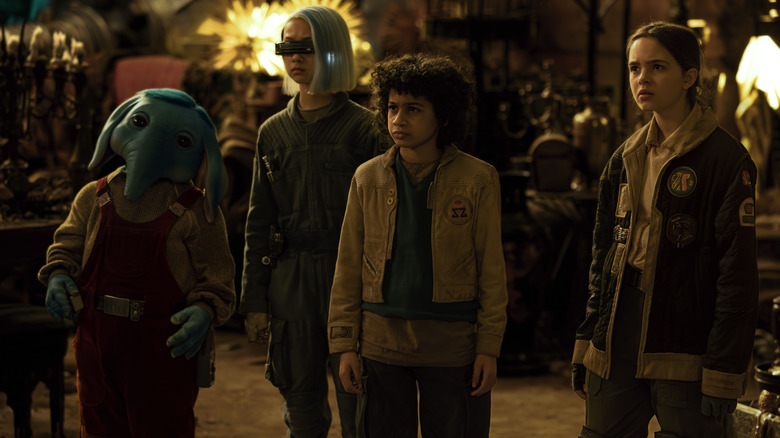
"Starfleet Academy" always had this sobering sense of momentum and stakes behind it, but episode 9 is the one that finally underlines that point ... along with its thematic connections to a certain "Star Wars" show of recent vintage. If any of the above sounds vaguely familiar to sci-fi fans, that's because "Skeleton Crew" took much of the same approach upon its premiere in late 2024. When "Starfleet Academy" protagonist Caleb Mir (Sandro Rosta) leads his friends to a planet well outside of Federation space in his quest to find his mom Anisha (Tatiana Maslany), it's easy enough to point to this setting as one that looks and feels awfully similar to the pirate sanctuary of Port Borgo in "Skeleton Crew." After all, the "wretched hive of scum and villainy" vibes practically jump off screen in both series, further blurring the line between their respective (supposedly rival) franchises.
But, underneath the surface, "Starfleet Academy" reminds us why "Skeleton Crew" was underrated in the first place.
Star Trek: Starfleet Academy has always had a lot in common with Star Wars: Skeleton Crew
If the various "Star Trek" and "Star Wars" productions were somehow packed into a single lunchroom, we have a sneaking suspicion we know which two, in particular, would end up sitting at the same table.
When both shows begin, it's clear we're focusing on a much different group of main characters than we may have been used to before. Looking back, it's refreshing to see how "Skeleton Crew" is fully upfront about its intentions. Although the opening sequence of its premiere begins with a riff on "A New Hope," we quickly meet our young heroes on their way to school. "Skeleton Crew" may be telling a story that eventually expands its scope and scale, but its heart remains impressively ground-level. Similarly, "Starfleet Academy" focuses on a group of students who don't know nearly as much about the galaxy at large as they think they do. Both adventures provide a steep learning curve for their protagonists, and, while trusted grown-ups who've been there and done that certainly help along the way, it's ultimately up to them to save the day.
Sure, their intended demographics are still miles apart, and the narrative structure of both shows couldn't be more different, but the point remains. By eschewing the conventional idea of what makes a "typical" leading figure in "Star Wars" or "Star Trek," we suddenly open ourselves up considerably to a vast and infinite world of stories just waiting to be told. An episodic storyline delving into each cadet's specific background and culture? A coming-of-age tale that puts the Skywalker Saga firmly in the background to explore this galaxy through the wide eyes of children? These are ideal examples of how to keep franchises alive and well.
Like Skeleton Crew before it, Starfleet Academy lets its kids be kids
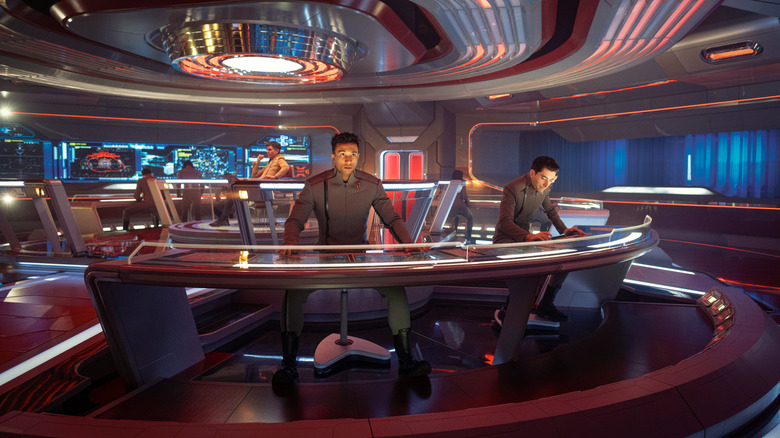
Maybe younger characters make for better stories because they simply don't know any better. Obviously, that's not a hard and fast rule across the board, but there might be something to the idea that protagonists who are less buttoned-up and mature have more reason to mess up, act out, and otherwise cause all sorts of mayhem. Both "Starfleet Academy" and "Skeleton Crew" get a ton of mileage out of that approach, putting their respective casts in all sorts of wild scenarios — largely due to problems of their own making, of course — and seeing how they get out of them.
"Starfleet Academy" episode 9, titled "300th Night," takes that to its logical conclusion. While the rest of the Academy celebrates the end of the semester, Caleb finally discovers the encrypted communications from his long-lost mother that he's been looking for all along. Although situated well outside of protected Federation space, he impulsively decides to head out on his own to find her. Luckily, his friends quickly stand by his side so he doesn't do anything dangerous by himself. By breaking the rules and banding together and relying on quite a bit of luck along the way, it only heightens the stakes ... as does the knowledge that "Starfleet Academy" isn't hesitant to kill off characters when needed.
In other words, this succeeds for the same reason that "Skeleton Crew" does. Bumbling heroes like Wim (Ravi Cabot-Conyers), Neel (Robert Timothy Smith), KB (Kyriana Kratter), and Fern (Ryan Kiera Armstrong) made countless mistakes and created all sorts of drama because they lack fully-developed brains, but that's what makes them such a joy to watch. Both "Star Trek" and "Star Wars" could use a little more childlike innocence like that.
"Star Trek: Starfleet Academy" is available on Paramount+, with "Star Wars: Skeleton Crew" streaming on Disney+.