

Clint Eastwood Didn't Like One Of The Greatest Westerns Ever Made
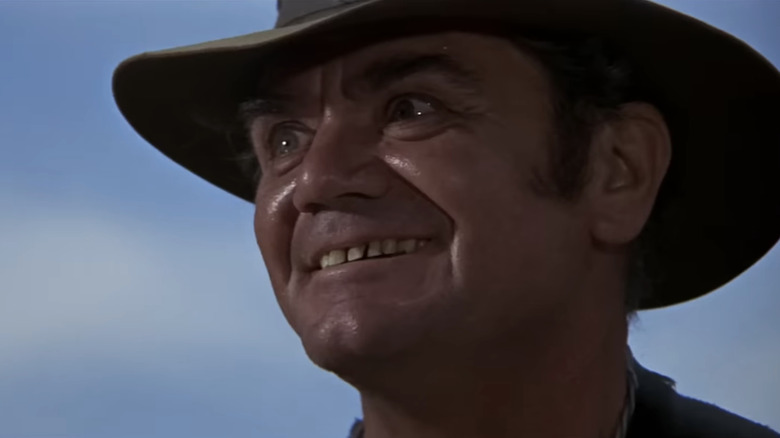
"The Wild Bunch" is one of several movies from 1969 that defined Western history. It is a seminal work often cited as one of the most important films — let alone Westerns — of its time. Clint Eastwood, however, didn't like it. In a 1992 interview, the actor admitted that while Sam Peckinpah's feature was "a good movie," he personally disliked its "ballet of violence."
Before the 1960s, Westerns were fairly straightforward in their depiction of the Old West. It was the white hats vs the black hats, i.e., good vs. evil, and that was pretty much it. Otherwise, the Western frontier was a fantasy land steeped in myth and magic. Then, with the arrival of Clint Eastwood as The Man With No Name in Sergio Leone's "Dollars" trilogy, everything changed.
In reality, Leone and his rugged star weren't the first to upend the myth of the Old West. 1950's "Broken Arrow" was revisionist in its treatment of Indigenous people, and 1952's "High Noon" took aim at the Hollywood blacklist. You can even trace the darker themes of the revisionist Western to films as early as 1935's "Westward Ho," which starred the man who otherwise came to epitomize traditional Westerns: John Wayne. Even with those examples in mind, it was Eastwood that became the face of the revisionist movement in the latter half of the 20th Century.
As such, you'd expect the legend to be a fan of something like "The Wild Bunch." Peckinpah's film is one of the most influential and important examples of the revisionist movement, and yet Eastwood remained unmoved.
Clint Eastwood didn't like The Wild Bunch's 'ballet of violence'
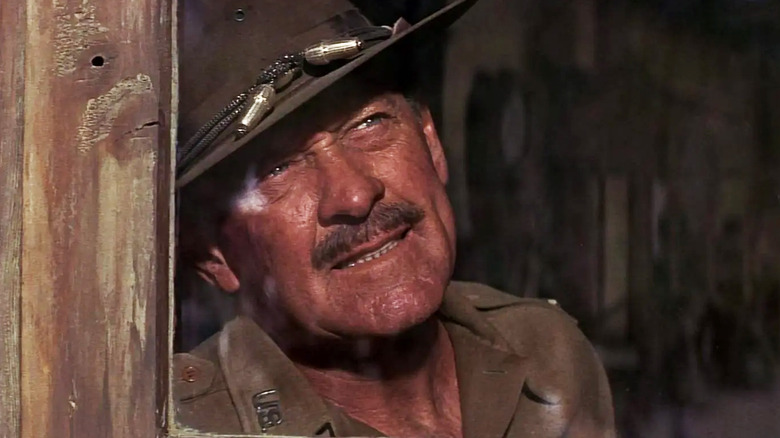
In 1968, John Wayne made "The Green Berets," a film dubbed "cruel and dishonest" by Roger Ebert, who saw through the star's attempt to whitewash the horrors of the Vietnam War. One year later, Sam Peckinpah attempted the exact opposite with "The Wild Bunch," a film designed to jolt audiences out of their desensitization to violence at a time when the bloodbath in Indochina created an ambient level of horror in the culture at large. Peckinpah lingered on shots of cowboys being felled in an Old West that was unrecognizable from the idealized terrain roamed by Wayne's cowboys of old. Surely, then Clint Eastwood — the man who epitomized a more rugged, amoral Western antihero — was a fan of Peckinpah's project.
Well, he wasn't. In a 1992 Los Angeles Times interview, Eastwood was asked what he thought of "The Wild Bunch" and didn't hold back. "It was a good movie," he said, "but I've never been one for the slow-motion technique, the ballet of violence." According to Eastwood, the film was "very effective" in its attempt to remind audiences of the visceral reality of violence and death, with the veteran star even acknowledging that Peckinpah's film became "the predecessor to a lot of people trying to do the same thing." Still, Eastwood just couldn't get on board. "I never liked it," he added. "I've always thought that drama is really the anticipation before the action happens, the buildup to it, and the action itself is like shuffling a deck of cards, so fast it's kind of unreal." As progressive a cinematic figure as he was at the time, Eastwood was still old-fashioned enough to be turned off by "The Wild Bunch" and its notoriously gruesome finale.
Clint Eastwood seems like he should have been pro-The Wild Bunch
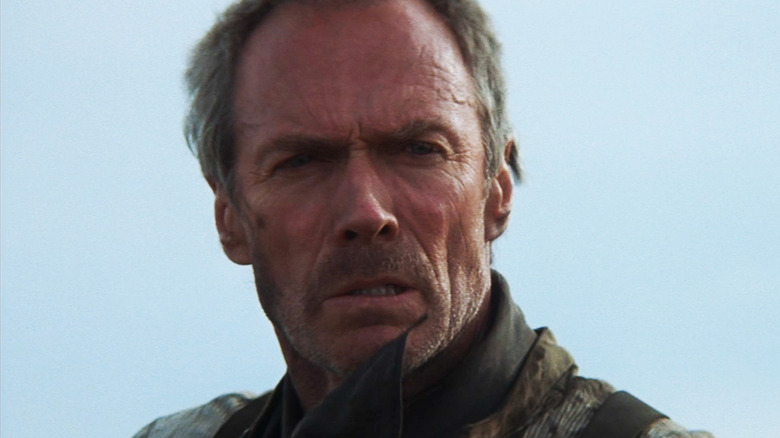
At the time of his Los Angeles Times interview, Clint Eastwood was promoting what became known as arguably the quintessential revisionist Western: "Unforgiven." The film was a dark reckoning with the brutal legacy of the Western frontier that explored the lingering pain and emotional trauma experienced by that celebrated figure of the Old West, the outlaw. In the film, Eastwood's William Munny acts as an avatar for that Western archetype as a whole. Having spent much of his life indiscriminately inflicting pain upon everyone, including (as we're reminded frequently throughout the film) women and children, Munny is haunted by his past. Almost a shell of a man, he spends his time tending to his meager farm before he's pulled back into the fray to hunt down a group of men who disfigured a sex worker.
In its deconstruction of the outlaw archetype and the history of violence on the Western frontier, Eastwood's celebrated revisionist Western shares a lot in common with Sam Peckinpah's 1969 effort. In fact, "Unforgiven" fans should absolutely watch "The Wild Bunch." Why, then, was Eastwood so unimpressed?
Admittedly, it's a bit of a mystery. The characters in "The Wild Bunch" were much more callous than Eastwood's Man with No Name, so that was probably part of it. But it seems he was also put off by the focus on violence. "Unforgiven" is more concerned with the lingering effects of committing such acts, so it would make sense that putting the brutality front-and-center via a slow-motion "ballet of violence" was what really got to him. Or maybe he was just bitter that while Peckinpah was making one of the great revisionist Westerns, he was making "Paint Your Wagon," a film that Eastwood still regrets to this day.