

15 Best Classic Movies Streaming On Netflix, Ranked
We may receive a commission on purchases made from links.
Any Netflix subscriber knows that the platform is far from the leading host of classic cinema. The streaming giant is regularly scrutinized for featuring hardly any 20th-century films compared to the glut of its Netflix Originals and other more contemporary fare. One look at their designated "Classics" genre section will reveal a limited selection that skews toward the '80s and '90s.
That's to say this list of the greatest classic cinema on Netflix is necessarily restricted by the streamer's own biases, but that doesn't mean these movies aren't fantastic. If Netflix doesn't offer the most substantial penetration into moviemaking's history, it at least hosts some now-aging films that capture the flavor of Hollywood and independent cinema during the latter stretch of the previous century, as the world barreled toward the new world of 2000. Netflix isn't the end-all, be-all selection of older movies, but it does give you a good jumping-off point.
Here are the 15 best classic movies on Netflix, ranked.
Glory
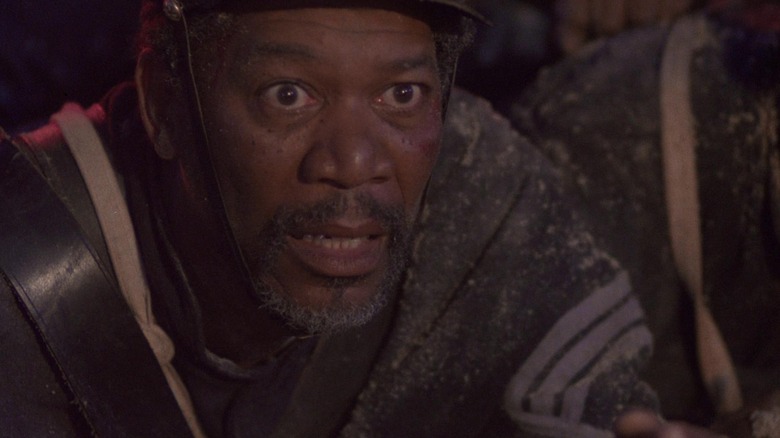
One of the more overlooked films to rightfully win multiple Academy Awards, "Glory" is a genuinely effective period-war-movie melodrama. Directed by Edward Zwick, with a screenplay by Kevin Jarre based on the books "Lay This Laurel" by Lincoln Kirstein and "One Gallant Rush" by Peter Burchard, it tells the story of the 54th Massachusetts Infantry Regiment, the first Black company to voluntarily fight in the U.S. Civil War, as the soldiers face the realities of fighting a war in a country that is battling over their very freedom as people.
Zwick takes a broad, weepy, sentimental angle to the movie, but he uses those emotional buttons to investigate the more complex notions that the conceit suggests in a palatable way, never skimping on the fundamentals, such as character work and well-shot spectacle. The movie has caught its fair share of criticism for centering a white general, played by Matthew Broderick, in what is fundamentally a story of Black revolution, but its detailed depiction of the war, which is guided by a slew of truly great performances from the likes of Broderick, Denzel Washington, Cary Elwes, and Morgan Freeman, ensure that "Glory" never cuts corners when it comes to authenticity.
Braveheart
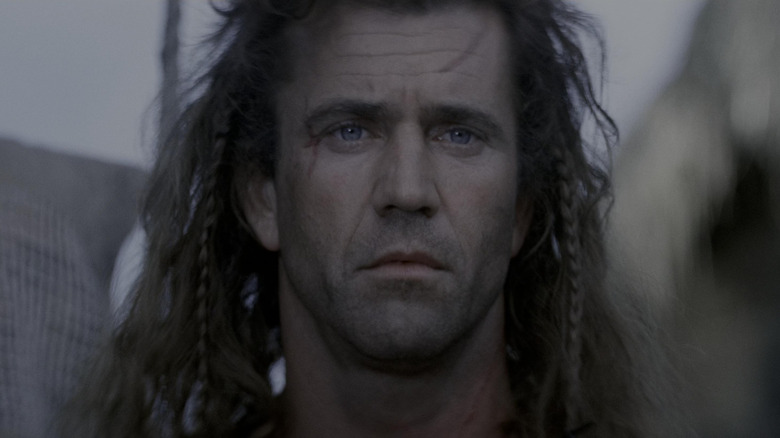
Despite "Braveheart" being one of the most historically inaccurate films ever made, it's an impressive feat of expensive, opulent '90s studio filmmaking from an era when this type of grandiose craftsmanship was more frequently accepted as a given than an outlier. Then again, director and star Mel Gibson's interpretation of the story of the Scottish champion William Wallace and the fight he leads against King Edward I (Patrick McGoohan) of England has that extra layer of viscerality that netted it Best Picture, Best Director, and a slew of other awards at the 68th Academy Awards.
Some may find the desecration of history in "Braveheart" a little too gauche for their taste, but Gibson's direction elevates Randall Wallace's script into something breathlessly entertaining on a moment-to-moment basis. As a period war epic, it's undeniably crafted and staged, and as a manifesto on Gibson's own strange delusions and religious compulsions, it's thrillingly peculiar and regularly tasteless. And yet, in that way, it becomes its own form of agreeable Hollywood fantasy, ripe with striking imagery and an enjoyable insouciance.
Forrest Gump
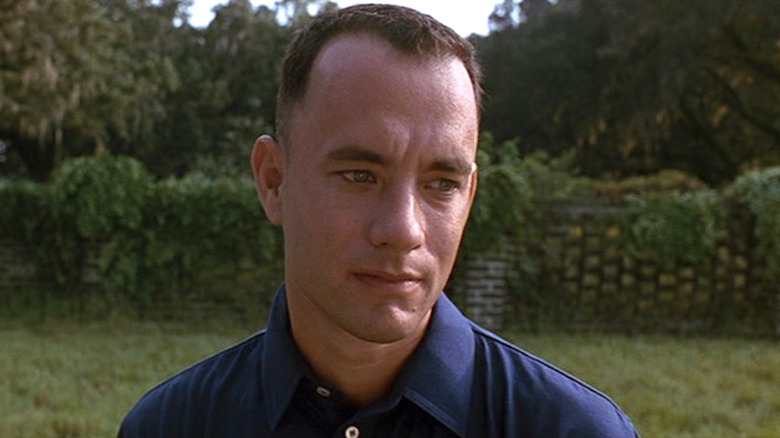
A movie that only further solidified Tom Hanks's position as America's favorite leading everyman in cinema, "Forrest Gump" is a long-time staple across generations — Boomers and Gen X like it because of how it creates a cinematic fantasy of the world they grew up in, and Millennials and Gen-Z like it because it was on TV when they were growing up. But make no mistake, the sentimentality that Robert Zemeckis layers into Eric Roth's script is palpable and infectious—Zemeckis was even left quite depressed after the gratifying shoot.
Hanks, as Gump himself, has gone down as one of the most recognizable and iconic characters in movie history. With his charming Mississippi accent and leisurely drawl, he guides the viewer through a story that is both feel-good and tragic, as Gump makes ironic, anachronistic appearances at major events throughout the 20th century. Zemeckis makes this Greatest Hits mixtape of major American and world events something crowd-pleasing and approachable, which is probably why "Forrest Gump" won six Academy Awards, including Best Picture and Best Director.
She's Gotta Have It
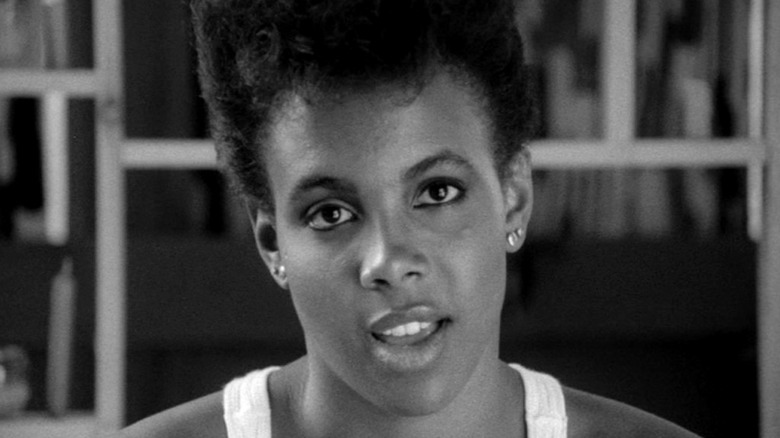
Spike Lee announced himself as an essential cinematic voice from the jump with this breezy, stylish, sexy comedy. Starring Tracy Camilla Johns as Nola Darling, it follows her character's bumpy love life as she juggles her feelings for three men, who each aim to win her heart. With those supporting roles filled out by Tommy Redmond Hicks, John Canada Terrell, and Lee himself, "She's Gotta Have It" is brimming with charming performances that fill out the lives and desires of these characters.
They're supported by Lee's typically energetic filmmaking, here more ramshackle and untidy to match the film's status as a debut, but still full of clear passion and potential. It's not without its shortsighted perspectives and choices — to this day, Lee regrets a frivolous sexual assault plotline that made its way into the script — but you can actively feel Lee finding himself as a filmmaker within the fervent, jazzy, black-and-white frames of characters that represented Black lifestyles and interiority rarely seen in such depth in films up to this point.
Stand By Me
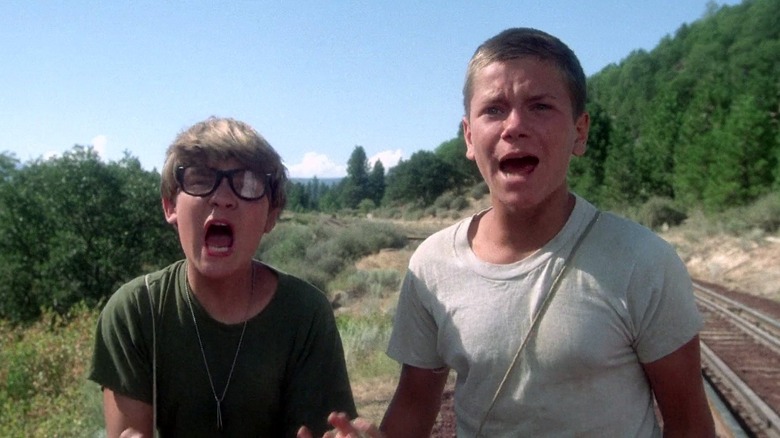
"Stand By Me" was released in 1986, and it remains the gold standard of coming-of-age movies to this day. Basedon Stephen King's 1982 novella "The Body," this Rob Reiner-directed childhood drama concerns the journey of four young boys as they travel into the woods to find a rumored dead body. What begins as a rascally day's adventure for a group of intrepid kids becomes a more poignant investigation of the childhood fears and emotional turmoil of kids in unfortunate circumstances that they had no choice in.
More than simply resting on easy facets of nostalgia, "Stand By Me" confronts the harsh realities of growing up in a surprisingly mature and naturalistic manner, and speaks to the uneasy transitional period of moving into the years when you're more aware of how the world around you operates. Wil Wheaton, River Phoenix, Corey Feldman, and Jerry O'Connell all impress with the emotional grounding they bring to their characters, conveying the recognizable pathos of actors far beyond their years.
Cast Away
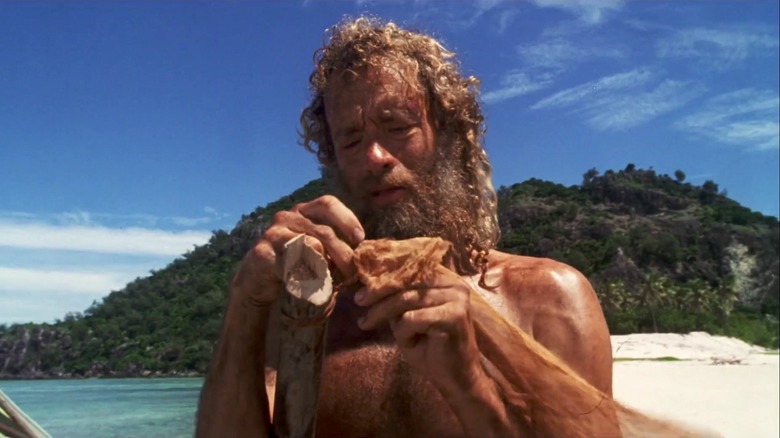
One of the sturdiest survival epics ever crafted, "Cast Away" remains a poignant study of the human conditions of loneliness, desolation, and willpower. Robert Zemeckis directs this Tom Hanks vehicle about an orderly, meticulous FedEx international manager, named Chuck, who is poached from his well-kept life when a plane crash leaves him marooned on a desert island, the sole survivor with only his wits to keep him alive, and his thoughts to keep him company.
Hanks is a marvel in his one-man show about a man whose rigid structure of day-to-day living slowly breaks down into desperate survival, in which he also maintains his emotional well-being by creating an inanimate friend to talk to out of a volleyball, which Chuck dubs Wilson. Zemeckis conveys Chuck's almost mythic-like journey with robust confidence, crafting a striking image where it counts, but letting Hanks' allusive face do most of the heavy lifting. It's a strong movie that gets the fundamentals right for an effective, emotional experience, which is why "Cast Away" landed in the top three of our ranked list of Robert Zemeckis movies.
Monty Python's The Meaning of Life
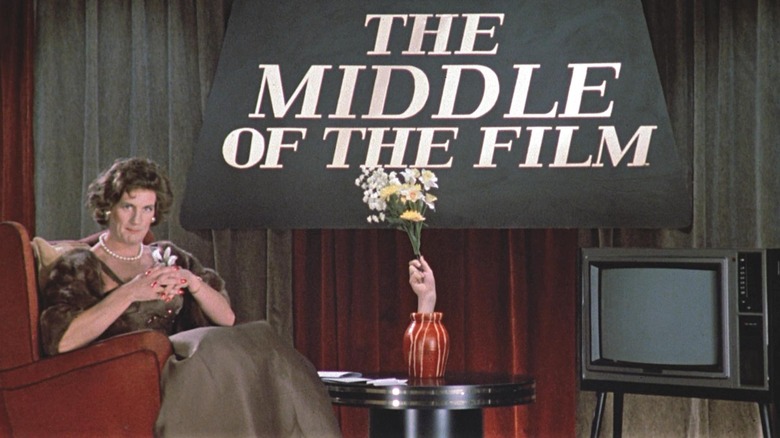
The final Monty Python film to feature all six members of the original comedy troupe before the passing of Graham Chapman in 1989, "Monty Python's The Meaning of Life" sees the group returning to their roots by structuring this 1983 comedy's runtime around a series of absurdist sketches as opposed to a traditional narrative, all looking to answer that great question about the purpose behind our existence. As you could expect from the Python crew, the answers are often bitterly and perposterously funny, adopting a piercing perspective on the world through the investigation of its various subjects.
It's also bound to have left some childhood scars on young viewers from its surprisingly shocking gross-out humor—look no further than the infamous Mr. Creosote sketch, which features 5 straight minutes of projectile vomiting and then a human explosion. The film fluctuates between the limits of good and bad taste, encompassing the totality of the inanities and injustices of being alive on Earth. John Cleese may have no idea why Monty Python has left such a lasting impact, but watching a movie like "The Meaning of Life" proves how essential the troupe's comedy really was.
A League of Their Own
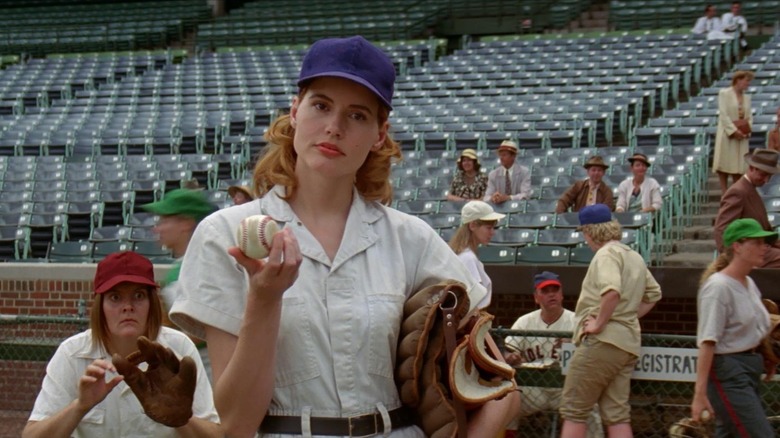
Netflix seems to have an affinity for including Tom Hanks films to help build out its small selection of classics. In director Penny Marshall's "A League of Their Own," he plays the washed-up, sexist coach Jimmy Dugan, who finds himself heading up the first team of the All-American Girls Professional Baseball League, while the country's men are off fighting in WWII. What ensues is a heartfelt, feel-good' 90s-style comedy-drama that tells a simple, feminist story of inspirational determination and ambition.
Marshall's film has all the elements of a shameless sap-and-schmaltz movie, but she grounds it in the recognizable emotional realities of the cast. And that cast is made up of some great personas: Geena Davis, Lori Petty, Madonna, Rosie O'Donnell, and more make up the eclectic group of women pushing forward in finding success and inspiration both in the sport of baseball and in each other. More than just a culturally iconic '90s film, "A League of Their Own is the ultimate sports movie.
Erin Brockovich
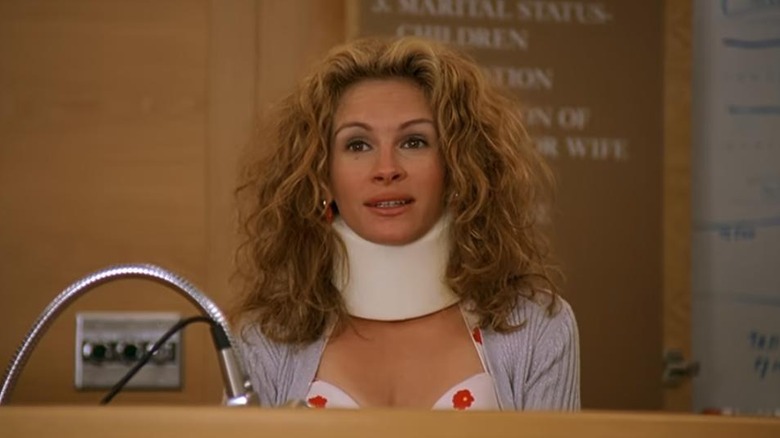
Steven Soderbergh may have moved on to exclusively directing small-scale cinematic larks that push the margins of his niche interests, but he was once a true Hollywood director, making widely accessible dramas for adults that received both commercial and critical acclaim. "Erin Brockovich" fits right in with his greatest works, sitting within the top 10 of our ranked list of Soderbergh's extensive filmography.
It has a plot that sounds dry but is made riveting by the artistry involved, Julia Roberts plays the titular Brockovich (for whom she won an Oscar for portraying), who gets hired on as a clerk at a law firm where she begins to uncover a massive scandal involving the local gas and electric company, who have been contaminating the local water supply with runoff toxic chemicals. It's a movie with a humanistic and anti-corporate bent that, these days, feels extraordinarily radical, and Roberts' performance makes for a singular modern heroine: brazen, outspoken, angry, but also deeply concerned for the plight of everyday people. As corporations continue to raze the infrastructure and stability of lower-class lives, it feels good to see a character devoted to taking such an entity to task.
The Sting
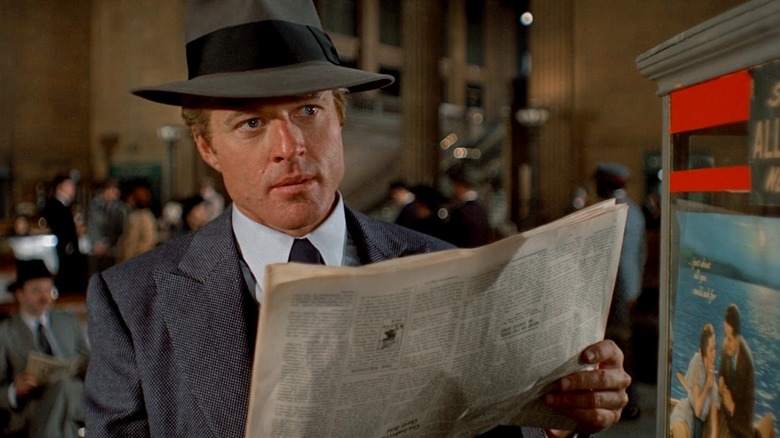
It doesn't get much more gratifying than "The Sting." This Best Picture-winning 1973 George Roy Hill film is a masterclass in breezy crime-caper escapades, with a screenplay by David S. Ward that, fittingly, initiated its own laundry list of lawsuits for copyright infringement. Nevertheless, it's hard to deny how easy it is to settle into the jaunty cadences of "The Sting," what with how devoted it is to providing audiences something purely, classically entertaining in a real Golden Age of Hollywood type of way.
That comes across in its extensive cast of 20th-century superstars and character actors, including Paul Newman, Robert Redford, Robert Shaw, Charles Durning, Harold Gould, Eileen Brennan, and more. They all handily mold themselves to this dashing story of two con men who engage in an elaborate scheme involving the rigging of horse race betting to fool a notorious local mobster out of his fortune.
If that sounds slightly knotty, Hill ensures that "The Sting" is never an overly complicated or boring watch, as the twisty plotting and delightful, detailed character dynamics consistently keep viewers wholly enthralled. It's a movie that was clearly made with the purpose to entertain, and it accomplishes that mission in spades.
Grave of the Fireflies
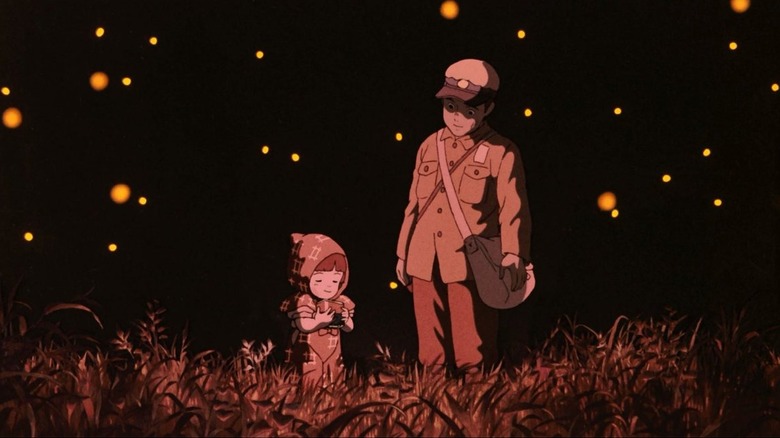
It should be forewarned that "Grave of the Fireflies" is not for the faint of heart. Despite coming from Studio Ghibli, which has a reputation among Japanese animation fans for films filled with exhilarating, imaginative fantasy and wondrous, fantastical worlds and characters, "Grave of the Fireflies" is grounded in a much more dreary sense of reality. It's notorious for being in conversation as one of the most depressing films ever made.
That said, its impact and artistic prowess are undeniable, as is its conceptualization of living lives defined by war, which is why "Grave of the Fireflies" is one of two perfect war movies, according to Rotten Tomatoes. It follows the suddenly orphaned children Seita (Tsutomu Tatsumi) and Setsuko (Ayano Shiraishi) as they try to find survival and solace in the heart of WWII. They end up confined to a bomb shelter, where they do everything they can to simply stay alive together.
The subject matter may be too overbearingly tragic for some, and writer-director Isao Takahata has certainly engineered the film as a sorrowfully tough watch. But "Grave of the Fireflies" is a beautifully animated anti-war proclamation that finds urgency in its harrowing nature.
Boyz in the Hood
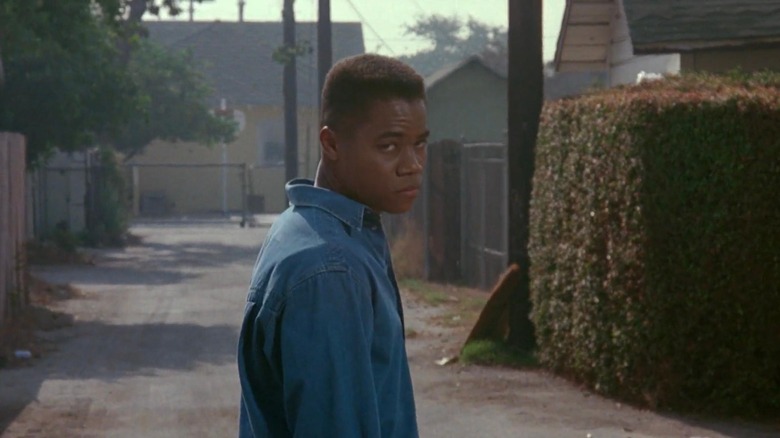
One of the great unsung American auteurs chronicling the lives and dreams of America's Black communities, "Boyz in the Hood" stands as John Singleton's greatest achievement. His film debut is a semi-autobiographical account of the reality of inner-city living within urban America, centered on three young men — Tre (Cuba Gooding Jr.), Ricky (Morris Chestnut), and Doughboy (Ice Cube) — who are set on diverging paths as a result of their varying responses to their environment.
The core cast of "Boyz in the Hood" effectively grounds the film's vision in reality, making it difficult to imagine Singleton once devising an entirely different casting concept. The principal three performers, along with essential supporting turns from the likes of Laurence Fishburne, Angela Bassett, and Reinga King, are effortlessly in tune with Singleton's artistic insight, which shed a new, forthright light on Black lives in mainstream American cinema that broke new ground and paved the way for films of a similar vein immediately in its footsteps. With "Boyz in the Hood," Singleton redefined the possibilities of telling Black stories on screen.
Pulp Fiction
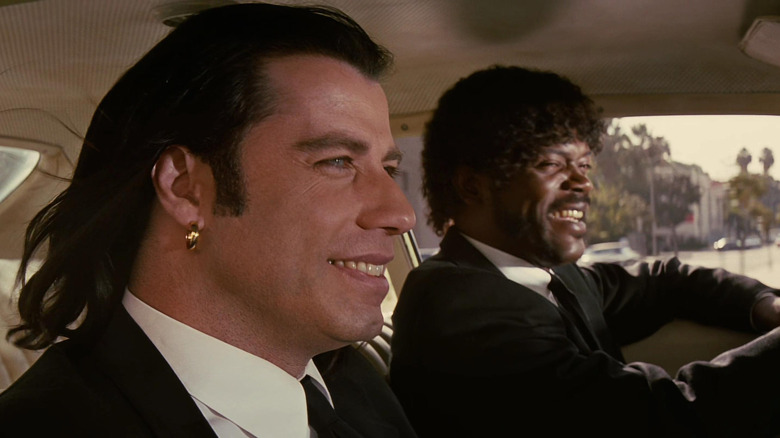
Is there a contemporary filmmaker who has produced more imitators than Quentin Tarantino? The video store film geek turned everlastingly extolled writer-director has a cinematic voice so distinct that countless other filmmakers have tried to replicate it, especially in the wake of Tarantino's culture-shaking "Pulp Fiction."
Tarantino broke the mold for anthology movies with "Pulp Fiction," conveying the lives and foibles of an eccentric all-star cast through a nonlinear series of interlocking stories. In that way, particularly in retrospect, it is perhaps the most potent synthesis of Tarantino's movie geekdom laid bare on screen, functioning almost like a clip show of all the, yes, pulp artistry that Tarantino had jammed his brain with in his adolescent years, splayed out in freewheeling, footloose fashion.
With its carefree attitude and featuring some of the most iconic performances of the '90s from a cast comprised of John Travolta, Samuel L. Jackson, Uma Thurman, Bruce Willis, Ving Rhames, Harvey Keitel, Tim Roth, Christopher Walken, and far too many more to name, there's a reason "Pulp Fiction" has held on to its prime cult movie status. It's simply hard to go wrong in how it captures the essence of the genre film and becomes its own paragon of the broad strokes it's so in love with.
Titanic
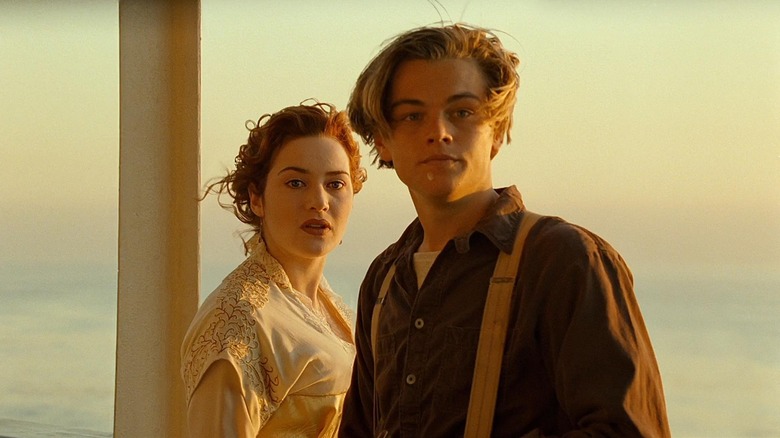
Never bet against James Cameron. Audiences have been reminded of this sage piece of cinematic counsel regularly throughout Cameron's storied career, but perhaps never more so than when "Titanic" was released on December 19, 1997, and went on to top the box office for 15 consecutive weeks.
With "Titanic," Cameron combines his obsessive fetishism of famous history, oceanography, and sweeping melodramatic spectacle into his most tragic and romantic object. Leonardo DiCaprio and Kate Winslet serve as the film's two doomed young lovers, whom we spend hours with, investing in their budding young love in spite of the fatalistic destination that Cameron chooses to converge the true disaster of history with the destinies of his characters.
Yes, Cameron's film thrives on the poignant and sorrowful, so much so that we were able to assemble a list of the 12 saddest moments in "Titanic." The film gets some guff nowadays for its broadly sentimental, schmaltzy storytelling and characterizations, but this simply speaks to Cameron's propensity for earnest forms of pathos, expecting that his palpable sense of romantic awe will transport audiences into his very headspace. With "Titanic," it absolutely does.
Night of the Living Dead
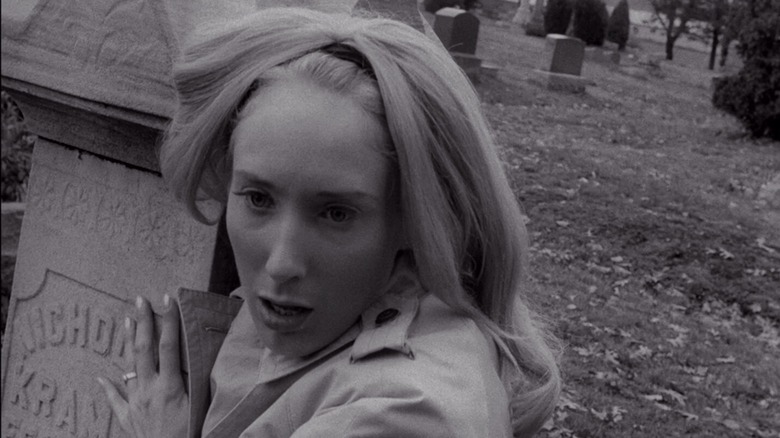
To this day, no one has captured the horror of the living dead as George Romero did. His career in revolutionary zombie cinema imbued stark real-world anxieties into the gory prospect of the undead rising to attack and eat the living, serving as candid, explicit political statements in a world that seemed only marginally less cursed than one in which ghouls walk the earth. Those movies started with "Night of the Living Dead."
"Night of the Living Dead" pushed horror cinema forward by embracing new principles of what genre cinema could encompass. Released in 1968, it is filled with a simmering wrath born of the tested bonds of American citizens amid the Vietnam War and the civil rights movement. Romero's film is not merely forward-thinking for casting a Black lead in Duane Jones—his character's conclusion signals a starkly clear-sighted view of a psychopathic nation
It's for those reasons that "Night of the Living Dead" was mired in controversy after its release. But Romero was never a filmmaker who took half-measures or backed away from leaving his audience with something to think about. With "Night of the Living Dead," people would have come for the zombies, but left shaken by a psychological sickness that seemed all too familiar.