

Absolute Batman Isn't A Superhero's Journey - It's A Full-On Horror Story
We may receive a commission on purchases made from links.
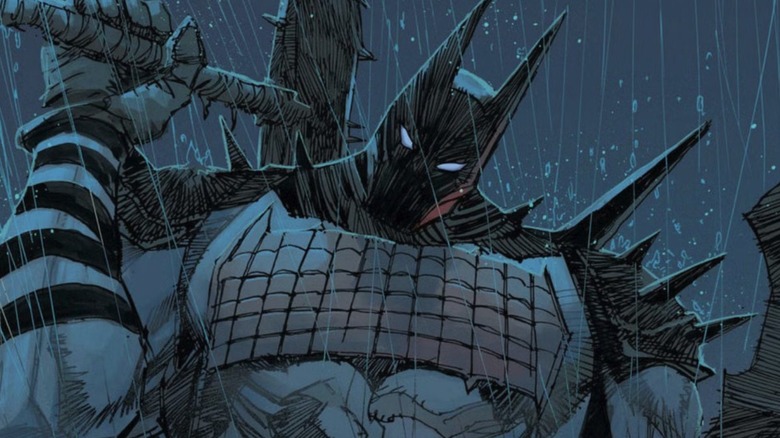
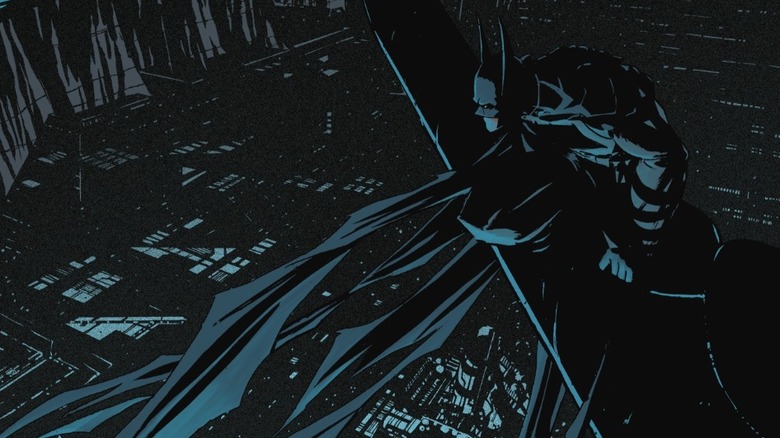
Of the major American superheroes, Batman most fits into the aesthetics of horror. A good Batman story needs a twinge of the gothic, and like his animal namesake, Batman is a creature of the night. The whole reason Bruce Wayne chooses to "become a bat" is he realizes that, to fight crime, he must inspire fear.
The best Batman films dip into horror from time to time, too. Tim Burton's "Batman" duology brought Gotham City to life in the style of German Expressionism. Matt Reeves' "The Batman" introduced Batman (Robert Pattinson) by showing how, every night in Gotham, would-be criminals fear every shadow or dark alley. They know the Bat could be silently stalking them, so they think twice before killing or stealing.
Scott Snyder and Nick Dragotta's mega-hit comic "Absolute Batman" is shaping up into one of the most horrifying Batman stories yet. From the first arc, "The Zoo," the book has reinvented Batman, down to his origin story: This Bruce Wayne is a blue collar Gothamite who lost his father (only his father) in a mass shooting at the Gotham Zoo. Batman wasn't born in Crime Alley or when Bruce fell into the Batcave, but in the bat enclosure Thomas Wayne locked his son in to save him.
Though an often-radical reinvention of Batman, "The Zoo" flows like a superhero origin arc. But the two-issue arc "Zero," debuting a lich-like Mr. Freeze, showed this comic could dive into horror. The following story, "Abomination," cemented "scary" as the norm of "Absolute Batman" with a terrifying Bane that's more monstrous than ever.
 DC Comics
Bane's classic debut story, "Knightfall," put an immovable object in Batman's path; Batman finally met a foe who outmatched and utterly broke him. "Absolute Batman" does all that in only nine issues.
'Abomination' pits Absolute Batman against Bane and mad science
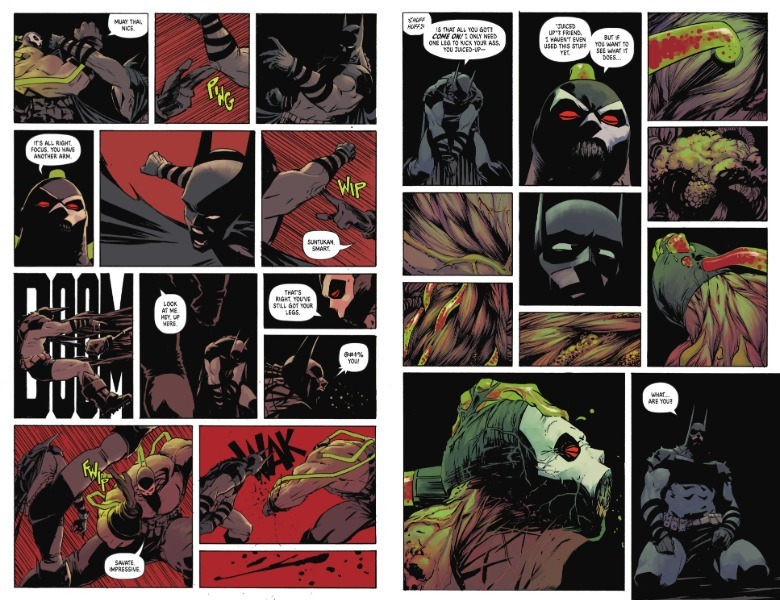
"The Zoo" shows Batman's strength of will, ingenuity, and success at crimefighting. Then "Absolute Batman" #9 ends with Batman meeting Bane, and none of that matters. Every martial art or weapon Batman throws at Bane does nothing and Bane needs only precise finger strikes to paralyze Batman, limb-by-limb. Dragotta's tight and boxy paneling frequently feels claustrophobic. Here, the close-ups emphasize the bit-by-bit beatdown. "Absolute" Batman is bigger than ever, and that goes triple for this ogre-like Bane, but Dragotta topping that huge muscular mass with a small, skull-like face holding bulging red eyes only makes Bane creepier.
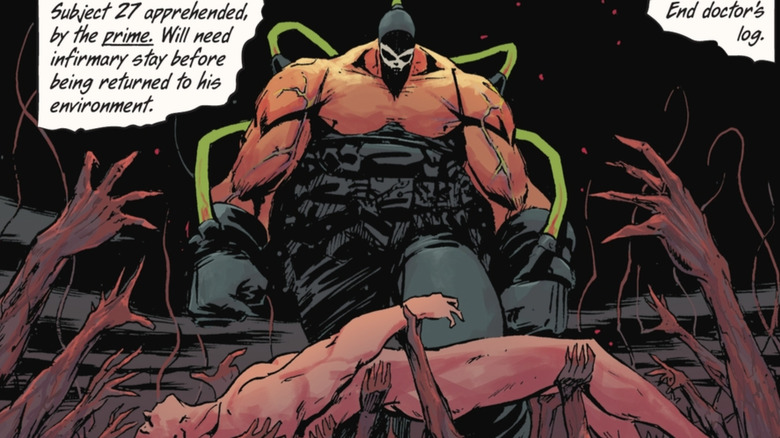
"Absolute Batman" #10 features Bruce locked up under Bane's watch. His prison? "Ark M," an underground city and a labyrinth of twisted science and mutants. Ark M's presence adds another twist of horror: Evil, unseen on the surface, has infected Gotham City from its foundations. The setting and torturous experiments Bruce endures in Ark M (priming him to take Bane's Venom) also evokes one of the best-ever superhero and horror intersections, Barry Windsor-Smith's Wolverine origin, "Weapon X." Each time Bruce escapes, he runs into a mutated Ark M "patient" scarier than the last and winds up back in his cell. Yet there's another monster dancing on his shoulder.
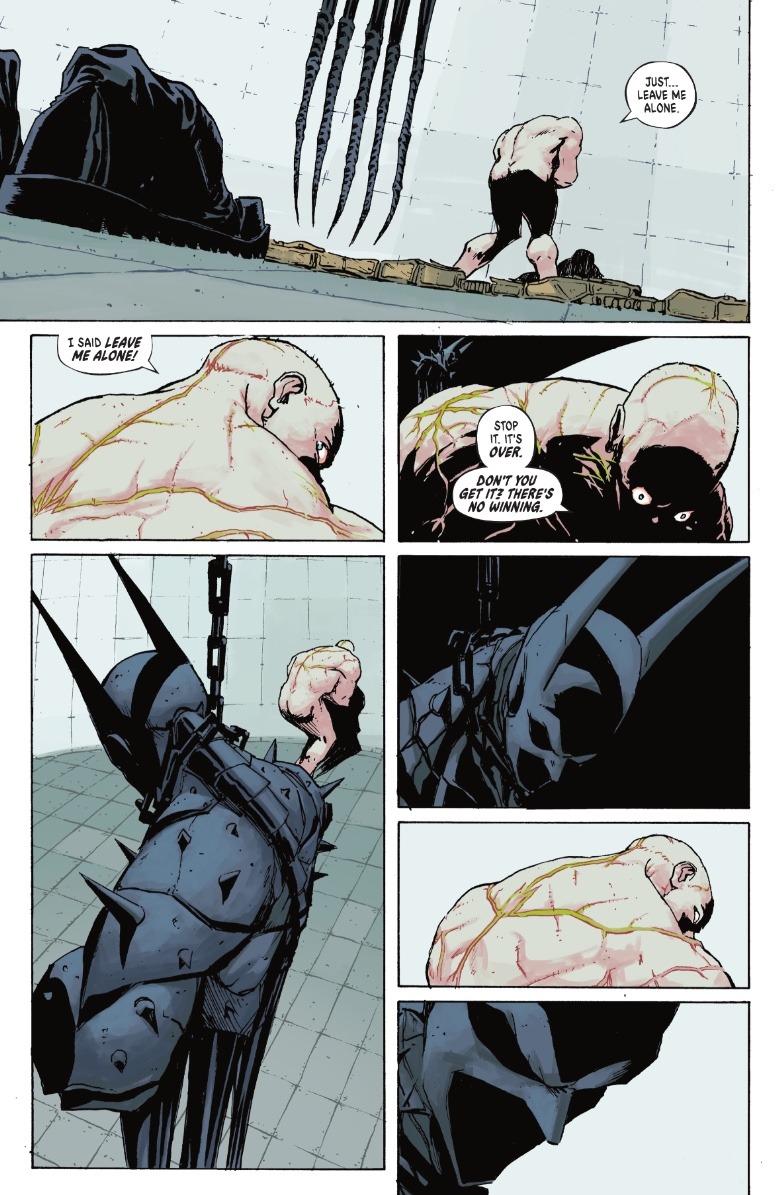
Like in Frank Miller's classic "The Dark Knight Returns," "Absolute Batman" suggests the Batman is Bruce Wayne's monstrous shadow self — a voice echoing in his head he can't silence, urging him on. When it seems like Bruce's will has finally broken, he talks to the empty Batsuit. Two close-ups of the cowl's empty eyes make it look like it's staring back at Bruce, angry and hungry. On the next page, the Bat has taken over Bruce once more.
 DC Comics
In Absolute Batman, Gotham is a city of monsters
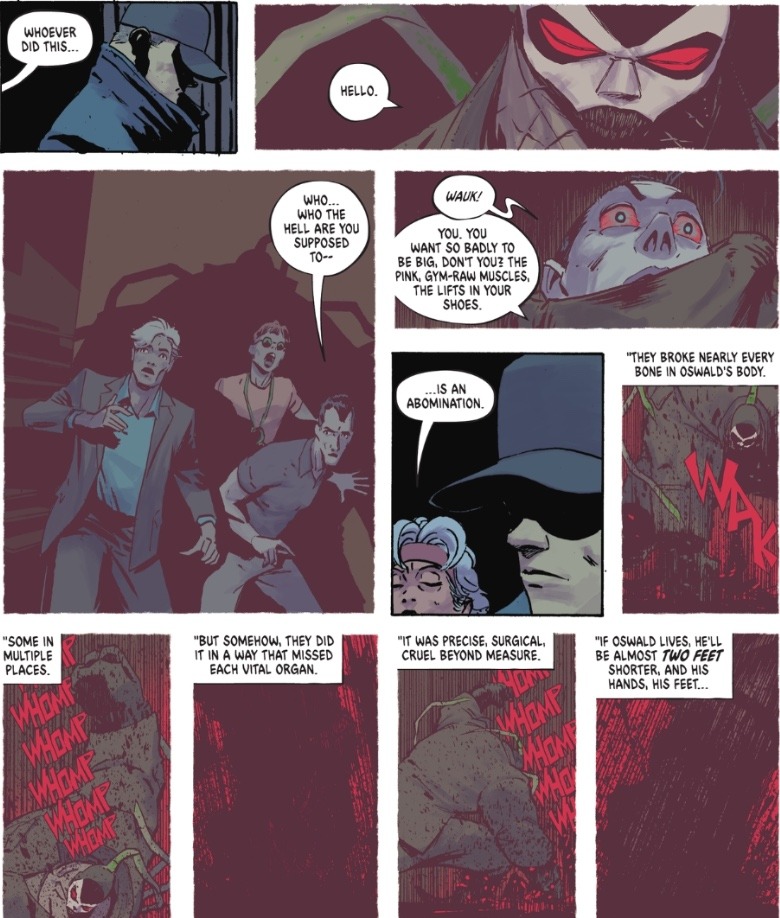
Batman finally escapes Ark M with his childhood friend Waylon Jones, who's been mutated into a ravenous reptile. Unlike the classic iteration of Killer Croc, Waylon is not a human-shaped man with scaly skin and sharp teeth. He's a kaiju-sized crocodile with Waylon's face at the tip of his snout. "Absolute Batman" #12 then shows Bane reacting to Bruce's escape by punishing Bruce's friends Oz, Eddie, and Harvey. A master of violence, Bane leaves each one in maximum and irreversible pain.
 DC Comics
Once more, "Absolute Batman" offers body horror to classic Batman villains: Oz's injuries give him a penguin-like stature, Harvey's entire left half is scarred and broken, and Eddie's Bane-damaged brain needs cybernetic implants.
Scott Snyder started as a horror writer (see his early comics like "Wytches," "Severed," and "American Vampire"). When Snyder wrote "Batman" from 2011-2016, he and artist Greg Capullo revamped mad scientist villain Doctor Death and introduced the inhuman Mr. Bloom. "Absolute Batman" is giving all of Batman's rogues gallery monstrous makeovers like Doctor Death's, up to the Joker himself. The horror of "Absolute Batman" doesn't all come from the grotesque, though, but also the existential.
"Absolute Batman" has earned comparisons to classic dark fantasy manga "Berserk" by Kentaro Miura, where dark warrior Guts struggles against monsters and fate itself, woven by the evil God Hand. Batman is in the same situation as Guts, because the "Absolute" DC Universe was designed by Darkseid. God is literally on evil's side, but Batman still fights for good. Alfred Pennyworth, reimagined as a still-active MI6 agent, understands how evil people rule the world, but Batman wins his loyalty by fighting against the system which Alfred had learned long ago to accept.