

All 5 Seasons Of Stranger Things, Ranked From Worst To Best
You know the drill: Spoilers for all of "Stranger Things" ahead.
It's kind of mind-blowing how much has changed since "Stranger Things" premiered on Netflix in 2016. At the time, the Duffer Brothers' potpourri of 1980s-style science fiction, horror, and action was the type of exciting, original, storyteller-driven project that the streaming service proclaimed to value above all else. As franchises and movies based on known intellectual properties came to dominate the box office, Netflix was out there either taking chances on untested creatives or giving statesman artists the resources they needed to realize their most ambitious visions. Even once-dead cult TV series could gain a new lease on life thanks to the platform.
10 years later, sadly, the dream of streaming is dead, and Netflix is no longer the antithesis to an IP-obsessed entertainment landscape where major studios gobble up their competitors; it's now one of those corporate monsters itself. In the same sense, "Stranger Things" has gone from representing the old Netflix to the Netflix of today, having become a machine that churns out spin-offs and demands a per-episode budget that eclipses the gross national product of certain countries. (I'm kidding, but only sort of.) Yet, in spite of this, the show remained unfailingly earnest throughout its run, which proved to be its salvation even as it threatened to collapse in on itself, creatively speaking. This isn't a case of a series' quality steadily dropping off the further it went, either. On the contrary, "Stranger Things" did some of its greatest work in its later seasons ... as well as some of its least impressive.
So, as the dust settles from the show's final super-sized installment, let's dive back into the Upside Down and examine how it all shook out. Here's every season of "Stranger Things," ranked.
5. Season 5
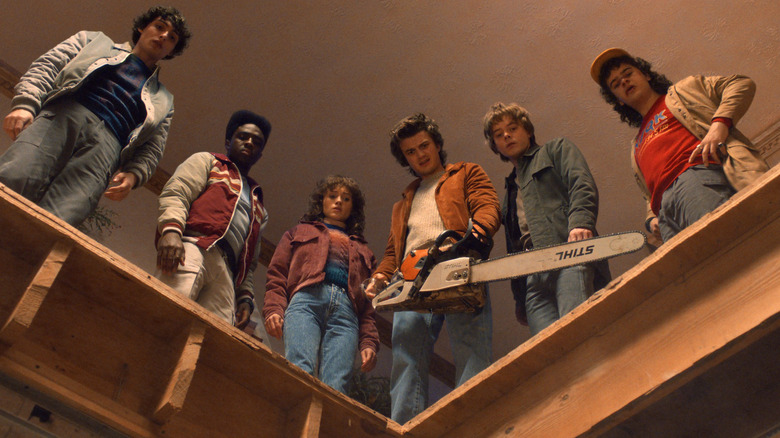
I swear this isn't just recency bias. There was a lot to appreciate about season 5 at first, from the promising storylines that paired certain players together for the first time to the way it balanced its information dumps and effects-heavy spectacle with meaningful and emotionally-charged character interactions. It wasn't seamless (Cara Buono's Karen Wheeler taking down some demogorgons like a badass wasn't enough to make up for her being otherwise back-burnered so early), but there was reason to be hopeful that the Duffers and Co. would stick the landing.
However, as technically difficult as "Stranger Things" season 5 undoubtedly was to pull off (hence, I'm reluctant to pick on its dodgy computer-generated backdrops and virtual scenery too much), it also exposed the cracks in the show's narrative foundation. For example, Will Byers (Noah Schnapp) embracing his sexuality and finding his inner strength was a subplot that worked fine in a vacuum, but it was also a frustrating reminder of how often the character was wasted in seasons past (as we'll discuss later). Then there was the choice to position Henry "Vecna" Creel (Jamie Campbell Bower) as the Voldemort to Will's Harry Potter, which would've been much more impactful if Henry's backstory had actually been covered here and not sequestered to the "First Shadow" spin-off play.
It all came to a head in the series finale, an overlong and repetitive episode that did Millie Bobby Brown's Eleven and Linnea Berthelsen's Kali incredibly dirty before culminating in a protracted 40-minute epilogue that tied up several story threads in trite and unambitious ways while abandoning others outright. (Seriously, did Amybeth McNulty's Vickie Dunne suddenly get eaten by a demodog off-screen?) By doing a disservice to so many female characters, in particular, season 5 just left a bad taste in my mouth.
4. Season 3
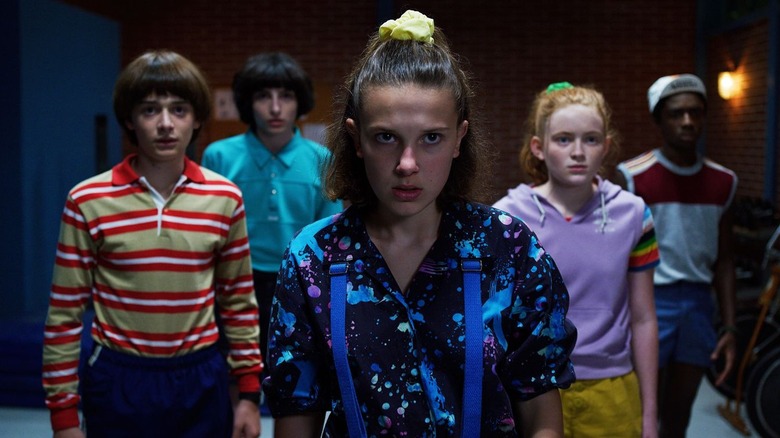
Season 3 was "Stranger Things" at both its best and its worst. It made great choices like bringing in Maya Hawke's Robin Buckley (don't you dare besmirch my beloved lesbian emotional disaster!) and upgrading Priah Ferguson's Erica Sinclair to a lead (every Scooby-Doo-y team of bumbling heroes needs a competent member), all the while serving up some of the nastiest Upside Down critters and most visually accomplished storytelling on the show up to that point. Even Dacre Montgomery's Billy Hargrove went from being Max Mayfield's (Sadie Sink) one-note abusive sibling to a complicated and tragic figure. Meanwhile, Max herself developed an adorable friendship with Eleven that brought new dimensions to both characters (and is also a reminder of how bizarre it is to hear the Duffers describe Eleven as a glorified metaphor for childhood on the heels of the series finale).
On the flip side of this coin, though, you had the whole storyline about Soviets invading Hawkins to mess with the Upside Down, which felt like it could've come straight out of an actual Cold War-era paranoia thriller (not a compliment). Season 3 also made the baffling choice to reimagine Joyce Byers (Winona Ryder) and Jim Hopper (David Harbour) as a "Moonlighting"-esque bickering screwball duo, as though they weren't two middle-aged adults who had known each other since they were teenagers and already gone through hell together. Even when the series started to show newfound signs of maturity here (like when it explored Karen's unhappy marriage or saw Natalia Dyer's Nancy Wheeler battling chauvinism in the workplace), it would ultimately retreat into rose-glass-tinted nostalgia for its period setting once more. Looking back in hindsight, this may have been when the creative limitations of the Duffers' approach to this universe really started to become apparent.
3. Season 4
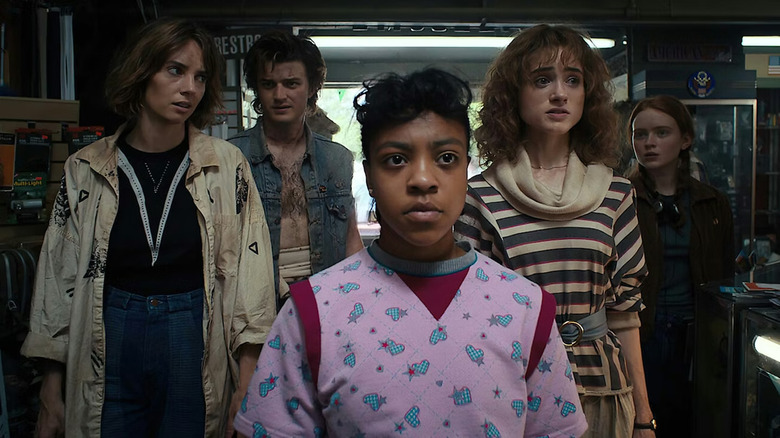
Thanks to the prolonged three-year break between this installment and season 3 (which was, of course, in no small part the result of the COVID-19 pandemic), season 4 was when it became near-impossible to ignore that the "Stranger Things" kids were no longer, you know, actual kids. But as awkward and gawky as the show's younger actors frequently looked while pretending they were barely out of middle school, the series itself felt more confident and surefooted. Even as its budget swelled and the scale of its narrative expanded, "Stranger Things" was able to remain faithful to its smaller, practical-heavier roots while smoothly integrating more digital elements into the fray than ever before. By the same token, the show's main ensemble had settled comfortably into their roles by this stage. All jokes about them bringing Steve Buscemi's "How do you do, fellow kids?" bit from "30 Rock" to mind aside, emotionally, you believed these troubled youths and misfits were exactly that.
The only downside to season 4 was that certain characters got way more substantial arcs than others. Specifically, Hopper, Eleven, and Max were all forced to separately confront the ghosts of their past (to powerful and moving effect) while also battling tangible monsters in their present, resulting in all-time moments like the first "Running Up That Hill" scene and needle-drop. Their loved ones, on the other hand, spent most of their time scrambling around in rickety planes or stoner vans trying to assist or rescue them, with poor Will, especially, given little to do beyond angsting about his haircut unreciprocated crush on Mike Wheeler (Finn Wolfhard). But even that wasn't enough to cancel out stuff like Eddie Munson's (Joseph Quinn) selfless rock-tastic sacrifice or the common people of Hawkins finally getting some attention with the whole Satanic Panic subplot.
2. Season 2
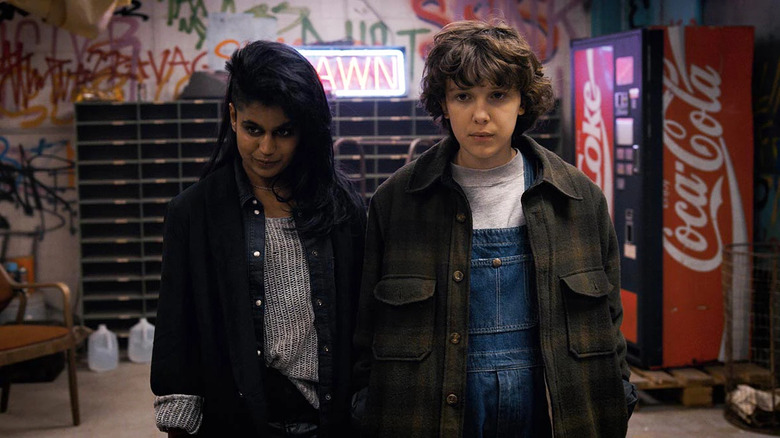
Here's a hot take for you: I kind of like "The Lost Sister," aka the episode where Kali teaches Eleven how to better utilize her powers while Eleven confronts her "sister" about the morality of taking violent revenge against the people who captured and abused them as children. It may've been generally deemed the worst episode of "Stranger Things" prior to the debut of season 5, but it was also a case where the show took a legitimate artistic risk and did something different (and, most importantly, interesting). In fact, much of what I like about season 2 is that it's the installment where the Duffers and their collaborators seemed most willing to experiment with the show's formula. This, in turn, led to happy accidents that would come to define the series going forward, like Steve Harrington (Joe Kerry) evolving from Nancy's kinda-jerky high school boyfriend to a likable himbo and nuturing parental figure to the show's young heroes. Not to mention, season 2 brought Max into the mix, introduced Erica, and confirmed that "Stranger Things" could feature massive, CGI-fueled (and slick) set pieces without overwhelming the personal, small-scale coming of age story it was telling.
Really, it's become all the easier to appreciate season 2 upon reflection. On top of everything else, it gave us the coolest Upside Down monster in the form of the Mind Flayer (a villain that the series finale did surprisingly right by) and transformed Barb (Shannon Purser) from a minor character whom the Duffers and their writing team had clearly only killed to give the show greater stakes to someone whose death had become much more emotionally consequential and poignant. The only thing it was missing was that X factor, which brings us to...
1. Season 1
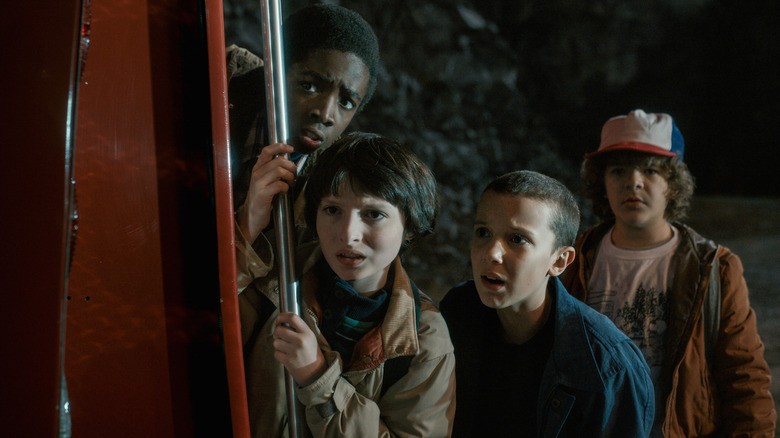
Every showrunner or showrunner team that's scored an unexpected success secretly know that it's impossible to truly recapture lightning in a bottle. So it was with "Stranger Things" season 1, which came along at the exact right time to become the closest thing we've had to a monocultural hit since the age of streaming began in earnest. It wasn't just a matter of timing, though. Season 1 is a tight piece of small screen storytelling that moves at a clip, pulling you into its world of inter-dimensional monsters, malevolent government experiments, and mysterious young girls with telekinetic abilities. It's also overflowing with images that have since become burned into our collective pop cultural consciousness, much like the visuals of the media that inspired the Duffers to begin with. Who can forget the first time they laid eyes on the haunting, blue-tinted nightmare realm that is the Upside Down? Or the sight of Hopper desperately performing CPR on Will as he flashes back to his own daughter Sarah dying from cancer (a moment that will make you choke up just thinking about it)?
Because it was a much lower-budgeted affair than the installments that followed, this season had to be more careful and considerate with what it did and didn't show viewers. Constraints can, ironically, be boosters for creativity, and that was very much the case here. More than that, the contained nature of "Stranger Things" season 1 makes it easier to accept the show's fundamental issues, like how it's always lacked the thematic depth and radical storytelling of the most celebrated works it homages (with Stephen King's literature being perhaps the most obvious example). Try as they did, maybe it's no wonder the Duffers could never quite top what they achieved in their first time at bat.