

The Simpsons' 10 Most Shocking Deaths, Ranked
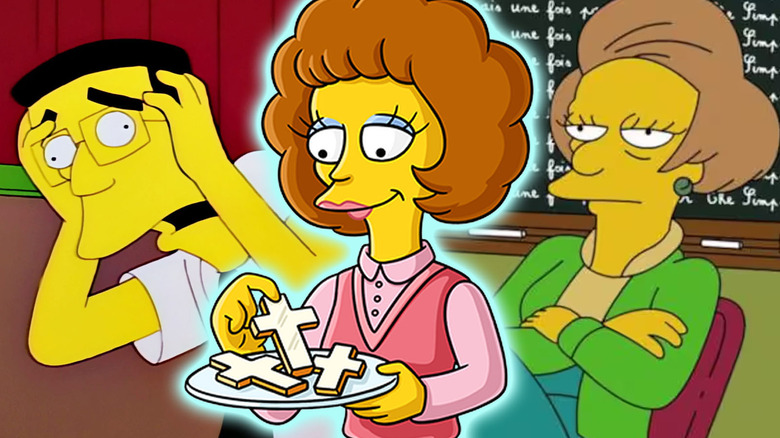
"The Simpsons," like any sitcom, tends to revert to the status quo by the end of every episode. Even when something outlandish happens, like Principal Skinner revealing he's not actually the real Seymour Skinner in one of the series' most infamous episodes, the residents of Springfield are more than happy to send things back to the way they were. But with death, there is no going back.
It's hard to mine death for comedy, but "The Simpsons" manages to find a way. Barring that, the show treats the deceased with a rare sense of reverence. "The Simpsons" may be a ridiculous animated sitcom, but even it has a sentimental streak every now and then. Granted, it's a well the show has only drunk from a few times over its lengthy run. Sure, background characters might die for a quick gag or to kickstart the main plot, but sometimes, characters we've really come to like end up biting the dust, never to return (unless it's in a "Treehouse of Horror" special).
Some Springfieldians have disappeared but don't quite qualify for this list. Dr. Marvin Monroe seems to exist within a limbo state where he's either dead or just been "very sick." Then there's the likes of Troy McClure and Lionel Hutz, both voiced by Phil Hartman, who were retired when Hartman died but could still be alive somewhere in the "Simpsons"-verse. Here are the most shocking "Simpsons" deaths we've mourned over the decades.
10. Alice Glick
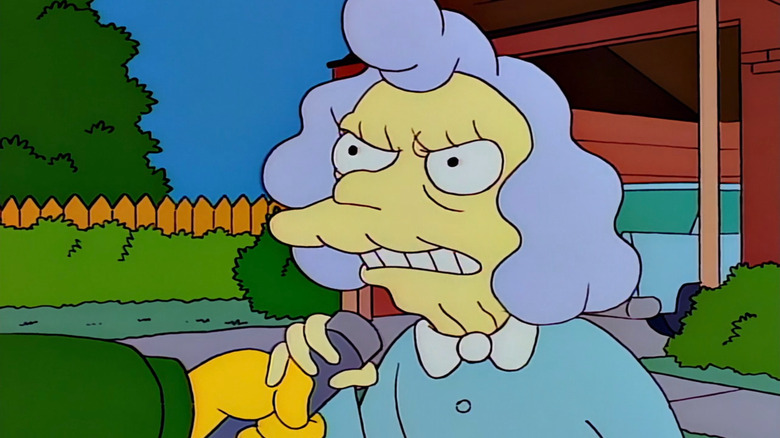
Alice Glick was never a prominent Springfieldian. Her biggest claim to fame is being voiced by Cloris Leachman in her first appearance back in season 2's "Three Men and a Comic Book." After that, she was played by "Simpsons" regular Tress MacNeille, getting a few good bits in now and then, like demanding $90 for a candy dish in season 7's "Two Bad Neighbors." But seeing as she was getting on in years, it makes sense she'd eventually pass on, which she did ... twice.
The first came in the season 23 episode "Replaceable You" where she's killed by a robot seal and even seen in heaven later. However, she would crop up in later episodes, meaning her "Replaceable You" death was non-canon. Either that or she has the same will and fortitude as Hans Moleman, who dies all the time but always returns. The writers must've decided to settle the debate once and for all and killed her off for good in season 37's "Sashes to Sashes." This time, her death is going to stick, as confirmed by executive producer Tim Long to TVLine: "In a sense, Alice the organist will live forever, through the beautiful music she made. But in another, more important sense, yep she's dead as a doornail."
It's hard to call Alice's second (and canon) death "shocking" when she died once before. Even though she came up, I kind of assumed she existed in the same limbo state as Marvin Monroe. Oh, what horrors exist in Springfield that so many can't pass to the other side. Still, Alice was a reliable comedic force when the writers knew how to use her, and she'll be missed.
9. Rabbi Hyman Krustofsky
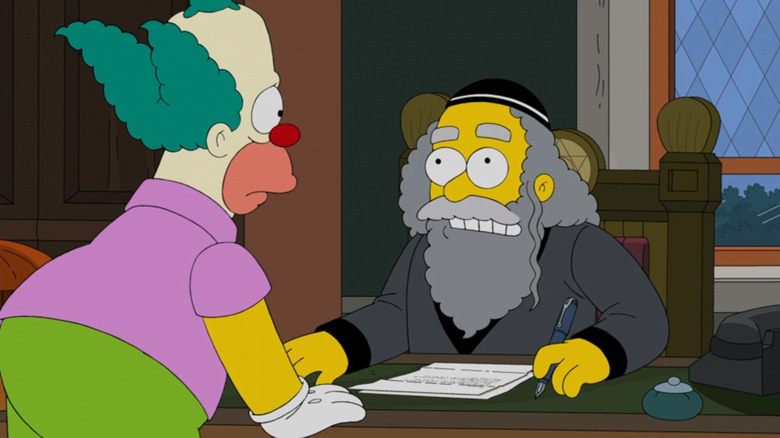
Rabbi Hyman Krustofsky, typically voiced by Jackie Mason, was a great foil for Krusty the Clown. He's introduced as disappointed in his son's career path before learning to accept it, adding some extra pathos to the raucous clown. However, his rare appearances made him pretty disposable, and he eventually passes away in the premiere episode of season 26, "Clown in the Dumps."
His demise could've been far more shocking had it not been telegraphed in the lead-up to the season. For starters, there's the episode's title, "Clown in the Dumps," which had a lot of people assuming Krusty the Clown himself would kick the bucket. That legitimately would've been shocking given Krusty's prominence on the show, but no, instead, the series killed off his dad, which makes sense since being "in the dumps" means being sad. And that's what Krusty is throughout the episode, as he contends with the fact his father didn't think he was funny.
Going into the 26th season, it was only natural for "The Simpsons" to find any way to drum up interest in a show that had long passed its "Best By" date. Rabbi Krustofsky had a handful appearances, but anyone who tuned in probably had a hard time remembering who he even was. It's a good reminder that if you're going to hype up a character dying, you better deliver the goods.
8. Fat Tony
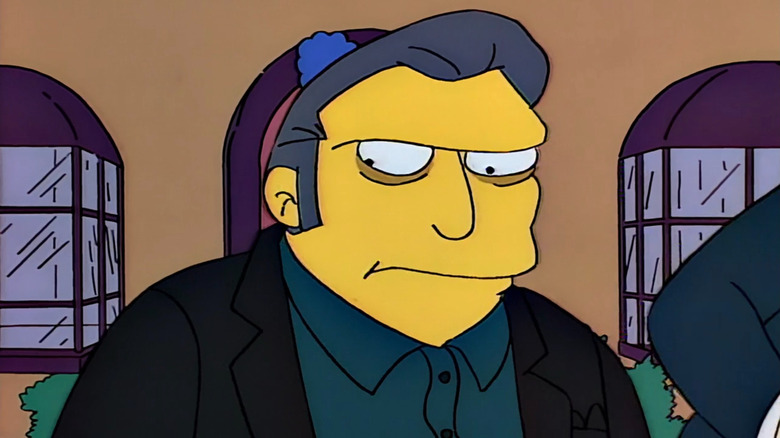
Fat Tony (voiced by Joe Mantegna) and his cronies were an excuse for "The Simpsons" writers to do whatever mob parodies they wanted. And if you can't believe the show would kill off such a fun character, you're right! Because they brought him back in the most roundabout way possible.
Season 22's "Donnie Fatso" sees Homer infiltrate the mob for the FBI. He gets in close with Fat Tony's crew ... too close. Upon learning that Homer was a rat the entire time, Tony suffers from a heart attack and dies. This weighs heavily on Homer's conscious, and he gets kidnapped by Fat Tony's cousin, Fit Tony, who wants to kill Homer initially but then realizes how much Homer truly cared for his fallen cousin. In a montage, we learn that Fit Tony took over Fat Tony's Springfield operations, but the stress of the job caused him to overeat to where his nickname changed to Fat Tony. Basically, we're back to square one.
Upon reading the episode's script, Mantegna was at first devastated to learn his character was getting killed off. But that was before learning he'd still have a recurring gig on "The Simpsons." It's all rather confusing. Fat Tony's dead but an identical Fat Tony assumes his place in Springfield, which is as odd of a status quo reset as you're going to get. And somehow, this exact plot line happened twice on the show.
7. Snowball II
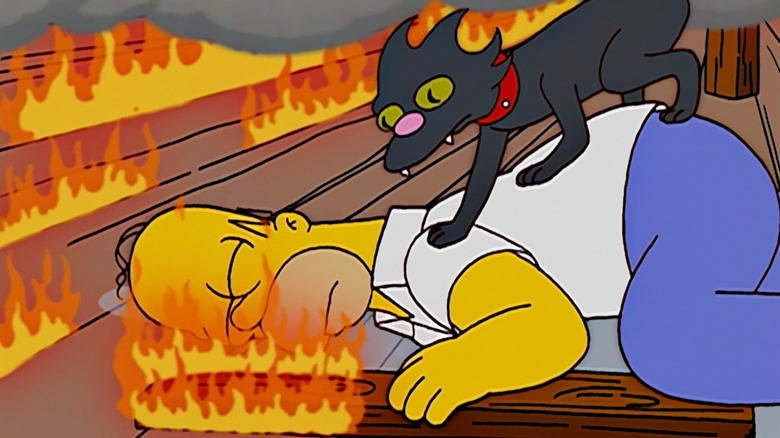
Fat Tony doesn't even get the dignity of being the first "Simpsons" character to have an absurd death/replacement storyline. That distinction goes to Snowball II. The family's first cat, Snowball, died before the events of the series and was replaced by Snowball II. The cat never quite made as much of an impact as the dog, Santa's Little Helper, but she was a reliable presence. Then, in season 15's "I, (Annoyed Grunt)-Bot," Snowball II gets run over by Dr. Hibbert's car, much to Lisa's dismay.
The rest of Lisa's story involves her adopting various other cats to fill the void, but they each meet quick demises. It's a tough episode to watch if you're a cat lover, but by the end, Lisa gets a cat that looks identical to Snowball II. Despite technically being Snowball V, Lisa says that they'll just call the new pet Snowball II for simplicity.
It's disappointing because Snowball II rarely gets spotlight episode, and when one finally comes around, it involves her untimely death. This does lead to a pretty funny meta moment where Principal Skinner calls out Lisa for the misleading name, and she reminds him of his actual name, Armin Tamzarian. It's a fun callback and a good reminder that "The Simpsons" will go to great lengths to ensure very few things ever change around Springfield. Still, we could do without all the rampant cat death next time.
6. Larry Dalrymple
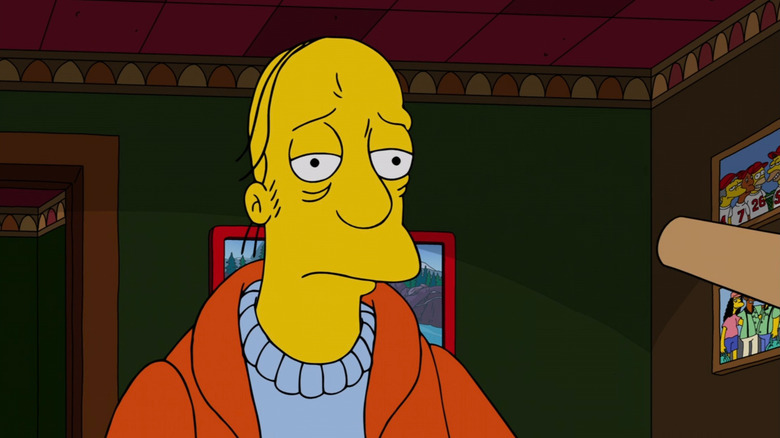
Larry was the epitome of a background character on "The Simpsons." He was one of two reliable barflies (in addition to Sam) who would often be seen at Moe's. While Homer and his buddies would chat with each other, he was always off to the side. I'm pretty sure he had fewer than five lines throughout the entirety of the series. He didn't play much of a role in Springfield, but he was a familiar face. And for many, it hit hard when he died sitting at the bar in season 35's "Cremains of the Day."
One might expect Larry's death to jumpstart some kind of unrelated zany adventure for Homer and his family to go on. Instead, we get a 22-minute tribute to the forgotten friend. Homer, Moe, Lenny, and Carl go on a trip to spread Larry's ashes and learn more about him after death than they ever knew in life. There's also a heart-wrenching montage of Larry sitting there looking sad while Homer and pals do all the fun stuff. It becomes clear that while they never considered Larry a real member of the gang, Larry considered them his closest friends.
It's a genuinely sad episode, and one that didn't sit well with long-time fans who liked Larry always being there. "The Simpsons" team even weighed in to say that was the point. It's meant to serve as a reflection not to ignore the people in your own life who are consistently there even if you don't think about them too often. Hopefully, Homer and his friends start bringing ol' Sam into more of their adventures so that they don't make the same mistake twice.
5. Bleeding Gums Murphy
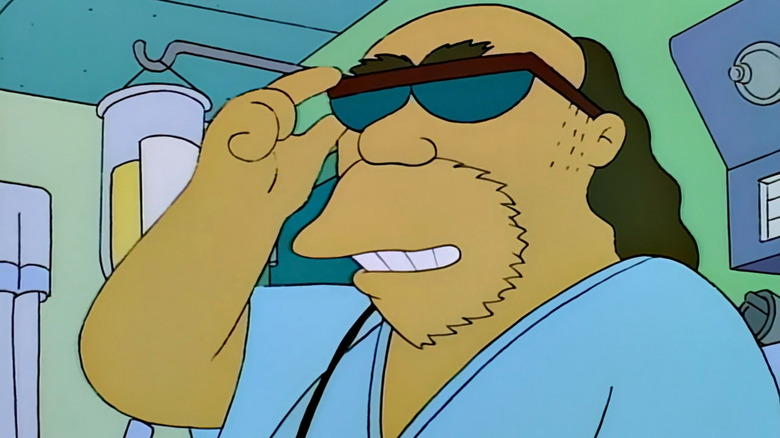
Bleeding Gums Murphy had an incredible impact on the show despite very little screen time. He first appears in season 1's "Moaning Lisa" when she's feeling the blues. He's one of the few people who actually understands her and encourages her to channel her sadness through her saxophone and sing her blues away. From that moment, he was referenced and appeared in various photographs, clearly a big influence on Lisa. He returns for season 6's "Round Springfield" when Lisa finds him in the hospital, but when she goes to visit him after a performance, she learns he's already passed away.
Lisa tends to be a more tragic figure. Her intelligence isolates her from both her schoolmates and her family. But Bleeding Gums Murphy understood the talent she had and was there to comfort her when no one else could. He didn't even need to say much, just playing the sax alongside Lisa was enough to show her there were people like her out there.
Death has always been part of "The Simpsons," with the first major one being Hubert Simpson during the "Tracey Ullman Show" shorts. Bleeding Gums felt different, though. He had almost ascended to the status of a mythic figure on the show, even appearing during the opening credits for years before it got a refresh. And Lisa mourns her mentor's death, with a sweet moment even materializing between her and Bart, as he buys Bleeding Gums' only record for Lisa so that she can honor his memory. Lisa was able to handle Bleeding Gums' death in part because he showed her how to channel her sadness, and that makes him worth remembering.
4. Frank Grimes
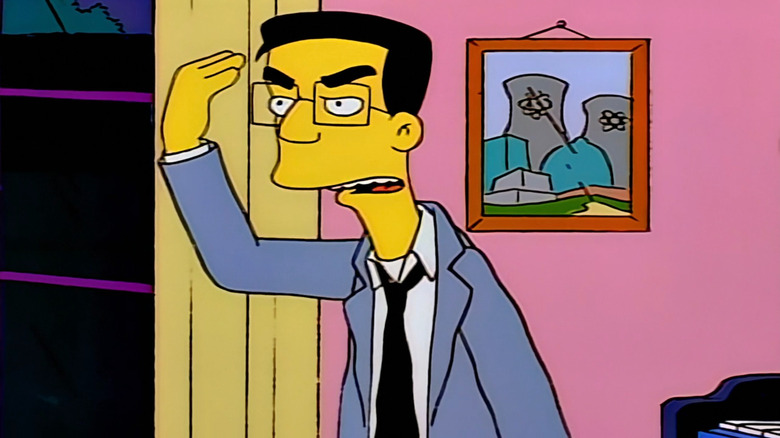
Season 8's "Homer's Enemy" is considered the best "Simpsons" episode ever on IMDb, and it's easy to see why. It introduced fans to Frank Grimes, or Grimey as he liked to be called, who's an immensely tragic figure. He's like a real person being dropped into Springfield and being forced to work alongside Homer, who is utterly incompetent at his job yet enjoys a relatively great life. He doesn't lose his job despite making numerous errors, and he's been able to go to space and hang out with presidents.
Nothing about Homer's life feels earned, at least if you're an outsider who has to see what he's usually like on a day-to-day basis. And after his attempt to humiliate Homer backfires, Grimey loses his mind and during a massive freakout sadly loses his own life. It's one of the most shocking "Simpsons" deaths for how dark it makes the entire episode. It's not just a bunch of meta jokes about how no ordinary human could do everything Homer has done. It shows how a competent individual can be driven to madness by the stupidity of not just Homer but of Springfield as a whole, as a town that's more than happy to overlook characters' obvious flaws.
As one final, dark punchline, Homer makes a quip at Grimes' funeral, causing everyone to laugh as he's been lowered into his grave. The show could've reset to the status quo by having Grimes skip town or even winding up in an asylum. Killing him is a cruel ending to one of the darkest "Simpsons" episodes of all time.
3. Mona Simpson
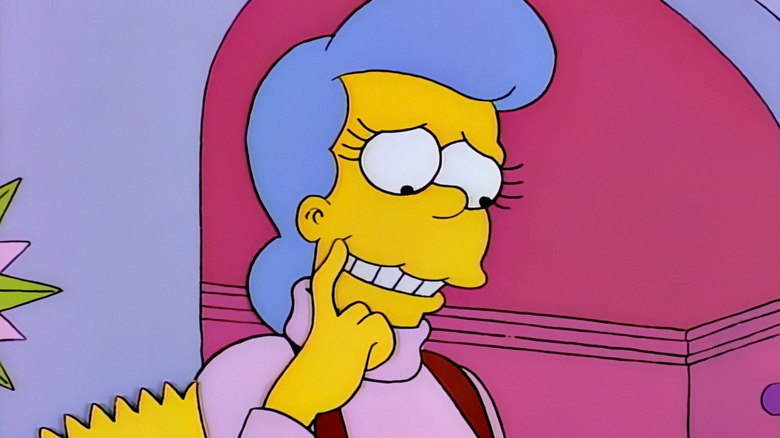
For a while, "The Simpsons" avoided much discussion of Homer's mother. While his father was kept away in a retirement home, it seemed as though Mona had passed away a long time ago. That is until season 7's "Mother Simpson" revealed she was very much alive and voiced by Glenn Close in one of the show's best guest star roles. She was a fugitive on the run after harming Mr. Burns' germ warfare products, and by the end of the episode, she'd have to go into hiding once more. She continued popping up, always needing to leave Homer yet again until we reach season 19's "Mona Leaves-a."
It finally appears that Mona will stay for good, but Homer is unwilling to allow her into his life because she's left him so many times before. When he has a change of heart and walks downstairs to forgive his mother, he discovers she's already died. It's a heartbreaking development. "The Simpsons" has never really been a show to dive into the psyches of its characters, but it's hard not to tie a link all of Homer's problems to his mother leaving him when he was young, leaving him to the devices of Abe Simpson, who was pretty neglectful.
Mona lived a long life, so it's not surprising she'd be a character the writers would consider killing off. But her death is a tragedy because it forever means there's a part of Homer that will remain broken. If she held on for just a few minutes longer, the two of them could've reconciled. Sadly, it's probably just too expensive to keep bringing Close back once every few seasons to voice Mona.
2. Edna Krabappel
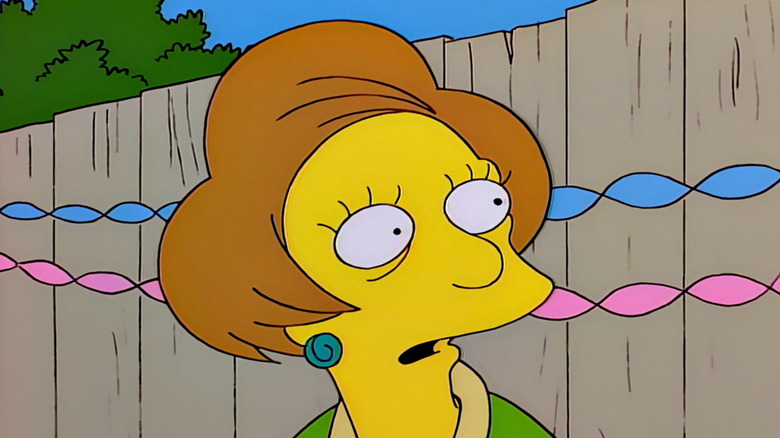
As mentioned previously, when Phil Hartman died, his "Simpsons" characters were retired. We never learn what happened to Lionel Hutz and Troy McClure, but the same "sweeping under the rug" couldn't work for Edna Krabappel when her voice actor, Marcia Wallace, tragically died in 2013. The show didn't just waltz around what happened to Ms. Krabappel. It couldn't even if it wanted; as Bart's teacher, she was too important to just cast aside. And she had also recently married Ned Flanders, turning him into a widower for the second time.
Within the continuity of "The Simpsons," Edna passed away. It's not explicitly mentioned what happened, but we do get a scene of Ned mourning her. Years later, the show would put out "Diary Queen" where Bart stumbles upon his former teacher's old diary and mistakenly believes that she thought he was his most improved student, and the episode uses archival recordings of Wallace to bring Edna to life once more.
Ms. Krabappel's death hits extra hard because it was accompanied by a real-life death. Wallace was an immense comedic talent, having also appeared on "The Bob Newhart Show." It might've been hard for other shows to know how to maneuver around this loss, but "The Simpsons" handled it with aplomb.
1. Maude Flanders
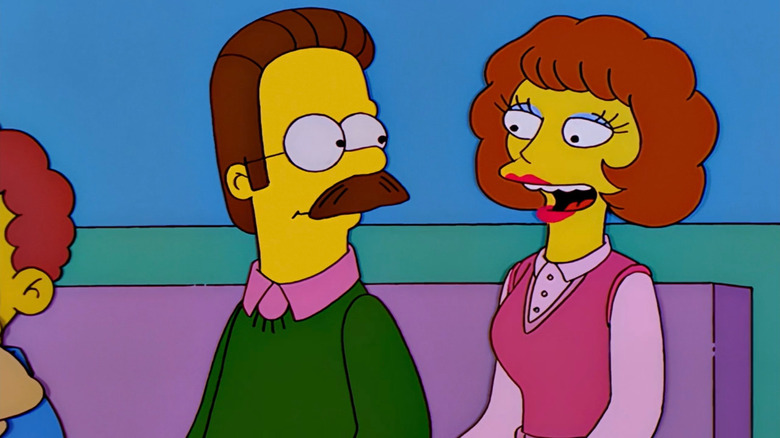
When you think of shocking "Simpsons" deaths, Maude Flanders is probably the first to come to mind. Even non-"Simpsons" fans or viewers who checked out long ago know about this. In season 11's "Alone Again, Natura-Diddly," the Flanders clan go to a racing event when Maude gets hit by a barrage of t-shirts, sending her over the edge of the bleachers to her doom.
Sure, "The Simpsons" had killed characters before with one-off appearances like Frank Grimes or minor recurring fixtures like Bleeding Gums Murphy. But Maude was the Simpsons' neighbor. We'd see her at church; she was there to help Ned when the family lost their house. And the real reason why "The Simpsons" killed off Maude has nothing to do with the voice actor dying. Maggie Roswell wanted more money to accommodate her commutes to Los Angeles, so she was replaced with Marcia Mitzman Gaven who voiced Maude as well as Roswell's other characters, like Helen Lovejoy and Miss Hoover. Gaven probably could've continued playing Maude, but the writers had other ideas in mind.
Maude's death was shocking because it felt disrespectful to a character who had always been there. On the other hand, it fleshed out Ned's character more, who had a tinge of sadness to him after. Maude's death was a big swing for "The Simpsons," as it changed the kind of father and religious believer Ned needed to be. "The Simpsons" normally doesn't change characters too much, but Ned always felt different after this, even if that meant sending him further down his path of flanderization. It's interesting to think if that would've happened if Roswell and Fox could've resolved her pay dispute amicably.