

5 Biggest Connections Between Isaac Asimov's Foundation And Robot Books
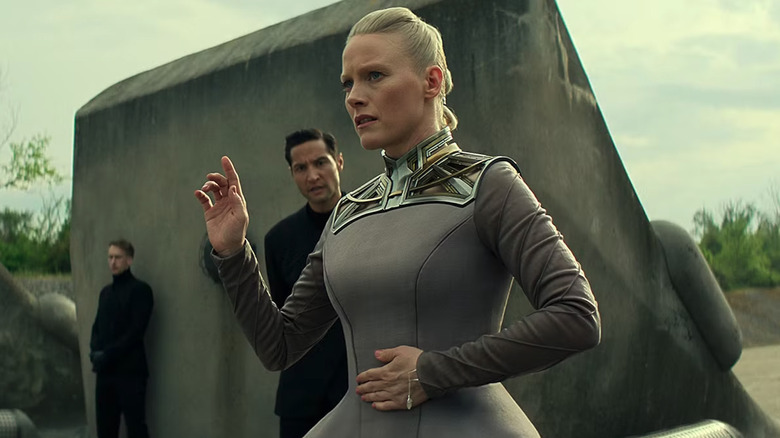
Isaac Asimov's "Robot" novels (including "I, Robot") and his "Foundation" books are set in the same universe. But just because two stories occupy the same space doesn't mean they actually impact each other. I remember reading through the books for both series for a while before I realized that they connected. But by the end of reading through both, the connection wasn't just clear. It was crucial.
If you're wondering how Asimov's two series tie into one another, I've highlighted five key areas where the crossovers are not just clear. They're super important, and these connections generally go in one direction: something starts in the "Robot" novels and eventually trickles through to the "Foundation" books. This is because the stories are set nearly 20,000 years apart, with the "Robot" stories coming first and the "Foundation" epic coming much later in human history.
Again, we're not just talking about cute "connect the dots" Easter egg stuff here. I've hunted down not one, not two, but five different points where the ingenious Founding Father of sci-fi brought up a character or concept in his "Robot" stories and then made it an intimately important part of his "Foundation" narrative. So, without further ado, let's look at some of the biggest connections between Isaac Asimov's "Foundation" and "Robot" books, starting with the most important one of all: Demerzel.
Demerzel (hands down, the most important robot in the history of humanity)
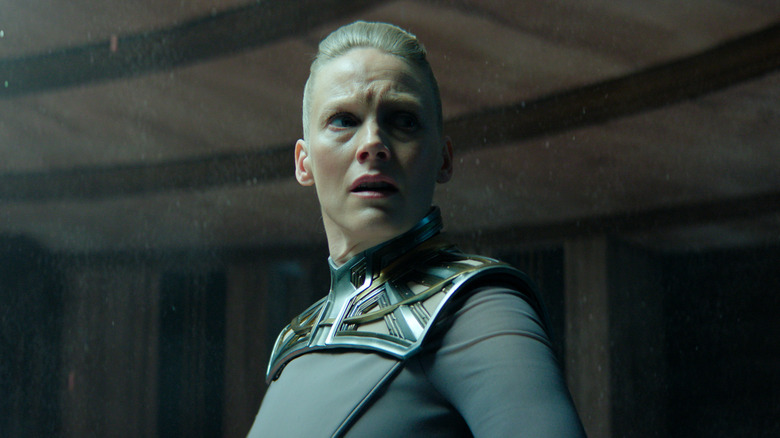
Demerzel is a fun character in Apple TV's "Foundation" adaptation. Played by the stoic Laura Birn, Demerzel has shifted from a quiet background character in season 1 to the unexpected protagonist of season 3. Even in that big heroic revelation, though, the gravity and importance of the character are underplayed in the show. In Asimov's books, Demerzel is the linchpin that saved humanity from tens of thousands of years of chaos and destruction.
Portrayed in print as a man (but still a robot, either way), Demerzel also goes by the familiar name R. Daneel Olivaw — and he shows up in some of the earliest "Robot" novels, particularly a trio of futuristic hardboiled detective novels. Later on, Daneel teams up with another robot, named R. Giskard Reventlov, and they develop the critical Zeroth Law of Robotics (more on that in a minute). This sets him on a thousands-of-years-long course where he first guides and then saves the Galactic Empire.
I don't want to give everything away here, but suffice it to say that as Asimov pumped out his sci-fi stories over the decades, Daneel (or Eto Demerzel, as he was later called in the "Foundation" books) remained one of the most consistent characters. Even when there are large chunks of prose where he doesn't show up, it's often revealed that he's quietly working away in the background, laboring to save the human race that he cares for so well.
The Laws of Robotics (Especially the Zeroth Law)
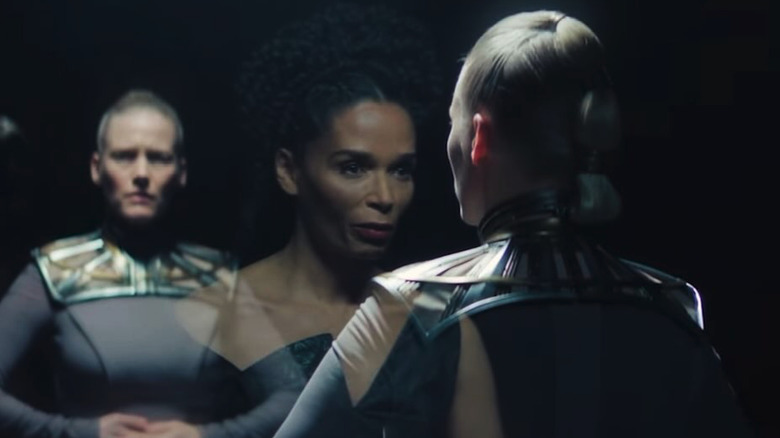
I mentioned the Laws of Robotics already, but they deserve an entire section of their own. Asimov's Three Laws of Robotics are etched in the annals of sci-fi history:
-
A robot may not injure a human being or, through inaction, allow a human being to come to harm.
-
A robot must obey orders given to it by human beings except where such orders would conflict with the First Law.
-
A robot must protect its own existence as long as such protection does not conflict with the First or Second Law.
These three are the widely known ones. But there's also the lesser-knnown fourth Law of Robotics, called the Zeroth Law — in many ways, it's the most important one of all. That one is developed in the book "Robots and Empire," and it goes thusly:
A robot may not harm humanity, or, through inaction, allow humanity to come to harm.
To put it another way (and Asimov does), robots can put the needs of "humanity" as a whole over the needs (and fate) of a single human. This is the critical rule that allows Demerzel/Daneel to help guide the Galactic Empire with a caring but iron fist. She/he is able to make decisions that lead to harm for humans — as long as it is always in the interest of the larger fate of humanity as a species. The law is developed toward the end of Asimov's "Robot" stories, but there's no doubt that its larger impact comes in the "Foundation" tale.
Mentalics, Gaia, and Galaxia
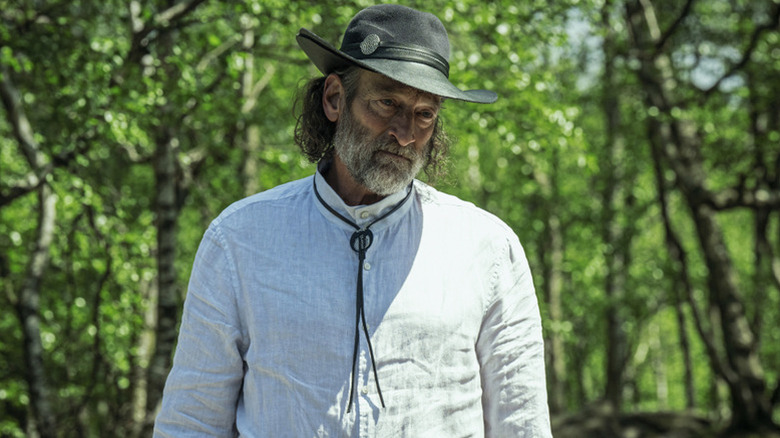
Season 3 of "Foundation" ushered in the era of the mentalics. These are best represented by the Second Foundation led by Gaal Dornick (Lou Llobell). But by the time season 4 rolls around, I expect another group of mind-bending experts to enter the scene. I'm talking about Gaians from Gaia, the living, sentient planet.
In Asimov's books, Gaia is a representation of the mentalic concept on steroids. The entire planet is a conscious hivemind (think "Pluribus," but more positive). By the end of the story, the single planet of Gaia begins to expand into a galaxy-wide hivemind called Galaxia. These massive mentalic communities are a cornerstone element of the later "Foundation" story. For their origin, though, we turn once again to the Robot novel "Robots and Empire."
In that book, the robots R. Daneel Olivaw and R. Giskard Reventlov join forces to develop the Zeroth Law. They also discover the ability to manipulate and influence minds — an ability that Daneel carries into the "Foundation" novels, where the concept is fully fleshed out as he founds Gaia and hatches the plan to create Galaxia.
The Spacers and Their Worlds
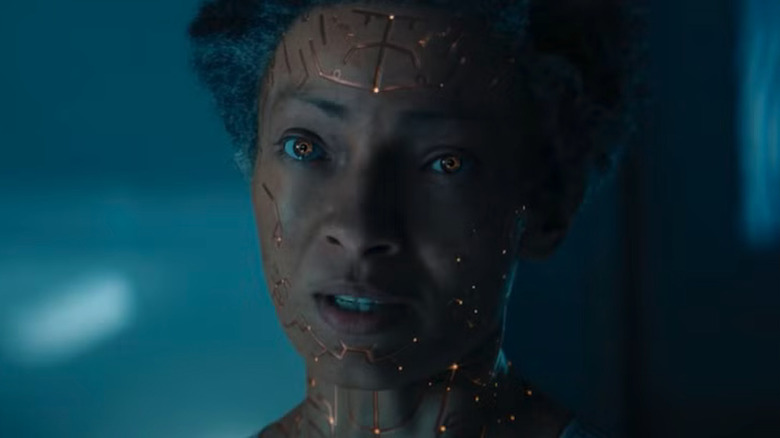
In Apple TV's "Foundation" series, the concept of a "Spacer" comes up early in the show. However, in the adaptation, these unusual human beings are merely connected to space travel. They have a fleet of ships that help the Emperor and his empire move across the wide spaces of the galaxy.
In the books, the Spacers are a completely different breed of human — and when I say "breed," I mean "breed." Spacers are the biologically advanced humans who live on the first 50 planets that humans settle in space. These early colonists are hostile to the mother planet, and they develop their own cultures on their own planets, two of which come up more often than the others: Aurora and Solaria.
The Spacers and their planets play a recurring role throughout many of the "Robot" novels. And yes, you guessed it: They also show up in the "Foundation" story, too. Not in the way Apple TV has done, though. In the last book of the "Foundation" series, called "Foundation and Earth," the main characters go on an odyssey that leads them to rediscover multiple lost Spacer worlds. Some of these are dead. Others are overgrown. Others are disturbingly identical to what they were 20,000 years earlier. Whatever their condition, in all of those cases, the Spacer worlds double as a critical connection point where many of the "Robot" novels take place, and the "Foundation" series slowly builds to its climactic conclusion. Let's hope the Spacers find their way back into the ongoing series before long.
A radioactive Earth (and its satellite)
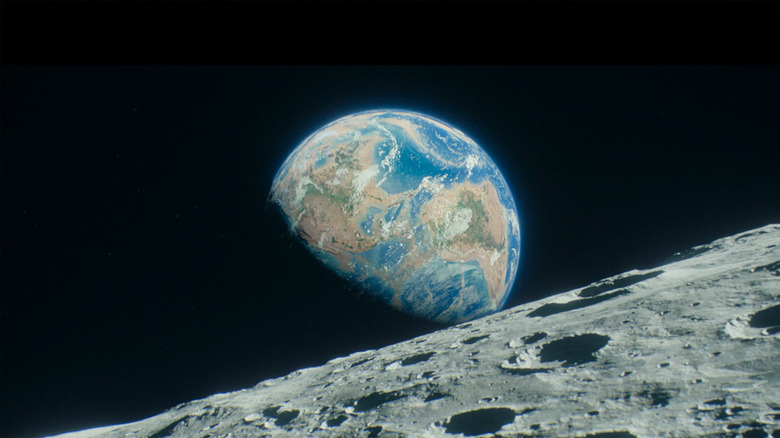
Asimov destroys Earth early on in his stories as a way to push humanity off the mother planet and out to find its destiny across the galaxy. The method of destruction that the author uses? Radiation.
In the "Robot" novel "Robots and Empire," the Earth is slowly and purposefully turned into a radioactive wasteland. It becomes uninhabitable in the following centuries, and then, it becomes a forgotten part of the past. It is an irrelevant factor in "Foundation" — that is, until the last two books, which center on a desperate search for the forgotten birthplace of humanity. Eventually, Earth is discovered, along with a very important colony led by a robot on its nearby satellite, the Moon.
Earth's radioactivity is the climactic element of one of the "Robot" novels. It's also the triumphant conclusion of the "Foundation" book series. It's so important that it's even already made an appearance in the final seconds of "Foundation" season 3. Expect Mother Earth in all of its radioactive glory to show up again moving forward — and when you see it, remember, its story is much bigger than the history of the Galactic Empire. It connects all the way back to the "Robot" novels.