

Why X-Men: The Animated Series Never Featured Kitty Pryde

We may receive a commission on purchases made from links.
The 1990s "X-Men" cartoon made an effort to feature the classic X-Men members who weren't in the main cast (Nightcrawler, Colossus, Iceman, Angel, etc.) as guest stars. That makes one absence all the more notable: Katherine "Kitty" Pryde, aka Sprite/Ariel/Shadowcat, was nowhere to be seen.
Introduced by writer Chris Claremont and artist John Byrne during "The Dark Phoenix Saga" (specifically 1980's "X-Men" #129), Kitty has the power to "phase," or become intangible and move through solid matter. She was only 14, a teen plucked from the Chicago suburbs when her mutant powers emerged. She became the little sister of the X-Men, especially for Storm and Wolverine, and her coming of age is a backbone of the Claremont years. Cycling through several different code names and costumes happened because she was figuring out who she was.
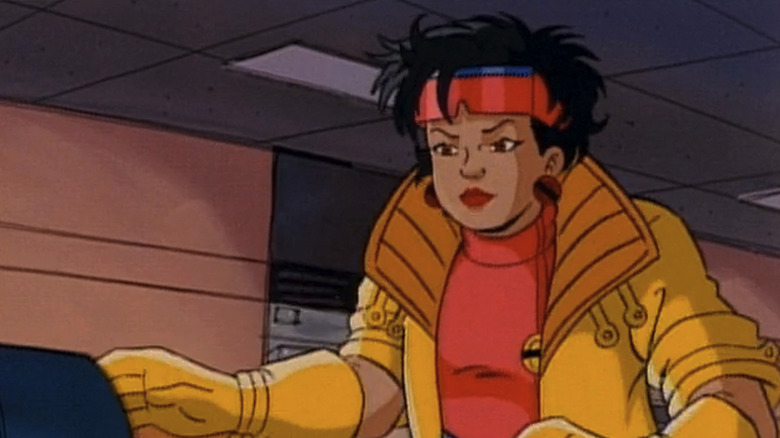
So why no Kitty in the cartoon? Because the series effectively gave her place on the X-Men to Jubilation Lee/Jubilee (Alyson Court), who, true to her celebratory name, can spark fireworks from her fingertips. Introduced by Claremont and Marc Silvestri in 1989's "Uncanny X-Men" #244, Jubilee basically served as Kitty's replacement in the comics. Kitty had grown up and left "X-Men" to star in spin-off book "Excalibur," so Jubilee took her place as a rookie and Wolverine's teen girl sidekick.
As "X-Men" story editor Eric Lewald has said, Marvel specifically requested they use Jubilee instead of Kitty, because Jubilee was newer. (Marvel also requested the fresh-faced Gambit, who got a team slot that might've otherwise gone to Colossus or Nightcrawler.) As writer David McDermott recounted in Lewald's book "Previously on X-Men: The Making of an Animated Series," the team decided that "Jubilee can basically fill in all the early Kitty Pryde roles if you want to do a story that happened during that period."
Jubilee took Kitty Pryde's place in X-Men: The Animated Series
Kitty had starred in the original "X-Men" animated pilot, which was even titled "Pryde of the X-Men." The episode features Kitty (Kath Soucie) joining the X-Men as they battle Magneto's Brotherhood of Mutant Terrorists. "Pryde of the X-Men" wasn't picked up for a series, but some of its makers, like Larry Houston and Will Meugniot, soon got a second shot at making an X-Men cartoon.
"To understand where 'X-Men' comes from, you have to go back to 'Pryde of the X-Men,'" Meugniot said in a 2018 interview on the 42Cast podcast. The eventual "X-Men" pilot, "Night of the Sentinels," features the X-Men taking in Jubilee after she's chased by those eponymous mutant-hunting robots.
Meugniot first conceived this story for "Pryde." He wanted to do a riff on the first issue of "X-Men," where Jean Grey joined the team. As that comic did, beginning with a new member joining would make any exposition about the X-Men and mutants organic; Kitty met the X-Men as the kids watching did, and asked the questions those kids had.
However, Marvel's merchandising division requested the villains of the pilot be Magneto and the Brotherhood because they wanted to introduce as many toys as soon as possible. So "Pryde" was, in Meugniot's view, hurt by having to "introduce 20 characters in 22 minutes." He still believed in his original pitch, though, and used it again as the basis for the 1992 "X-Men" pilot, albeit with Jubilee instead of Kitty.
"I felt that the semi-hidden nature of the X-Men group lent itself to the perfect 'way in' for an audience, most of whom didn't know anything about mutants," wrote Lewald in "Previously on X-Men." As with Kitty, Jubilee served as this "way in."
Jubilee was important to X-Men: The Animated Series

In "Night of the Sentinels," Jubilee has discovered that she's a mutant and can't control her powers. This allows young viewers to learn what a "mutant" is and the struggles they face. The script doesn't just scribble out "Kitty" for "Jubilee," though. Jubilee runs away from home and hits the mall, where she's attacked by a Sentinel. Storm and Rogue, who were shopping, rescue her. In Jubilee's comic debut, she was a teen runaway who caught sight of the female X-Men on a mall trip and then followed them home.
The Sentinels are hunting Jubilee because her foster parents registered her with the "Mutant Control Agency," so the X-Men attack the agency's HQ to destroy its files on registered mutants. (Bold move for the cartoon to kick off with the heroes engaging in an act of terrorism. The episode stresses the Mutant Control Agency is not affiliated with the government — can't have kids questioning authority too much!)
With this opening, "X-Men" season 1 serialized a story arc around the Sentinels' threat to mutantkind. The season finale adapted the comic story "Days of Future Past," depicting a dark future where the Sentinels have nearly exterminated mutants. In the comic, Kitty travels back in time, possessing her younger self to stop the Sentinel-ruled future before it happens. How'd the cartoon do that story without Kitty? It used Bishop, who time travels physically, instead.
Revival series "X-Men '97" repeated "Night of the Sentinels" and used Sunspot/Roberto da Costa joining the team to introduce the X-Men to new viewers; Jubilee mentored Sunspot, bringing her arc full circle. The "X-Men '97" season 1 finale featured Kitty's photo (in her blue Excalibur costume), hinting that the animated X-Men might finally meet Miss Pryde after a very long delay.