

10 Best Characters In The Knives Out Movies, Ranked
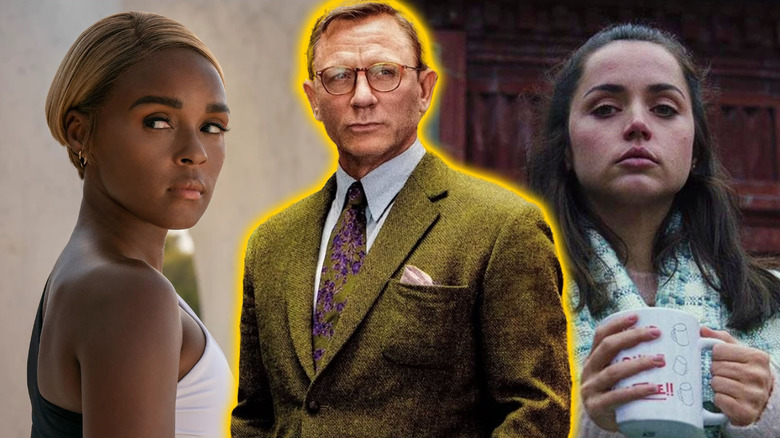
Spoilers for all the "Knives Out" mysteries follow.
The year is 2019. Two years prior, Rian Johnson had strangely become one of the most polarizing directors in Hollywood as a result of his work on "Star Wars: The Last Jedi," a film hailed by critics as a high-water mark in the troubled franchise's history but ultimately so divisive among fans that it gave "Star Wars" an identity crisis that the brand still hasn't fully recovered from. Whether you loved or hated the film, however, most would agree that Johnson had succeeded in one thing: subverting audience expectations.
Naturally, he took this storytelling instinct away from the galaxy far, far away and entered the world of the murder mystery. His first effort was "Knives Out," a hilarious, clever, and endlessly entertaining whodunnit in the tradition of Agatha Christie's Hercule Poirot stories. It was a runaway box office success that spawned two sequels — 2022's "Glass Onion" and 2025's "Wake Up Dead Man." While all three films use Johnson's subversive writing to shock and titillate the audience, not enough is said about how it also serves to create more interesting characters. The "Knives Out" films would be so much less without the colorful ensembles that carry them, so we're lining up our ten favorite suspects from the series so far.
10. Linda Drysdale
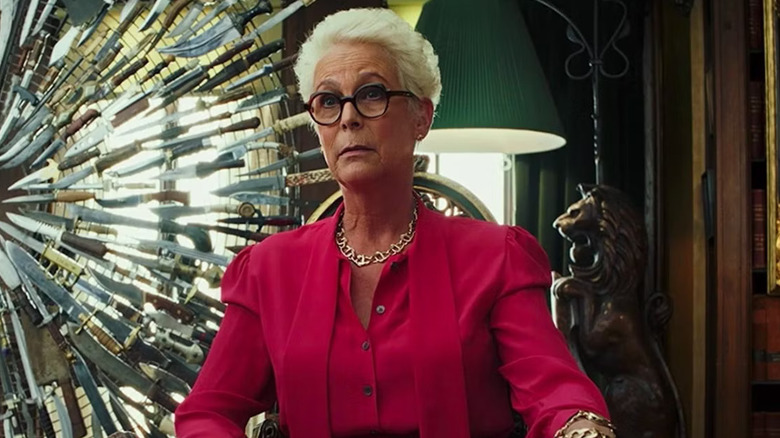
It's a credit to the incomparable career of Jamie Lee Curtis that Linda Drysdale probably ranks among the most underrated characters she's ever played. Undoubtedly the best utility player in the "Knives Out" franchise (which is to say, a character that is not an investigator, victim, or murderer), she appears in the first film as part of the large Thrombey extended family who serve as the stable of suspects for Benoit Blanc's debut case. Linda was born Linda Thrombey, the eldest child of prolific mystery novelist Harlan Thrombey (Christopher Plummer). Despite venturing far outside her father's empire to make a life for herself as a real estate developer (marrying Don Johnson's Richard Drysdale in the process), she seemingly remained his favorite child, the two playing games of deceit, detection, and misdirection, one of which posthumously reveals her husband's ongoing affair.
While most of the Thrombey family get lost in the shuffle of the case, fading in and out of focus relative to how likely they are to have murdered Harlan, Linda Drysdale demands attention in every scene she's in. This magnetism is justly earned through Curtis' chillingly calculated performance and Rian Johnson's dynamic use of her within the plot. In one moment, she can be vulnerably, tenderly reflective of her relationship with her father or contritely welcoming of Harlan's nurse Marta Cabrera (Ana de Armas). The next, she can spit words like acid, bullying her way through interrogations and legal processes with fiery rage. Linda's arc is also the strongest outside the film's central characters, with the ultimate revelation of Richard's infidelity earning her a difficult kind of freedom and closure that each of the Thrombeys would have killed for. Metaphorically speaking. Probably.
9. Miles Bron

While "Knives Out" felt first and foremost like a long overdue deliverance of the murder mystery genre to contemporary moviegoers, part of its charm was its deft social commentary. Mysteries (especially those set in mansions populated by the obscenely wealthy and unseen staff that make their lavish lives possible) often explore class inequality. That Johnson took it a step further by drawing a connection between that inequality and the indignities faced by immigrants in America could be seen as merely a component of his modernization of genre conventions.
In "Glass Onion," however, Johnson and the sequel's star Edward Norton made it clear that these films are meant to use mysteries as a vehicle to engage with topical political and social discourse. It's hard to imagine any cast member understands this better than Norton himself, seeing as he's the only "Knives Out" character to have such direct parallels to influential and culturally ubiquitous figures. Who is Miles Bron if not an unflattering patchwork of tech entrepreneurs? Peter Thiel's inhumanly myopic futurism and Elon Musk's immaturity and hedonism. (Mark Zuckerberg is all but mentioned by name, with a character using "The Social Network" to refer to Bron cutting his business partner out of his tech company.)
Of all the "Knives Out" killers, Bron is the easiest to get ahead of — but that's not entirely a bad thing. Johnson warned Norton prior to the actor reading the script that "Glass Onion" was going to lean harder on the darkly absurd satire of films like "Dr. Strangelove." The point of Bron is that he is predictable. His blatant evilness (and, to an even greater extent, his stupidity) is to be taken seriously, rather than explained away as misunderstood genius.
8. Hugh Ransom Drysdale
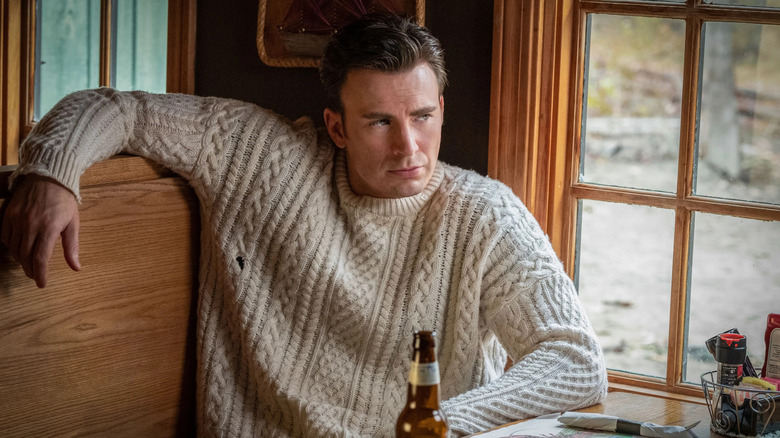
Casting Chris Evans as Hugh Ransom Drysdale, fresh off of a near decade-long run as one of the most unimpeachably "good" good guys in cinema history, was a stroke of genius on the part of Rian Johnson. Johnson was actually trying to find an actor he could cast against type for this role specifically, and Evans (perhaps because he'd been playing Captain America so long) all but begged the filmmaker to give him a shot at breaking bad. But while it's certainly true that the actor's connection to the Star-Spangled Man makes Ransom a less obvious suspect in the murder mystery at the heart of "Knives Out," the brilliance of the character was there long before the audition.
Having learned that Harlan Thrombey, his grandfather, would be leaving the entirety of his estate and fortune to Marta, Ransom impulsively decides to frame her for Harlan's murder at his 85th birthday party. However, his plan fails decisively, yet in a manner that improbably leaves Harlan dead (apparently by murder; in actuality by suicide) and Marta erroneously certain of her guilt. Because of how this information is presented to the audience, Ransom — who would either be a clear red herring or a disappointingly obvious killer — is able to hide in plain sight without putting on airs. He is, and always behaves like, "an a**hole." That Johnson was able to give a murder mystery film such an unconventional supporting "hero" while still pulling off a satisfying twist of his true culpability is an impressive feat — as well as a testament to how likable Evans is as a performer.
7. Jefferson Wicks
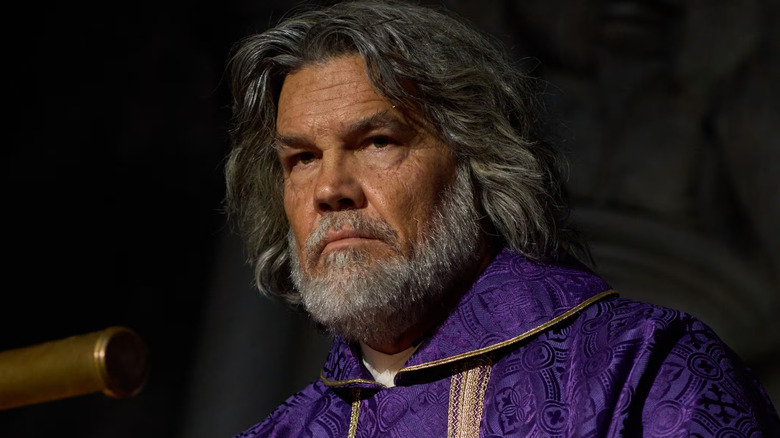
While "Glass Onion" flirted with the trope of the unlikable victim as a misdirect, "Wake Up Dead Man" goes all out by creating a victim so morally corrosive and contemptible that it's hard not to reserve more sympathy for the killer. Jefferson Wicks is the abusive monsignor of Our Lady of Perpetual Fortitude, a small Catholic church with a dwindling ministry thanks to the negligence of those entrusted with its care. Adopting an increasingly isolationist view of faith and religion, he is more interested in controlling a small but devoted flock through fear than trying to grow his church through humble outreach. By the time he's offered the chance to turn his cult of personality into an unfortunately plausible political career, it's little surprise how quickly he abandons his post and betrays the very people who worshipped him like a god.
Despite being afraid that supporting roles were killing his career, Josh Brolin gives a staggering performance as Wicks that stands shoulder to shoulder with his best work. His fear-mongering monologues are some of the film's most electric moments, with Brolin's blistering delivery twisting faith beyond recognition and solidifying his presence as unstoppable and insurmountable. It isn't often that a mystery's murder victim is also its most terrifying villain. As with Miles Bron, there's room for audiences to draw connections directly to the real world as they see fit — many will likely notice the uncannily orange hue of his face, which will inspire comparison to another powerful demagogue. At the same time, the beauty of Wicks (and Brolin's simple, powerful performance) is that he stands entirely on his own as a character, compelling and provocative without a necessary analog.
6. Harlan Thrombey
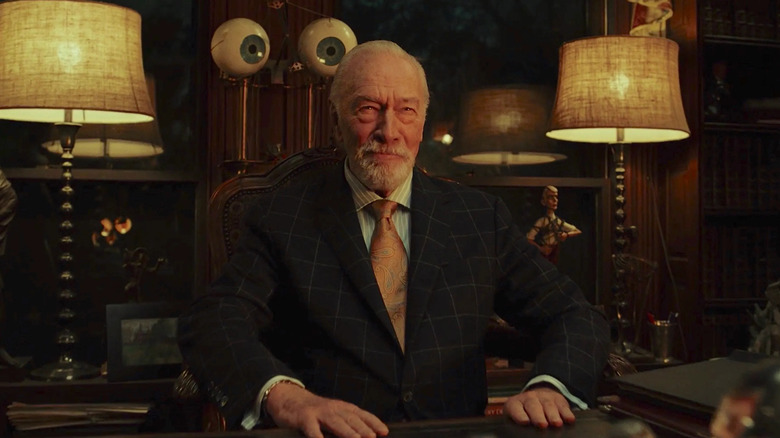
Harlan Thrombey is the unsung hero of the original "Knives Out" film. Plenty was said at the time of Blanc, Ransom, and Marta, all of whom righteously maintained their place at the center of an ensemble project. Years later, however, it's worth considering if Harlan isn't one of the greatest murder mystery victims of all time.
To refresh your memory, the wealthy writer dies by suicide in the first film after believing that Marta (his caretaker, so beloved to him that he had already planned to give her everything he had upon his passing — albeit at a much later date) had accidentally given him a lethal dose of morphine. With her unable to find the naloxone to counteract the mistake (Ransom had removed it from her medicine bag), Harlan, in his final moments, used his mastery of the mystery genre to teach Marta how to stage his death as a suicide that would absolve her of legal responsibility. As neither of them were aware, however, Marta actually hadn't overdosed him at all, and only believed she did because of Ransom's tampering.
Tragically, Harlan represents his family's lack of reality to a lethal extreme. All of the Thrombeys are so out-of-touch that they can't tell a real knife from a prop, but Harlan is so lost that turning his death into an overly complicated mystery plot seems like a saner option than waiting for the ambulance to arrive. Fascinatingly, one could argue his inability to separate fiction from reality sealed his doom in more ways than one — after all, where else did Ransom get the foolish impulse to solve his problems with paperback plotting?
5. Martha Delacroix
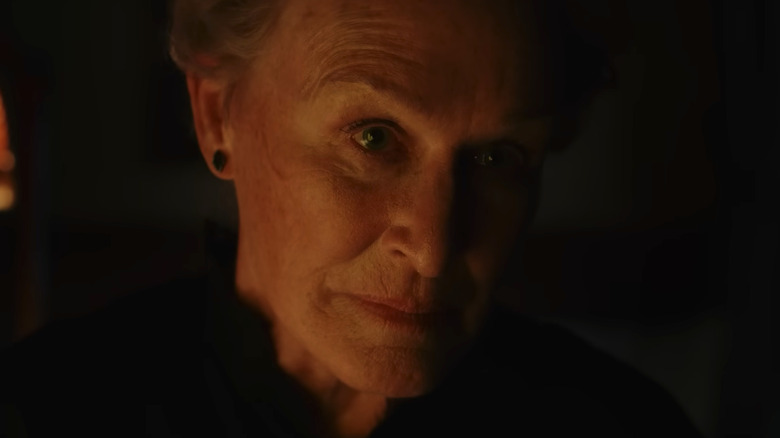
All due respect to Ransom Drysdale and Miles Bron, but how is any murderer going to compete with a cinema legend like Glenn Close, especially with the material Rian Johnson wrote for her in the role of Martha Delacroix. Once a devout follower of Wicks', whose own zealously exacting standards of faith caused her to drive his mother to her ultimate demise, she conspires with local doctor Nat Sharp (Jeremy Renner) and her groundskeeper boyfriend Samson Holt (Thomas Haden Church) to murder the monsignor. In staging his death as a messianic miracle, she hopes to preserve his impact on the world while preventing him from absconding with the vast family fortune hidden in his father's crypt.
Close is unsurprisingly incredible as Martha, easily giving the "Knives Out" franchise one of its strongest dramatic performances. It can't be overstated how well she's supported by Johnson's material and directing — neither Drysdale nor Bron have an arc as clear, compelling, or moving as hers, which is all the more impressive considering that Johnson is able to hide her as the true killer until the very last moments of the film. From the shot of her stumbling into the church, frail from self-induced poisoning, to unburden her guilty soul before Father Jud (Josh O'Connor), Johnson and Close pace her climactic (and literal) come-to-Jesus moment perfectly. The audience can't help but hang on every word as they twist the story in emotionally earned and cathartic ways that still surprise and dazzle. The confession, repentance, and final push to let her hatred for Grace (Annie Hamilton) go at long last elevate the finale of "Wake Up Dead Man" above not just other mystery films, but most popular films released this year in any genre.
4. Helen Brand
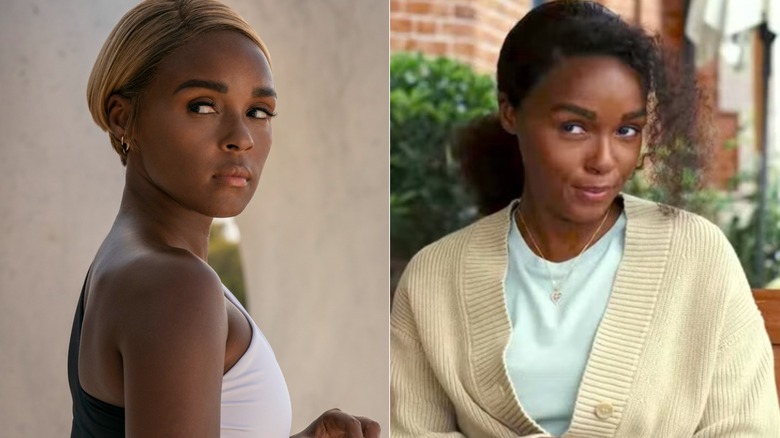
Speaking of impressive "Knives Out" performances, we still can't gush enough about Janelle Monáe's ridiculously effective double-act in "Glass Onion." She stars opposite Daniel Craig as two different characters — Cassandra "Andi" Brand (an ambitious tech entrepreneur who left her roots behind only to get sucked into the duplicitous and dangerous orbit of Miles Bron) and her twin sister Helen Brand, the citizen sleuth who seeks out the help of Benoit Blanc when Andi suspiciously dies by suicide. Believing that Andi was actually murdered by Bron and/or one of his cult-minded "disruptors" after she threatened to reveal herself as the brains behind Bron's success, Helen disguises herself as Andi to infiltrate their island getaway with an uninvited Blanc.
Monáe accomplishes a daunting feat through her performances in "Glass Onion," not only having to make Andi and Helen distinct from one another physically, vocally, and expressively, but to then add on another layer by performing Andi through Helen for the first half of the movie. Even putting her work aside, Helen specifically stands out as arguably the film's best character. Johnson pulls "The Prestige" of this twin twist perfectly, giving the rewatching audience the invitation to shift their focus from noticing all the cleverly hidden clues to enjoying those in Monáe's performance. She's a puzzle box to be solved in and of herself — an embodiment of the subtle storytelling, misdirection, and intrigue that make the "Knives Out" movies so enjoyable.
3. Marta Cabrera

When production first contacted Ana de Armas about potentially auditioning for the role of Marta Cabrera in the first "Knives Out" film, she originally turned down the opportunity. The character breakdown sent to her — devoid of every detail that might leave the story's secrets vulnerable to anyone who could get their hands on audition sides — was overly simplistic and made Marta sound like a stereotype (de Armas recalls the phrase "pretty Latina caretaker" taking center stage).
Fortunate as it was that casting agents were eventually able to see her for the role and ultimately cast her, this misunderstanding shows how unique of a character Marta is. Indeed, she appears at first glance to be a stock character in a murder mystery — a kind but underwritten domestic worker who will ultimately reveal some crucial piece of the mystery for Blanc at the eleventh hour. Johnson doesn't merely subvert this trope by putting Marta at the center of the narrative, using "Knives Out" in large part to explore how she has to socially navigate the Thrombeys, but gives her the film's most psychologically compelling character arc. Believing that she accidentally killed Harlan and being subsequently convinced by him that the act would have her mother potentially deported, a good-hearted woman (so pure the thought of lying makes her literally vomit) is forced to use the deceptive tools of the people who employ her to survive.
This journey both fortifies her own sense of right and wrong (as Blanc points out, her morality is what absolves her) and emboldens her to stand up for herself against the Thrombeys. The ending is somewhat up for interpretation — but after all they put her through, the chances of Marta selflessly sharing the inheritance as she once might've seems nonexistent.
2. Jud Duplenticy
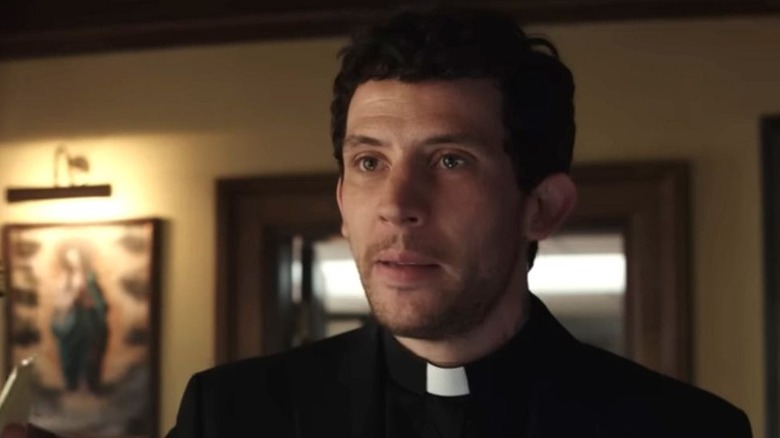
There's a moment in "Wake Up Dead Man" where it becomes apparent that, compared to the previous two "Knives Out" movies, Johnson has arguably written his most successfully character-driven mystery yet. It comes about halfway through the film. After months of abuse from Monsignor Wicks and, now, facing a mob of hateful followers who believe him to be the murderer, Josh O'Connor's Jud Duplenticy (a remorseful boxer-turned-Catholic priest who killed a man during a fight) has found new purpose in his investigation with Benoit Blanc. Especially given that being a murder suspect jeopardizes his position in a church he was already disillusioned with, it awakens a fire in him that could sustain him beyond his calling.
But then he makes a literal call, as part of his search, to a character who is only in one scene (a construction administrator, powerfully portrayed by Bridget Everett). Despite trying to get the information and get off the phone as quickly as possible, Jud is paused at the height of the investigation when she unexpectedly asks him to pray for her. Seeing the smashed religious trinket before him (beautifully mirroring Grace's destruction of the church in the flashback), he realizes how far he's let his frustration with the town pull him from what he truly loves.
"Wake Up Dead Man" asks big questions about the nature of religion — particularly about whether or not humanity can find a form of grace that transcends it. Johnson and O'Connor bring this question to life through Jud in such deeply moving fashion that they provide the film with a protagonist tangible enough to be compelling outside the immediate mystery.
1. Benoit Blanc
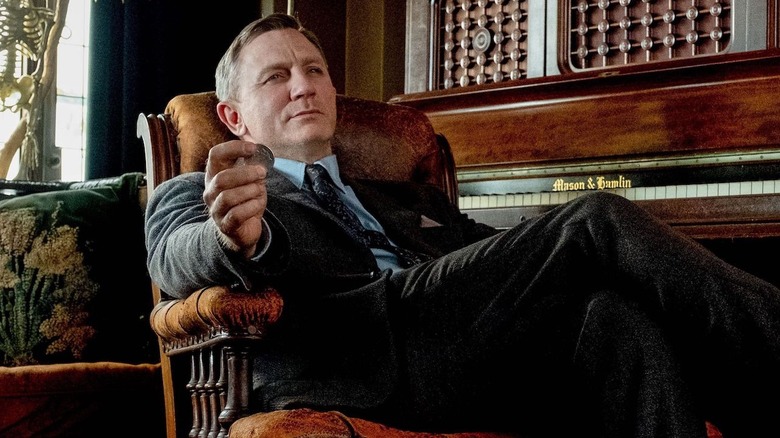
As hard as we thought about it, it's impossible not to place Benoit Blanc at the top of a list like this — even though we hardly know anything about him. Daniel Craig's southern sleuth is never really the protagonist of the "Knives Out" films despite being the only character to appear in all three. Audiences learn about his life through fleeting glimpses into his pandemic routine in "Glass Onion" or an off-hand line about his fame in "Wake Up Dead Man."
We would actually argue that this restrained use of Blanc is what ultimately makes the character work. He isn't hollow or two-dimensional — in "Glass Onion," we see him wrestle with the morality of letting Helen Brand put her life at risk to help him solve a case, and (briefly) experience doubt when she is shot by Miles. "Wake Up Dead Man" gives him an especially interesting character arc, positioning him for the first time as a true narrative antagonist. Having seen through the pageantry of religion and found nothing that would welcome him into the heart of the church, he comes to Jud as an atheist who, in the service of his investigation, is essentially trying to pull the priest away from his duties to the church.
This dynamic allows Blanc to be more than an observer without suddenly making the mystery about him personally. If Johnson can continue to use the character in this way — and if Craig continues to enjoy playing him as much as he clearly does — Blanc could become one of the greatest fictional detectives of all time.