

15 Movie Marketing Stunts That Went Too Far
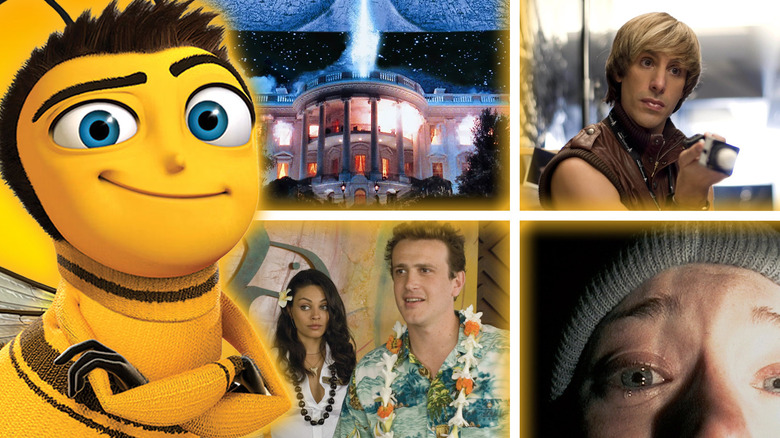
Hollywood is a town of public relations. While moviemaking drives the industry, marketing those films (and their stars) is just as important to the bottom line. Steven Spielberg changed Hollywood forever when "Jaws" became the first blockbuster in 1975, giving studio execs a taste of just how profitable the movies can be. This also led to larger marketing budgets for films with "box office smash" written all over them.
Marketing has always been important to the industry, even decades before "Jaws" hit theaters. In the early days of film, before television, Old Hollywood masterminds perfected the publicity stunt as a means to market their films, creating public spectacles to make headlines. While modern blockbusters spend millions of dollars on advertising spots, guerrilla marketing can still help gets butts in seats today.
The most memorable marketing campaigns often generate a fair share of controversy, and in the 21st century, virality is the goal. Of course, some of these campaigns go viral for the wrong seasons, and publicity stunts can easily backfire. Let's take a look at 15 movie marketing stunts that went too far.
The lion in the hotel room for The Revenge of Tarzan
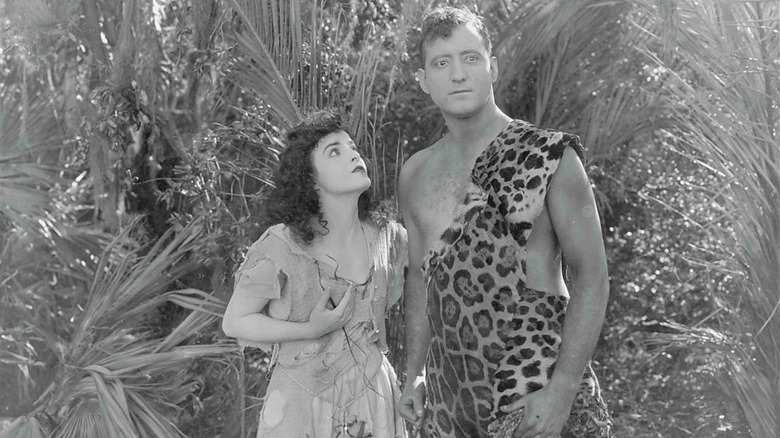
When he was 13 years old, Hollywood press agent Harry Reichenbach ran away to join the circus. Considering his career as an adult, this origin story makes a lot of sense. An early genius of cinematic spectacles, Reichenbach was the architect of numerous press stunts, but none more famous than his feline prank for the 1920 film "The Revenge of Tarzan."
Reichenbach checked in at New York's Hotel Belleclaire using the name T.R. Zann. He professed to be a musician, and asked that his Steinway piano be brought up to his suite. The bellhops fulfilled his request by hoisting a box containing what they thought was his heavy piano and maneuvering it through the window. In the morning, Reichenbach called room service and ordered ten pounds of raw steak. The hotel manager and bellhops entered his room to find that a giant lion had taken up residence there — no piano in sight. The police were called and Reichenbach's stunt made headlines, generating plenty of buzz for "Tarzan," which went on to have a successful premiere.
Jim Moran sat on an ostrich egg for 19 days for The Egg & I
Unless you've time-traveled from the 1940s, you probably don't know the name Jim Moran. But if you're interested in movie marketing campaigns, you should get to know him, as Moran is often credited as being the creator of the publicity stunt. Moran performed many moneymaking stunts, including selling a fridge to an Inuit person for General Electric, spending ten days looking for a needle in a haystack, and changing horses mid-air as part of an election campaign.
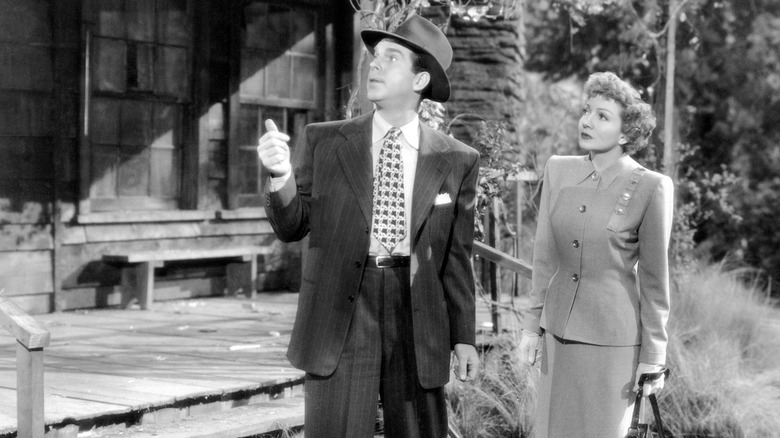
His most famous Hollywood stunt involved a bird and an egg. In 1947, Universal released "The Egg and I," which follows a young couple (Claudette Colbert and Fred MacMurray) who become chicken farmers. To promote the film, Moran began sitting on an ostrich egg on Father's Day. Moran spent a total of 19 days sitting on the egg, which belonged to a pair of ostriches named Joe and Eve, before it hatched. He used a wheelchair with a basket attached underneath to squat on the egg, spending his nights sleeping in an ostrich corral. When the egg finally hatched, he suggested the ostrich should run for Congress.
Snuff rumored to be an actual snuff film
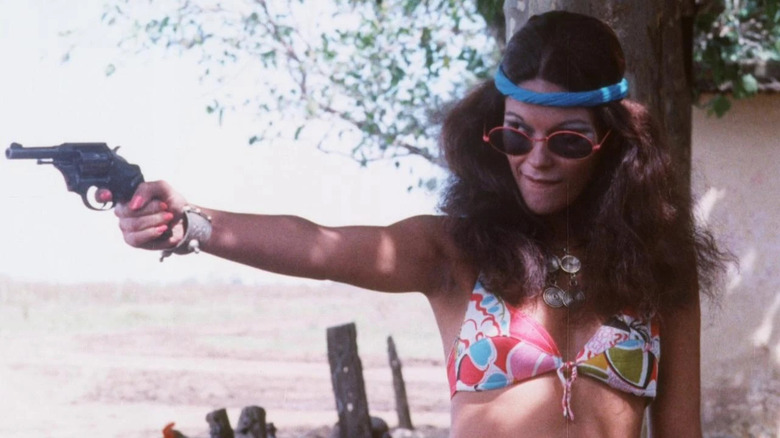
The 1976 film "Snuff" was designed to generate controversy. Originally titled "Slaughter" and based on footage from husband-and-wife duo Michael and Roberta Findlay, the film was renamed to capitalize on then-recent rumors that snuff films were being made somewhere in South America. Inspired by the Manson Family murders, the movie functions as an exploitation film, with a shocking ending tacked on. In the movie's last few minutes, the camera zooms out to show a film set. The "director" begins making out with a production assistant in front of the entire crew before brutally murdering her.
The film's big marketing gimmick was that it was an actual snuff film, and this murder really took place. Watching the film, it's obvious that's not the case, but it created a furor from folks who hadn't seen it. The Adult Film Association of America (AFAA) kicked producer Allan Shackleton out of the organization, and the Manhattan District Attorney investigated the film. Various groups picketed the film, which actually helped the cause, as Shackleton had intended to hire protestors himself. All of this publicity was a boon to the low-budget film, which beat "One Flew Over the Cuckoo's Next" at the box office three weeks in a row.
Million Dollar Mystery gives away one million dollars
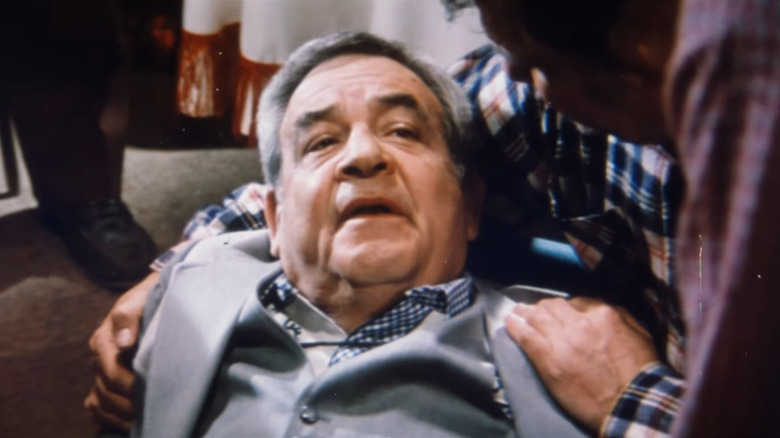
"Million Dollar Mystery" came up with a clever publicity stunt to promote the film, but it cost a pretty penny. The 1987 movie follows a man (Tom Bosley) who hides $4 million in several different places across the country. Characters in the film find $3 million, but $1 million remains at large at the end of the movie. As a promotional tie-in with Glad Bags, the film's trailer announced a contest in which audiences participated in a sweepstakes to win the "missing" $1 million. Viewers were encouraged to fill out forms guessing where they thought the money was hidden, based on clues given in the film.
The answer turned out to be the Statue of Liberty, which 356,306 people guessed correctly. The winner, 15-year-old Alesia Lenae Jones from Bakersfield, California, was chosen at random. Unfortunately, this promo didn't turn out well for producers. De Laurentiis Entertainment Group lost $11.5 million on the film, though they were true to their word and still gave the young woman her reward money.
Independence Day's fake broadcast about aliens invading
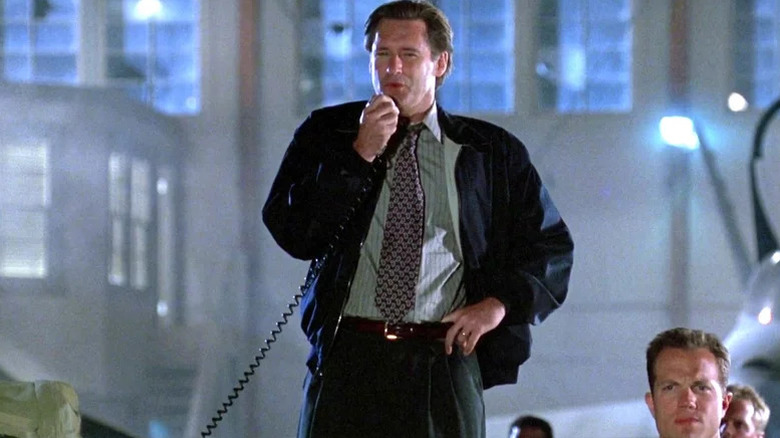
In the 1990s, "Independence Day" ran one of the most expensive advertising campaigns in movie history. Fox spent $1.3 million on a Super Bowl ad. They made a deal with Apple, including scenes from the film in which Jeff Goldblum's character uses a PowerBook in Apple commercials. They created tie-in toys and partnered with companies like Coors and Coca-Cola, advertising the film for months in advance.
In a clear homage to Orson Welles' "The War of the Worlds" radio drama, Fox also produced a fake news broadcast discussing a purported alien invasion. The hour-long TV spot begins with American news anchors discussing disruptions they're having with their network. The broadcast then shows news footage from around the world, as anchors discuss what appears to be an extra-terrestrial attack.
It becomes clear about 15 or 20 minutes in that this isn't a real news broadcast, as Bill Pullman appears on screen as President Whitmore. Still, the first few minutes of the broadcast are pretty convincing, and several Redditors claim they believed it was real when they watched it as kids.
Journalists sent anonymous love letters to promote The Love Letter
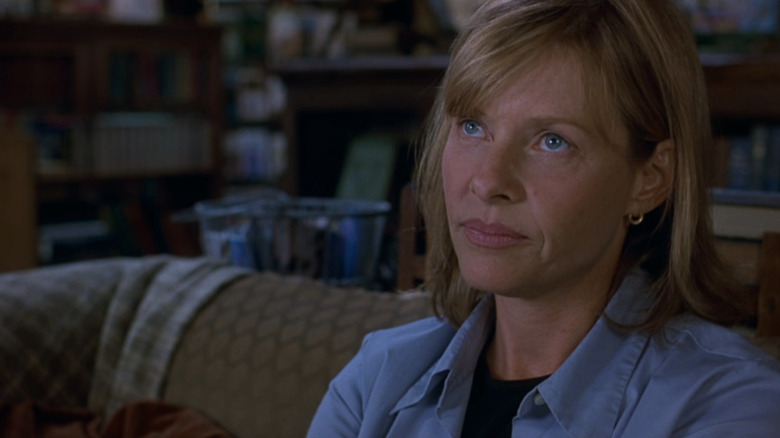
The 1999 film "The Love Letter" is not a very memorable movie, except, perhaps, to certain film critics who went to see it. Chicago Reader critic Jonathan Rosenbaum spoke to Ira Glass of "This American Life" about his strange experience with the film. In the late 1990s, Rosenbaum received an anonymous love letter that seemed to be written with an old typewriter. "Do you know how much in love with you I am? I have fallen in love without taking a step," the letter began.
Some time later, Rosenbaum went to a screening of "The Love Letter," a movie starring Kate Capshaw in which an anonymous love letter gets passed around a New England town. Someone reads the titular letter aloud in the film, and Rosenbaum recognized it as the one he had received. He realized the letter must have been a promotional effort on behalf of the studio, sent to critics to stir up some sort of emotional response. In the end, Rosenbaum didn't feel good about the stunt, as it had played on his desire for flattery but ultimately made him feel silly for ever wishing the letter had been real.
The Blair Witch Project's scary website
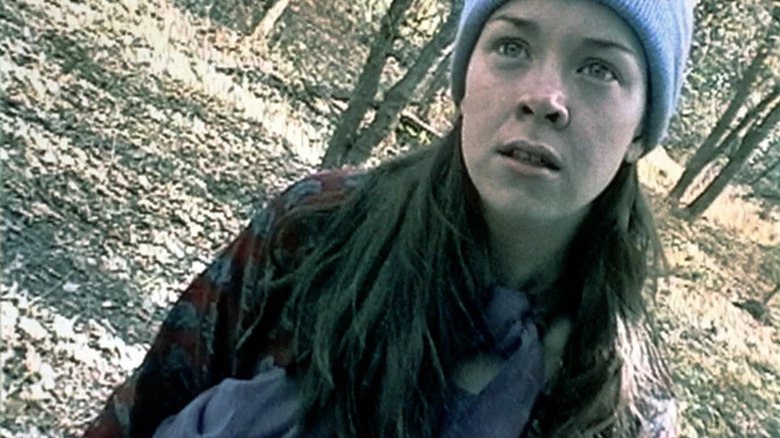
"The Blair Witch Project" is famous for several things: how little the actors got paid to make it, how much it scared Stephen King, and, most notably, the marketing campaign that had audiences believing the events of the film really happened. "The Blair Witch Project" is a found-footage-style faux documentary about three students investigating the Blair Witch curse (also made up, but purported to be a real legend). One of the first movies to be marketed using a viral internet campaign, the film changed movie marketing forever.
The campaign began with the launch of a website about the film. The website included fake police interviews and newsreel footage, and suggested that the protagonists had gone missing while filming the movie. The bulk of the marketing campaign, beginning with the website, revolved around the fact that it was a real documentary gone wrong. The IMDb pages of the actors (who had the same names as their characters) were even updated to describe them as "missing, presumed dead." The website was visited more than 160 million times in those first three months.
Cocaine-cutting mirrors given out at Blow screenings
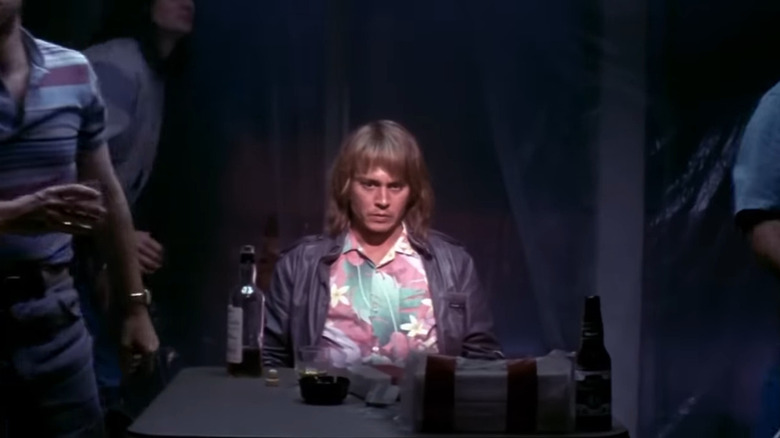
Movie studios sometimes give out fun souvenirs to audiences at early screenings as a way to drum up excitement and generate discussion about their upcoming films. For example, at screenings of "The Triangle of Sadness," viewers were gifted motion sickness bags and under-eye anti-aging strips. The marketers behind "Blow," the 2001 film in which Johnny Depp plays drug trafficker George Jung, attempted a similar gag, but not everyone found it funny.
Tickets to advanced screenings of the film came with a goodie bag: rectangular mirrors in a rubber sleeve with the movie's logo on it. New Line Cinema, the film's distributor, also gave out mirrors at bars and sports events as part of their promotional effort. The marketing campaign drew criticism because some saw the mirrors — often used to "cut" cocaine — as glamorizing drug use. "Anyone who sees 'Blow' recognizes that this highly acclaimed film does not promote or glorify the use of drugs," Steve Elzer, senior vice president of New Line Cinema's corporate communications, said in response to these criticisms.
The Mission: Impossible III bomb scare
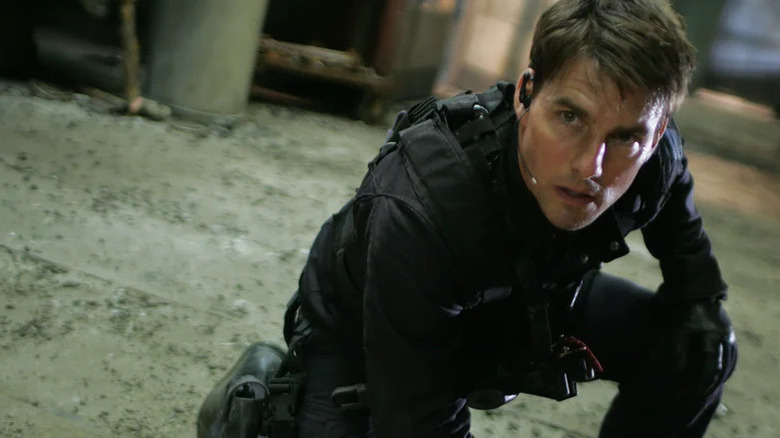
In "Mission: Impossible III," as in all "Mission: Impossible" movies, Tom Cruise's Ethan Hunt faces difficult choices that put the fate of the world, and those he holds dear, in jeopardy. The marketing campaign for that film was meant to playfully reference those high stakes, but in one instance, things got a little out of hand, and the bomb squad was called in.
Paramount and The Los Angeles Times concocted a campaign that involved 4,500 red plastic boxes affixed to newsstands across the city. The idea was that these little music boxes would play the famous "Mission: Impossible" theme song every time someone opened the news rack. The campaign was meant to make an "extraordinary mission" out of the "everyday news rack experience."
Unfortunately, things didn't quite go as planned, but, as they say, all PR is good PR, right? Two people reported the boxes, which looked suspicious with their wires attached to the coin machine. The bomb squad was called and blew up one of the newsstands, while a medical center was evacuated near another sighting. No one was hurt, but Paramount was threatened with a lawsuit.
Aqua Teen Hunger Force creates another bomb scare

Guerilla marketing campaigns can be successful because of how they marshal the element of surprise, but sometimes, surprises can backfire. Take a 2007 marketing campaign for an animated film. In 2000, Cartoon Network premiered "Aqua Teen Hunger Force," a television series for their Adult Swim programming block. The show was popular enough that a feature film, "Aqua Teen Hunger Force Colon Movie Film for Theaters," was released in 2007.
As part of promotional efforts for the movie, Cartoon Network placed LED signs depicting characters from the film in cities across the country. In Boston, the signs, which seemed shoddily constructed with exposed wires and electrical tape, attracted the attention of passersby, and eventually, the police were called. The bomb squad arrived, and police shut down portions of the freeway and the Charles River. It wasn't until five hours later that someone realized the devices depicted characters from the show and weren't actually dangerous. Two men were arrested, and the Turner Broadcasting System and Interference, Inc., the marketing agency that devised the campaign, were ordered to pay $2 million to the city of Boston.
Jerry Seinfeld zip-lines in bee suit for Bee Movie

Against all odds, "Bee Movie" was the source of many memes in the Tumblr era, and in the years since its 2007 release, the animated DreamWorks film became an ironic emblem of digital absurdity. When you look back at the press tour for "Bee Movie," one thing is clear: It was always going to be this way.
"Bee Movie" premiered where all great movies about talking insects premiere: The Cannes Film Festival. Though the film didn't come out until November, star Jerry Seinfeld arrived in France in May armed with 30 minutes of highlights to show hungry moviegoers. He also arrived with a unique costume. Standing upon a luxury hotel, Seinfeld donned a large, fluffy bee suit before being attached to a zipline. He then flew above a crowd of people in said bee suit, reportedly flailing his arms and legs about as he performed the absurd stunt.
"You know, one thing I hate is any kind of movie promotion that smacks of desperation in any way," Seinfeld said before jumping off the roof. Chris Rock, another one of the film's stars, was also in attendance at Cannes, though he did not take flight.
The infamous Forgetting Sarah Marshall ad campaign
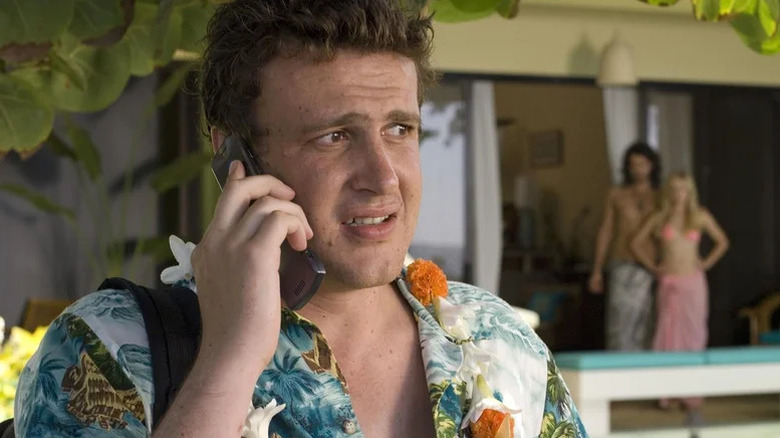
The ad campaign for "Forgetting Sarah Marshall" might be more memorable than the film itself. Indeed, it's extra memorable for people who share a name with the film's title character. To promote the film, Universal Pictures launched a billboard campaign which included signs reading things like "I hate you, Sarah Marshall," and "you do look fat in those jeans, Sarah Marshall."
The ads were fine for a chuckle, that is, unless you were named Sarah Marshall. NPR interviewed several real-life Sarah Marshalls, some of whom were upset with the promotion. One Sarah Marshall put up posters in her town that read "You suck, Judd Apatow," in reference to the film's director. The parents of a high school Sarah Marshall got worried calls from parents, asking if she was the target of a hate campaign. Of course, the visibility of this campaign was the point. "Everything we hoped would happen has come to pass," said Adam Fogelson, president of marketing and distribution for Universal Pictures
Sacha Baron Cohen lands on top of Eminem at the MTV Movie Awards and protests gay marriage
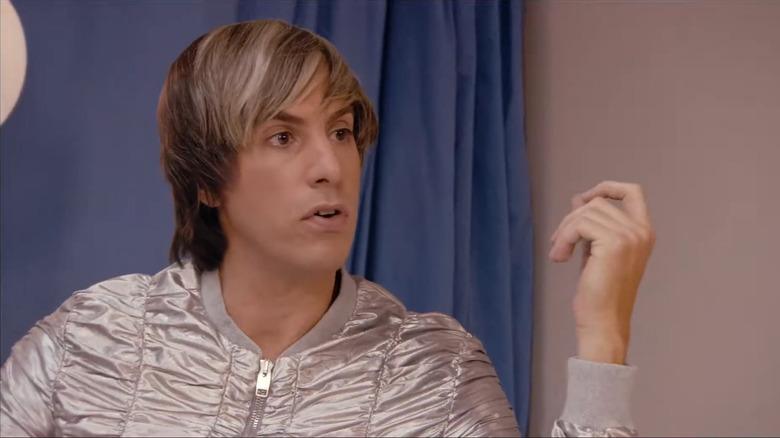
Sacha Baron Cohen took to the skies to promote his 2009 film "Bruno." Performing as the main character in the film, Cohen wore white feathers and a white jockstrap while flying above the stage at the MTV Movie Awards. At one point, the wires flipped upside down and he landed on Eminem's lap, with Cohen's scantily clad crotch in Eminem's face. Eminem seemed legitimately mad, yelling, "Yo, get this mother****** off me!" However, the rapper later revealed that he was in on the stunt. He shared that Cohen called him with the idea, and he agreed to be involved because he was a fan of the comedian's work.
That wasn't Cohen's only stunt for the film. Capitalizing on the fact that Bruno is gay, Cohen attended a rally for Proposition 8, the California law that aimed to overturn gay marriage. Dressed in character once again, Bruno happily marched with the anti-gay protesters until his identity was discovered and he had to leave the premises.
The telekinesis stunt for the Carrie remake

Guerilla marketing campaigns work especially well for horror movies, where unexpected occurrences are par for the course. (The viral marketing campaign for "Smile" is a recent example of one such success.) The 2013 remake of "Carrie" didn't make much of an impact — probably because it isn't very good — but producers did attempt to make a splash with a similarly viral-focused marketing campaign.
The prank took place at a coffee shop in Manhattan, using an IRL occurrence to generate viral videos. The masterminds behind the prank installed a fake wall, remote-controlled chairs and tables, and spring-loaded books and framed photos on the walls. In the stunt, a man spills his coffee on a woman's laptop. She gets angry with him and uses her supernatural powers to throw him against a wall. The tables and chairs move when she yells, and the books fly off the bookshelves. The people performing the stunt were actors, as were the patrons sitting directly next to them, but everyone else in the coffee shop had no idea what was going on, leading to some pretty shocked reactions.
Ex Machina Tinder bot
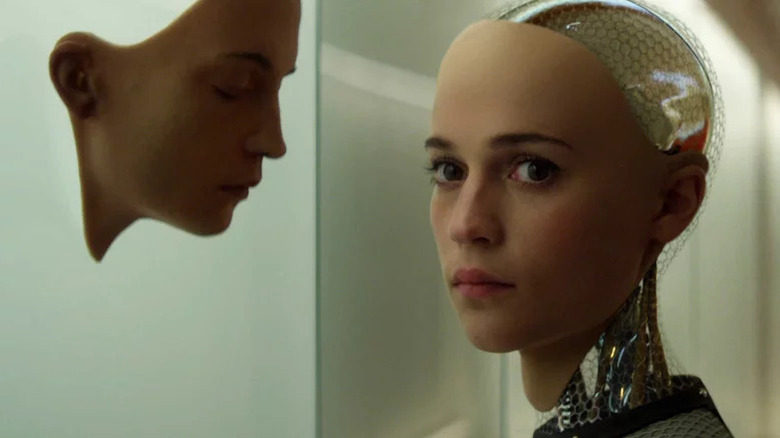
Artificial intelligence is everywhere today, but it wasn't as discussed when "Ex Machina" premiered in 2015. A24 was ahead of the curve when they used a bot to promote their AI-inspired film. "Ex Machina" premiered at SXSW, the festival known for tech as much as movies. As a sneaky effort to promote the film, the studio created a fake Tinder profile for Ava, the robotic character played by Alicia Vikander.
Ava was listed as 25 years old, and her profile read, "I like to draw. And busy intersections in cities." (In the film, Ava says she wants to visit a busy intersection to people-watch.) A staff member at Adweek matched with Ava and was unaware he was talking to a bot until she directed him to her Instagram, @meetava. Tinder Ava may not pass the Turing test for many of us today, but she did fool at least one guy named Brock.