

12 TV Shows Like Apple TV's The Morning Show
We may receive a commission on purchases made from links.
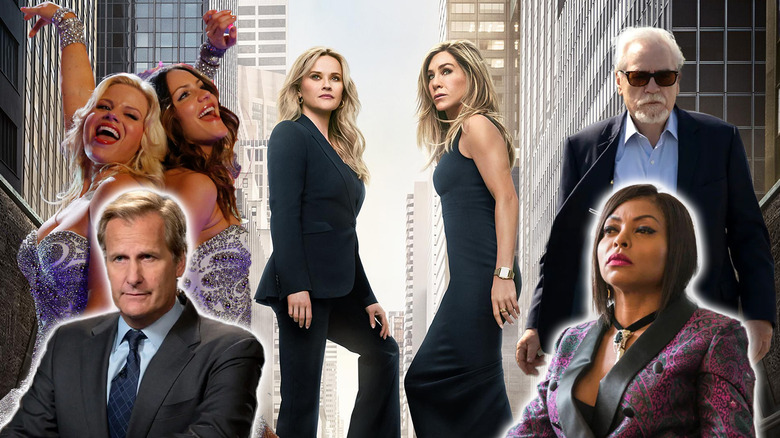
Apple TV has become a big player in the streaming wars since its launch as Apple TV+ in 2019, with the best shows on Apple TV now making up a diverse gallery — but "The Morning Show," the flagship star-studded drama with which the streamer first stepped out into the scene, remains one of the defining Apple TV series six years and four seasons after its premiere.
Created by Jay Carson and inspired by Brian Stelter's nonfiction book "Top of the Morning," "The Morning Show" stars Jennifer Aniston and Reese Witherspoon as Alex Levy and Bradley Jackson, two very different journalists and media personalities who begin to work together as anchors of a massively popular morning news program after Alex's former co-host Mitch Kessler (Steve Carell) is ousted for sexual misconduct allegations.
It's a scathing, fast-paced dramatic send-up of the cutthroat world of U.S. corporate media with a refreshing emphasis on the experiences of women — and if you'd like to get acquainted with some other television series like "The Morning Show," here's an essential line-up to watch right away.
The Newsroom
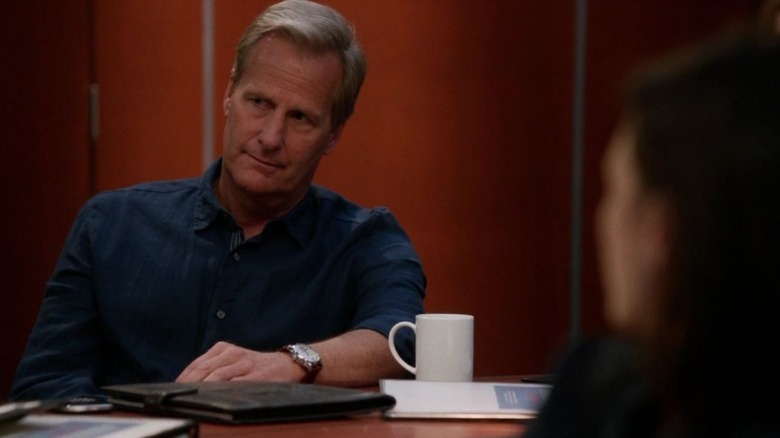
The American TV series that has the most in common with "The Morning Show" in terms of tone, atmosphere, visual style, and narrative focus is by far "The Newsroom." Created by Aaron Sorkin, this HBO series takes a highly political approach to the world behind the scenes of TV news. Much like "The Morning Show," "The Newsroom" directly tackles real-world events by imagining the characters' journalistic responses to them, albeit with even more overtly-stated commentary and messaging than the Apple TV series.
Set in the production offices of the fictional Atlantic Cable News network, "The Newsroom" centers on primetime news anchor Will McAvoy (Jeff Daniels), who's developed a neutral, inoffensive political persona over his decades as a newscaster. After his ex-girlfriend, passionate journalist MacKenzie McHale (Emily Mortimer), becomes the show's new executive producer, Will is pushed to take a more active role in contextualizing and critiquing the news as opposed to just reporting them — a self-defined "mission to civilize" that he carries out with the help of a plucky team played by charismatic stars like Dev Patel, Alison Pill, Olivia Munn, John Gallagher Jr., Thomas Sadoski, and Sam Waterston.
Despite what all that lofty ambition might suggest, "The Newsroom" is at its heart a crowd-pleasing, unabashedly maximalist character drama of the sort that Sorkin made his name in, and, although Sorkin himself never felt like he got "The Newsroom" right, the show should still be a treat for any "The Morning Show" fans.
Succession
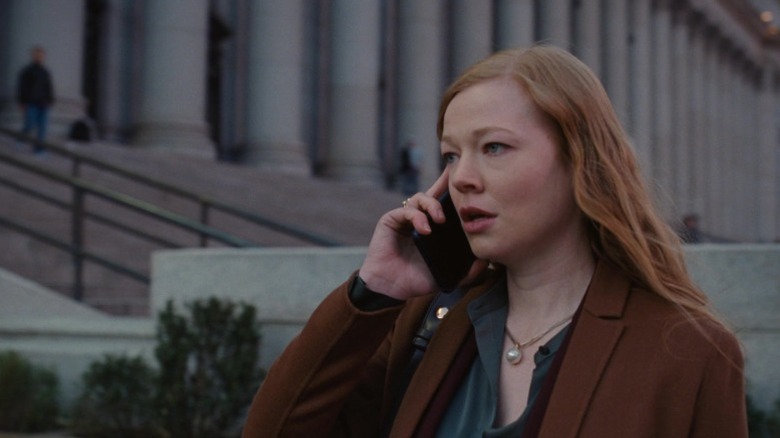
"Succession" is both a somewhat goofier and somewhat more serious show than "The Morning Show" — a sharp, dense, and quick-witted Shakespearean chronicle of power disputes delivered through dry workplace comedy devices, one-liners and shaky cam and all. It's one of the best HBO shows of all time, which makes it an easily recommendable watch for anyone. But "The Morning Show" aficionados, in particular, will definitely be smitten with its juicy corporate intrigue, fast-paced banter, and fascinatingly frayed characters and relationships.
Created by Jesse Armstrong, who won four straight Primetime Emmys for his writing on the series, "Succession" follows the lives of the Roy family, made up of patriarch Logan Roy (Brian Cox) and children Kendall (Jeremy Strong), Roman (Kieran Culkin), and Siobhan (Sarah Snook). Logan owns Waystar RoyCo, one of the world's largest and most powerful media conglomerates, and, after his health begins to deteriorate, life for the Roy siblings becomes a bitter and multi-layered fight for control of Waystar. From there, "Succession" fashions what turns out to be at once a satire of the unimaginably wealthy and their disconnect from the real world, and a gripping, masterfully-written chronicle of how corporate media looks out for its own interests and how power is structured and circulated in contemporary American society — a show as topical as it is timeless, as hilarious as it is harrowing, and as bonkers as it is brilliant.
Smash
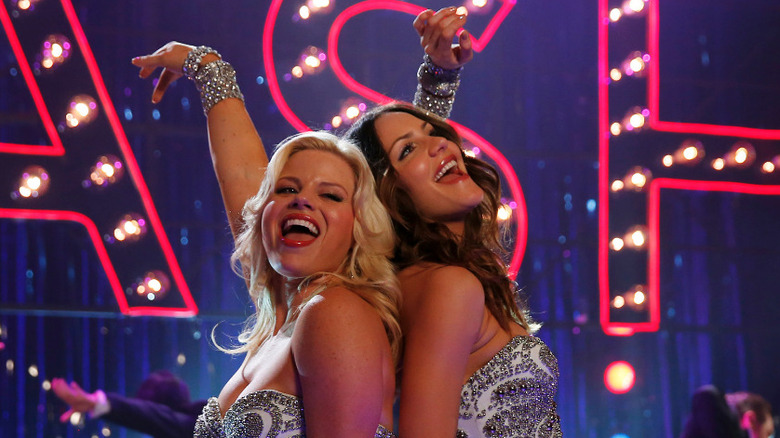
Although the worlds of morning news and Broadway musicals are far apart in a lot of ways, there's more than a little overlap in their amalgamation of media firestorms, warring egos, and grippingly sensational dramatics — as demonstrated by the fact that, for all their differences, "The Morning Show" and "Smash" are very similar shows.
While "Smash," the best TV series you didn't watch, operates under certain limitations as a network series that "The Morning Show" isn't beholden to, both shows are fundamentally about the carnivalesque absurdity of New York City showbiz, and they're about its way of melding together careers and lives in such a way as to create a mirage of high stakes around essentially frothy business. Created by theater veteran Theresa Rebeck, "Smash" is set amid Broadway's musical theater community, with the first season following the production of a new biographical show about Marilyn Monroe and the fight between novice Karen Cartwright (Katharine McPhee) and the more experienced Ivy Lynn (Megan Hilty) for the main role. Season 2, meanwhile, follows the ramifications of the "Bombshell" premiere and the assemblage of a different, competing musical.
It was a heavily controversial series at the time for its over-the-top drama, tonal messiness, and unapologetically theatrical musical numbers, but its campy mayhem did earn its share of passionate fans — and makes for a very nice sleek-yet-soapy pairing with "The Morning Show."
UnREAL
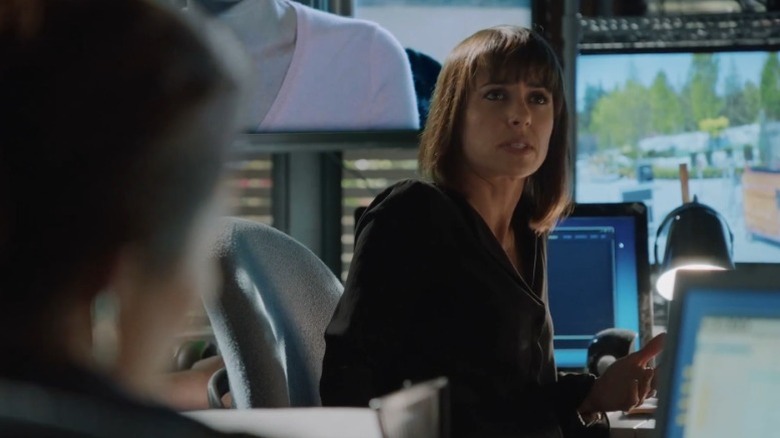
Lifetime and Hulu's "UnREAL" is a messy, magnificent must-watch for fans of television about television. Although it wears its trashiness and lurid abandon on its sleeve, the Marti Noxon and Sarah Gertrude Shapiro-created series is first-rate television by all standards, as intensely watchable and addictive as it is rewarding, especially for its first couple of seasons. Not for nothing, it managed to overcome critical skepticism and become the first Lifetime series ever to score a Primetime Emmy nomination for Outstanding Writing for a Drama Series.
"UnREAL" explores the age-old question of just how authentic so-called "reality shows" can be trusted to be, through the story of Rachel Goldberg (Shiri Appleby), a morally conflicted producer who returns to the dating show "Everlasting" one season after leaving it due to a breakdown. Under pressure from ruthless executive producer Quinn King (Constance Zimmer, in a phenomenal performance), Rachel sets out to rebuild her career by exercising her talent for manipulating contestants and manufacturing drama.
As it turns out, the navigation of audience expectations, network demands, ethical concerns, social media frenzies, and volatile interpersonal conflicts in the world of reality TV production is, as presented by "UnREAL," rather similar to what goes on in "The Morning Show'"s version of morning news. The two shows' commonalities don't stop there; "UnREAL" is also kindred to "The Morning Show" in tone, style, and sheer commitment to gaudy drama.
Empire
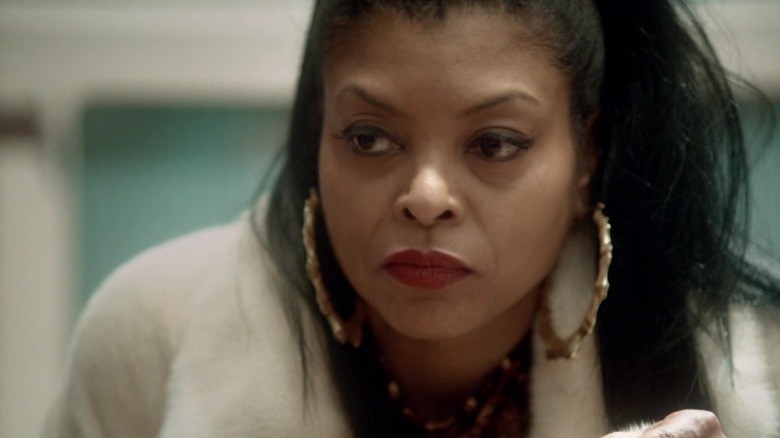
Fox's "Empire" was one of the biggest television hits of the 2010s — a splashier, kitschier network TV precursor to the glossy HBO iteration of "Succession" with a near-identical premise. Arguably the most notorious show ever to dive (however fantastically) into the intricacies and turbulences of the hip hop industry, this Lee Daniels and Danny Strong-created series stars Terrence Howard as Lucious Lyon, the powerful music tycoon at the head of Empire Entertainment.
After being diagnosed with ALS and learning he doesn't have much time left, Lucious begins to prepare his three sons to follow in his footsteps and secure the company's legacy, fostering rivalry between them in the process. Things are made even more complex by the arrival of his wife Cookie (Taraji P. Henson), who just left prison after a 17-year sentence for drug dealing and has designs of her own on Empire Entertainment.
It's a twisty, thorny watch that gets you hooked from episode one, and its similarly sensational-yet-searing depiction of the entertainment industry scratches the same itch as "The Morning Show." Both shows also manage to be surprising in the depth of characterization they afford over the years to their seemingly over-the-top characters — with "Empire," in particular, being immensely helped by the two central performances, especially Henson, who devours the part of Cookie Lyon with a gusto that renders her into a ready-made TV icon.
Mad Men
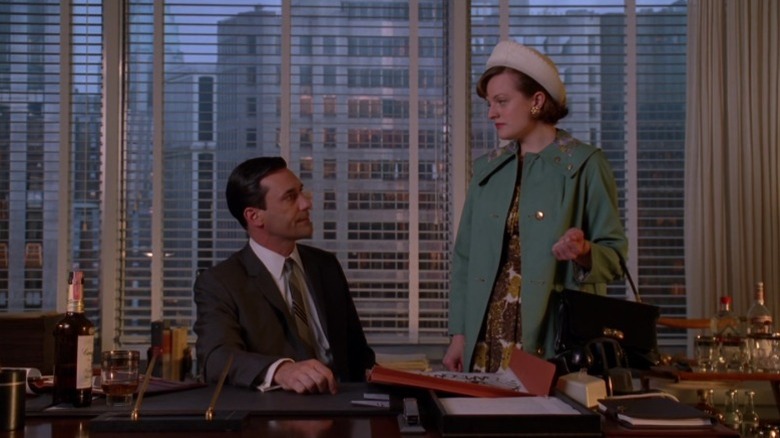
Contemporary dramatic television owes a lot to "Mad Men" across the board. The Matthew Weiner-created AMC series helped set a new standard for longform audiovisual storytelling with its patient, seemingly mundane chronicles of daily life at a New York City advertising agency in the '60s. Over the years, those chronicles added up to a dramaturgical feat of stunning depth and breadth, a portrait of the United States in a transformative era that folded revelatory little touches into every corner of every scene.
Jon Hamm stars as Don Draper, a hotshot creative director at a Manhattan ad agency whose career success and picture-perfect family life in the suburbs are just a thin cover for a lifetime of unhappiness. Elisabeth Moss, January Jones, Christina Hendricks, Vincent Kartheiser, John Slattery, and other wonderful actors round out a cast of fascinating, multifaceted characters.
"The Morning Show" is among the innumerable series influenced by "Mad Men," particularly taking ues from the AMC show's command of the nuances of corporate coexistence and the ways in which it intersects with — and chips away at — people's personal lives. Fans of "The Morning Show" may also be captivated by the deep deep interest "Mad Men" has in the lives and personalities of its female characters, and in the specific ways women are impacted by noxious hierarchies of office power and fight tooth and nail to create a place for themselves within its crannies.
The Bold Type
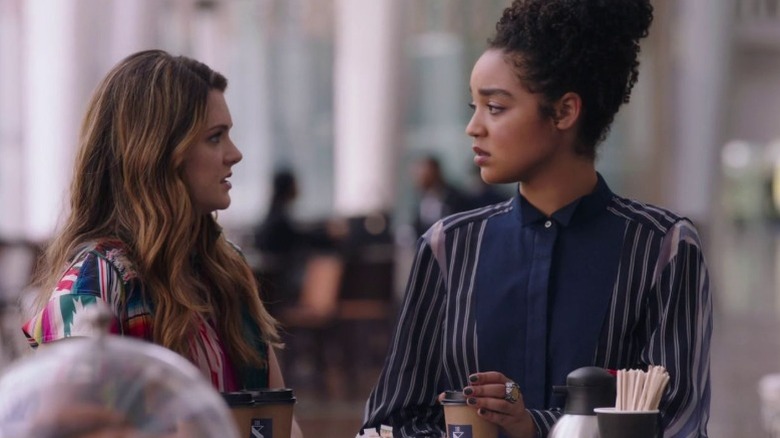
Although the uplifting, effortlessly watchable tone favored by Freeform productions is a long ways away from the willful viciousness of "The Morning Show," "The Bold Type" is a Freeform show with so many similarities to the Apple TV workplace dramedy that it manages to stand as a kind of breezier counterpart to it — although still with plenty of devastating, hard-hitting conflict.
Created by Sarah Watson and inspired by the life of former Cosmopolitan editor-in-chief Joanna Coles, "The Bold Type" follows the goings-on at Scarlet, a fictional global women's interest magazine based in New York City. The main characters are Jane Sloan (Katie Stevens), a newly-promoted staff writer hoping to prove herself; Kat Edison (Aisha Dee), a skilled social media director exploring her sexuality; and Sutton Brady (Meghann Fahy), an editorial assistant navigating a secret relationship with Scarlet board member Richard Hunter (Sam Page). All three women report to tough but loving editor-in-chief Jacqueline Carlyle (Melora Hardin), who readily takes Jane under her wing.
It's a show more focused on out-of-office drama and romantic trials than "The Morning Show," with a more positive (if still critical) view of the New York City journalistic world. But both the Freeform and the Apple TV series share an attentiveness to the pressures of existing in public view as a female journalist, and to the possibilities for great storytelling therein.
Billions
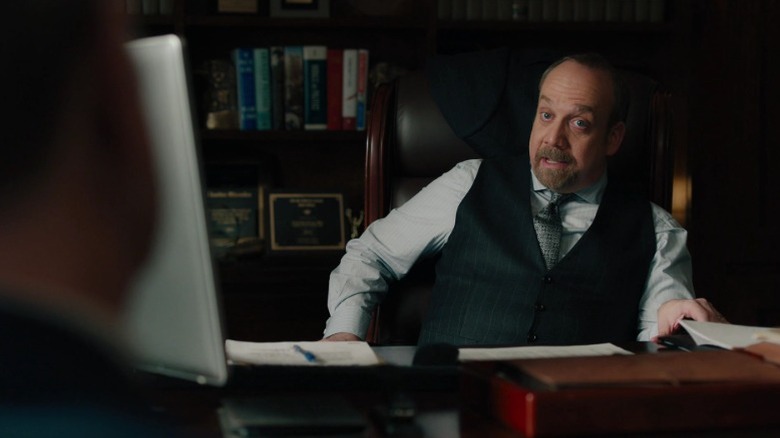
Psycho, priceless, good in a crisis, working the angles, the characters in Showtime's "Billions" are antiheroes and villain protagonists to the nth power. Many shows on different levels of kitschiness and intended respectability across the 2010s endeavored to look at the exploits of truly mean, irredeemable, ruthlessly self-actualizing people, but few have matched the sheer scale of the quest for wealth of hedge fund manager Bobby Axelrod (Damian Lewis), or the bitterness of his sparring with United States Attorney Charles "Chuck" Rhoades, Jr. (Paul Giamatti).
For "The Morning Show" fans, "Billions" offers the pleasure of an equally incisive grappling with the power games of the wealthy and the lives of those affected by them, similarly cast against the glossy surfaces of New York City high-rise towers that offset the moral and emotional brutality. Created by Brian Koppelman, David Levien, and Andrew Ross Sorkin, the series follows the years-long face-off between Axelrod and Rhoades, and its repercussions for a wide array of characters, with special attention to the psychological fault lines of every player involved. Memorable clashes, wild twists, miles of rapid-fire dialogue, and mountains of tough but hypnotic financial lingo ensue, with a deftness in bridging together the office warfare and the soapy domestic intrigue that undoubtedly were among "The Morning Show" pool of TV influences.
Hacks
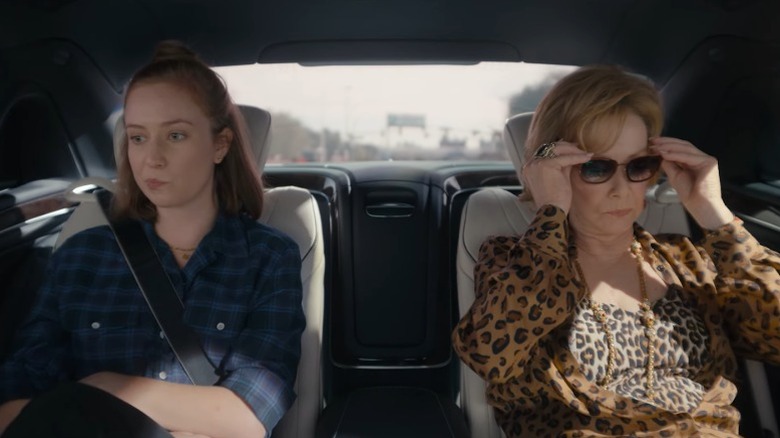
HBO Max's "Hacks" begins with a washed-up comedian settled into an unambitious Las Vegas residency, and a young Los Angeles TV writer dealing with the fallout of an offensive tweet — and that perceptiveness about the outskirts of showbiz sparkle sets the tone for the whole show's pastiche of the entertainment industry. Initially bound only by professional necessity and a shared love of the tenets of comedy, Deborah Vance (Jean Smart) and Ava Daniels (Hannah Einbinder) are forced to find a middle ground between their vastly different worldviews after Ava is begrudgingly hired as a writer for Deborah.
As seasons of "Hacks" go by, Deborah and Ava wind up forming a profound, co-dependent bond — and, in turn, the Lucia Aniello, Paul W. Downs, and Jen Statsky-created series evolves from a fun and snappy industry satire to a searing, layered character drama that just happens to also be hilarious. Already one of the defining shows of the 2020s by any definition, "Hacks" is more overtly jokey than "The Morning Show," but both series exist within the same thematic ballpark, as stories about ambitious and complicated women navigating the endless circus of contemporary American media.
It should certainly come as welcome information to "The Morning Show" fans that "Hacks" is cut from a similar tonal and cinematic cloth, only with its scathing wit (sharp enough to have given Conan O'Brien PTSD because of its accuracy) aimed towards Los Angeles as opposed to New York.
Big Little Lies
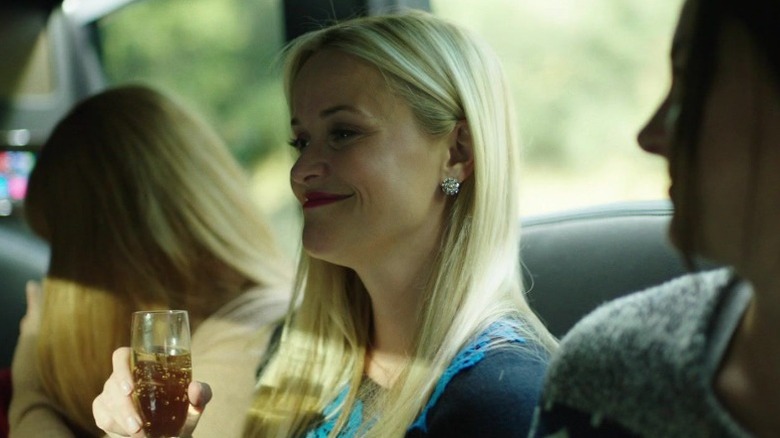
It's almost funny to remember now that she's established herself as a veritable TV icon, but there was a time not long ago when the concept of movie star Reese Witherspoon crossing over to the small screen seemed off-kilter. The show that initiated her TV star era and may now get a third season, "Big Little Lies," shares a lot of aesthetic and thematic preoccupations with "The Morning Show."
For starters, "Big Little Lies" is another series that understands the fascination and the terror of access. Much of the fun in it stems from the savvy way in which writer David E. Kelley and directors Jean-Marc Vallée (for season 1) and Andrea Arnold (for season 2) exploit our morbid curiosity about the lives of the rich and (seemingly) unbothered, counting on the formidable cast and the glossy production values to make the messiest, cattiest conflicts feel capital-B Big — a method not entirely dissimilar from the way "The Morning Show" approaches its own affluent milieu.
But what really bridges both shows is the fact that, on "Big Little Lies," the soapy entertainment also belies a great respect for the humanity and complexity of the players at hand, with the underlying darkness of the storytelling ultimately coming to the fore sans any irony or callousness. With a cast made up of not only Witherspoon but also Nicole Kidman, Zoë Kravitz, Shailene Woodley, and Laura Dern all at their absolute best, that storytelling strategy inevitably spells greatness.
The Studio

A number of entries on this list, much like "The Morning Show," belong to the tradition of series that offer proximity to the entrails of show business as a selling point. But "The Studio" is something else entirely. Created by Seth Rogen, Evan Goldberg, Peter Huyck, Alex Gregory, and Frida Perez, the multi-Emmy-winning Apple TV series is maybe the single most up-close work of insider ribbing in TV history — a show so meta, so massive, and so steeped in specifics of the current Hollywood landscape that it feels almost surreal to watch.
On top of the sheer fascination it inspires as a feat of production, of course, "The Studio" is just an excellent comedy series. Telling the story of a bumbling studio executive (played by Rogen himself) trying to stick to his artistic principles in an increasingly absurd industry landscape, Seth Rogen and Evan Goldberg marry their ample skills as filmmakers to their love for exquisitely-crafted cringe comedy, creating a burlesque of the contemporary American movie industry that, among other things, does a better job of riffing on "Entourage" than HBO's own "The Franchise."
In addition to being hilarious, "The Studio" is also a gripping and pulse-pounding watch, thanks as much to the rapid-fire sharpness of the writing as to Rogen and Goldberg's predilection for densely-choreographed long takes. Like "Hacks," it offers a spirited L.A. parallel to "The Morning Show'"s account of the maddening bustle of New York City entertainment production.
The Good Wife
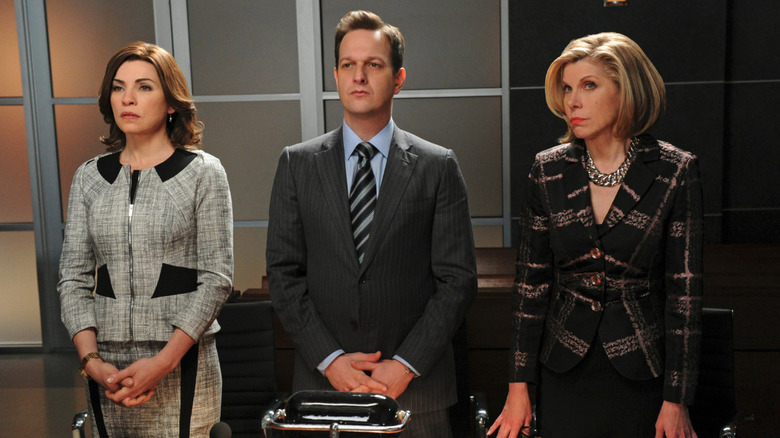
Created by Robert King and Michelle King, "The Good Wife" is one of the very best American legal dramas of the 21st century — a show that learned from the persuasive structuring and irresistible showmanship of great courtroom shows of the past, while updating them for the Prestige TV era by adding in a stunning amount of research, lived-in detail, thoughtful character psychology, and dauntless political epistemology.
Notable at the time for the emphasis on serialization and attention-demanding storytelling with which it broke the mold of network TV drama series, "The Good Wife" tells the story of Alicia Florrick (Julianna Margulies), who, after 13 years as a stay-at-home mother, takes up work as a junior litigator at a Chicago law firm to provide for her kids following the arrest of her disgraced State's Attorney husband (Chris Noth). Alongside memorable characters like investigator Kalinda Sharma (Archie Panjabi) and firm senior partner Diane Lockhart (Christine Baranski), Alicia quickly begins to chart her own path in the legal world.
As it patiently spins out and weaves together the stories of Alicia, Kalinda, Diane, and others in its deep bench of great characters, "The Good Wife" emerges as a fantastic example of rich, rewarding female-centric television that isn't afraid to wrestle with contemporary issues. In other words, it's perfect viewing for "The Morning Show" fans.