

12 Best Movies Like It's A Wonderful Life
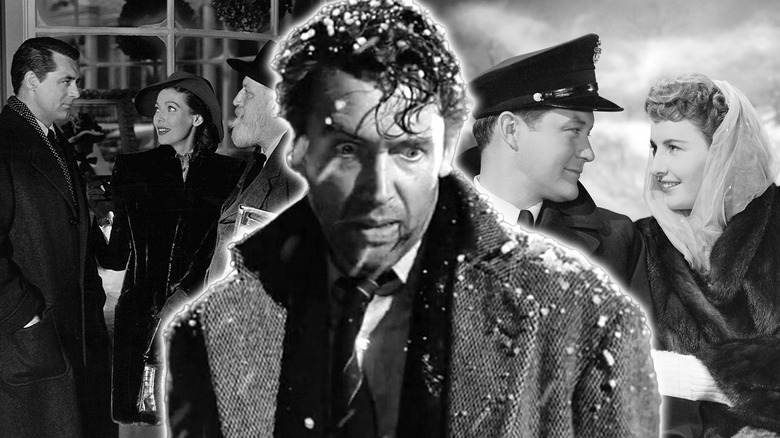
An enduring Christmas classic that received Steven Spielberg's seal of approval, "It's a Wonderful Life" is one of the most wholesome movies from the 1940s. For the uninitiated, the 1946 film has small-town everyman George Bailey (James Stewart) give up his personal dreams to help his family and community. Despondent over the direction his life has taken, Bailey contemplates suicide, only for his guardian angel, Clarence (Henry Travers), to intervene. After being given a tour of what the world would be like without him, Bailey gains a newfound appreciation of his life.
For those looking to keep the classic Hollywood vibes going, there are plenty of similar movies to "It's a Wonderful Life." These range from films that also include a wintry holiday to movies from that era with creative talent and themes that echo filmmaker Frank Capra's masterpiece. And while evoking Hollywood's Golden Age, these movies continue to stand the test of time and also feature a strong sense of sentimentality. With all that in mind, here are the 12 best movies like "It's a Wonderful Life" that you should watch next.
Scrooge (1935)
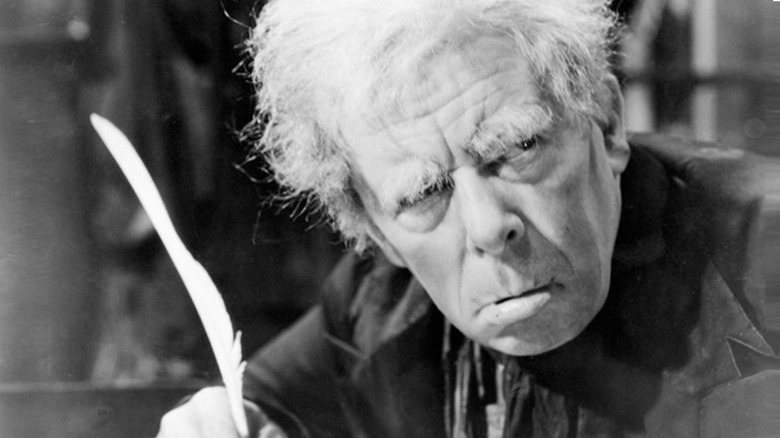
Charles Dickens' 1843 novella "A Christmas Carol" has been adapted for the screen scores of times for over a century, with its first adaptation being impossible to watch today. Fortunately, the 1935 version of Dickens' yuletide ghost story, titled "Scrooge," is still readily available, including on several streaming platforms. The adaptation recounts the tale of miserly Ebenezer Scrooge (Seymour Hicks), who coldly dismisses Christmas and spending time with others for the holiday. On Christmas Eve, Scrooge is visited by a group of ghosts who show him different Christmases from his past, present, and future to remind him of who he was and what will happen to him if he doesn't change his ways.
To be sure, the 1935 "Scrooge" is an unapologetically British production, retaining a lot of those sensibilities. But what makes this iteration stand out from other adaptations is its art design, offering moody stage layouts and cinematography. That gives the movie a near-German Expressionistic vibe that highlights the dark, atmospheric elements of the story. Audiences wanting something more traditional should go with the 1951 "A Christmas Carol," but "Scrooge" is a haunting treatment of Dickens' story.
Mr. Deeds Goes to Town (1936)
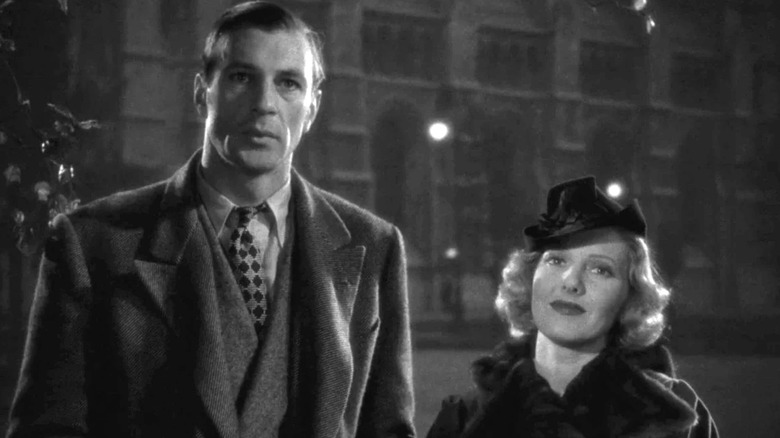
Before he co-wrote and directed "It's a Wonderful Life," Frank Capra directed 1936's "Mr. Deeds Goes to Town." The movie stars Gary Cooper as Longfellow Deeds, a man from small-town Vermont who inherits a vast fortune and relocates to New York City. As Deeds acclimates to his new life and wealth, he befriends Babe Bennett (Jean Arthur), unaware she's a journalist trying to write a hit piece about him. Deeds steadily wins over the cynical big city folk with his earnest, compassionate nature while trying to figure out what to do with his riches.
"Mr. Deeds Goes to Town" is one of the best Gary Cooper movies and he proves to be a strong match for Capra's directorial style. Cooper worked best playing the cinematic everyman, and the character of Longfellow Deeds is firmly in his acting wheelhouse. Decades later, a loose remake in 2002 also provided Adam Sandler with one of his best roles, underscoring the narrative's long-lasting appeal. Unpretentiously delivered, "Mr. Deeds Goes to Town" showcases Capra and Cooper in their wholesome element as they weave a modern fairy tale.
The Shop Around the Corner (1940)
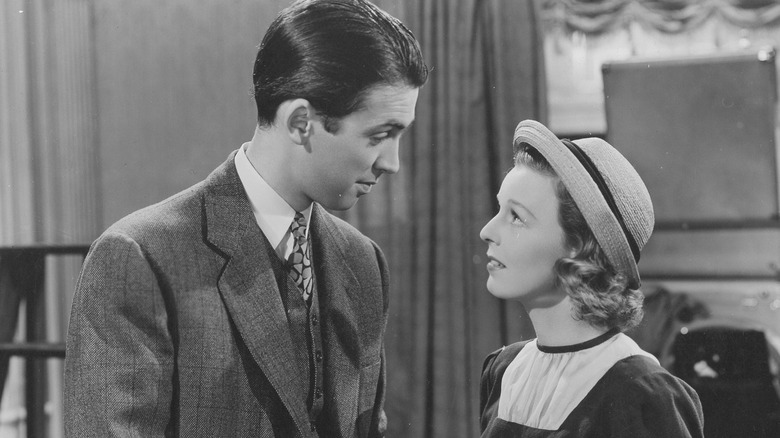
Before starring in "It's a Wonderful Life," James Stewart brought his talents playing an unassuming everyman to the 1940 romantic comedy "The Shop Around the Corner." Stewart plays Alfred Kralik, a salesman at a leather store in Budapest who forms a rivalry with the newly hired Klara Novak (Margaret Sullavan). Kralik and Novak form a romantically charged dynamic with their mystery pen pals, unaware that they've been anonymously writing to each other the whole time. This escalates as Christmas approaches, with the two trying to arrange a meeting with their illicit correspondent while their professional bickering intensifies.
Although "The Shop Around the Corner" isn't among Stewart's perfect Rotten Tomatoes-scored movies, it's still an enjoyable watch. Stewart is as charming as ever, especially when his character learns the truth behind who he's been writing to while still deciding to maintain the secret. The movie was remade a number of times, most notably updated for the burgeoning Information Age as "You've Got Mail" in 1998. A lightweight romantic comedy with a playful chemistry between Stewart and Sullavan, "The Shop Around the Corner" provides breezy fun.
Going My Way (1944)
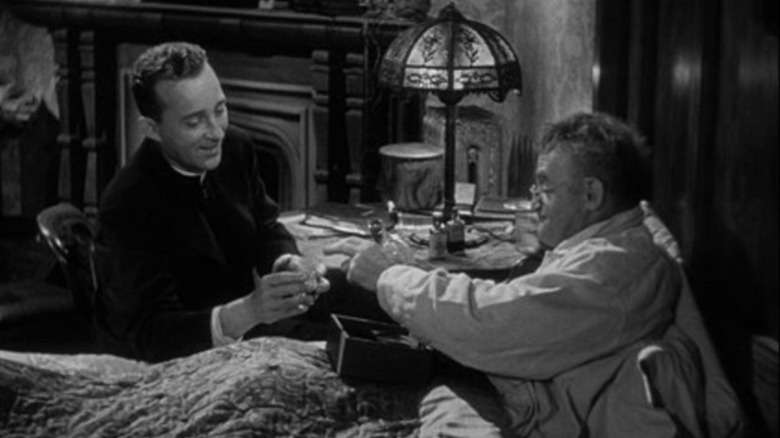
Expect to see a lot of Bing Crosby on this list, because the doe-eyed crooner dominated holiday-oriented family-friendly movies for much of the '40s and '50s. After transitioning from his musical career to being a successful comedic actor paired with Bob Hope, Crosby achieved acclaim for his starring role in 1944's "Going My Way." Crosby plays Father Chuck O'Malley, a young priest assigned to a parish in New York, with O'Malley's unconventional methods clashing with the venerable Father Fitzgibbon (Barry Fitzgerald). Using his singing talents, O'Malley helps the church overcome its mortgage issues as he finally earns Fitzgibbon's favor.
"Going My Way" is basically "The Blues Brothers" or "Sister Act," just leaning into Crosby's vocal crooning rather than rhythm and blues or soul music to save a financially troubled church. The Christmas in New York setting towards the end of the film helps highlight its joyous overtones, bolstered by Crosby's musical performance. This seasonal setting also helps underscore the community spirit of the story, something "It's a Wonderful Life" conveyed with its ending. Crosby earned an Academy Award for his performance in "Going My Way," cementing him as a holiday season staple.
A Tree Grows in Brooklyn (1945)
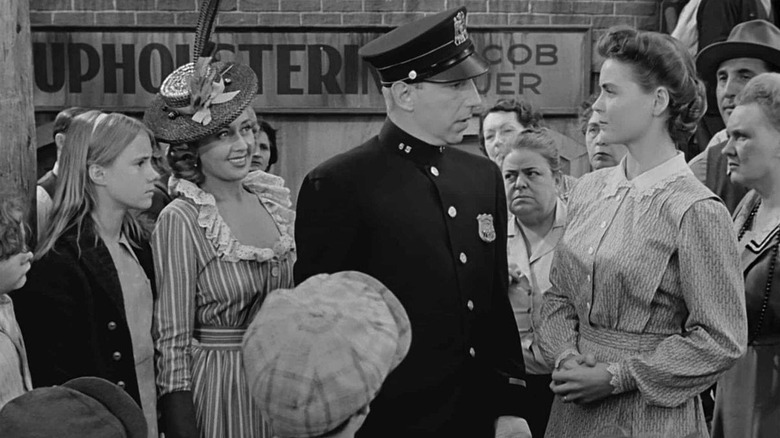
Betty Smith's autobiographical novel "A Tree Grows in Brooklyn" was adapted into a movie in 1945, directed by celebrated filmmaker Elia Kazan. The movie centers on the Nolan family struggling to get by in 1912 Brooklyn, with matriarch Katie Nolan (Dorothy McGuire) stepping up compared to her lackadaisical husband Johnny (James Dunn). The family's wellbeing is compromised further when Katie learns she's pregnant around the holidays, already concerned with how they're going to support another child. The titular tree refers to a tree of heaven growing near the family's home, which struggles to grow again after having many of its branches culled.
"A Tree Grows in Brooklyn" isn't necessarily a Christmas movie, but like "It's a Wonderful Life," it features a pivotal scene around Christmas. Katie Nolan is very much a protagonist in the same working-class mold as George Bailey, selflessly giving to support her family. And just like the Bailey family's struggles, it's the community that comes around the Nolans, in this case in the form of Officer McShane (Lloyd Nolan). A bittersweet movie about perseverance and the importance of family, "A Tree Grows in Brooklyn" is another emotional family-centric flick.
Christmas in Connecticut (1945)
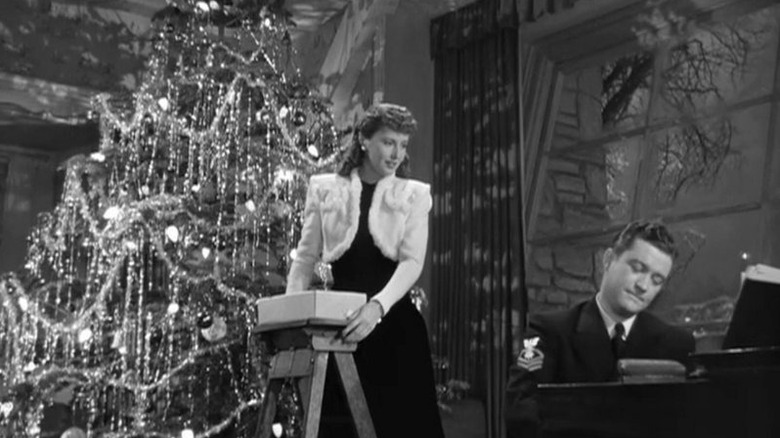
Before the seemingly endless parade of popular Hallmark Christmas movies that audiences get these days, the narrative formula was set by 1945's "Christmas in Connecticut." The movie follows Elizabeth Lane (Barbara Stanwyck), a magazine writer who dazzles readers and her publisher with her columns about being a married Connecticut farmer despite actually being single in Manhattan. Elizabeth is tasked with welcoming war hero Jefferson Jones (Dennis Morgan) back to his hometown in Connecticut as her publisher is unaware of the deception. Elizabeth plots an elaborate ruse to maintain her appearance as a married homemaker in rural Connecticut, though she instantly falls in love with Jefferson upon meeting him.
A screwball romantic comedy with an effective holiday setting, "Christmas in Connecticut" gets by on Stanwyck's crowd-pleasing protagonist performance. The tried-and-true narrative formula of a big-city gal growing accustomed to a more bucolic lifestyle and falling in love along the way is firmly established here. The film was remade as a television movie in 1992, directed by Arnold Schwarzenegger of all people, with the action star also appearing in a cameo role. At any rate, stick with the original "Christmas in Connecticut" over the countless imitators that have surfaced in its wake.
The Bells of St. Mary's (1945)
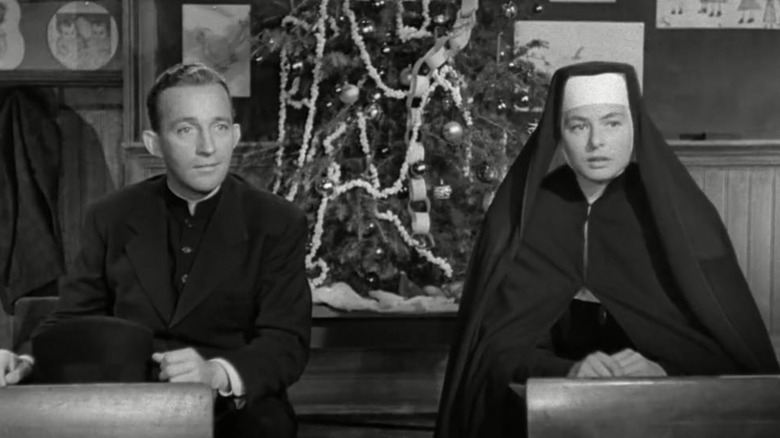
Bing Crosby reprised his award-winning role as Father Chuck O'Malley in 1945's "The Bells of St. Mary's." The movie has O'Malley reassigned to head the parish of St. Mary's, which he finds targeted by greedy businessman Horace Bogardus (Henry Travers). Unless O'Malley relinquishes his parish's real estate of an associated school for inner-city elementary school children, Bogardus threatens to have it condemned. O'Malley works together with Sister Mary Benedict (Ingrid Bergman) to try to help Bogardus see the error of his ways and donate a suitable building to help the struggling school.
"The Bells of St. Mary's" features another humble protagonist facing a cruel and powerful business figure like "It's a Wonderful Life." Interestingly, Travers, who plays the villain here, went on to play the angelic Clarence in "It's a Wonderful Life" the following year. Crosby shines as O'Malley once again and the film stands as one of Ingrid Bergman's best movies in no small part due to her memorable performance. A straightforward and enjoyable sequel to "Going My Way," "The Bells of St. Mary's" is elevated considerably by the charm of its two lead actors.
It Happened on 5th Avenue (1947)
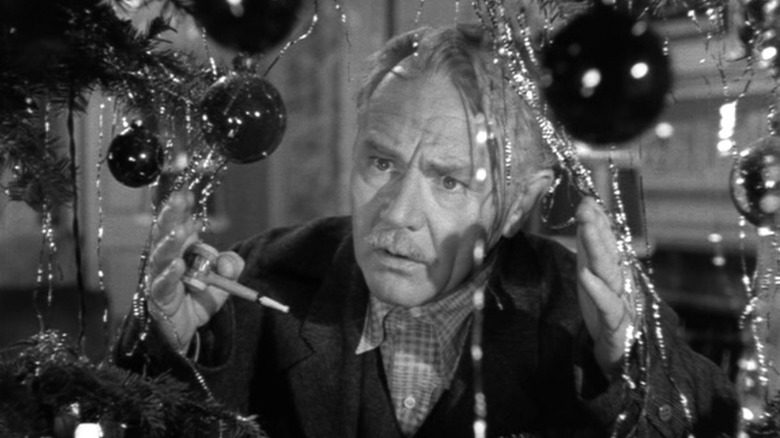
Manhattan's Fifth Avenue is one of the biggest shopping districts in the world, let alone in New York City. This strip serves as the setting for the 1947 romantic comedy "It Happened on 5th Avenue," with vagrant Aloysius T. McKeever (Victor Moore) squatting in a mansion on the street. As a housing crisis worsens, more squatters move in, including veteran Jim Bullock (Don DeFore), with the property owner's daughter Trudy O'Connor (Gale Storm) becoming enamored with him. Trudy's father Mike (Charlie Ruggles) plans to develop real estate that Jim intends to become cheap veteran housing, leading to hijinks between them during the holidays.
Admittedly, "It Happened on 5th Avenue" has the strangest premise of any other movie on this list, featuring an odd class war in the heart of Manhattan. But more than the shared era, the movie evokes "It's a Wonderful Life" through a hard-working protagonist safeguarding his community in the face of competing rich and powerful interests. Those themes are delivered amid all the screwball comedy antics and cases of mistaken and concealed identity, with Moore as the cast's standout actor. An unusual Christmas movie, to be sure, "It Happened on 5th Avenue" is an overlooked comedy from its era.
Miracle on 34th Street (1947)
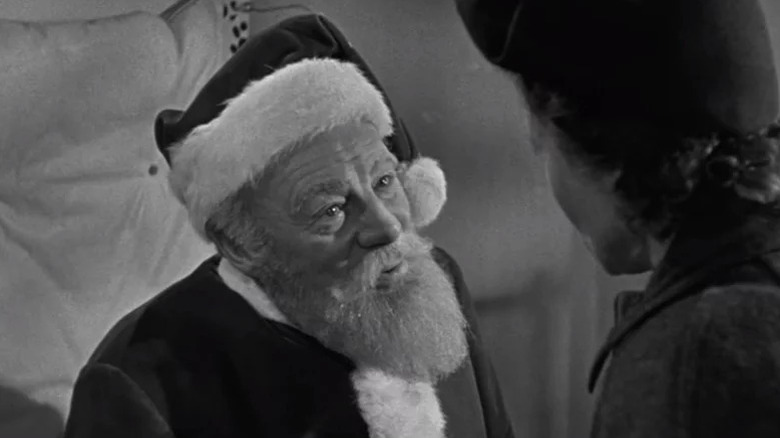
Santa Claus is coming to Manhattan in the 1947 holiday movie "Miracle on 34th Street," starring Edmund Gwenn as Kris Kringle. After being hired to work as a Santa at Manhattan's Macy's department store, Kringle strikes an effective chord with customers despite his odd personality and unconventional actions. As Kringle insists that he is the real Santa, his corporate bosses recommend he be committed to a mental institution even as he generates positive buzz for Macy's nationwide. This yuletide development unfolds as a relationship forms between single mother Doris Walker (Maureen O'Hara) and her neighbor Fred Gailey (John Payne).
While those with a healthy amount of '90s nostalgia might prefer the 1994 remake, the original "Miracle on 34th Street" continues to hold up decades later. The 1947 movie's use of Macy's helps ground the narrative in a way that not even John Hughes could secure for his remake. But real-world corporate entities aside, "Miracle on 34th Street" beautifully suggests that holiday magic is authentic and very much around us, even as we least expect it. As far as the best Christmas movie characters of all time, it's hard to beat Santa Claus, and Gwenn's performance still reigns supreme.
The Bishop's Wife (1947)
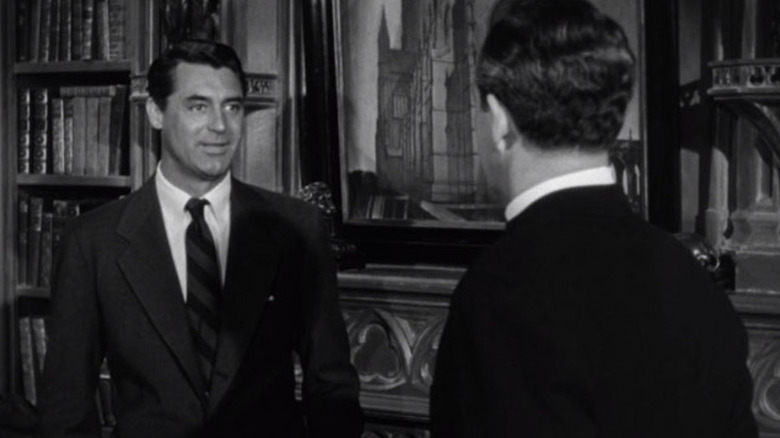
Robert Nathan's 1928 novella "The Bishop's Wife" was adapted into a fantasy romantic comedy in 1947 starring Cary Grant. Grant plays an angel named Dudley who arrives on Earth to provide unassuming Bishop Henry Brougham (David Niven) and those around him with some well-needed spiritual guidance. With Henry distracted by his obsessive project building a new cathedral, his marriage is strained, which is complicated when Dudley falls for Henry's wife Julia (Loretta Young). Marital strife aside, Dudley brings Henry the divine wisdom and inspiration he needs to lead his congregation in time for Christmas.
"The Bishop's Wife" is elevated significantly by the acting talents of Grant, Young, and Niven, forming the complex emotional trifecta at the heart of the story. Grant, in particular, brings a natural charisma to the movie that warms up every scene he's in rather than portraying Dudley as a stuffy divine figure. But the romantic undertones help spice up a story that's really about rediscovery of faith around the holidays on a community level. Thoroughly fueled by Grant's limitless charm, "The Bishop's Wife" is a solid Christmas watch with a magnificent cast.
White Christmas (1954)
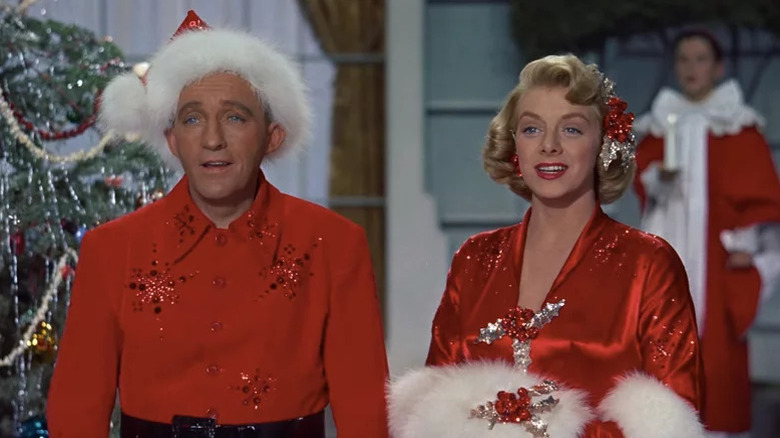
Though Bing Crosby's hit song "White Christmas" came out in 1942 as part of the soundtrack to his movie "Holiday Inn," it got the spotlight in 1954's "White Christmas." Crosby plays Bob Wallace, a World War II veteran who forms a song-and-dance duo with his fellow vet Phil Davis (Danny Kaye) after the war. The two pair up with a sister-singer team in Betty (Rosemary Clooney) and Judy Haynes (Vera-Ellen), with a romance forming between the two groups. The quartet decides to provide a special Christmas show at the struggling Vermont inn of Wallace and Davis' old commanding officer, who put his life savings into the inn.
Irving Berlin's "White Christmas" was the highest-grossing film of 1954 by a wide margin, earning approximately six times its $2 million production budget. While Crosby remains a strong draw, both dramatically and musically, the real MVP of this production is Danny Kaye. Bringing a more comedically irreverent and youthful energy to the proceedings, Kaye pulls off the tricky feat of being silly without distracting from the movie itself. Arguably the best Christmas movie of the '50s, "White Christmas" has endured almost as long as "It's a Wonderful Life."
A Christmas Story (1983)
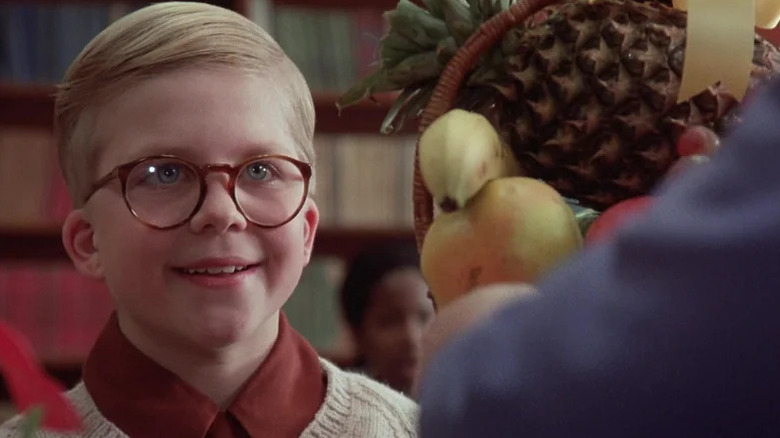
Though 1983's "A Christmas Story" obviously wasn't made during Hollywood's Golden Age, it's an immersive celebration of that era. Set sometime around the late 1930s or early 1940s, the movie focuses on Indiana adolescent Ralphie Parker (Peter Billingsley) in the lead-up to Christmas. Unfolding in slice-of-life vignettes, Ralph dreams of getting a Red Ryder air rifle for Christmas, though the adults in his life are convinced it's too dangerous. Throughout the holiday season, Ralphie's relationship with his family and friends is explored as they get into a series of yuletide hijinks.
"A Christmas Story" is one of the most rewatchable Christmas movies around, which is good because cable television channels practically play it on loop during the holidays. The movie uses its period piece setting well, evoking the '30s and '40s era while keeping its relatable appeal timeless. The film's vignette-heavy format works to its favor, creating memorable set pieces that stand on their own while filling out the overarching narrative. A holiday classic that's only grown more beloved over time, "A Christmas Story" is a perennial favorite that surpasses "It's a Wonderful Life" in rewatchability.