

6 Essential Star Wars: The Clone Wars Arcs Everyone Should Watch At Least Once
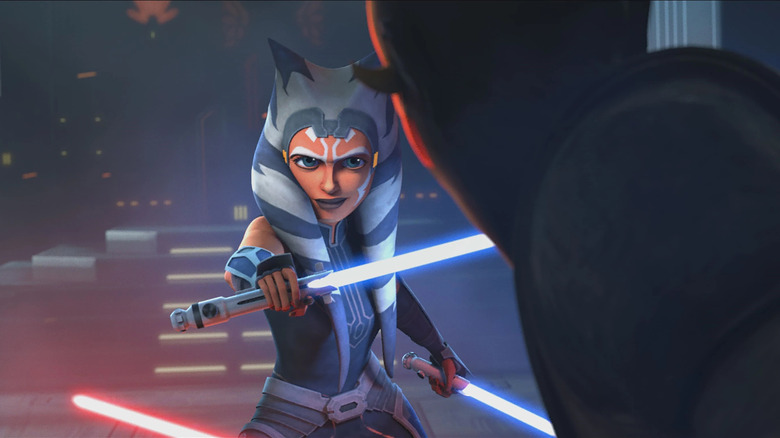
Let's not beat around the bush: The "Star Wars" homework packet has grown gargantuan since Disney rebooted the canon. While fans of the old Expanded Universe mourned its relegation, there was an appeal for more casual fans. Finally, a universe that had become rather cumbersome to get into was getting a fresh start.
A decade later, though, we're back at the same problem, and there is no single bigger unit in the "Catch Up On 'Star Wars'" curriculum than the animated shows. Eight-episode Disney+ series are pretty easy to digest as they come, but the backlog of animated stories — which have become increasingly central to the overriding franchise lore since Dave Filoni's ascension at Lucasfilm — is often cited as a major roadblock to newer or more casual fans digging deeper into "Star Wars." And of the animated series, none is longer or more intimidating than "Star Wars: The Clone Wars."
Across seven seasons and 133 episodes, "The Clone Wars" tells some of the strongest "Star Wars" stories outside of the core films. George Lucas was so involved in its creation that Disney selected the show as the only major work beyond his six films to transfer from the old canon to the new. And yet, it's not exactly an easy show to watch. The early seasons show their age visually, while the middle seasons are filled with lethargic arcs. The show often struggles to balance moralized, kid-friendly episodes and larger-scale storylines for all fans, which is why today, we're making things a bit simpler.
If you haven't watched "The Clone Wars," and you don't know where to start, worry not. We're going to run down six of the best and most important arcs, as well as some "bonus reading" for those who want to fill in more of the gaps.
The Mortis Arc: Episodes 315-317
The first arc I'm recommending comes near the end of "The Clone Wars" season 3. Don't read that as a hard knock on the earlier parts of the show — there's some fantastic stuff in season 2 in particular — but in picking the absolute essentials, we have to jump into the action a bit.
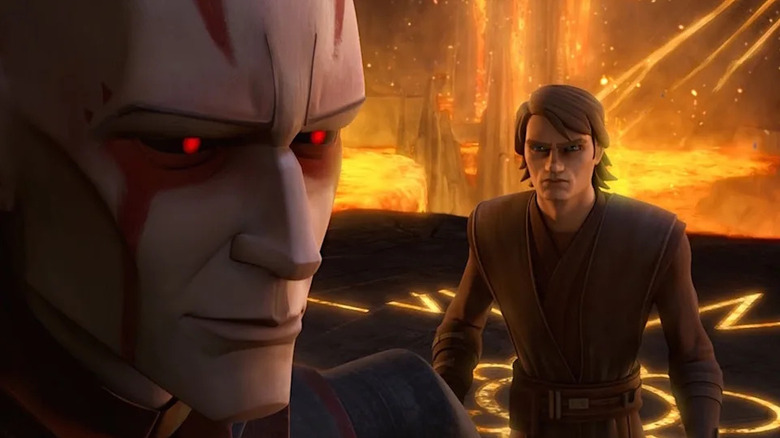
Mortis is, in a word, controversial. It is at the same time the most bizarre arc in all of "The Clone Wars," the most important (for reasons that continue to reveal themselves), and the most seismic in terms of overarching "Star Wars" lore. If you've somehow managed to avoid all references to the magical planet of Mortis in your own "Star Wars" fandom, here's the elevator pitch for these episodes: Anakin Skywalker (Matt Lanter), Obi-Wan Kenobi (James Arnold Taylor), and Ahsoka Tano (Ashley Eckstein) respond to a deep-space destress signal, which ends up pulling them into a strange world rife with the Force. There, they encounter a family of apparent deities with immense cosmic powers who play out the franchise's great light-dark dichotomy in microcosm.
At the time, it was easy to read these episodes as a fun, fairy tale side story — more metaphorical than literal. But in the years since, the so-called Mortis Gods have popped up again and again, most recently via references in the "Ahsoka" show. While Lucas created these characters himself, Filoni continues to push them closer to the center of the franchise. If you want to fully understand whatever's going to happen in "Ahsoka" season 2, a quick watch of these three episodes is likely in order.
The Umbara Arc: Episodes 407-410
Of all the arcs I've included here, the Umbara arc is the one with the least lore implications or connective narrative tissue to other "Star Wars" stories. However, it's also what many would call the show's shining moment, and it's definitely the arc that best embodies the actual title of the series. These are clones, and boy are they at war.
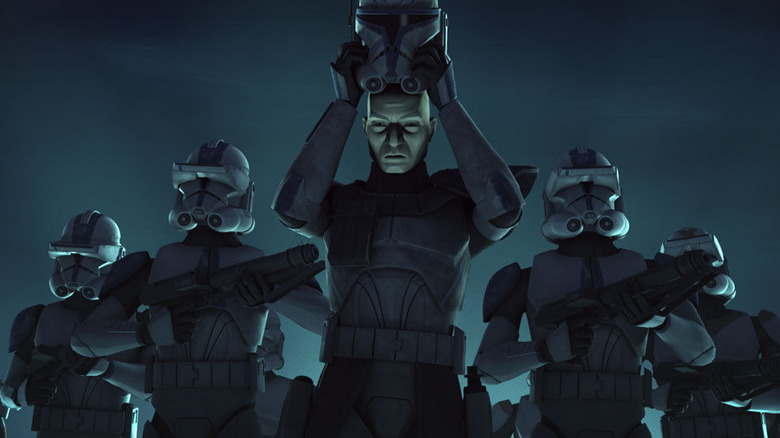
More than any other batch of episodes in the show, these four detail the realities of war for the clone troopers of the Republic. Things kick off in "Darkness on Umbara," where Anakin is called away from a brutal campaign on the Separatist world of Umbara, leaving substitute Jedi general Pong Krell (Dave Fennoy) in command of the 501st. However, Captain Rex (Dee Bradley Baker), one of the main characters of "The Clone Wars" not featured in the prequel trilogy, is the real protagonist here. As the story unfolds, Krell's violent methods push Rex and his fellow clones to the brink, forcing difficult confrontations with what it actually means to be a soldier.
The main storyline is great here, but it's everything else around the edges that really elevates the Umbara arc to its station as a fan favorite. Nowhere in "The Clone Wars" is the titular war itself more stark. The animation paints a dark, treacherous battlefield, and the enemy the clones face — the Umbarans themselves — provide a much grayer molarity to the conflict than the usual droid battalions.
For bonus reading, and a more thorough exploration of the clone character Fives (Bradley), who features prominently, watch season 1's "Rookies" and season 3's "ARC Troopers" before diving into the darkness of Umbara.
The Shadow Collective Arc: Episodes 514-516
Ask any casual "Star Wars" fan who hasn't seen "The Clone Wars" what they know about it, and they will likely answer, "Anakin has a padawan, and Darth Maul comes back to life with spider-legs."
The Maul material in "Clone Wars" gets an outsized amount of attention due to the character's popularity in the fandom. He's the one thing even the prequel trilogy haters could agree was great about those films, and in the grand reparative project "The Clone Wars" conducted on the reputation of the prequels, bringing Maul (Sam Witwer) back became a central thread.
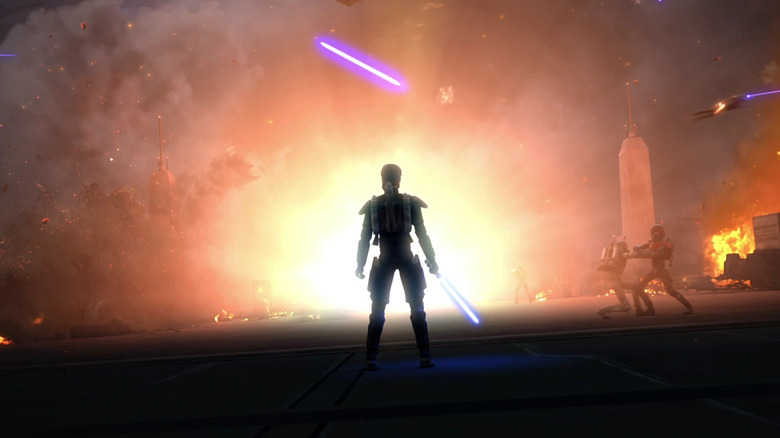
While all of the Maul and Maul-adjacent episodes are worth watching, the real culmination of his arc on the show comes near the end of season 5, when he attempts to build himself a criminal empire to rival both the Jedi and Palpatine's regime. These three episodes — "Eminence," "Shades of Reason," and "The Lawless" — are outstanding, and I won't go into too much narrative detail here for fear of spoiling any of the twists and turns. Suffice it to say, there's Mandalorian action, incredible material for Obi-Wan Kenobi, and one of the best (and still most underrated) lightsaber fights in all of "Star Wars."
To get the most out of this arc, you'll want to start with a few others — season 2's Mandalorian saga (episodes 212-214), season 3's Nightsisters arc (episodes 312-314), and the preceding batch of Maul episodes (421, 422, and 501). You could even throw in "Corruption" and "The Academy" from season 3 if you're really enjoying all of the Mandalorian politics.
The Rogue Jedi Arc: Episodes 517-520
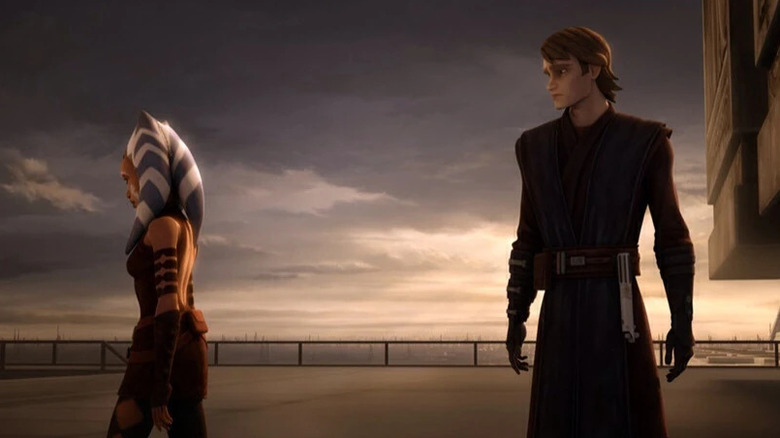
Aired directly after the Shadow Collective episodes, the final arc of season 5 is "The Clone Wars" at its absolute best. If you're going to pick just one arc off this list to watch, make it this one — especially given how important the character of Ahsoka Tano continues to be in the ongoing "Star Wars" saga.
The setup here is pretty simple. As the war drags on, Anakin and Ahsoka are called back to Coruscant to investigate a bombing at the Jedi Temple. Their investigation reveals the massive wave of public sentiment against the Jedi, whom many Republic citizens blame for the war. As secrets reveal themselves, the bond between master and apprentice is pushed to its limit, leading to some of the most emotionally resonant moments in the entire show and the culmination, in many ways, of Ahsoka's arc with Anakin.
At this point, most fans know the basics of what happens here, even if they haven't watched the episodes firsthand. But even if that's you, and you see no point in watching these episodes because you know the ending, I'd encourage you to check them out all the same. Visually, the show is rarely more outstanding, and the performances from Matt Lanter and Ashley Eckstein really demonstrate the peak of what "Star Wars" can be in an animated format.
For bonus reading and maximum emotional impact, check out some of the early arcs centering Anakin and Ahsoka, like season 1's Ryloth run (episodes 119-121), season 3's Citadel arc (episodes 318-320), and especially season 2's Geonosis arc (episodes 205-208).
The Clone Conspiracy Arc: Episodes 601-604
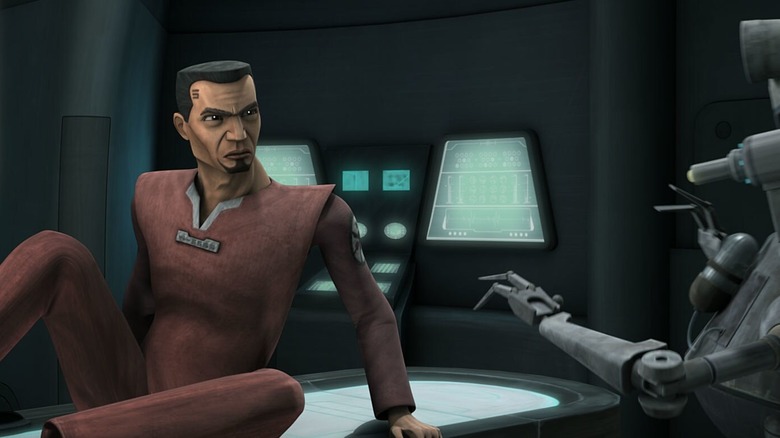
If you always wanted to know more about how Order 66 actually works after watching "Star Wars: Episode III — Revenge of the Sith" for the first time, this is the arc for you. While in the middle of a campaign, recurring series clone protagonist Fives begins to suspect that there might be more to him and his brothers' genetic programming than meets the eye. As he digs deeper, a full conspiracy unfolds, leading directly to Chancellor Palpatine himself.
The leadoff arc and standout set of episodes for "The Clone Wars" season 6, this is another run that adds great depth and context to the events of the prequels. It further humanizes the clone characters and sets the stage for their ultimate betrayal, all with some of the strongest writing and animation in the series.
It's worth noting, however, that these episodes fundamentally retconned the mechanics of Order 66, going in a very different direction from how the command was explained in Expanded Universe materials like Karen Traviss' "Republic Commando" novels. This was a result of Lucas directly intervening, though, as season 6 was produced just before the Disney acquisition.
The Siege of Mandalore Arc: Episodes 709-712

The final arc of "Star Wars: The Clone Wars" is also one of its absolute best. While the main events here were well known ahead of time thanks to material in "Star Wars Rebels" and other affiliated texts, it's the spectacle and emotional crescendo that makes this finale hit so hard.
Anakin, Obi-Wan, and a lot of the other core characters of "The Clone Wars" get their big climaxes in the prequel trilogy, so it's fitting that the animated series centers the characters who don't for its final batch of episodes. This is really an arc about Ahsoka, Maul, and the clones — all characters caught up in the jet stream of the war and Palpatine's machinations. As the episodes catch up to and begin to overlap with the events of "Revenge of the Sith" (which is Lucas' masterpiece, just fyi), they pull powerful moment after powerful moment, throwing the full tragedy of the war into sharp relief.
That's without getting into any of the spectacle, which would be enough to get this arc on this list by itself. There are intense battles between clones and Mandalorians, the greatest lightsaber fight in the entire series, and a final act so explosive and devastating it makes the entire franchise just that much better.