

The Rings Of Power Season 3's Incest Storyline Is A Big Change From The Books – And It Could Have Been Much Worse
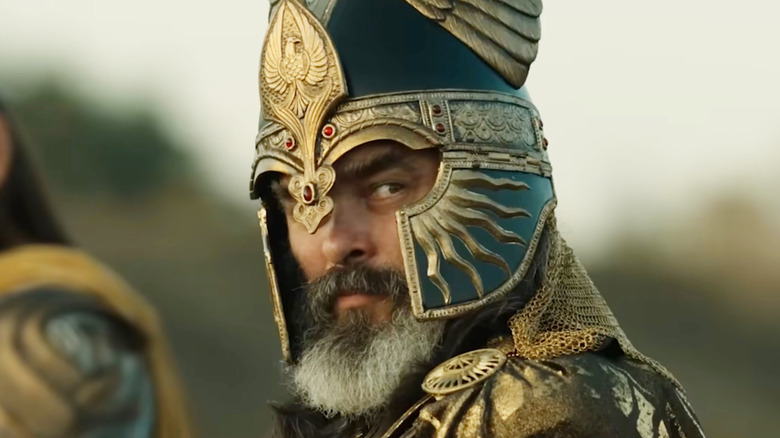
One does not simply walk into spoilers. This article discusses major plot details up to "The Lord of the Rings: The Rings of Power" Season 3, Episode 6.
When it comes to a story as sprawling and complex as "The Lord of the Rings," not all adaptation changes are made equally. Throughout three seasons of "The Rings of Power," showrunners J.D. Payne and Patrick McKay have given us plenty to choose from. Some, like the arrival of Gandalf (Daniel Weyman), make perfect sense — although technically he's not meant to be involved in the action until centuries later in the timeline, you can understand why the series' creatives would want to speed things up a bit. Others, like the decision to keep Galadriel (Morfydd Clark) and her husband Celeborn (Jamie Campbell Bower) apart for so long, took longer to come into focus.
While many of the headlines will center on the deception of Charlie Vickers' Sauron and his breakthrough in figuring out how to forge the One Ring, an under-the-radar twist revealed itself all the way in the west on the island kingdom of Númenor. For several episodes, we've watched rivals and royal cousins Pharazôn (Trystan Gravelle) and Míriel (Cynthia Addai-Robinson) come closer and closer to outright conflict over the throne. How they resolve this may seem to line up with author J.R.R. Tolkien's original telling, but the circumstances vary considerably.
Now we know why the Prime Video series changed things up. In the latest episode, their attempts to negotiate and avoid bloody civil war reach an impasse ... until Pharazôn finds an unexpected solution. Actually, make that a proposal. Yes, this is the moment "The Rings of Power" takes a page out of the "House of the Dragon" playbook. And it could've been much worse.
The Rings of Power Season 3 actually tones down J.R.R. Tolkien's original Míriel/Pharazôn relationship
"The Lord of the Rings" may have a reputation as cozy, comforting fantasy with its plucky Hobbits and kindly old wizards, but don't look past the abject darkness at the heart of the story. J.R.R. Tolkien never shied away from the shortcomings of individuals throughout his tales — in fact, as a Catholic, he emphasized them. But all it takes is a cursory look at the lore and mythology preceding his most famous novels to realize just how much Middle-earth has in common with the likes of Westeros in "Game of Thrones."
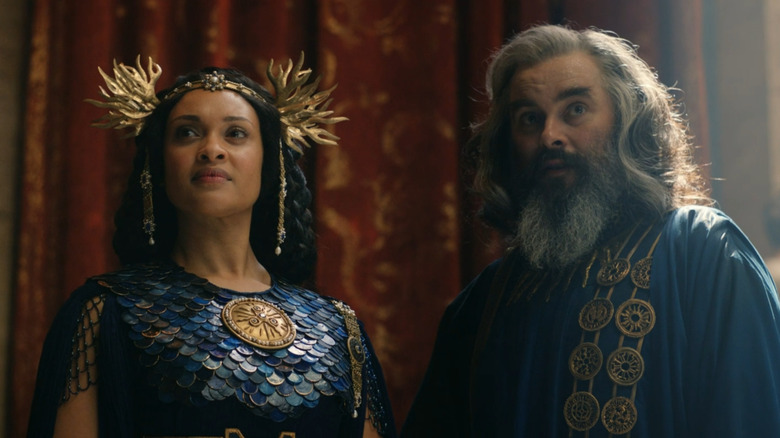
Don't believe us? Look no further than how "The Rings of Power" begins to resolve one of its biggest storylines in Season 3. After several episodes of Númenor coming perilously close to tearing itself apart, we're left on an unsettling cliffhanger. The usurper Pharazôn suggests that he and Míriel repair this rift through an incestuous political marriage. It's clear from the look on Míriel's face that this is a measure of last resort, but everything about her arc thus far implies that she'll end up putting the greater good of the kingdom over her own desires (which, remember, are more romantically inclined towards Lloyd Owen's noble Elendil).
Still, this is far tamer than how Tolkien originally tells it. While the appendices found at the end of "The Return of the King" are light on details, other sources (like "The Silmarillion") explain how Pharazôn looked enviously upon the rightful heir Míriel, forced his cousin into marriage against her will and against all the laws of the land, and took power. Compared to this, "The Rings of Power" gives Míriel far more agency.
The Rings of Power is laying the groundwork for the fall of Númenor in Season 4
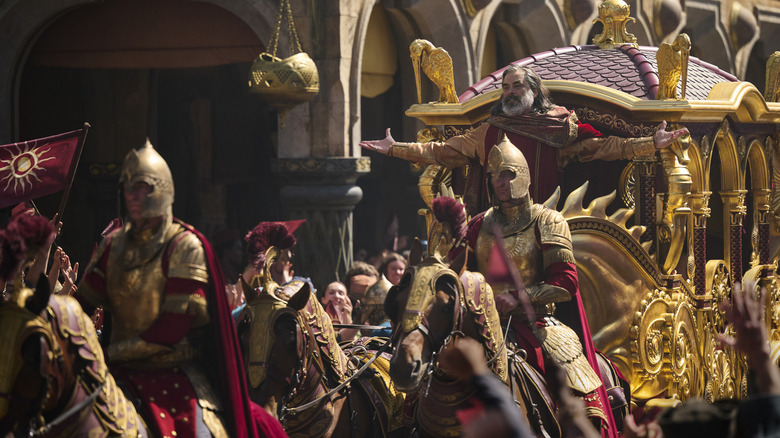
Those who know their J.R.R. Tolkien ought to be well familiar with where "The Rings of Power" is going next. (For those who don't, be advised this next section dives into major potential spoilers.) With only two episodes to go in Season 3 and the bulk of it likely taking place on the mainland, the Númenor plot will soon need to resolve itself. Míriel must still actually agree to Pharazôn's terms and avoid a costly battle, thus allowing their combined forces to look outwards and send their armada to assist the beleaguered Elves attempting to resist against Sauron.
But it's what comes next, almost certain to unfold in Season 4, that concerns us the most. With their power soon to be consolidated in an uneasy alliance, Míriel and Pharazôn will eventually have to contend with that pesky Dark Lord. According to the various texts, this is the pivotal inflection point that puts us on a path towards the inevitable Fall of Númenor. According to Tolkien's original writings, Númenor's entrance into the war has disastrous consequences. Granted, their fearsome army quickly overwhelms Sauron's own and leads to him being taken back to the island as a prisoner, but that's where all the troubles begin. Eventually, Sauron worms his way into Pharazôn's ear and convinces him to set his sights on the Valar themselves — a desperate gambit to stave off death among Mortal Men and seize the eternal life that's been denied them.
None of this ends well for Númenor, but we're getting ahead of ourselves. The final two episodes of "The Rings of Power" Season 3 stream November 25, 2026, on Prime Video.