

This '60s Sketch Show Became One Of The Biggest Flops In TV History
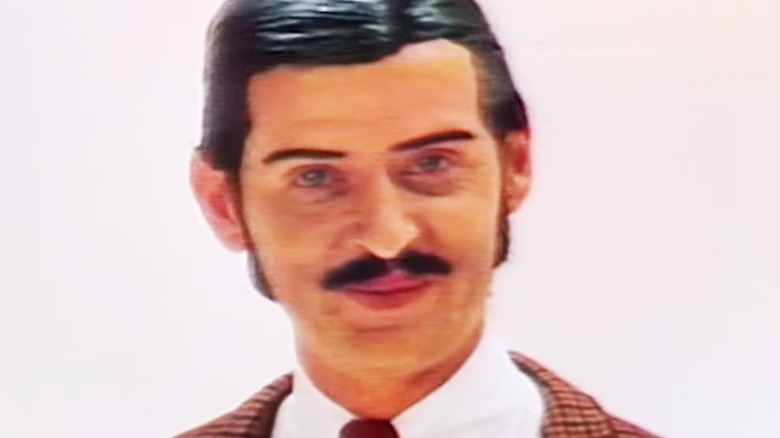
Networks tried all sorts of wild and outlandish ideas in the 1960s as they attempted to wrestle audiences' attention away from their rivals. This was the decade that gave us "My Mother the Car," the show for which Jerry Van Dyke turned down "Gilligan's Island" and which had him talking to his deceased mother via a car radio. The '60s also gave us Sally Field as a flying nun and sitcoms such as "The Hathaways" which featured a trio of trained chimpanzees who were treated like human children by their suburban "parents."
It was during this era that ABC decided to debut its surreal sketch comedy series "Turn-On," and when I say "series," I mean single episode. The show was so poorly received that it was yanked off the air after its debut installment in 1969, and rumors have since emerged that it became the only series in TV history to be canceled while it was airing. That might be a slight exaggeration, but not by much.
1969 was the year the world watched Neil Armstrong and Buzz Aldrin land on the moon, "Star Trek" aired its final episode, and a man who actually did say yes to "Gilligan's Island," Alan Hale Jr. paid a visit to Sally Field's aforementioned airborne nun. But the year got off to a rocky start for ABC when it debuted one of the most notorious flops in TV history.
"Turn-On" was created by Digby Wolfe and George Schlatter, with the latter having created the hugely popular NBC series "Rowan & Martin's Laugh-In," aka "Laugh In," and the former having written for that same series. Their attempt to recreate the magic at ABC was a more lewd, surreal affair that aired once on Wednesday, February 5, 1969, and was never seen again.
Turn-On was a bizarre sketch show shot in an all-white vacuum
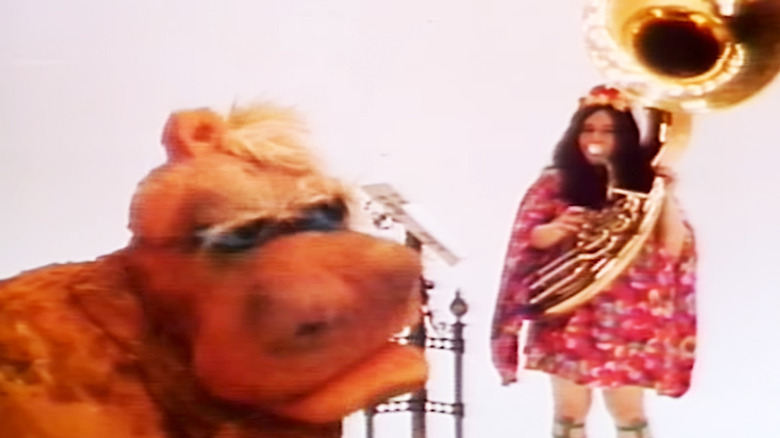
Forgotten sketch comedy show "Weird TV" might be the weirdest series of all time, but "Turn-On" isn't far off. For one thing, its concept seemingly had little to do with comedy. As one of two computer engineers explains during its opening moments, "Turn-On" is "the first computerized TV show." What does that mean? Well, in a practical sense, it means every sketch unfolds in a vast all-white vacuum, where the supercomputer supposedly responsible for the show manifests sets and characters. Essentially, the whole thing takes place within the Construct from "The Matrix."
The opening sequence is a bewildering and surreal experience, featuring an array of diverse performers who appear within the Construct in quick succession, including puppets and a woman who plays a sousaphone before bursting into laughter — all scored by an electronic rhythm and synth hits that apparently have little to do with what's happening on-screen. It's the kind of thing that wouldn't be out of place on Adult Swim in the 2000s. In the late-1960s? Let's just say network affiliates were concerned about their ratings.
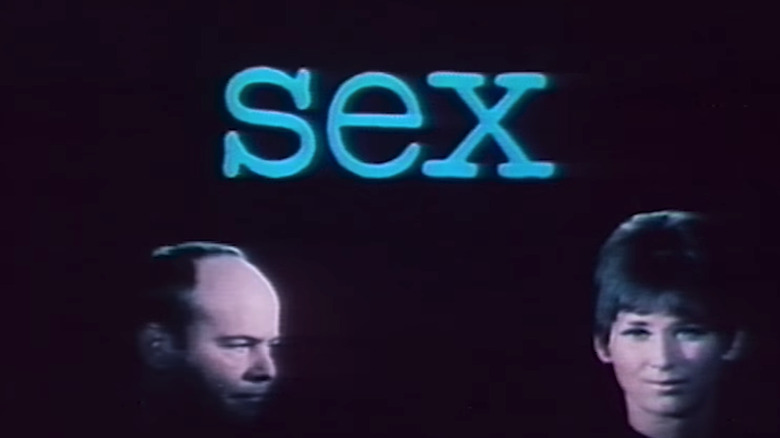
Things get a bit more blue as the debut episode of "Turn-On" continues. While "Laugh In" pushed boundaries, its ABC counterpart contained more sexual humor. And by "humor," I mean the word "Sex" flashing on-screen above guest host Tim Conway and Bonnie Boland and a "sketch" in which a woman tries desperately to get a box marked "The Pill" out of a vending machine. Meanwhile the show's credits continue to appear throughout the episode as suggestive cartoons pop up from time to time. This mixed media approach sort of calls to mind "Monty Python's Flying Circus," which also debuted in 1969. Unlike that now legendary series, however, "Turn-On" was cancelled almost immediately.
Turn-On provoked a backlash from ABC affiliates
A stub in the February 7, 1969 edition of The Oregonian (via Newspapers.com) noted how local ABC affiliate KATU-TV did not air the "Turn-On" premiere at the behest of its management, who were evidently put off by a preview screening. "The station's management decided certain portions of the program 'are not in good taste and that these portions would be objectionable to a substantial and responsible part of the community,'" reads the report, which also noted that the Associated Press critic Cynthia Lowry had highlighted the "frankly blue jokes" that offended the Oregon affiliate management.
ABC seemed to agree, and it pulled the plug after the first episode went out. According to co-creator George Schlatter, though, the show's swift cancellation came down to a station manager in Cleveland who wanted to keep "Peyton Place," the show that would have run in the "Turn-On" time-slot, on the air. "He started calling the stations as it came across the country telling them they had to cancel this show," Schlatter stated. "[...] He convinced them to cancel the show, so by the time it got to California, the show was off the air, and some of it has never been seen." It's this recollection of events that seems to have birthed the "canceled while it was on the air" urban legend.
The attempts at transgressive humor and surrealism in "Turn-On" feel too try-hard, and the overall experience of sitting through the premiere episode is actually quite unpleasant. That said, it's not impossible to admire Schlatter and Digby Wolfe's attempt to do something different. What's more, we've gotten plenty of awful TV shows with 0% Rotten Tomatoes scores, and I'd much rather watch "Turn-On" than an episode of "Real Rob."