

One Of Daredevil's Most Important Characters Was Only Supposed To Appear Once
We may receive a commission on purchases made from links.
If you asked Marvel readers to name Daredevil's most important supporting character, many would answer Elektra Natchios, the sai-wielding ninja assassin and Matt Murdock's sometimes lover, sometimes foe. But she came fairly late into the publication of "Daredevil." Created by writer/artist Frank Miller, Elektra debuted in 1980's "Daredevil" #168. The issue details her past of falling in love with Matt in college. In the present, the two are reunited because Elektra's assassin job brings her into conflict with Daredevil.
Miller had been drawing "Daredevil" since issue #158. He asked "Daredevil" editor Dennis O'Neil for a chance to write the book, and he turned it around completely. Miller transformed "Daredevil" from one of Marvel's least popular comics into one of its best, as his hard-boiled writing and dynamic action made "Daredevil" feel unlike any other comic. (Miller soon did a similarly influential revamp of Batman, which is why Batman and Daredevil remain so similar.)
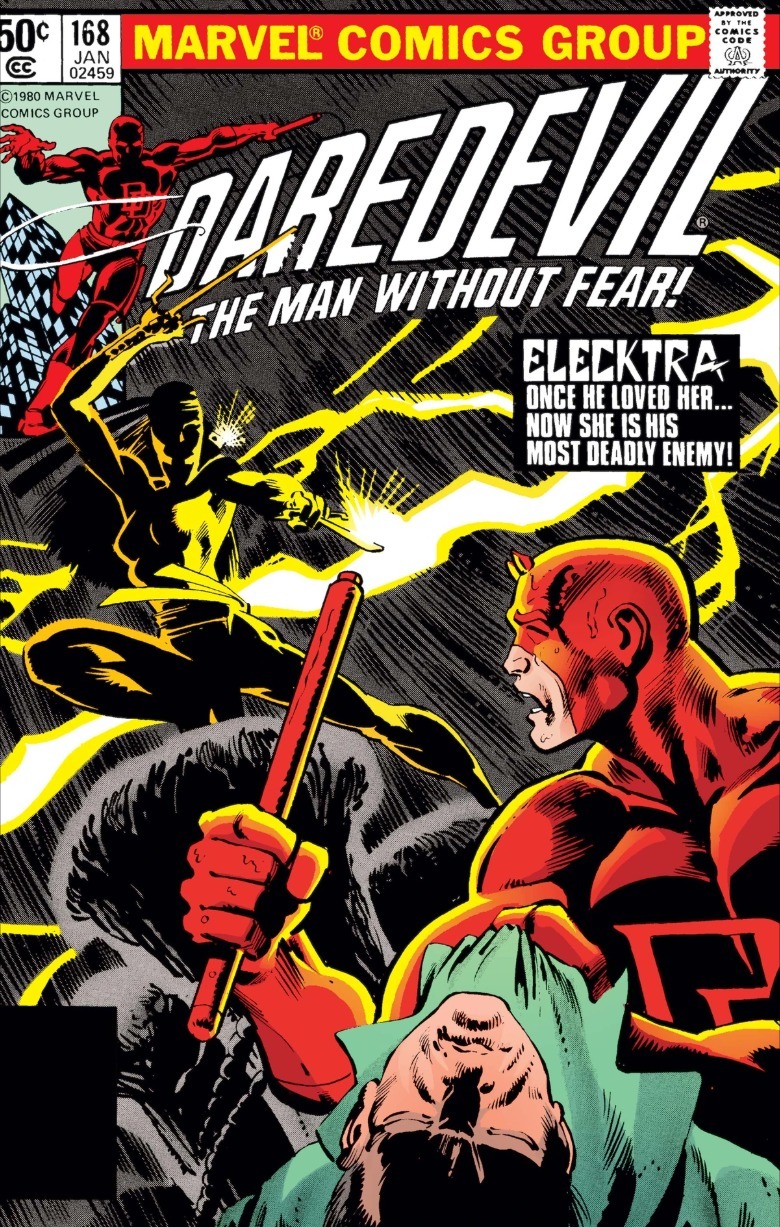
"Daredevil" #168 was Miller's first solo writing credit on the book. His cover (inked by Klaus Janson) depicts a lightning strike, a fitting image for what Miller would do for the comic. That lightning conceals Elektra in shadow, while Daredevil looks on in horror. "Once he loved her... now she is his most deadly enemy!" the cover declares. Between the cover's imagery and the story promised by that caption, how could you not pick up this comic?
 Marvel Comics
But at the time, Miller didn't see Elektra as the key to overhauling "Daredevil." In a 1983 discussion with Comics Interview magazine, Miller explained, "I came onto ['Daredevil'] thinking I was doing a couple of fill-ins on the writing. I ended up taking over the series, [and] had a character who was only supposed to appear for an issue take over the series on me — Elektra."
How Frank Miller created Elektra for Daredevil
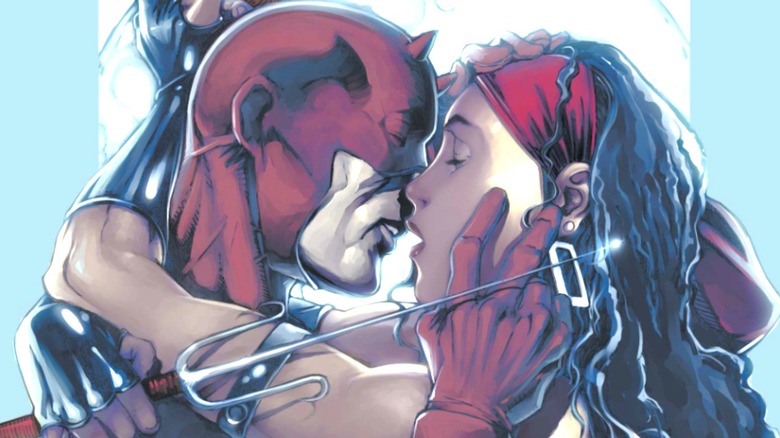
Frank Miller named Elektra after the Greek myth of Electra, the daughter of Agamemnon and Clytemnestra who killed her mother to avenge Clytemnestra's murder of Agamemnon. Elektra Natchios is also defined by the death of her father, a Greek ambassador murdered in a hostage situation during Matt and Elektra's college years romance.
"Daredevil" by Miller takes a lot from film noir, and an alluring but deadly woman from the hero's past is a noir hallmark. Miller had one particular noir story in mind: Will Eisner's crime comic strip "The Spirit," particularly a 1950 story that introduced Sand Saref, the Spirit's childhood girlfriend turned femme fatale. Elektra's backstory — in love with the hero, rejects the law after her father dies, becomes an international criminal — hits the same beats as Sand's. (Bringing this full circle, Miller directed a "Spirit" movie in 2008 featuring Eva Mendes as Sand Saref, but it received very bad reviews.)
In the 2003 documentary "The Men Without Fear: Creating Daredevil," Miller recalled that he had wanted to introduce a new type of superhero love interest with Elektra, i.e. one who jumps across rooftops with her man. "Why wouldn't [superheroes] be operatic in their romance the way they are in combat?" Miller asked.
Knowing Miller apparently thought he might get one chance to tell Elektra's story, it makes sense that "Daredevil" #168 tells a complete and tragic arc. Daredevil and Elektra clash over the same quarry, and Matt remembers his past with Elektra (a blatant retcon, one smoothed over by Matt's inner dialogue suggesting it's been too painful to think of Elektra since). The issue ends with Daredevil revealing he's Matt Murdock to Elektra, but they still live in different worlds now. He then vanishes into the night, leaving Elektra crying alone.
Not even death could stop Elektra
Frank Miller actually brought Elektra back in his very next issue, "Daredevil" #169, but that appearance writes her out. She enters Matt's apartment, sees he's involved with Heather Glenn, and leaves, once more heartbroken. As Miller settled in on "Daredevil," though, he brought Elektra back in issue #174 as a regular character.
From there, she fought alongside Daredevil against the evil ninja cult the Hand and was hired to kill her lover by Wilson Fisk, the Kingpin. Fisk's former assassin, Bullseye, didn't take kindly to being replaced, so he murders Elektra in the double-length "Daredevil" #181. Elektra's fate echoes previous deaths of Marvel Comics female leads (now called "fridging"), like Gwen Stacy in "Amazing Spider-Man" or Jean Grey in "X-Men."
Miller felt that Elektra had to die or else she'd become an "insipid character," and he managed to convince Marvel's reluctant then editor-in-chief, Jim Shooter. But in Miller's penultimate issue, "Daredevil" #190, Elektra is revived by the Hand — unbeknownst to Matt, who still believes Elektra lost to him.
Elektra's resurrection opened the door for her to return, like in Miller and Bill Sienkiewicz's "Elektra: Assassin" or Miller's "Elektra Lives Again." Miller later revised Matt and Elektra's past in the 1993 miniseries "Daredevil: Man Without Fear" (drawn by John Romita Jr.), retconning Elektra into a dangerous thrill-seeker from the start.
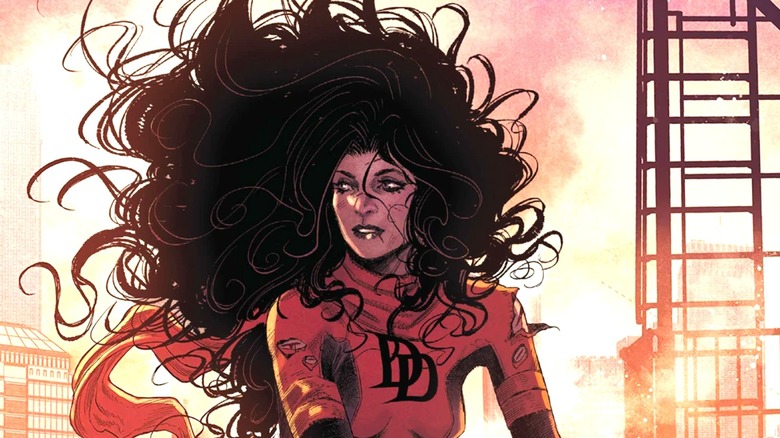
Nowadays, Elektra sits as a permanent fixture of Daredevil's world, played in live-action by Jennifer Garner and later Elodie Yung. The comic Elektra even became Daredevil herself during writer Chip Zdarsky's run on "Daredevil." That endurance is not what Miller had wanted, and he admitted Elektra slipping through his hands "stings like hell" in "Marvel Comics: The Untold Story." If there's one publisher that won't let a good character go, after all, it's Marvel Comics.