

Patrick Stewart's X-Men Role Was The Best Comic Book Movie Casting Of All Time
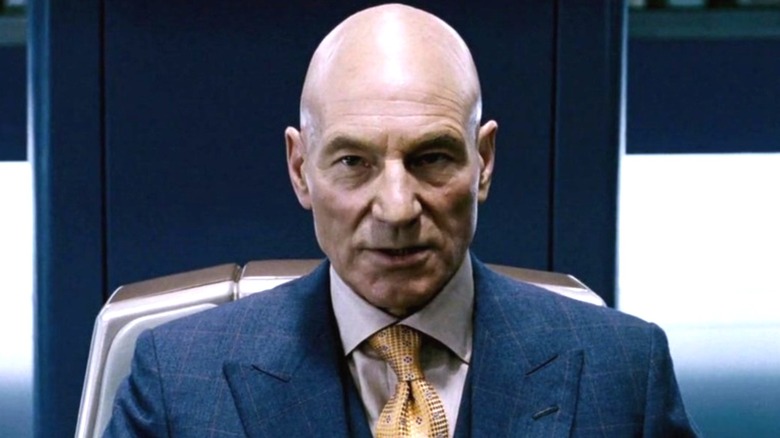
Hearts have broken around the world because legendary actor Sir Patrick Stewart has died at age 86. Audiences will get to see him one last time in this year's "Avengers: Doomsday," which we now know will be the end of his 26-year-run playing Professor Charles Xavier. ("Doomsday" will also see him reunite with his old friend/screen partner Ian McKellen as Magneto.)
Stewart was one of the finest Shakespearean actors of his generation, but in the 1980s, he became equally revered by nerds everywhere for playing Captain Jean-Luc Picard in "Star Trek: The Next Generation." Picard became the model for Stewart's second most famous role as Professor X.
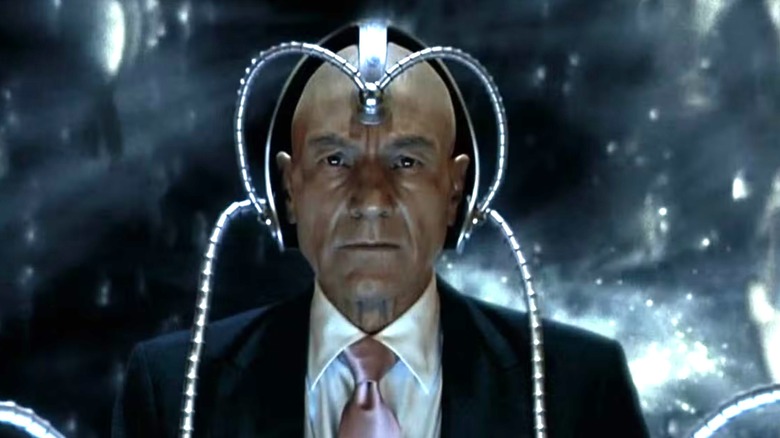
During the 1990s, when an "X-Men" film was in development, Patrick Stewart was already accepted as the one and only choice to play Professor X. Comic book fan publication Wizard Magazine famously fan-cast him as Professor Xavier, and Stewart was the only actor on both their list and the final movie's cast. Now, some of that comes down to physicality; Stewart lost his hair prematurely, and one of Professor X's defining physical characteristics is his bald head. Nerds had just seen Stewart play a bald leader across seven seasons of "Star Trek," so of course he was the natural pick for Professor X.
But to say that Stewart also had the talent to play Professor X grossly understates it. The first "X-Men" was near the beginning of the superhero movie boom. Almost three decades on, no casting choice has surpassed Stewart as Professor X; he simply is the character, in appearance and anima. Yes, it's become a meme of how many times Stewart's Professor X has died onscreen and then returned ("X-Men: The Last Stand," "Logan," "Doctor Strange in the Multiverse of Madness"), but that just underlines how hard it's been to let go of his performance.
Patrick Stewart as Professor X elevated the X-Men movies
While "X-Men" fans in the 1990s all had Patrick Stewart as their number one option to play Professor X in a movie, Stewart himself has admitted he knew nothing of "X-Men" when he was cast. What eventually convinced him to take the part were the social themes of "X-Men." Like the comics, the "X-Men" films use the struggle of mutants as an allegory for real civil rights. Stewart was a political activist in real life — he championed feminism and domestic violence awareness, owing in part to growing up in an abusive household himself. As Professor X, Patrick Stewart was the sort of saintly crusader for equality and human dignity we venerate real progressive icons for being.
As had been the case on "Star Trek," Stewart's performances in the "X-Men" films inspired his co-stars to rise to his caliber. He, of course, shared incredible chemistry with Ian McKellen. Think of the final scene in "X-Men," as Xavier visits the captured Magneto in his cell: it's just two old friends playing chess and sharing some bitter disagreements, but it's captivating to watch and arguably the best scene in the whole movie. Two veteran actors are playing the drama of the scene utterly straight, and convincing otherwise anyone who doubted that superhero films can have true gravitas.
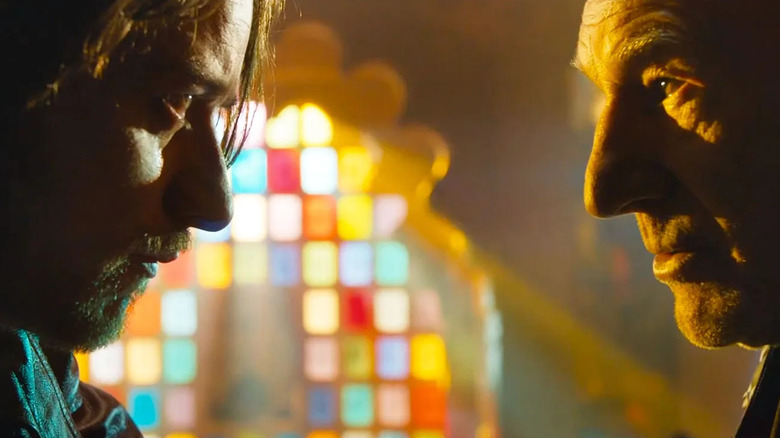
Stewart's most touching scene as Xavier is in "X-Men: Days of Future Past," when he telepathically talks with his own younger self (James McAvoy) and gives him some needed guidance. "Just because someone stumbles and loses their way, doesn't mean they're lost forever," the elder Xavier says with his trademark kindly whisper, talking about both humanity and himself. The reassurance of those words travels well beyond the screen. If Patrick Stewart implored you to "hope again," how could you say no?
Patrick Stewart changed how we think of Professor X
Comic artist Jim Lee, who drew the cover for 1991's "X-Men" #1 and redesigned the team (giving them the looks then used by "X-Men: The Animated Series"), has said that during his work on "X-Men," he worked to make Professor X a more active leader in the vein of Captain Picard. That comparison is prophetic now, and I think it underlines how Patrick Stewart as Professor X had overtaken the perception of the character.
Stewart also kept his British accent when playing Xavier, but in the comics, Xavier was born and raised in New York. Yet after the "X-Men" movies came out, voice actors David Kaye (in "X-Men: Evolution") and later Jim Ward (in "Wolverine and the X-Men") modeled their performances on Patrick Stewart when voicing Professor X.
The "X-Men" films were often unfaithful to the comics, and one subtle way is how they soften Xavier's edges. In the movies, Stewart's Xavier is often downright messianic. In the comics, he has an arrogance to him — an unshakable belief that he knows best. After all, the X-Men are his students and he's their teacher. Xavier is not a secret villain — far from it — but in the comics, Magneto clocks his old friend rather accurately: "We must be wary of good men. For what will they not do to show how good they are?"
Patrick Stewart's Professor X instead embodies the most noble qualities of an educator: protectiveness of his students, a desire to build bridges through sharing of knowledge and experience, and optimistic hope in human nature and the future. Charles Xavier in the "X-Men" films was the shared voice of our better angels, and so much of that soul came from Patrick Stewart. May he rest in peace.