

Every Clayface Episode Of Batman: The Animated Series, Ranked
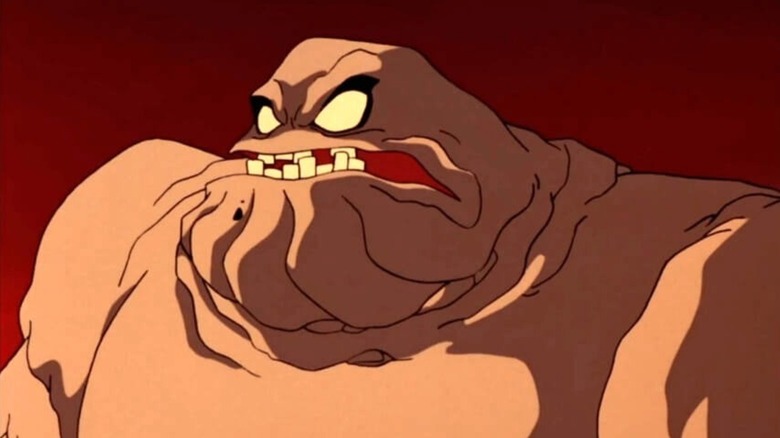
DC Studios' "Clayface" owes a debt to "Batman: The Animated Series." The movie is a loose, feature-length remake of Clayface's first appearance on that show, the two-part episode "Feat of Clay." In that episode, actor Matt Hagen — left scarred by an accident — uses experimental chemicals to restore his movie star looks, but abuse of those chemicals turns him into a shapeshifting super-villain.
Clayface was voiced by Ron Perlman, one of the many great guest stars who appeared on "Batman: The Animated Series." His deep baritone reached tragic depths as Clayface but became downright scary once Hagen gave himself over to his new monstrous self. Perlman has played many comic book characters since. In DC animation, specifically, he's since voiced Killer Croc in "The Batman" and Slade in "Teen Titans." Perlman also played the most unconventional superhero of all, Hellboy, in two live-action films directed by Guillermo del Toro. But even with that stacked resume, his Clayface remains a highlight. Matt Hagen's tormented soul is almost a test run for similar pathos Perlman brought to Hellboy.
"Batman: The Animated Series" used Clayface rarely, but he's remembered as one of the show's most tragic villains, neck-and-neck with Mr. Freeze (Michael Ansara) and Two-Face (Richard Moll). When it's a Clayface episode, don't expect a happy ending. So let's look back at every time Clayface starred on "Batman: The Animated Series," as well as its sequel series/third season "The New Batman Adventures."
(To be comprehensive, Perlman's Clayface also returned one last time in "Justice League" episode "Secret Society" as part of the eponymous alliance of super-villains, but we're keeping this list to "Batman: The Animated Series" only.)
4. Holiday Knights
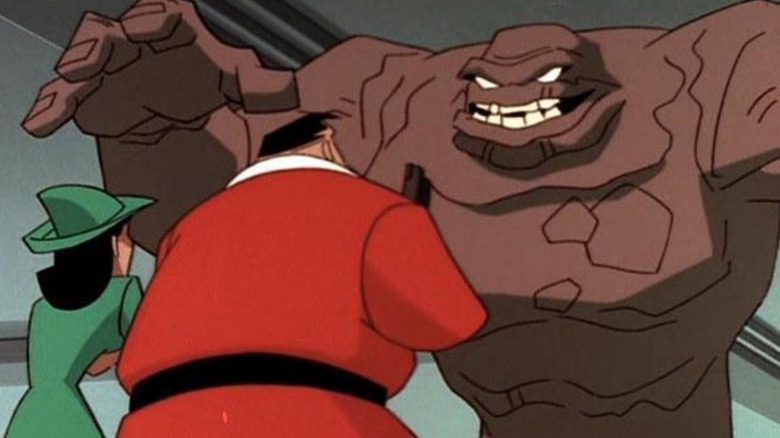
"The New Batman Adventures" kicked off with a Christmas anthology episode, based on the 1994 comic "The Batman Adventures Holiday Special." Clayface is the villain of the second segment. Barbara Gordon (Tara Strong) is Christmas Eve shopping in a department store. In that same store, Clayface splits his body into numerous smaller forms — disguised as children — for a shoplifting spree. That leads to a memorable image when Barbara tries to grab one of the "kids" by the arm, and it turns to mud in her grasp.
"New Batman Adventures" used a new art style and this episode debuted Clayface's redesign. Little was changed, aside from softening the edges and simplifying the details of his mud form. Ironically for a shapeshifting villain, Clayface still looked like the same character as in "Batman: The Animated Series."
As one segment in a 22-minute episode, "Holiday Knights" is by design the shallowest Clayface episode. He's there for an action set piece and little more, and the segment is more there to show off Batgirl. Barbara was a very rare guest character in "Batman: The Animated Series," but in "New Batman Adventures," she's part of the main cast. "Holiday Knights" demonstrates that she can take down one of the most dangerous criminals in Gotham City without any help from Batman himself.
3. Mudslide
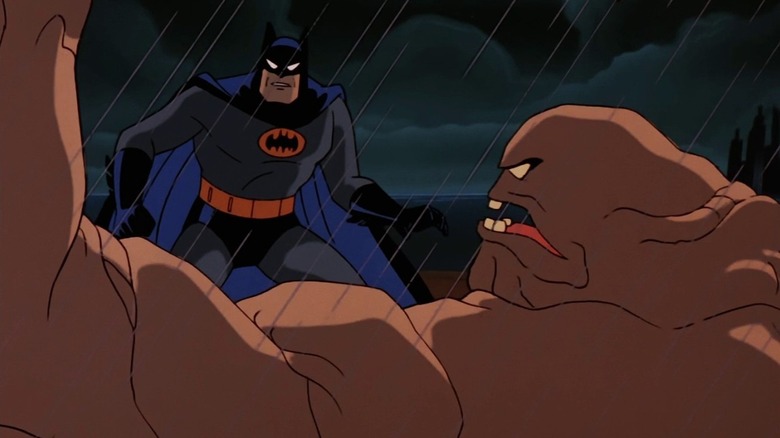
Clayface's appearances on "Batman: The Animated Series" were sporadic. "Feat of Clay" teases a return, but it took about 30 episodes for the show to pick up on that thread. "Mudslide" is a good episode, but proof of the truism that the sequel is rarely better than the original.
In "Mudslide," Hagen's mutated body is deteriorating. He's sought shelter with Stella Bates (Pat Musick), a doctor who has long carried a torch for Hagen — or, at least, the men he played onscreen. Determined to save himself without losing his shapeshifting powers, Clayface steals an experimental "MP-40" chemical ... from Wayne Enterprises, putting Batman right on his tail. The episode stays true to Clayface's flawed characterization from his first appearance; Hagen is a pitiable figure, but also a selfish man who won't take help except on his own terms. Like a Greek tragedy (extra fitting for an actor), his misfortune is born from his own flaws.
"Feat of Clay: Part 2" director Kevin Altieri has confirmed that Matt's stunt double, Teddy (Dick Gautier), was intentionally coded as his boyfriend. "Mudslide" has been read as continuing that queer coding, with Hagen's failing body being an allegory for HIV. (Not for nothing, Hagen doesn't reciprocate Stella's romantic interest, though he'll reenact scenes from his movies to string her along.)
"Mudslide" ends with Clayface coming apart and melting away, falling off a cliff and seemingly dissolving in the ocean below. It's one of the saddest endings in the whole run of "Batman." Series writer Michael Reaves claimed Clayface was intended to be dead when quoted by Cinefantastique magazine, being slightly amazed that the censors let them kill off a character onscreen. But Clayface would return and prove that the show could get darker still.
2. Growing Pains
While "Batman: The Animated Series" aired on Fox Kids, "The New Batman Adventures" moved to Kids' WB. "Batman" writer and producer Paul Dini has claimed that Kids' WB was less censorious than Fox Kids had been, hence the series finally getting to feature characters like, for instance, the pyromaniac villain Firefly. That might also account for Clayface's return episode, which is the darkest one yet. The cycle of abuse and tragedy is complete, as Hagen becomes the monster in someone else's story.
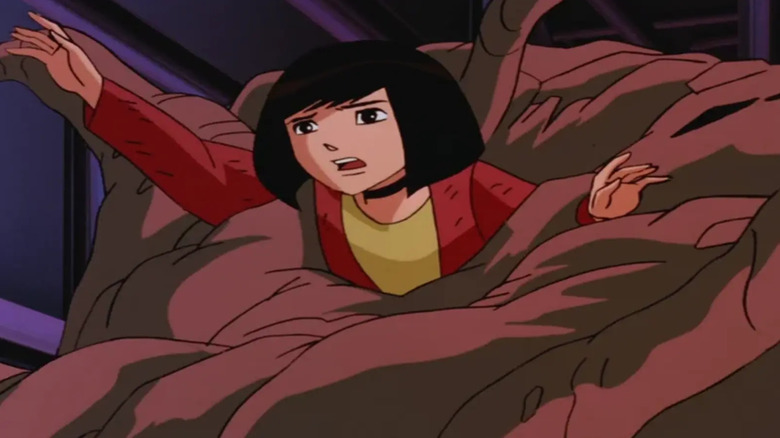
In "Growing Pains," Robin (Mathew Valencia) tries to help a young runaway, Annie (Francesca Marie Smith), who is being chased by a man we believe is her abusive father. That's technically true; Annie is actually a spawn of Clayface, created as a lookout while he was recovering from the events of "Mudslide." She was an independent being for so long she developed her own will, but Clayface only sees her as a missing piece of himself. Annie can be read as his daughter, but Hagen has the malignant narcissism of an abusive parent.
"Growing Pains" has one of the darkest endings in "Batman: The Animated Series," because Clayface successfully reabsorbs Annie into himself. "Mudslide" ended with Clayface seemingly dying onscreen. "Growing Pains" ups the ante; Clayface kills a child — an artificial child of his own making, but still. Any episode that undid Clayface's ending in "Mudslide" would have to make his return feel worth it, and "Growing Pains" does so with the bitterest tragedy yet, while simultaneously capping off Hagen's descent into pure villainy. As the police haul a contained Clayface away, Robin — in cold anger and still believing that Annie had her own soul — says they shouldn't forget to charge him with murder.
1. Feat of Clay
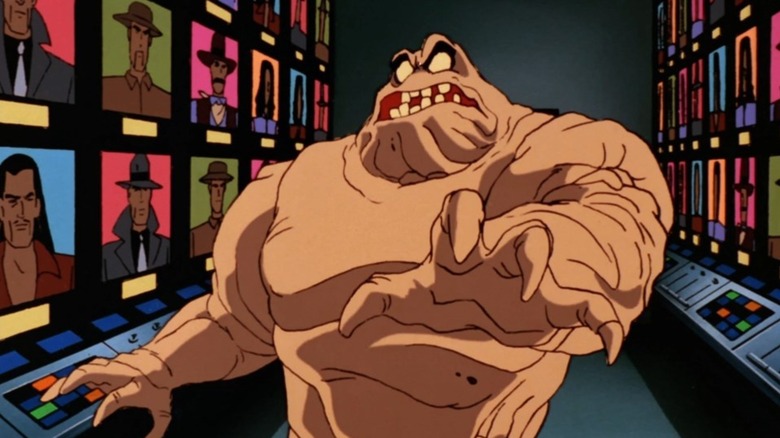
The punny title "Feat of Clay" wound up being fitting, because it remains one of the greatest feats by the "Batman: The Animated Series" team. As a two-parter running a full hour, it balances a fairly complex plot full of corporate espionage (not typical kids' show stuff!) and Bruce Wayne himself being framed for attempted murder.
In "Feat of Clay," Hagen uses Renuyu, an experimental face cream developed by corrupt businessman Roland Daggett (Ed Asner). Daggett is planning a takeover of Wayne Enterprises and blackmails Hagen into trying to kill Lucius Fox (Brock Peters) while disguised as Bruce Wayne, all by withholding Renuyu samples. "Feat of Clay" frames Matt's dependency on the chemical like a real drug addiction, and his transformation into Clayface comes with loaded, bitter irony; Daggett's henchmen give him all the Renuyu he wants by dumping an entire canister of it down his throat (a visual shown only in shadow, but disturbing nonetheless). Evoking old Universal monster movies as well as body horror, "Feat of Clay" is one of the scariest "Batman" episodes.
Two-parters in television carry a risk. Their extended length ups audience expectations, and if the conclusion doesn't live up to the opening act, the whole thing will be a disappointment. "Feat of Clay" avoids that, because "Part 2" is generally considered even better than "Part 1." The first half of the story was animated by the studio AKOM, notorious for shoddy work, whereas "Part 2" was animated by TMS Entertainment, who bring anime-like fluidity to Hagen's shapeshifting. The episode's climax, set in a TV studio where Batman confronts Clayface with headshots of all the roles Matt Hagen has played, is an emotional and animation-craft high point for "Batman" as a whole.