

5 Documentaries To Watch If You Like You Can See Everything
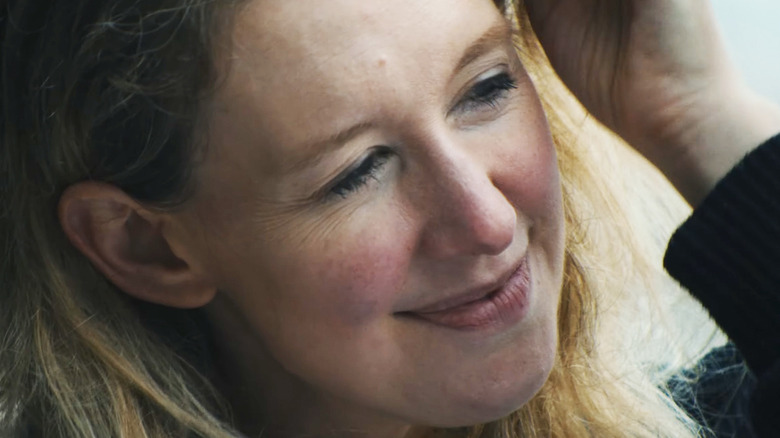
Nathan Fielder and Lance Oppenheim's "You Can See Everything" is a mystifying masterwork of mind-melting manipulation. It's also one of the best films of 2026 that will have audiences thinking about it long after the credits roll. The film blends documentary footage with scripted segments to create a truly unique and darkly enchanting mesmeric experience that's unlike anything anyone has seen before. Unfortunately, that makes it hard to recommend documentaries like Fielder and Oppenheim's latest.
That said, there are several excellent documentaries that share much in common with "You Can See Everything." For one thing, the A24 doc is far from the first to focus on a hugely controversial individual. Filmmakers have been fascinated by contradictory and contentious public figures for decades, which means there are plenty of choices if you're similarly fascinated by these Holmes-like characters. What's more, many filmmakers have, like Oppenheim, subverted documentary standards to create unique and interesting takes on the format. While it's nigh on impossible to find anything quite like "You Can See Everything," we've tried to round up a list of documentaries that feature enough in common with Fielder and Oppenheim's film to keep fans interested.
The Act of Killing

On its face, 2012's "The Act of Killing" is a vastly different documentary than "You Can See Everything." Whereas the latter focuses on a health startup fraudster and her sinister partner, the former follows former members of Indonesian death squads who took part in mass killings in 1965 and 1966. But the two documentaries share an affinity for bending the documentary format to confront their subjects through the lens of media and recreation.
In "The Act of Killing," directors Joshua Oppenheimer, Christine Cynn, and a still-anonymous Indonesian person don't just follow their subjects with a camera and ask questions. They ask these murderers, who have been elevated to national celebrities and show no contrition for their actions in the genocide, to re-enact their killings. Anwar Congo, a former leader in the Indonesian paramilitary group Pancasila Youth, takes the filmmakers up on their offer, enthusiastically recreating the gruesome scenes alongside many of his fellow killers. As the weight of his actions begins to settle in, however, decades of remorse starts to surface for Anwar, leading up to one of the most extraordinary moments ever captured in a documentary — or on film in general.
A sequel, 2014's "The Look of Silence," follows the family members of the Indonesian genocide victims as they confront their relatives' killers. But it's not quite as inventive as "The Act of Killing," which remains one of the best documentaries ever made and a must-see for anyone even slightly compelled by Fielder's novel use of recreation to interrogate serious real-world issues.
Spermworld
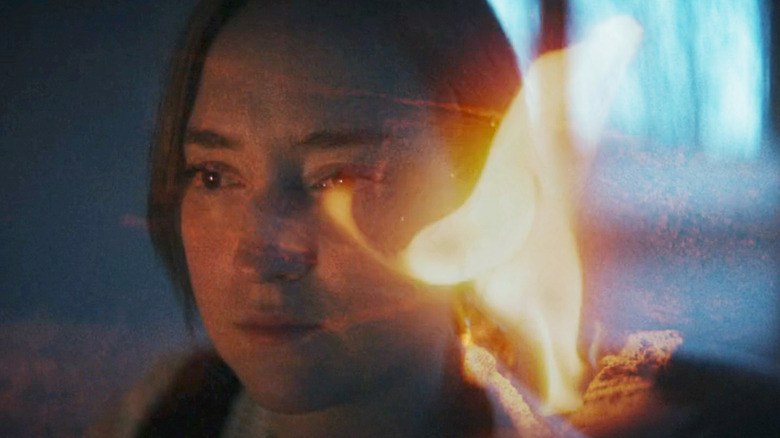
Lance Oppenheim has been making documentaries that mix factual entertainment with stylized visuals and a cinematic sensibility since his 2020 film "Some Kind of Heaven." He also made the 2024 documentary series "Ren Faire" and produced the 2025 documentary "The Python Hunt," and all of them make a fine companion to "You Can See Everything." But his 2024 doc "Spermworld" might be the most relevant to those who were particularly fascinated by Elizabeth Holmes' apparent inability to apprehend reality.
The film is one of the best documentaries on Hulu, and focuses on sperm donors who operate in an unregulated market, selling their services online and in some cases even having sex with their clients. It has the stylized visuals of "You Can See Everything," including the extreme closeups that lend an almost Lynchian atmosphere to proceedings. But it's also populated by people who seem entirely incapable of grasping why an unregulated sperm donor market might be problematic.
There's a scene in "You Can See Everything" where Nathan Fielder plays Abbott and Costello's legendary "Who's on First?" routine for Holmes, only to discover that she didn't grasp the joke around which the entire bit revolves. "Spermworld" opens with a woman meeting one of these lone wolf sperm donors in a hotel room, and not only is it as awkward as anything in "You Can See Everything," it immediately makes you wonder whether the subjects of this documentary actually understand what's happening. Things only get more uncomfortable from there, so if you enjoyed being deeply unsettled by the events of Oppenheim's Holmes documentary, "Spermworld" is right up your alley.
Louis Theroux: Inside the Manosphere

One of Nathan Fielder's superpowers is that he's willing to sit in awkward moments for as long as it takes to get a reaction from his subjects. It's an extension of his comedy, which similarly leverages awkwardness for laughs not unlike the so-called "anti-comedy" of Tim & Eric, whose company produced his "Nathan for You" series. But Fielder isn't the first documentarian to use uncomfortable social situations as an investigative weapon.
Louis Theroux has been using an unassuming charm and generally unthreatening aura to disarm his subjects since the '90s, and, like Fielder, has an uncanny ability to allow an awkward silence to play out for far too long. As such, all the British documentarian's films share something in common with "You Can See Everything." But his latest effort, 2026's "Louis Theroux: Inside the Manosphere" features an array of deeply troubling individuals who, like Elizabeth Holmes, seem completely convinced of their own self-importance and are incapable of reflecting on how their actions might harm others.
What's more, like the main villain of "You Can See Everything," Holmes' partner Billy Evans, the central subject of "Inside the Manosphere," Harrison Sullivan, becomes increasingly malevolent as the doc goes on. Theroux's ability to easily expose Sullivan's moral corruption as one of the increasingly prevalent mens' rights grifters is as impressive as Fielder's takedown of Billy Evans in "You Can See Everything." There's also a final confrontation that's every bit as tense as the confrontation between Fielder, Evans, and a surprise A-list actor in Fielder's doc.
Predators

Elizabeth Holmes wasn't the only controversial figure to find herself at the center of a Lance Oppenheim project in 2026. In September, prior to "You Can See Everything," the director delivered his darkly unsettling Robert Pattinson-led media satire "Primetime," which sees the British actor portray "To Catch A Predator" host Chris Hansen. While the film debuted to positive reviews and confirmed that Oppenheim is as adept at directing films as he is documentaries, the best movie made about Hansen remains 2025's "Predators."
"Primetime" seems at once in awe of and skeptical of its main subject. But "Predators" is much more condemnatory of Hansen's legacy — and rightly so. The film, directed by David Osit, asks whether televising moments in which men's lives effectively came to an end was actually all that healthy an enterprise and challenges Hansen on how "To Catch A Predator" not only ended in tragedy (if you've seen "Primetime," you'll know what I mean) but on how his example has led to a cottage industry of independent "predator hunters" who operate in the social media age with no oversight. Even more compelling is the way in which "Predators" forces us, the viewers, to reckon with our own complicity in the success of "To Catch A Predator" and true crime in general.
This makes "Predators" a must-watch and easily one of the most important and journalistically rigorous documentaries of the last decade. Hansen, who, like Elizabeth Holmes, seems incapable of taking any responsibility for his prior actions, makes for an extremely compelling subject, but "Predators" goes beyond being a takedown of the "Dateline NBC" personality to ask pressing questions about culture more widely. It's unmissable.
The Amazing Johnathan Documentary
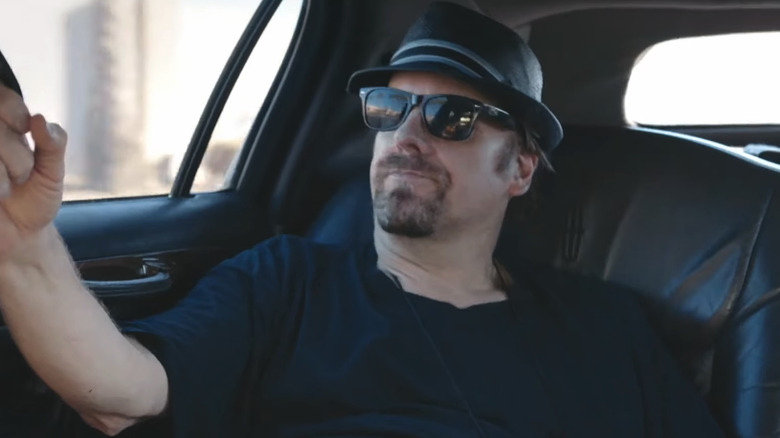
"The Amazing Johnathan Documentary" is directed by Ben Berman, who, like Nathan Fielder, has a background in comedy. In fact, both Berman and Fielder have direct links to Tim Heidecker and Eric Wareheim, with the former having served as a director on many of the alt-comedy duo's shows and Fielder having worked with their production company on his part-non-fiction/part-scripted series "Nathan for You." As such, there's a shared sensibility between "The Amazing Johnathan Documentary" and "You Can See Everything." Though they are very different documentaries, they both contain an offbeat comedic streak that allows them to push the documentary format beyond your standard talking head montage. They also both have direct access to their frustratingly inscrutable subjects.
John Edward Szeles, aka The Amazing Johnathan, was a magician who melded magic and comedy and saw major success in the 2000s and early 2010s. Then, in 2007, he was diagnosed with cardiomyopathy, and he withdrew from public life in 2014. But Berman's documentary questions that diagnosis and becomes increasingly skeptical of its subject as he prepares for a comeback tour. As things progress, the documentary takes some wild turns, with Johnathan essentially pitting Berman and his team against another documentary crew.
"The Amazing Johnathan Documentary" focuses a little too much on its director and lacks the cinematic stylization of "You Can See Everything." But it is a fascinating film that, like Fielder's latest project, isn't content to follow the established norms of documentary filmmaking.