

Fans Of FX's Say Nothing Will Love This Haunting Documentary Most People Haven't Seen
Northern Ireland was historically a hotbed for conflict between Protestant British loyalists and Catholic Irish Republicans. These "Troubles" have largely settled since the 1998 Good Friday Agreement, but it's still a drama rich period for storytellers to revisit — even in unexpected ways, like in the lovely teen sitcom "Derry Girls."
One of the sharpest explorations of this history is the non-fiction book "Say Nothing: A True Story of Memory and Murder in Northern Ireland" by Patrick Radden Keefe, later adapted into a TV mini-series in 2024. "Say Nothing" may have been overlooked by the Emmys, but it was a masterful adaptation. Real-life characters in this ensemble include sisters (in blood and arms) Dolours and Marian Price, as well as Jean McConville, a single mother "disappeared" by the IRA after being accused of informing British authorities.
Radden Keefe is far from the only to chronicle that history, though. Dolours Price (who died in 2013) got to tell her own story in a 2010 interview with journalist and Troubles historian Ed Moloney. This interview then became the backbone of the 2018 docudrama "I, Dolours," directed by Maurice Sweeney.
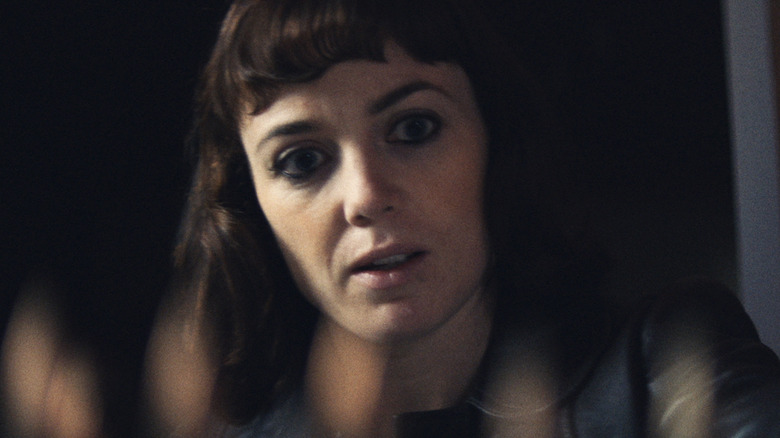
The movie recreates some events the real Dolours Price describes, from her actions in the IRA to her and Marian's hunger strikes during their imprisonment after bombing London. (Dolours and Marian are played in "I, Dolours" by Lorna Larkin and Gail Brady). However, the movie sticks to what was said in the interview; Lorna Larkin's Dolours will sometimes look into the camera and recite some of the real Dolours' words. If it by nature lacks the dramatic flair of "Say Nothing," "I, Dolours" still understands how to let a powerful story speak for itself.
I, Dolours is a tragic portrait of an Irish revolutionary
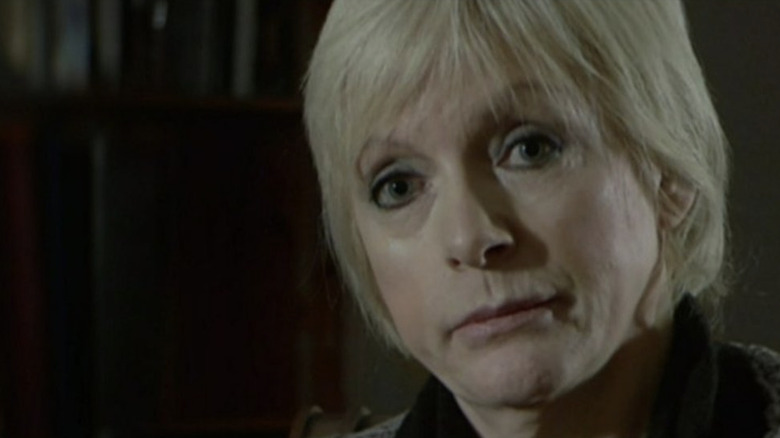
As an 80-minute documentary, "I, Dolours" narrows in on what its subject lived and saw. "Say Nothing" uses its last third to show former IRA soldiers like Dolours living civilian lives, their sins unspoken, and showcasing their bitterness that the war didn't end with the Irish reunification they wanted. "I, Dolours" chronicles Dolours' childhood, her time in the IRA and then prison, letting her words in the interview convey how she's lived with herself.
The Price family had a long and proud tradition of Irish Republicanism and contributing to the armed struggle for it. "We wouldn't hear 'Little Red Riding Hood' [as a bedtime story], we'd hear they hanged my [father's] friend, Jimmy," Price recalled to Ed Moloney, adding while her father was a Catholic first, "On my mother's side, Ireland came before God." That makes the documentary's last words all the more haunting: "It had all been nothing," Dolours Price said — not just her fight, but her family's fight.
The movie sometimes melds the real and recreated. When Dolours talks about her early peaceful activism, the film uses footage of the 1969 Catholic civil rights march by the People's Democracy movement. It also splices in staged shots of Lorna Larkin-as-Dolours and Gail Brady-as-Marian marching, rendered in newsreel black-and-white. (Amusingly, later the film cross-cuts between speeches by Conservative British Prime Minister Margaret Thatcher and an imprisoned Dolours vomiting.)
The staged scenes could betray the documentary's objectivity, filtering Dolours Price's words through Sweeney's filmmaking and Larkin's performance, but remember those words come from Dolours' own memories and biases. Memories are imperfect, yet they're what we have to record history. "I, Dolours" offers the singular perspective of Dolours Price and will make you understand her.
Dolours Price and her chilling tale of shattered faith
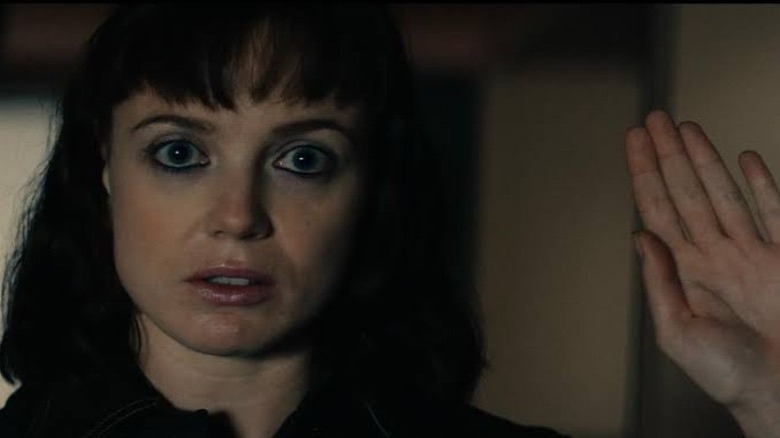
The staged scenes in "I, Dolours" help add visual weight, but Dolours Price's own words still leave the deepest cuts. When the film shows marchers being beaten by Protestant loyalists (attacks condoned by the police), Dolours recalls the instant of her radicalization:
"I looked into the eyes of some of these people who were beating us, and they were glazed over with some kind of hate, and I thought to myself, 'No, that person is never going to want to walk alongside of me.'"
Some of Dolours' other words echo the brutality she carried out. Ed Moloney asked her during the interview if the IRA disappearing informants into unmarked graves was a war crime. Price agrees it was — she would've preferred informers' bodies be left out in public to make touts think twice. One of Dolours' duties in the IRA was driving people like Jean McConville to their executions, but the film opts for quiet symbolism of the violence, like an empty beer bottle smashing on a pub floor.
"Say Nothing" the mini-series depicted Patrick Radden Keefe's conclusion that Marian Price must've been the one who killed Jean McConville. (The real Marian Price sued over this.) Dolours Price didn't confirm this, so "I, Dolours" does not show the shooting, only Jean being walked to her murder and then her lying dead. The televised "Say Nothing" also simplified the Price sisters' prison release into happening at the same time, while "I, Dolours" shows how Marian got out a year earlier, and Dolours' despair at the separation.
"Say Nothing" is necessary cold water for people (especially Irish Americans) who champion the IRA, and "I, Dolours" complements it by getting even closer to the truth.