

TV Legend Leif Erickson Starred Alongside Ingrid Bergman In This Classic Historical Drama
We may receive a commission on purchases made from links.
Fans of classic Western series will always remember Leif Erickson as Big John Cannon in the underrated NBC Western series "The High Chaparral." It was his best known role and by far his longest tenure on a TV series. But Erickson also forged an enviable film career, at one point working with one of the greatest directors of the 20th Century and a bonafide screen legend on the 1948 historical epic "Joan of Arc."
Victor Fleming is best known for directing one of the most beloved movies ever made (even if it did only just break even): 1939's "The Wizard of Oz." That same year he also helmed "Gone with the Wind," making this the most important year of his professional career. But like Erickson, Fleming was much more than his best known projects, and his contributions to film stretch far beyond his two indisputable 1939 classics.
He directed his first feature in 1919 before going on to work extensively with Douglas Fairbanks during the silent era. In the 1930s and '40s, he oversaw dozens of films for MGM, which not only included the aforementioned 1939 triumphs but numerous other classics including 1935's "Reckless" and the Spencer Tracy-led "Captains Courageous."
At the same time a young Leif Erickson was starting his acting career. The actor's first film was "Wanderer of the Wasteland" in 1935, the same year Fleming's "Reckless" and "The Farmer Takes a Wife" debuted. Like the director, Erickson worked consistently throughout the '30s and '40s, appearing alongside Greta Garbo in 1937's "Conquest" and Bob Hope in 1941's "Nothing But the Truth." By the end of the '40s, he and Fleming teamed up for a film that would ultimately represent the director's final feature, and another notable project for Erickson who shared several scenes with star Ingrid Bergman.
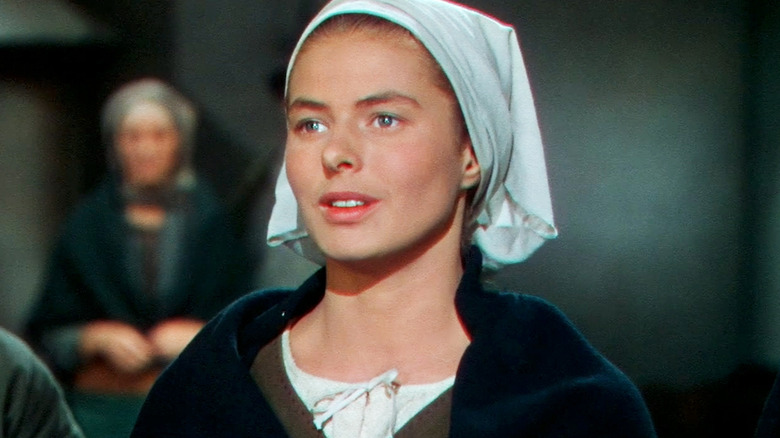
Ingrid Bergman starred in Victor Fleming's final movie, Joan of Arc
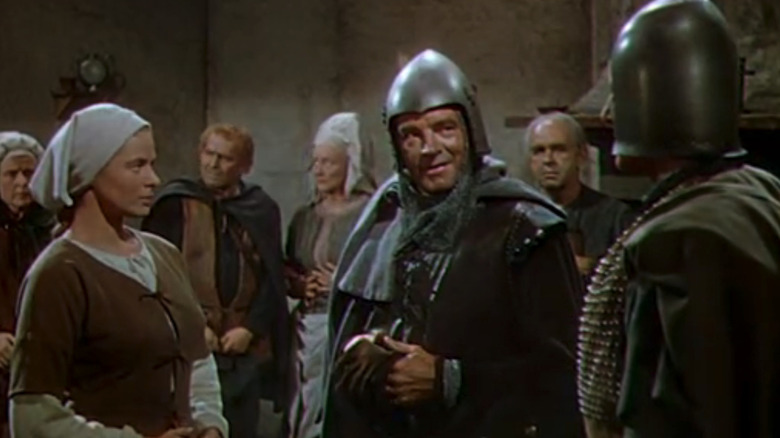
Victor Fleming's output began to slow in the 1940s, but the then-quinquagenarian continued to work right up until 1949 when he passed away from a heart attack in Arizona. Almost 20 years later, this would be the same place settled by Leif Erickson's Big John Cannon in "The High Chaparral." In 1949, however, Fleming had just finished his own collaboration with Erickson on what turned out to be the director's final film, 1948's "Joan of Arc."
One of few features that Fleming made for a studio other than MGM, "Joan of Arc" was originally an RKO release (a significantly shorter version was given a wider release by another company two years later). It saw Ingrid Bergman star as the eponymous French savior and was written by Maxwell Anderson, who three years prior had written and produced the Broadway play "Joan of Lorraine," which also starred Bergman. Anderson adapted that production for the big screen with help from co-writer Andrew Solt.
The film isn't typically cited as one of Ingrid Bergman's greatest projects, but it's an impressive and epic production. The story picks up after the One Hundred Years War when a 14-year-old Joan is a peasant girl who claims to be hearing messages from the Almighty urging her to lead an Army against the English. The young war-heroine-in-the-making intends to crown the Dauphin Charles VII (José Ferrer) as King of France, and alongside the future King forms an army before reclaiming large swathes of the country for her fellow Frenchmen. Erickson fought as part of this divine army during the Battle of Orleans, playing military leader Jean de Dunois, "B*****d of Orleans."
Joan of Arc is a major accomplishment but it didn't seem that way at first
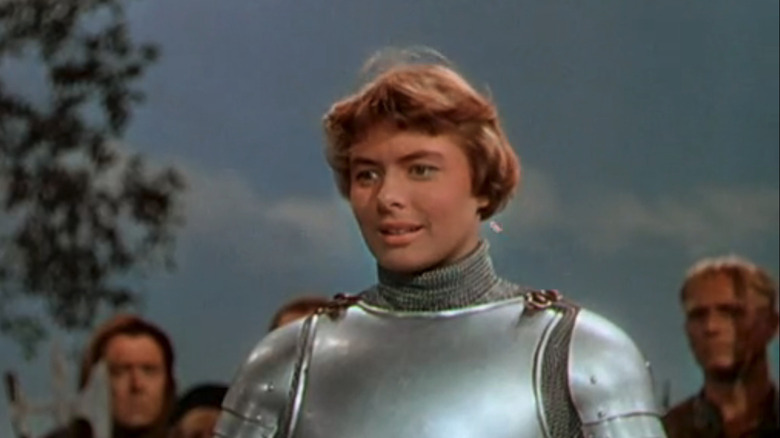
When Victor Fleming's epic "Joan of Arc" debuted in November 1948, the initial reaction was anything but epic. In "Victor Fleming: An American Movie Master," author Michael Sragow quotes writer Adela Rogers St. Johns as calling the film "The one time [Vic] failed." She continued, "I felt so sorry for him [...] I went to see it with him one night, and he sat and cried all the way through it. That was his heartbreak." What's more, according to Sragow the reviews were "shriveling," with the Los Angeles Daily News reporting that the movie "sprawls awkwardly, in episodic lumps."
That said, a contemporaneous review from The Hollywood Reporter was much more positive, describing "Joan of Arc" as "the most glorious fulfillment of the Joan legend" and "a magnificently staged panoramic insight into the life and times of the simple French peasant girl who left such a controversial impact on history." The film also received eight Oscar nominations, winning for Costume Design and Cinematography.
Sadly, Fleming died just two months after its release, passing away in January 1949. That same year, Ingrid Bergman left Hollywood to film "Stromboli" in Italy with Roberto Rossellini while Leif Erickson continued to work solidly back in the States. Following "Joan of Arc" Erickson played a small part in one of the best movies ever made when he appeared in Elia Kazan's crime drama "On the Waterfront" a decade before he debuted as Big John Cannon.