

George R. R. Martin's A Song Of Ice And Fire Books, Ranked
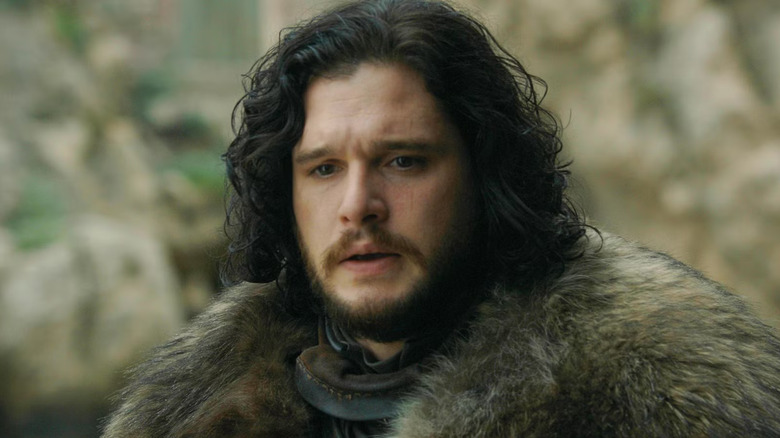
With "The Winds of Winter" still yet to blow into bookstores, it's looking like George R. R. Martin's "A Song of Ice and Fire" (the source material for HBO's "Game of Thrones") will go down as an unfinished masterpiece. Well, as much as a story can qualify for the second description when the first word sits in front of it.
Thanks to the TV series, the books broke through the niche of their own genre to become a worldwide phenomenon. But that's not to say the books needed an adaptation to save them. Martin's dialogue and characterization are some of the best in the business. The same could be said for his plotting, if only he could rein in both his perfectionism and discipline himself enough to prune his story.
Martin has said there are two types of writers: architects, who plot everything in detail, and gardeners, who let their story take shape as it grows. He's a gardener, and that style might be what doomed the books to noncompletion; he let his seed of a story grow into too vast a forest to contain. But looking at the books' highs and lows, it's clear you can't separate vice from virtue here. If Martin was the kind of writer who kept things simple, "A Song of Ice and Fire" would not be the story that we know.
For all the grief Martin has gotten about not finishing, it's worth remembering said grief is only thrown his way because he made people fall in love with "A Song of Ice and Fire" to begin with. Here are the five currently published main saga books, ranked from worst to best.
5. A Feast for Crows
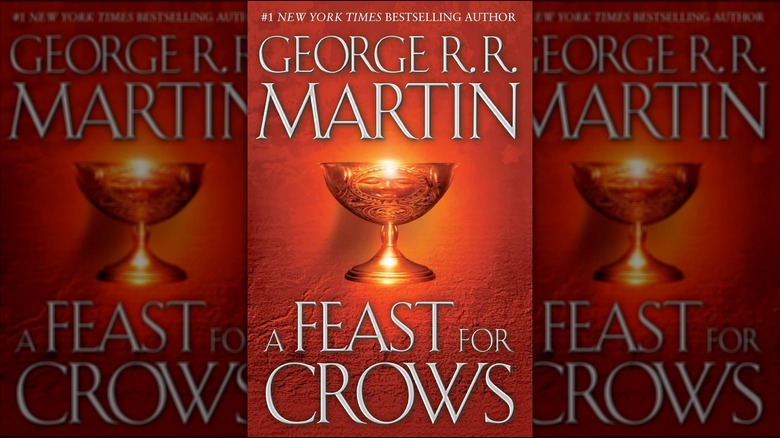
Herein is the downside of doing a ranking list: Something has to be in last place! You won't get many arguments from "A Song of Ice and Fire" fans when calling "A Feast for Crows" the weakest book in the series. It's got lots to love, but it's structurally compromised.
For the good: Cersei Lannister becomes a POV character, and her chapters are hilarious. After three books of her as a cunning evil queen, we now see how unstable, paranoid, impulsive, and often stupid she is. You know that line from "The Sopranos," when Uncle Junior muses "Some people are so far behind in a race that they actually believe that they're leading"? Yeah, that's Cersei. The dissonance between how she sees herself and her decisions is a strength made possible by Martin's limited POV writing.
The titular feast refers to the state of Westeros. With a war over and new holds on power untested, Martin expands the game of thrones' scope with new narratives. I quite like the Iron Islands' POV chapters, which introduce terrifying pirate lord-warlock aspirant Euron Greyjoy (a character the "Game of Thrones" TV series utterly failed), but I'm less enamored with Dorne.
The book's ambition in widening its lens is also the root of its faults. Instead of moving the story of the past three books forward, this one adds new subplots and POVs while existing ones are either absent or make little progress. Take Brienne of Tarth's chapters, a largely aimless narrative of her wandering the Riverlands. Yet even in that aimlessness, Martin finds some beauty, like when Brienne hears a wise priest's speech about how war creates "broken men."
4. A Dance with Dragons
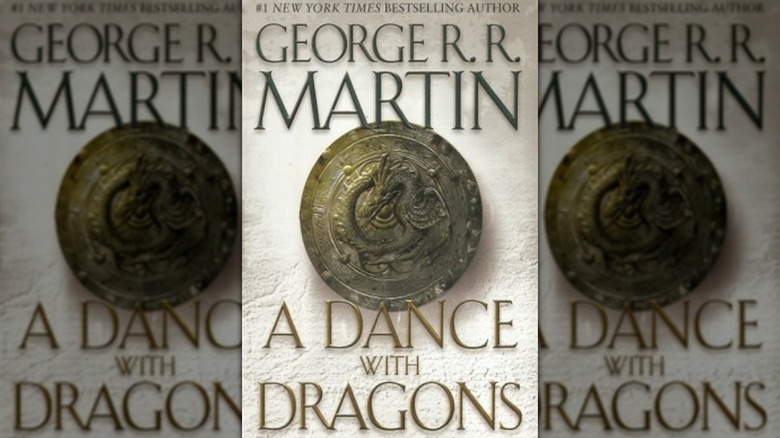
Martin and his publisher decided "A Feast for Crows" had gotten too long, so half the POV chapters were cleaved out into a fifth book, "A Dance with Dragons." The most recently published book in the series, "A Dance with Dragons" leaves all the main characters in the middle of quests or downright mortal peril.
Martin trying to write through his writers' block with new characters crosses the threshold of no return here, with a twist that Prince Rhaegar Targaryen's son, Aegon, may be alive and a rival to his Auntie Daenerys for the Iron Throne. This massive upheaval, coming in book five out of a planned seven, shows a gardener who refuses to prune a branch. Martin had originally conceived a time jump between Books 3 and 4 and you almost wish he followed through ... almost, because it's hard to wish away the highs of "A Dance with Dragons."
After being largely absent in "Feast," Jon Snow and Daenerys are both back, and their storylines are where this "Dance" soars highest. Both of them learn to be a leader, Jon of the Night's Watch and Daenerys of her new kingdom Mereen, and face the almost insurmountable challenges that come with that burden. Jon battles political dissent over letting wildlings pass the Wall, while Daenerys learns that conquering a city and freeing slaves is much easier than the reconstruction that follows. Were we to lose this character development to a time skip, "A Song of Ice and Fire" might still feel as incomplete as it does now.
The book ends with Daenerys in exile, and Jon seemingly killed in a Julius Caesar-like stabbing by his Night's Watch brothers. These endings were surely meant as a dark point before a dawn that, sadly, remains a dream.
3. A Clash of Kings
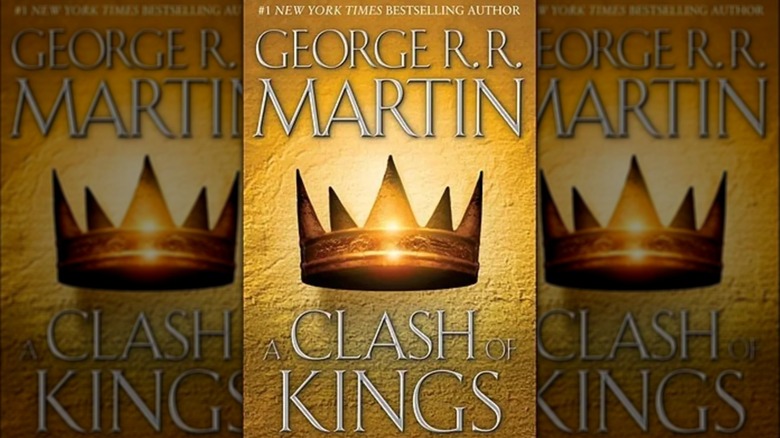
"A Clash of Kings" marches forward from the chaos Book 1 left Westeros in. The titular clash is dubbed the War of Five Kings in-universe, for the Seven Kingdoms have fractured. Yet while you'd think a war starting means an escalation of action and pacing, "A Clash of Kings" ultimately reads more as connective tissue. It's this book that holds the first signs that Martin would have trouble pushing his story forward. Besides an ominous vision in Chapter 48, Daenerys Targaryen's story here feels like it's treading water. But if there is a sophomore slump, it's only a slight one.
"Clash" introduces the previously-alluded-to Stannis Baratheon, lawful heir to the Iron Throne. Stannis and his inner circle, from lowborn former smuggler Davos (the POV into Stannis' story) to the prophecy-bearing witch Melisandre, are welcome additions. Theon Greyjoy, a background character in Book 1 and royal hostage of the Starks, evolves into a POV this book as he tries to return to and reclaim his place in his family. To say he fails is putting it gently.
As for the existing POVs, Arya Stark's chapters bring a harrowing portrayal of how wars trample all over the smallfolk. The book's true star, though, is Tyrion Lannister. Having been named Hand to his monstrous nephew King Joffrey, Tyrion cements his power in King's Landing with cleverness and viciousness both.
The alternating POVs of "A Song of Ice and Fire" can push you through the book because you want to get to the next chapter of your favored character. No book better demonstrates that than "Clash of Kings," where you spend much time wanting to get back to Tyrion. It all collides, of course, in the Battle of Blackwater Bay, the series' most ambitious action sequence.
2. A Game of Thrones
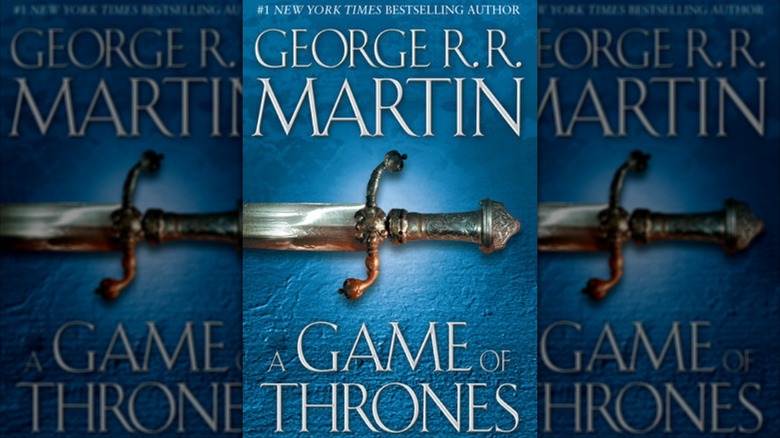
Has there ever been a better debut novel in a fantasy series than "A Game of Thrones"? Certainly the books that could match it are precious few. The cold open of Night's Watch Rangers meeting grisly ends from the Others (who are ethereal in a way "Game of Thrones" never managed with its White Walkers) could just as easily work as a shiver-worthy short story, but it promises greater terrors as these Others encroach further south.
"A Game of Thrones" may be the smallest of the books in both page count and scope, yet it also feels the most complete and comprehensive. "Game" moves relatively swiftly compared to later books, partially because Martin shows greater willingness to jump across uneventful time. This is just one symptom of some mild first book syndrome i.e. things that don't quite match up with later details as Martin refined his story. But if "A Game of Thrones" doesn't quite have the lived-in quality of the later books, where the world grows as gradually yet expansively as a nest of vines, it trades it for tighter, more propulsive plotting. The book even employs a murder mystery hook, with Ned Stark needing to piece together why Jon Arryn, his mentor and previous King's Hand, was assassinated.
Speaking of Ned, his presence separates this book from the later ones. The noblest man in Westeros getting his head chopped off — when this twist hit casual audiences in the first season of the "Game of Thrones" TV series, it proved to them this series wasn't conventional fantasy. The novel does such a strong job endearing you to Ned that you miss his POV in the later books, and mourn the secrets that seem to have died with him.
1. A Storm of Swords
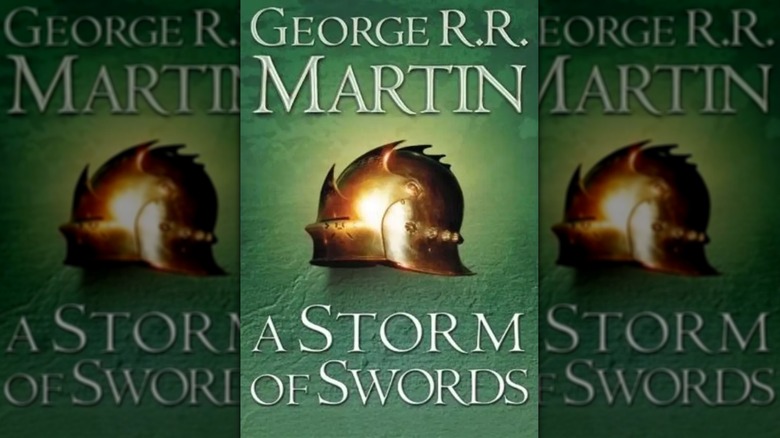
Were you expecting anything else? "A Storm of Swords" is widely considered the magnum opus within "A Song of Ice and Fire," as this sometimes slow-boiling story finally delivers explosive pay-off. Now, these swords have become double-edged; "A Storm of Swords" arguably reads even better by comparison now, and it remains so cherished because it's the only real climax the series has gotten.
But even in a vacuum, those climaxes are spectacular. The book is most famous for weddings red and purple, the former being so brutal Martin himself called it the hardest scene to write. ("A Song of Ice and Fire" is sometimes simplified into misery porn and the genre-defying slaughter of the Starks at the Red Wedding is probably the cincher of that reputation.) Even reading King Joffrey die a death as brutal as he earned comes at a price, because Tyrion is framed for the murder.
The Stark siblings spared from the Red Wedding face plenty of turmoil, too. Jon Snow's love for wildling Ygritte, including holding her as she dies after battle with his own Night's Watch brothers, is a doomed romance to rival "Romeo and Juliet." Arya finds herself traveling with Sandor Clegane, one of the men on her murder list. But the book's greatest arc belongs to Jaime Lannister, who finally receives a POV and validates George R. R. Martin's "gardening" writing style even with all its thorns and weeds.
In Book 1, Jaime is an arrogant, two-dimensional villain: a man who looks like a storybook's Prince Charming, but is actually an attempted child murderer in toxic love with his twin sister. If Martin was an architect, that's probably all Jaime would've ever been, instead of the complex character that "A Storm of Swords" reveals him to be.