

After The Twilight Zone, Rod Serling Created A Short-Lived Western Series That Deserved More
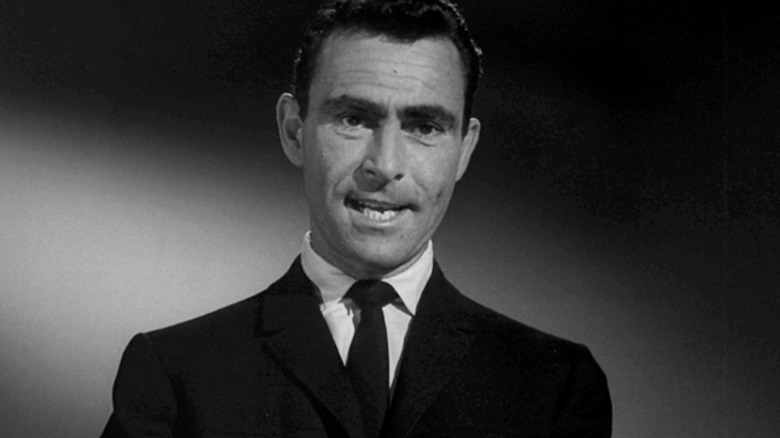
In 1960, Sam Peckinpah debuted his adult take on the TV Western with "The Westerner." Focusing on a tough itinerant cowboy, Peckinpah's show was an attempt to move away from the more family friendly small screen oaters of the era. And while it certainly had an impact, it lasted only one season before NBC pulled the plug. Then, five years later, "The Twilight Zone" creator Rod Serling had another go. His "The Loner" also focused on a wandering gunslinger and was likewise an attempt to deliver a more mature take on the Old West. It, too, only lasted a single season, but like "The Westerner," it deserved more.
In 1962, "The Twilight Zone" was kicked off TV by a now forgotten sitcom, "Fair Exchange," before being reinstated for a further two seasons. By that point, however, Serling was struggling to maintain the quality of what remains the greatest anthology TV show of all time, and the series ultimately went off the air in 1964. Serling would later return to sci-fi/horror anthology storytelling with "Night Gallery." In the interim, though, he turned his attention to the Old West.
"The Loner" was Serling's first Western series, but it wasn't his first foray into the genre. Aside from several Western-themed "Twilight Zone" episodes (including his satirical take on the genre, "Showdown with Rance McGrew"), Serling had penned the 1958 film "Saddle the Wind." With "The Loner," the writer once again took a critical approach to the oater, attempting to do what Peckinpah had done five years prior. It wasn't exactly successful, but much of that was due to "The Loner" simply being ahead of its time.
The Loner was Rod Serling's attempt to capture a more realistic Western frontier
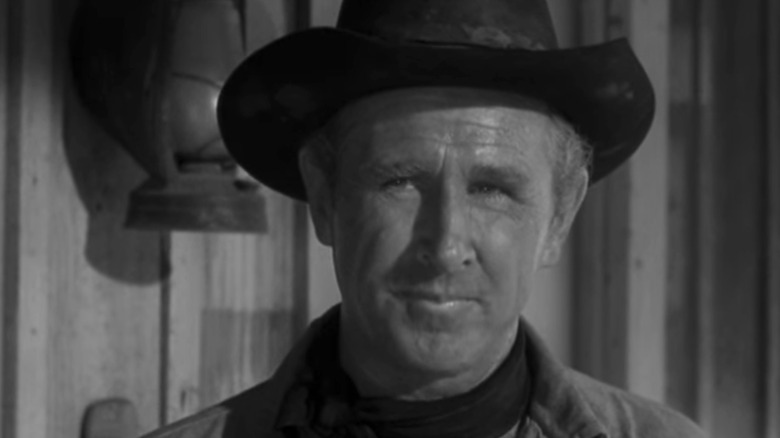
In 1965, some of the best Western TV shows of all time were in their prime, including "Bonanza" and "Gunsmoke." Elsewhere, Chuck Connors' "The Riflemen" had wrapped up two years prior, and Clint Eastwood was becoming a star on "Rawhide," all while James Drury kept things in order at the Shiloh Ranch on "The Virginian." But none of these series represented a realistic depiction of the 19th Century Western frontier. "The Loner" was Rod Serling's attempt to provide just that.
It starred Lloyd Bridges as William Colton, an ex-Union Army captain who, following the conclusion of the Civil War, sets out on a westward journey. On his travels, Colton encounters multiple colorful characters and predictably finds himself at the center of many a debacle. But unlike other shows of the time, which typically included some sort of moral lesson and wrapped up each episode with a satisfyingly neat conclusion, "The Loner" was essentially a human drama set in the Old West.
It was also clearly an extension of the sentiment Serling expressed in his introduction to the "Twilight Zone" episode "Showdown with Rance McGrew," in which he says, "If there are any television sets up in cowboy heaven and any one of these rough-and-wooly nail-eaters could see with what careless abandon their names and exploits are being bandied about, they're very likely turning over in their graves." In other words, "The Loner" was Serling's attempt to do right by the rough-and-wooly types.
Oddly enough, however, Serling wasn't actually interested in the brutality of the frontier. In September 1963, the Corpus Christi Caller-Times (via Newspapers.com) reported that production on "The Loner" had been "halted" after 15 episodes because "he refused to put more violence into it."
Audiences weren't ready for Rod Serling's Old West
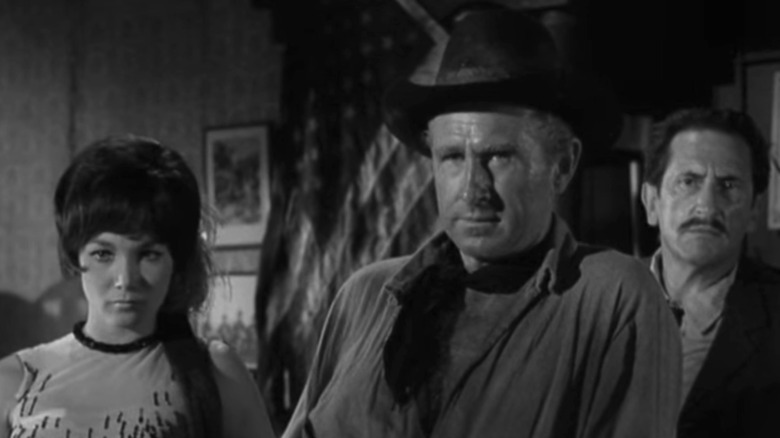
When news of "The Loner" being halted broke, Michael H. Dann, vice president of programming at CBS, claimed that Rod Serling had been summoned to a meeting to discuss the show's tone but that violence hadn't been an issue. Nonetheless, the Serling maintained that it was the lack of bloodshed at issue. "I told Dana that if the network wanted a conventional Western, with emphasis on violence and action, it should have gotten a conventional Western writer," Serling said. "The initial idea of the series [...] was that it was to be a thought-provoking, meaningful human drama with a Western flavor."
"The Loner" did eventually air for 26 episodes between 1965-1969, with Serling writing 15 of them. In that time, Lloyd Bridges' former cavalry captain encountered multiple characters, from soldiers returning home from war and Army deserters to old fashioned outlaws and even a Mennonite pacifist sect. All the while, he remained haunted by his memories of the U.S. Civil War, though he wasn't a completely joyless character. Neither was the series, which often veered away from drama for more lighthearted episodes.
In the end, however, Serling's take on the Western simply wasn't popular enough with viewers, and it was ultimately scrapped after just one season. Though much of its ratings trouble came from the fact it was too adult for kids and too unfamiliar for adult audiences used to the likes of "Bonanza," the show was merely ahead of its time. "The Loner" had, at the least, the lineaments of the revisionist ethos that would eventually come into vogue starting in the 1970s. But in the mid-1960s, audiences liked their Western adventures to be simple and straightforward.