

5 Forgotten Superhero TV Shows That Still Hold Up Today
The cultural cinematic ascendency of the Marvel Cinematic Universe in the late 2000s gave way to an enormously long glut of superhero cinema that only just started to wane sometime in the mid-'20s. But thanks to the blinding financial success of "Spider-Man: Brand New Day," the superhero wave might yet continue for a few more years. Did "Spider-Man" breathe new life into the genre, or was it the last hurrah during an overall downward bent? Given that "Supergirl" was a bomb earlier this year, we're still probably looking at the latter. Time will tell.
This near-two-decade wave of superheroes has reshaped the way journalism works, even. Magazines, websites, and podcasts all sprung up in the shadow of the MCU, each one devoted to speculating about what might eventually arrive in superhero cinema, as well as looking over the history of the genre, tracing how we got here. /Film certainly does this, and, if I may say, has done it better than any other website or magazine.
Given that level of attention and analysis, it would be difficult to find superhero shows and movies that remain obscure to a mass audience. Surely, one might assume, everything has already been excavated. The superhero genre has been combed through quite deeply, and there's nothing left to discover, right?
Well, as it so happens, there may still be many obscurities left, and we are here to shed some light on perhaps-unknown or forgotten superhero TV shows that might be worth exhuming. The following shows are of different tones and vintages (although three of them are from the 1990s), and they are all enjoyable.
Electra Woman and Dyna Girl (1976)
There are few pieces of superhero media as influential as William Dozier's amazing 1966 comedy series "Batman." That series seeped into popular culture like so much maple syrup poured into a shag carpet. Audiences loved it, and the show was so popular, a feature film was rushed into production and released in theaters less than a year after the TV series' debut. Adam West and Burt Ward are so sublimely funny and perfect that they came to define Batman and Robin for generations. Many fans of Batman comics even came to resent Dozier's show, as it made an otherwise broody character into essentially cartoon fodder.
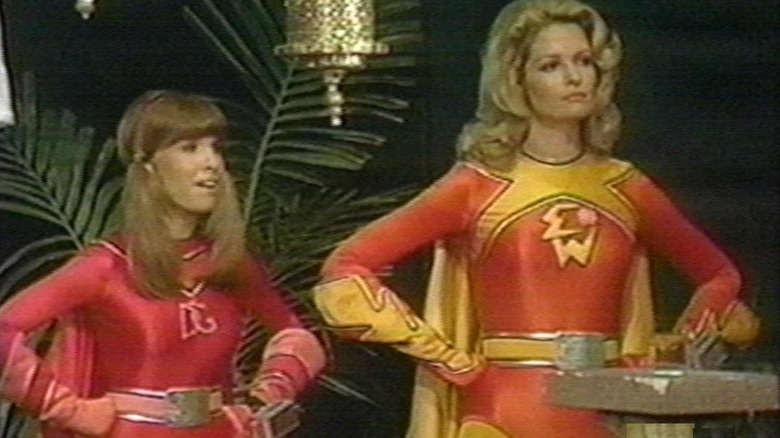
"Electra Woman and Dyna Girl" came out of the Sid and Marty "Land of the Lost" Krofft canon in 1976, a full decade after "Batman," but it was tapping into a similar campy vibe. Deidre Hall plays Electra Woman, and Judy Strangis plays her sidekick Dyna Girl, a pair of costumed crimefighters who use electronic gadgets to apprehend bad guys. Just as "Batman" had the Bat-computers, the Batmobile, and the Bat-ladder, "Electra Woman" has the ElectraBase, the ElectraCar, and ElectraComs. The heroes, when off-duty, work as reporters in a newspaper office, but transform into their alter egos when criminals are afoot. Both Hall and Strangis are wholly devoted to the roles, and are quite funny.
The series only lasted for 16 episodes, but it looms large in the imagination of Generation X for its silly energy, its bright costumes, and its colorful rogues gallery of villains. Sig Haig played a genie in one episode, a servant of Ali Baba, played by Malachi Throne. Cult actress Tiffany Bolling played the Spider-Lady, and TV veteran Peter Mark Richman played a Pharaoh.
Samurai Pizza Cats (1990)
Like 1966's "Batman," one can also look in the shade cast by the behemoth of "Teenage Mutant Ninja Turtles" and find some very strange mushrooms growing indeed. There was, all of a sudden, a bizarre wave of self-effacing cartoons about unlikely superpowered animals. "Biker Mice from Mars," "Battletoads," "Superhuman Samurai Syber-Squad," "Wild West C.O.W.-Boys of Moo Mesa," "Street Sharks" ... The Turtles' footprints were everywhere.
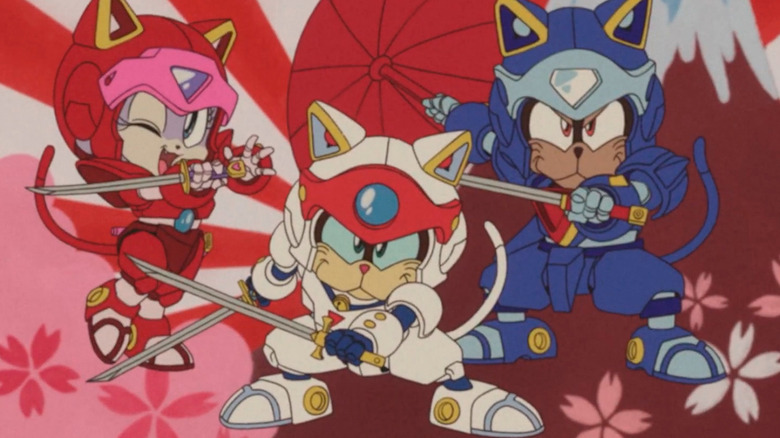
One of the most amusing cartoons to rise in the Turtles' wake was the Japanese comedy series "Samurai Pizza Cats," a slapstick farce that satirized traditional Japanese tokusatsu shows, the Ninja Turtles, and kids media in general. The three title characters were Speedy Service (pronounced like "ceviche"), Polly Esther, and Guido Anchovy, voiced in the English dub by Rick Jones, Sonja Ball, and Terrence Scammell, respectively. The series takes place in a parallel version of Tokyo populated by cybernetic anthropomorphic animals. The Samurai Pizza Cats work at a local pizzeria, and are called into action by their boss, Big Al Dente, to stop the political ambitions of one Seymour Cheese, a rat who wants to take over the city with his army of ninja crows. Seymour, in a surprising development, is openly gay and has a passion for crossdressing. The character's queerness is taken mostly in stride, and the character is fun and inspiring.
The series breaks the fourth wall constantly and plays up every one of its silly conceits. It's frantic and bursting with chaotic energy that will ignite one's sapped brain. There is a larger story at play, and four superhero ally cats — General Catton, Bat Cat, Meowzma O'Toole, and Spritz T. Cat — appear from time to time to aid the Samurai. More than anything, though, one will simply get lost in the sugar rush of this TV show.
Night Man (1997)
In 1993, Malibu Comics launched an imprint called the Ultraverse, which was a massive new collection of interconnected superhero titles, made as an attempt to compete with comics giants Marvel and DC. The conceit of the Ultraverse was that mysterious energy bolts began striking the Earth, imbuing random people with superpowers. In the comics, one such bolt his a San Francisco cable car, giving everyone on board powers before the cable car swung out of control and hit a car.
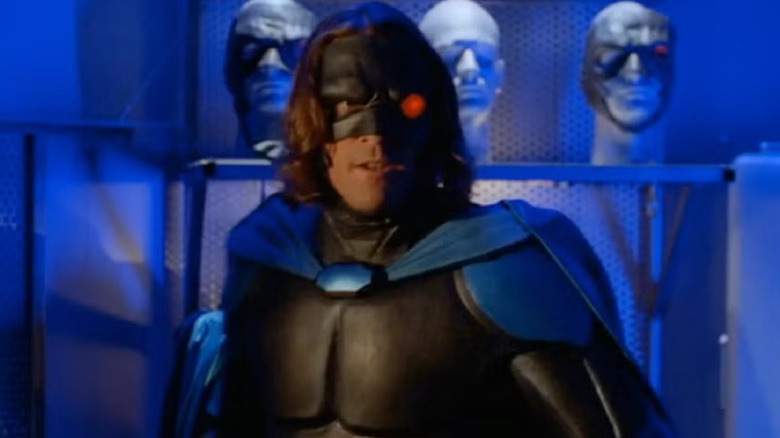
The driver of the car, Johnny Domino, was nearly killed when a chunk of cable car metal embedded itself in his skull. He somehow survived, however, with the metal remaining in his brain. The metal magically cut off his need for sleep and permanently dilated his pupils, making him a night owl. In a supernatural twist, he could also hear evil thoughts emanating from those around him. These mutations led him into a life of night-bound vigilantism.
In 1997, "Night Man" debuted in syndication, taking a surprising amount of material from the original comics. The TV show added a high-tech collection of toys to the Night Man's collection, including a flying suit, cloaking technology, and a laser eye. The "Night Man" TV series was low-budget but earnest, stylish, and charming. Former model Matt McColm played the title hero, and Kim Coates played his archenemy, billionaire Kieran Keyes. Like many serialized superhero shows, each episode would typically feature a new villain for the Night Man to apprehend.
It's wild to think, in an era of better-known heroes like Spider-Man and the X-Men, that Night Man would be given the star treatment on TV, and provide perfectly decent entertainment. The series only lasted two seasons, but it's a hoot.
Silver Surfer (1998)
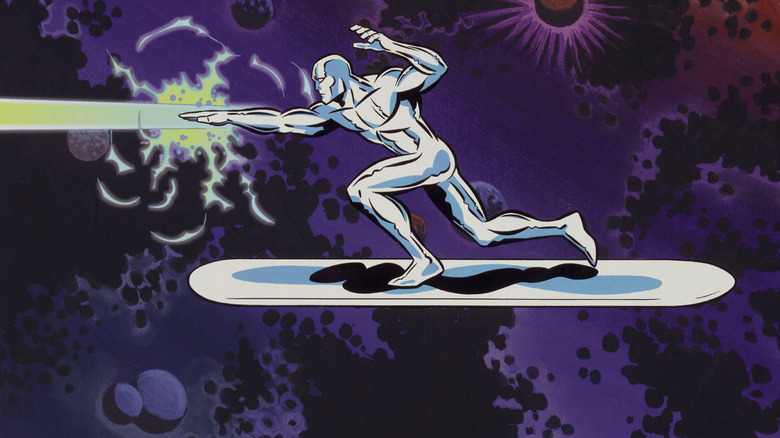
Marvel Comics' Silver Surfer is one of the canon's strangest, most psychedelic figures. The Silver Surfer is, as his name implies, a chrome-plated humanoid that can hurtle through the cosmos at many thousands of times the speed of light on a cosmic surfboard. Initially, the Surfer was the herald of Galactus, a massive humanoid space deity that consumed planets whole, giving the Surfer the role of an evil harbinger. The Surfer ended up on his own eventually and went on heady, cerebral space adventures.
The 1998 TV series "Silver Surfer" was a glorious effort to bring the character's headiness to Fox Kids' audiences. Harlan Ellison is the credited story writer on one episode, and one episode was penned by "Star Trek" legend D.C. Fontana, so this was a series that reached into the vast depths of space. The dialogue on the show was declarative and full of exclamation points, just like Marvel Comics in the 1960s. ("Behold! I possess the power cosmic!" That kind of stuff.) It was a retro change of pace from the relatively straightforward versions of the X-Men, Spider-Man, and the Fantastic Four that also ran in the 1990s. For my money, "Silver Surfer" is the best of the lot.
What's more, the animators used stylized designs and unusual CGI techniques to make the series look like the thick-lined, demonstrative drawings of Jack Kirby, one of Marvel Comics' star artists in the 1960s. The series was bold enough to stand out, both in writing and in visuals. There are a lot of strange stories that can be told about a silver space god and the minor deities — like Thanos and Adam Warlock — that he encounters.
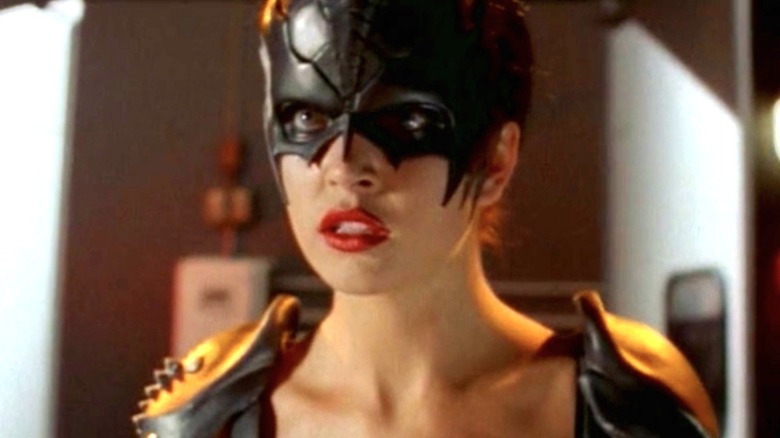
Black Scorpion (2001)
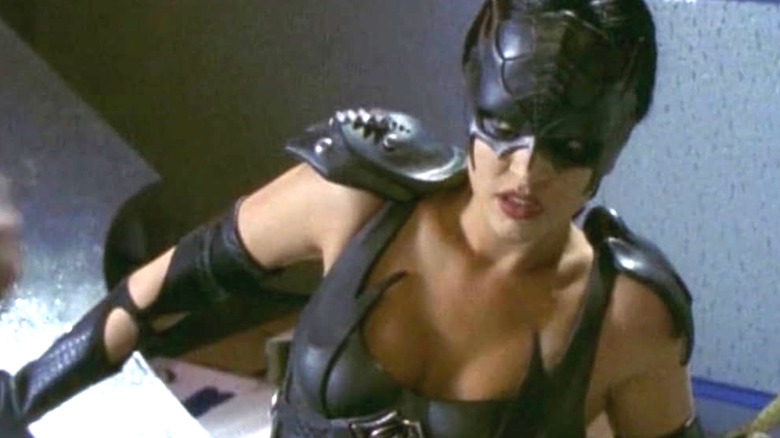
In the late 1990s, superheroes were a hot enough commodity that even B-movie legend Roger Corman decided to get in on the game. In 1995, he executive produced Craig J. Nevius' TV movie "Black Scorpion," which starred Joan Severance as the titular superheroine and which aired on Showtime. Even as late as 1995, "Black Scorpion" was taking its cues from 1966's "Batman," presenting its hero as capable and cool, but living in an outsize universe of camp sexuality. Severance returned for "Black Scorpion II: Aftershock" in 1997, and that eventually led to a TV spin-off series in 2001. Michelle Lintel took over playing the title character, and the concept finally seemed to make sense. Black Scorpion was always meant to be a TV series.
It should be noted that "Black Scorpion" serves very much as a vehicle for plate after plate of cheesecake. Lintel's costume is a rubberized dominatrix swimsuit, and the show's rotating bevy of villains is played by a retinue of gorgeous models. Athena Massey plays Aftershock. Lisa Boyle plays Medusa. Lana Clarkson plays Mindbender. To make sure that audiences are thinking of "Batman," "Black Scorpion" also has villain roles for Adam West (as Breathtaker) and Frank Gorshin (as Clockwise), who also famously played the Riddler on "Batman."
"Black Scorpion" is cheap and dumb, but it was constructed to be cheap and dumb. The actors are all wholly dedicated, and the series is funny and action-packed. (Well, maybe more like "skirmish-packed.") The series only ran for one 22-episode season in 2001, but that was enough to get the point across. Black Scorpion didn't enter the canon of immortal superheroes, but she can give you 22 episodes of whimsical entertainment.