

Sci-Fi Author Isaac Asimov Has An Unexpected (And Controversial) Book Recommendation
We may receive a commission on purchases made from links.
Isaac Asimov is largely referred to as a sci-fi author these days, as his most widely read works tend to be works like the "Foundation" series, the "I, Robot" series, "The Currents of Space," "The Ugly Little Boy" (still awaiting a film adaptation), and "Nemesis." He frequently attended "Star Trek" conventions in the 1970s, and is still, to this day, beloved by sci-fi fans the world over.
It should be remembered, though, that Asimov wrote a wide variety of books, being prolific throughout his decades-long career. He wrote two mystery novels, for instance, and dozens of mystery short stories besides. He wrote books of limericks, as well. Deep-cut fans will be fond of Asimov's non-fiction work as well, as the author wrote multiple tomes about the history of science, the environment, biology, and the cosmos. He was also a literary critic, and I have read "Asimov's Guide to Shakespeare" very closely, which puts all of the Bard's plays into historical context. Asimov also wrote many books about the history of the Bible, often as a refutation of the Divine.
The point is that Asimov was a polymath, and his interests were broad and all-encompassing. He loved science and science fiction, but he was a man of the world, well-read and eager to write about everything that crossed his mind.
That said, it might still be a shock to learn that Isaac Asimov, in his 1980 autobiography "Joy Still Felt," handily excerpted by Reactor Magazine, admitted that he was riveted by Margaret Mitchell's 1936 Civil War apologia "Gone with the Wind." He recounted a story from 1975 when he stayed up all night to read it, unable to put it down. An odd choice for the author of "Foundation."
Isaac Asimov loved reading Gone with the Wind
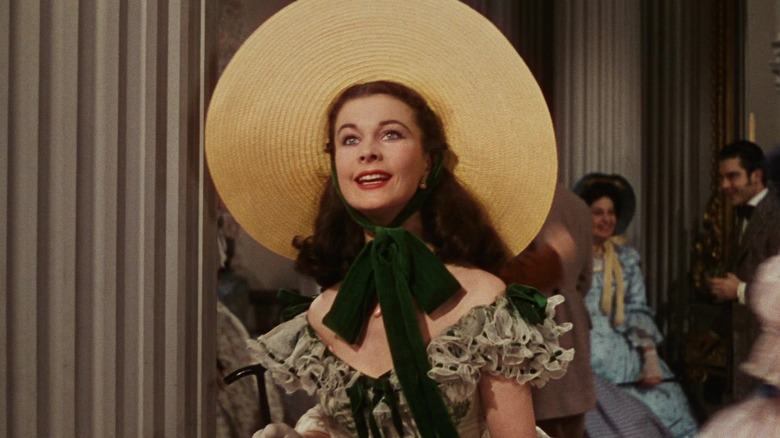
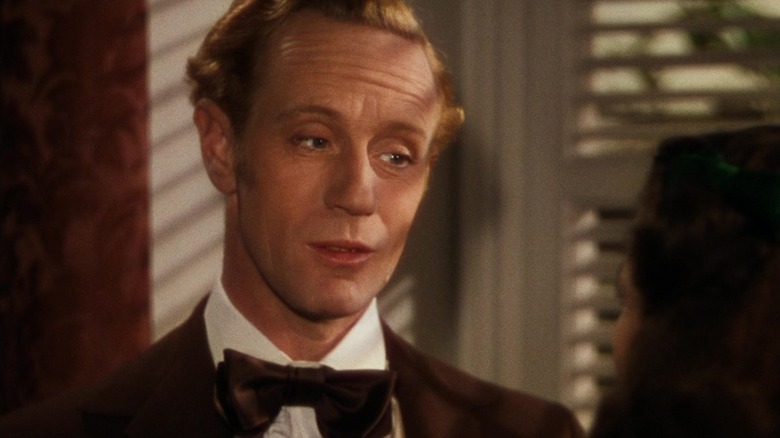
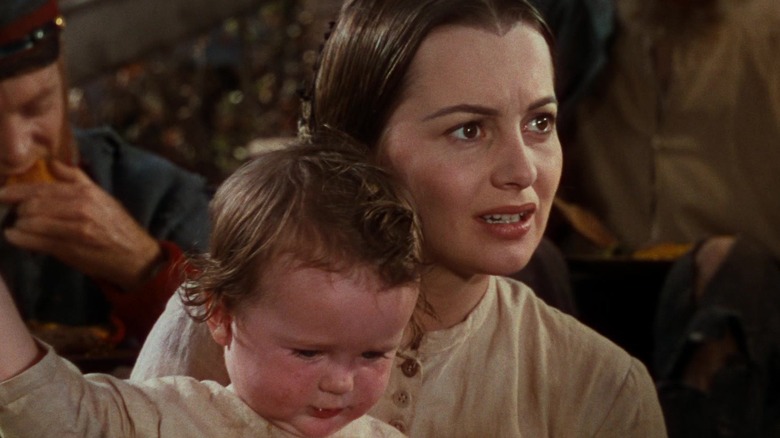
It should be noted that "Gone with the Wind" is no light beach read. Margaret Mitchell's epic is a brick that runs over a thousand pages. There's a reason that Victor Fleming's ultra-popular 1939 film adaptation runs four hours. For the record, "Gone with the Wind" is still, to this day, the most popular movie of all time. Spider-Man could only wish for "Gone with the Wind" numbers. Most members of the public know more about the movie than Mitchell's original book, but both tell the story of Scarlett O'Hara, the spoiled brat daughter of a wealthy landowner, and how she weathers the massive upheavals to her wealth, love life, and social station from 1861 through the mid-1870s. The title refers to the Confederacy, a way of life that is now, as the book posits, tragically gone with the wind.
The book is controversial because of its clichéd staging of the "Old South" as a romantic, halcyon time when everything was better ... including the pervasive slavery. The Confederacy, by the same token, is depicted as a romantic "lost cause," rather than an oppressive wave of violence instigated to keep slavery legal.
There is a portion in "Joy Still Felt" in which Asimov recalled being on vacation with his wife and idly picking up a copy of "Gone with the Wind," "certain ... that it was a foolish book." But then he cracked it open and couldn't stop reading. "It took me 15 hours of nearly continuous reading to finish the book," he wrote, "And when I was done I was angry. I wanted more!" Whatever its message, it seems that "Gone with the Wind" is a page-turner.
Other obscure, non-sci-fi books that Asimov liked
Isaac Asimov didn't go into any more detail. Asimov, who was born in Soviet Russia in 1920, was certainly not sympathetic to the Confederacy or Margaret Mitchell's "Lost Cause" romanticism, but he was a student of history and was likely fascinated by the book's viewpoint. Sadly, he doesn't go into great detail. All we know is that he loved it.
The Reactor Magazine article also found a few other notable non-sci-fi books that Asimov was drawn to and occasionally went on record discussing. For one, in his memoir "I, Asimov" (how clever is that?), he revealed that he loved an obscure 1841 British novel titled "Ten Thousand a-Year" by Samuel Warren. The book is about an aspiring dandy named Tittlebat Titmouse and features other colorful Dickensian characters such as Lord De La Zouch, Thomas Tag-Rag, and Robert Huckabuck. The villain of the book was a "solicitor and chief schemer" named Oily Gammon, and Asimov loved that character the best. Indeed, focusing on Oily Gammon changed his view of literature. He wrote, "I think that was the first time I realized that a villain, not a 'hero,' might be the true protagonist of a book."
Unlike "Gone with the Wind," there is no celebrated film adaptation of "Then Thousand a-Year," and the book received poor reviews, notably from a Graham's Magazine critic by the name of Edgar Allan Poe. Poe — who inspired "The Fall of the House of Usher" — wrote that the book was "shamefully ill-written. Its mere English is disgraceful to an L.L.D. — would be disgraceful to the simplest tyro in rhetoric." An LL.D. is a doctor of law. So Poe and Asimov stand at opposite corners on this one. I, like you, haven't read "Ten Thousand a-Year," but now I'm interested.