

House Of The Dragon Season 3's Battle Of Tumbleton Breaks Game Of Thrones Tradition In One Big Way
Warning: This article contains major spoilers for the Season 3 finale of "House of the Dragon."
Perhaps it's only fitting that this up-and-down season of "House of the Dragon" ends up bookended by two major battles — each full of spectacle and fury yet equally riddled with creative issues. To date, both "Game of Thrones" and this prequel series have gone to great lengths to stage epic sequences of war throughout their respective runs, sparing no expense in the process. We've watched characters we love put in mortal danger, we've seen villains we love to hate get their just desserts, and every step of the way we've been forced to grapple with some major shades of grey.
Did that just come to a sudden end with the Season 3 finale of "House of the Dragon"? We've spent almost two full months waiting for the sparks to fly and for the Battle of Tumbleton to begin in earnest, but the end result of this conflict is leaving us scratching our heads. Much like the season-opening Battle of the Gullet, this is as technically ambitious and well-staged a battle as it gets. But as the lines are drawn between the two armies and the arrows begin to fly, it soon becomes painfully clear that this violent escalation is very different from any we've seen in this franchise before. Where even the most minor of skirmishes typically gave us a side (or even just an individual) to root for amid all the carnage, the Battle of Tumbleton takes the opposite approach.
As we watch both sides commit unspeakable acts and unambiguous atrocities, we realize there's absolutely nobody to root for in this senseless battle — and, thus, no real reason to feel invested at all.
House of the Dragon gives us no reason to care about what happens in the Battle of Tumbleton
Look, this isn't our first time in Westeros. We know that there's generally not a ton of morally righteous, upstanding characters worth throwing our support behind, but typically these adaptations have been careful to include at least a few. "House of the Dragon" always had an uphill battle in that regard, in all fairness. George R.R. Martin's book, "Fire & Blood," isn't exactly interested in depicting two good-but-flawed rivals vying for a throne over a series of misunderstandings — that's a show-only invention. Instead, the Dance of the Dragons plays out on the page as two power-hungry and fundamentally unlikeable factions willfully bringing about the downfall of their own dynasty for the pettiest of reasons.
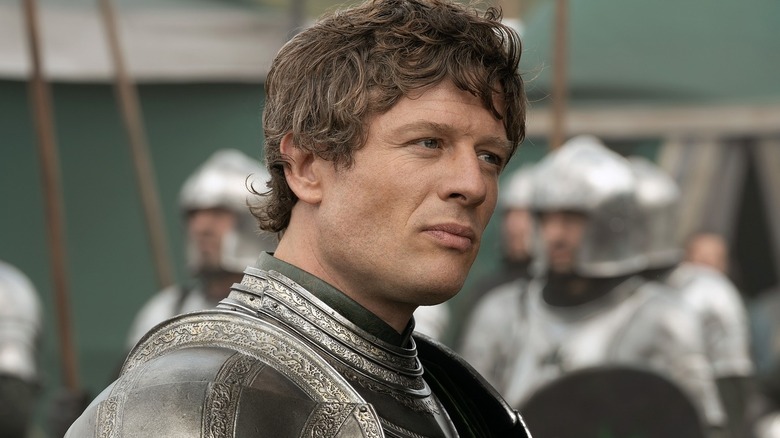
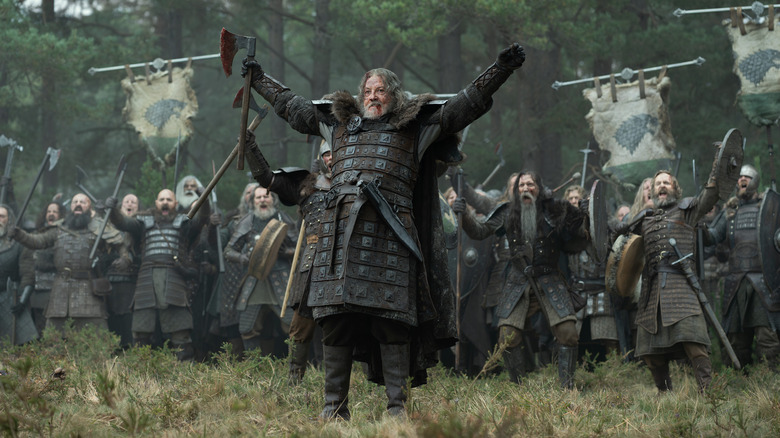
The Season 3 finale finally sees this reality catch up with the show. It begins when the scheming Ormund Hightower (James Norton) trots out young, defenseless children to act as human shields on the walls of Tumbleton. It's a conniving and cowardly act by someone who's quickly become one of the more enjoyable villains of the show, but this attempt at adding some extra tension into the battle backfires spectacularly. Despite Rhaenyra (Emma D'Arcy) explicitly warning her lover Daemon (Matt Smith) that "the realm is watching," he almost immediately tells his army to show no mercy and bring only their "worst" selves. It's hardly any surprise when Roddy the Ruin (Tommy Flanagan) and his aged Winter Wolves then slaughter the kids who feebly attack them, and it only gets worse when Daemon faces more youngsters blocking the gates ... and has his dragon Caraxes burn them alive.
When this devolves into two sides committing war crimes indiscriminately, it's hard to truly care about anything that happens next.
House of the Dragon fails to give its characters anything to do in the Battle of Tumbleton
Adding insult to injury, the Season 3 finale devotes the bulk of the hour to Tumbleton but struggles to actually give its various characters much of anything to do. Ulf the White (Tom Bennett) spends half the engagement passed out drunk in an outhouse which, fine, is totally something Ulf would do. But his snap decision to then turn his dragon on both sides for scorning him feels less like a momentous betrayal and more like, well, a snap decision with no real weight behind it. His fellow dragon-rider Hugh (Kieran Bew), meanwhile, shows up only to mourn his wife and nothing else. Even Daemon and Ormund are stuck in thankless roles, fighting just an obligatory amount of enemies before either dying (RIP Ormund and your weird smelling sensitivities) or walking away.
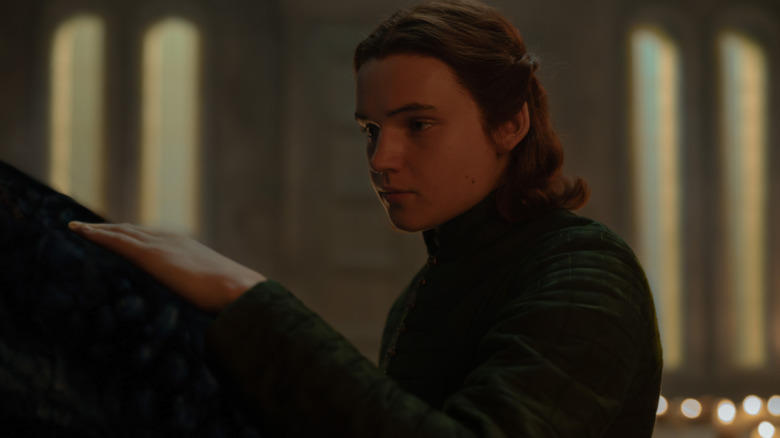
And as for Daeron the Daring (Benjamin Evan Ainsworth), arguably the most compelling figure in the battle whom "House of the Dragon" has spent a full season building up to some sort of grand, character-defining choice? He feints at leaping on his dragon and making the decision to either flee or defend the people who are giving up their lives for their reluctant king, but this one active moment is taken from him as the battle turns into a slaughter, and he ends the season without doing much of anything.
This is a far, far cry from anything that happens in "Fire & Blood," but perhaps Season 4 may fix this. The book actually depicts two separate battles at Tumbleton, the last of which may go down later. If so, we have another long wait ahead of ourselves to see "House of the Dragon" deliver on everything it's promised.