

5 '70s Sci-Fi Movies You've Probably Never Watched (But Absolutely Should)
The 1970s was one of the most transformative decades in cinema history. Many of the best movies ever made were released during this period, from "Star Wars" to "The Godfather" and beyond. The landscape of film wouldn't be the same without the bold, foundational filmmaking we experienced during this time.
It was, in particular, a major period of growth in the realm of genre filmmaking. The '70s redefined the horror genre forever and for better, but it was also a truly wondrous period for science fiction. Not just because it was the beginning of a galaxy far, far away, or because Steven Spielberg made "Close Encounters of the Third Kind," but because it was a period so rich in cinema that gems were able to slip through the cracks.
Even within the realm of popular franchises, there are movies from this period that deserve more attention. Yes, there are classics like Stanley Kubrick's controversial "A Clockwork Orange" that are rightfully celebrated loudly, but we're not here to talk about those movies. We're here to talk about a handful of sci-fi movies from the '70s that you probably haven't seen, but absolutely should.
From unsung franchise installments to underseen gems from cinematic legends, we've got a small grab bag of cinematic selections offering up a little something for every sort of science fiction fan to enjoy. Let's get into it.
Conquest of the Planet of the Apes (1972)
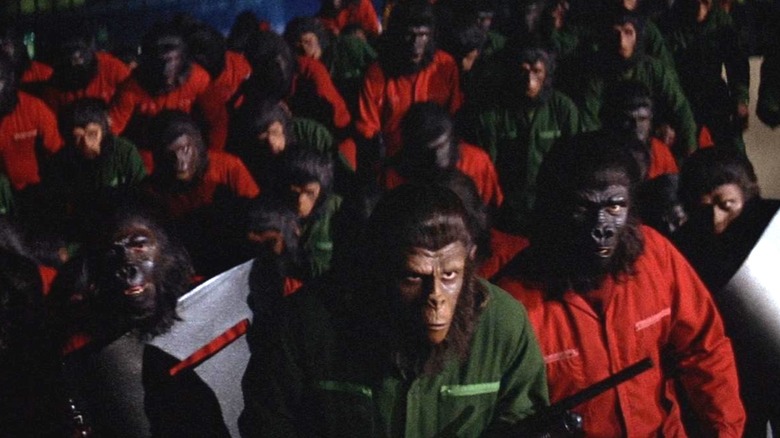
The "Planet of the Apes" franchise is incredibly popular and has remained so for decades. The 2010s reboot series that began with "Rise of the Planet of the Apes" has an awful lot to do with that. But while many sci-fi fans have seen the original classic and many of the more recent movies, one of the franchise's very best entries remains woefully underseen. That movie is 1972's "Conquest of the Planet of the Apes," one of best sci-fi sequels no one talks about, in my humble opinion.
Directed by J. Lee Thompson, the fourth entry in the series is set in a futuristic world that has embraced ape slavery. A chimpanzee named Caesar (Roddy McDowall) resurfaces after almost twenty years of hiding and prepares for a revolt against humanity. With his help, the apes turn the tables on humanity, leading a revolt against their cruel masters. What starts as a sort of low rent but well-conceptualized dystopian sequel turns into a dark, searing, cinematic revolution and, I kid you not, one of the best ever cinematic examples of the oppressed rising up against their oppressors.
I should note that "Conquest of the Planet of the Apes" had to change its ending to avoid an R rating, and the theatrical version neuters the final product a bit. If at all possible, I fully encourage people to seek out the extended cut of the movie, which is available on Blu-ray, as it's superior to the theatrical cut. Setting that aside, this is by far the most underrated movie in a legendary franchise. Whereas sequels like "Beneath the Planet of the Apes" semi-regularly get their flowers, this one is sorely deserving of more attention than it gets.
Westworld (1973)
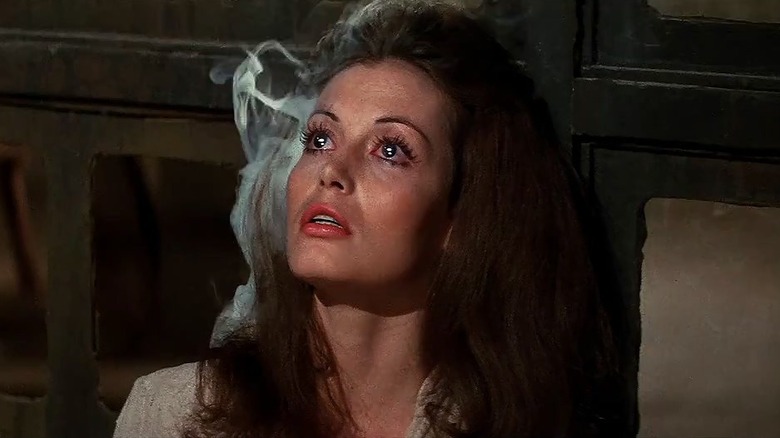
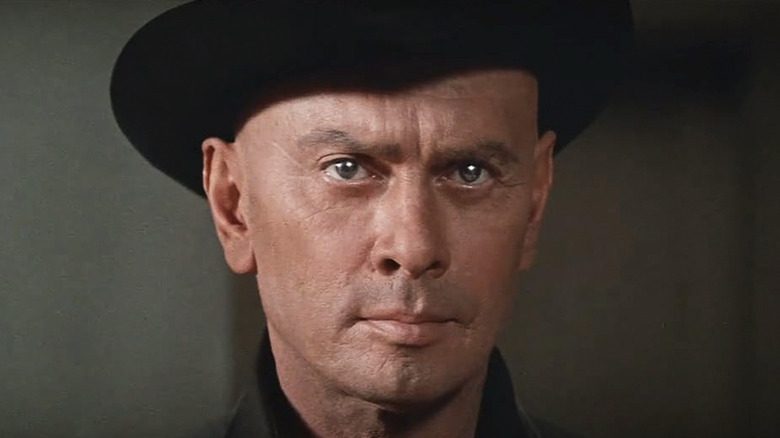
For people of a certain age, "Westworld" exists as a big budget, prestigious, heady TV show from HBO that was a big part of the cultural conversation for a hot minute. HBO canceled "Westworld" after four seasons in 2022, but the franchise traces its roots back to the early 1970s and the mind of Michael Crichton, the author who would go on to write "Jurassic Park." Long before that, though, he wrote and directed a movie about a very different sort of theme park where s*** goes very wrong.
The movie takes place in a futuristic theme park where guests pay large sums to pretend to be gunslingers in an artificial Wild West, which is populated by advanced humanoid robots. However, when the system goes haywire, death quickly follows, leaving Martin (Richard Benjamin) on a quest for survival in what was supposed to be an escapist fantasy.
Crichton's movie isn't quite as high concept as HBO's show ended up being, for better or worse. What we get is something a little more streamlined but still full of heady ideas and social commentary. Despite its age, the themes and many of the effects still hold up. It's anchored by performances from great actors including Yul Brynner and James Brolin, among others, and despite being over 50 years old, it still works.
Beyond that, it's a fascinating time capsule, given where Crichton's career ended up going and what this franchise ultimately became. Not for nothing, but a "Westworld" movie remake is also in the works from David Koepp who, perhaps not coincidentally, is the man who scripted Steven Spielberg's "Jurassic Park."
Dark Star (1974)
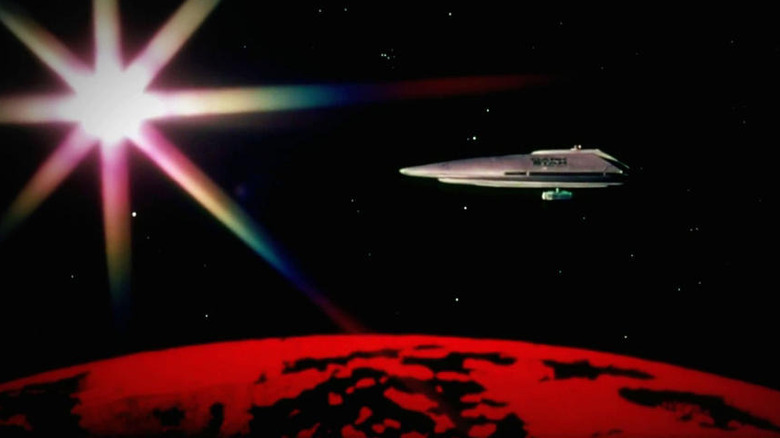
John Carpenter is known to many as the Horror Master. As the man who made classics such as "Halloween" and "The Thing," it's a title he most certainly earned. But before he gave us Michael Myers, his career started with an ultra-low-budget cult sci-fi comedy called "Dark Star." It's a very bizarre, entertaining, confounding piece of work, but an important one in the filmography of one of the most celebrated genre filmmakers to ever do it.
The movie takes place in the distant future and centers on a group of scientists who are sent on a mission to destroy unstable planets. Twenty years into their mission, they have to contend with several major problems, including a rowdy alien and an intelligent bombing device that starts to question the meaning of its existence.
Written by Carpenter and Dan O'Bannon ("Alien"), it started life as a student film but was eventually turned into a feature that was released theatrically, marketed as being "from the author of Alien & the director of Halloween." It's certainly not Carpenter's best movie, but it's not one of his worst, either. It falls somewhere in the middle as more of a cinematic history piece showcasing us bits and pieces of the ingenious filmmaker he would become.
Carpenter is the king of doing a lot with a little. "Dark Star" is, if nothing else, proof positive of that. It's totally wacky, of its time, and exceptionally strange. But it also has big ideas and is impressive considering its budgetary restraints. It's in some ways a pretty inspiring piece of work. Sometimes, a big idea is more important than a big budget.
Terror of Mechagodzilla (1975)
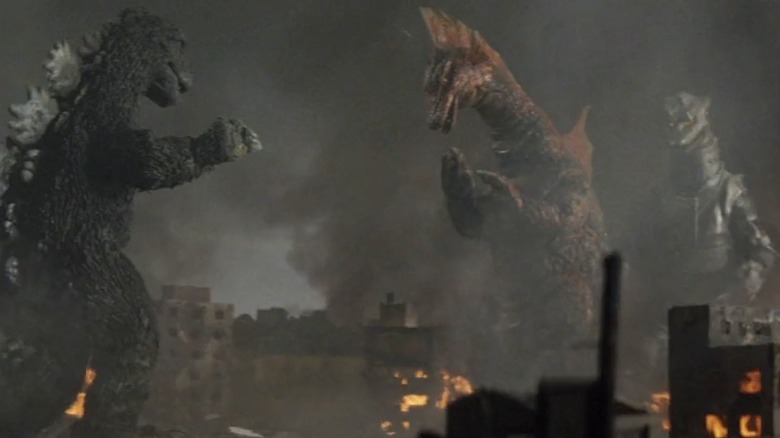
Anyone reading a list about '70s sci-fi movies has likely seen a "Godzilla" movie or two. But a lot of the early movies in one of the genre's most enduring franchises can blur together for people, like me, who grew up watching them on cable. To those people or to any other more casual fans of the series, I humbly suggest that a dedicated viewing of 1975's "Terror of Mechagodzilla" is well worth one's time. Put simply, it's some of the best rubber suit kaiju action ever put on the silver screen.
The movie takes place after a submarine expedition to salvage the remains of Mechagodzilla is thwarted by a massive dinosaur named Titanosaurus. Meanwhile, an Interpol investigation leads a biologist to uncover the work of Dr. Mafune and his mysterious daughter, Katsura. Aligned with the Black Hole Aliens, Katsura's life becomes entwined with the new and improved Mechagodzilla, leading to a three-way monster showdown for the ages.
Whereas the premiere of the original 1954 "Godzilla" caused tears as it was so emotional for people as a metaphor for the atrocities of WWII, "Terror of Mechagozilla" is fully and completely insane for much of its runtime. It's very corny and very in line with later entries in the series. But the third act is where the price of admission becomes worth it.
Ishiro Honda, who directed the original monster movie classic, returned to finish what he started with what would become the final entry in the original "Godzilla" movie era, known as the Showa era. It went out with a bang, as Godzilla, Mechagodzilla, and Titanosaurus duke it out in spectacular fashion — so much so that it makes one wish we could go back to rubber suits instead of CGI, at least every once in a while. It's the goods.
Planet of Dinosaurs (1977)
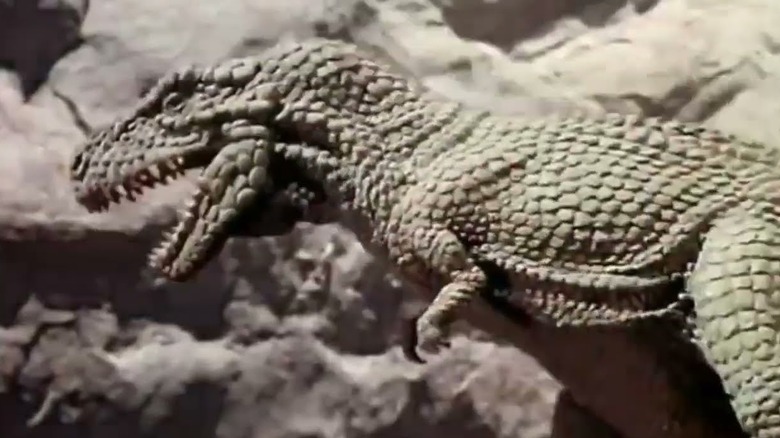
In the realm of dinosaur movies, the landscape has been dominated by the "Jurassic Park"/"Jurassic World" franchise for more than thirty years. That makes sense, as Steven Spielberg's "Jurassic Park" is a groundbreaking masterwork that holds up to this very day. But dinosaur movies certainly existed before that moment in 1993, and 1977's "Planet of Dinosaurs" is an example of what this sub-genre of science fiction had to offer in the pre-"Jurassic" days.
Very basically, the movie follows a space shuttle pilot named Jim (James Whitworth) who, along with his colleagues, is forced to bail out of the vehicle, leaving them stranded on a planet full of prehistoric monsters. Stop-motion dinosaur shenanigans ensue.
Director James Shea makes the most out of the stop-motion effects of the day and the dinosaur stuff, though very retro, is the reason to check this one out. Everything else is pretty corny; it's low budget, but there's something charming about its retro cheesiness. More importantly, though, it exists as a demonstration of just how far filmmaking advanced in a relatively short period of time.
The time between "Planet of Dinosaurs" and "Jurassic Park" was the same amount of time between "Inception" and "Project Hail Mary." Whereas both of those movies, broadly speaking, look comparably spectacular, the difference between the two dinosaur movies in question is staggering. Yes, there's enjoyment to be had for the right sort of viewer from a pure cinematic standpoint, but it's a fascinating viewing experiment for just about anyone, sort of like opening a time capsule to the past. Sometimes, it's worth taking a moment to truly appreciate just how far filmmaking has come.