

5 Forgotten '90s Romantic Comedies That Still Hold Up Today
Nostalgic Gen-Xers will happily tell you about the glory days of the 1990s, when there seemed to be a new hit romantic comedy every week. Yes, they will say as they push their glasses up their noses, there was a time when films like "Sleepless in Seattle" would come in at #5 at the international box office, when "Jerry Maguire" outgrossed Michael Bay's "The Rock," when Julia Roberts and Meg Ryan stood astride the globe like mighty colossi. Yes, audiences once adored the frothy, artificial charms of dazzlingly attractive movie stars falling in love, and would laugh heartily at them as plot contrivances endeavored to keep them apart. But we knew that the gods had fated Tom Hanks to end up with Meg Ryan, for Julia Roberts to end up with Richard Gere, for Sandra Bullock to end up with Bill Pullman (even though she was initially in love with Peter Gallagher), for Stella to get her groove back with the youthful Winston. And so on.
For the past 20 years, the largest box office hits have tended to be sequels, remakes, and big-budget, effects-driven actioners. Only now, in 2026, are we finally coming out of that with horror hits like "Backrooms" and "Obsession." The blinding success of "Spider-Man: Brand New Day" is an anchor in the past, not a push into the future. Perhaps a time will come when romantic comedies rule again, and a new generation of cute, lovelorn movie stars will push their way back into the theatrical mainstream.
The following 1990s romcoms are all enjoyable, exemplary pictures, each either representing or pointedly subverting the dominant trends of their day. Many were likely missed by Gen Z, so we're here to remind them. Take notes, kids.
L.A. Story (1991)
The director of the Steve Martin-scripted-and-starring comedy "L.A. Story" was born in England, but somehow made two of the most town-accurate Los Angeles movies ever. In 1998, he directed the big-budget disaster film "Volcano," about a lava spurt erupting next to the Beverly Center, and in 1991, he made "L.A. Story," which views the City of Angels through an absurdist lens, but somehow feels wholly realistic. And in a town where everything is fake, can love shine through as the only thing that is real?
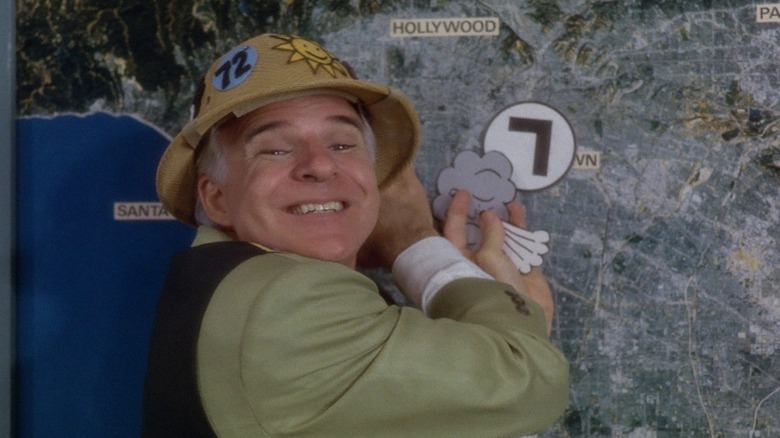
Steve Martin plays an L.A. weatherman named Harris Telemacher, and his job is incredibly boring: it's always sunny and pleasant in L.A., after all. Harris is in a rut. His girlfriend has left him, and he doesn't know what to do with his PhD. Into his life comes a British journalist named Sara (Martin's then-actual-wife, Victoria Tennant), a woman he has to show around Los Angeles. People have elaborate coffee orders! No one walks! No one seems to notice the frequent earthquakes! Restaurants are snooty beyond belief! The jokes are obvious, but golly do they hit hard. "L.A. Story" is equally funny if you hate or love Los Angeles.
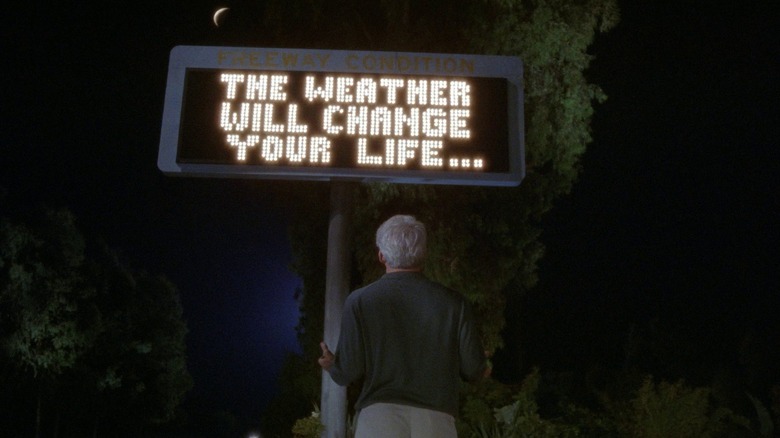
And there is a magical element to the film. A sentient freeway sign (!) tells Harris what he needs to do to foster his romance with Sara, implying that destiny is still real. It gives him cryptic clues and anagrams. Harris, meanwhile, is distracted by a pretty younger woman named SanDeE* (Sarah Jessica Parker) who floats on a cloud of vibes. Richard E. Grant, as he always is, is a standout as Harris' romantic rival.
"L.A. Story" is equally sweet, magical, weird, and funny.
Sabrina (1995)
In 1995, Sydney Pollack remade Billy Wilder's 1954 film "Sabrina," itself adapted from Samuel Taylor's 1953 play "Sabrina Fair." Wilder brought a screwball energy to his film, which starred Audrey Hepburn as the title character, a chauffeur's daughter who is deeply attracted to David (William Holden), the irascible, irresponsible son of her dad's employers. When David begins to show attraction to Sabrina, however, it only breeds complications, as David is about to be married to a wealthy heiress (Martha Hyer). It's up to David's all-business, stick-in-the-mud brother Linus (Humphrey Bogart) to counter-charm Sabrina and seduce her away from David. Naturally, the tight-laced Linus and the romantic Sabrina form a bond of their own.
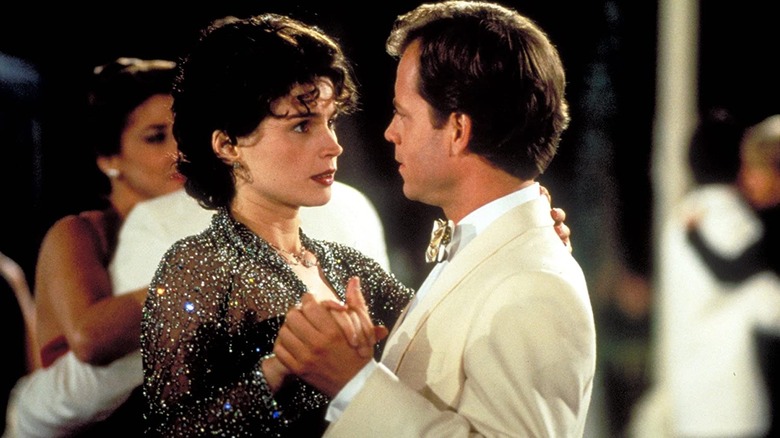
Pollack's remake classes up the joint with a calmer tone and a mellower, more erudite mood. The characters are all well-reasoned adults who aren't merely following impulses. Well, David is, and Greg Kinnear plays the irascible David with the utmost skill. Sabrina is played by Julia Ormond, and she is utterly believable as the dazzling naif who is discovering true romance for the first time. Harrison Ford does surprisingly well as Linus (he had to let his ego go), a boring stuffed shirt who cares not for romance. When Ford and Kinnear bicker, both actors give the impression that yes, these characters have known each other for years and kind of resent each other's existence. Lauren Holly plays the Martha Hyer role.
The character work in the "Sabrina" remake is fantastic, and even small characters have a lot of personality. Margot Martindale and Paul Giamatti have tiny roles, and even they stand out. It's a movie about falling in love, and then considering the consequences. Naturally, though, the consequences will have to be damned, and the heart embraced.
Billy's Hollywood Screen Kiss (1998)
The 1990s saw a marked rise of queer cinema, and queer characters began turning up more and more on screen. By 1996, Robin Williams and Nathan Lane were playing a long-together couple in Mike Nichols' huge hit film "The Birdcage" (a remake of "La Cage Aux Folles"), and "gay best friends" started turning up on TV everywhere. Indeed, the "gay best friend" became so common a character, it was soon noticed as a stereotype. Indie filmmakers, meanwhile, churned out multiple queer romcoms, some of them bracing and insightful, others of decided low quality, but all wholly welcome.
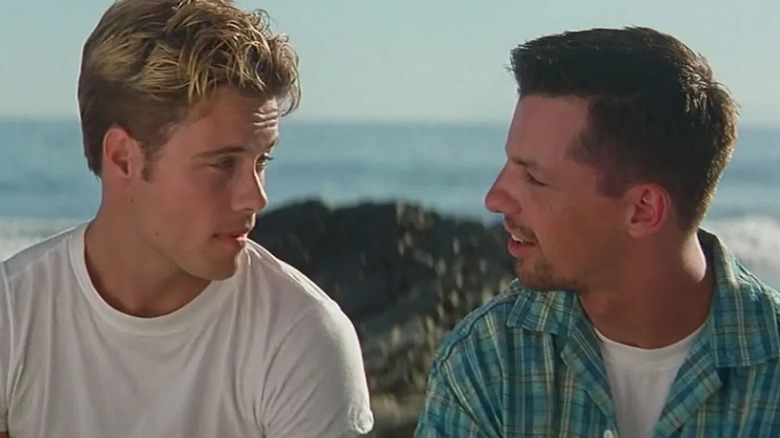
Tommy O'Haver's low-budget indie "Billy's Hollywood Screen Kiss" is one of the lighter, funnier films to come from the queer romcom uprising of the 1990s, as its characters were all delightful and its modern queer issues palpable. Billy, played by Sean Hayes, is a transport to Los Angeles who dreams of stardom in the world of photography. Like many transports, he's not finding much luck. Worse, Billy is lovelorn; he longs to have a genuinely romantic relationship instigated by a gigantic kiss like one might see in the movies.
Billy might have found his potential boyfriend in Gabriel (Brad Rowe), an angelically handsome barista who ... sigh ... might be straight. Billy is too awkward to ask about Gabriel's sexuality, so he depends on clues and implications. Gabriel says it's okay that they sleep in the same bed, for instance, but doesn't ever flirt outright. Billy cannot stand the suspense.
Eventually, Gabriel reveals his sexuality, and Billy gets his kiss, but some of those things don't happen in the way Billy intended. More than anything, we understand Billy's late-'90s angst and frustration. So when the kiss comes, it kind of blindsides us.
Bride of Chucky (1998)
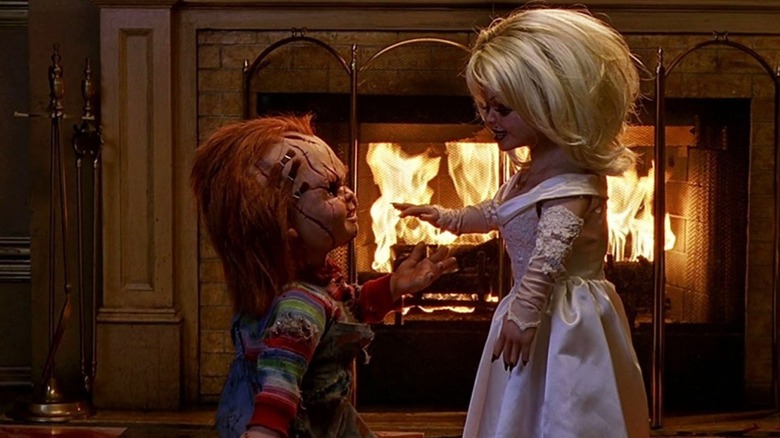
It's worth noting that "Child's Play 3," released in 1991, is one of the worst in the franchise. It was a limp, latter-day slasher with a bad script and some silly kills. From 1991 until 1998, however, the horror landscape changed dramatically, allowing in a wave of sardonic, self-aware slashers that mocked the genre they hailed from. As such, "Child's Play" was resurrected with the horror/romcom "Bride of Chucky," directed by Ronny Yu. In "Bride of Chucky," the ripped-up Chucky doll from the last movie is located, stitched together, and magically resurrected by Tiffany (Jennifer Tilly), Chucky's ex-girlfriend. She hopes that Chucky (Brad Dourif) can eventually be shunted into a human body and they can be a couple again.
Chucky has no feelings for Tiffany, however, and goes so far as to murder her in a bathtub. Out of spite, he shunts Tiffany's soul into a doll, trapping them both. Through a series of plot complications, Chucky and Tiffany find themselves trapped on the road with a fleeing teen couple (Katherine Heigl and Nick Stabile). Naturally, Chucky tries to find a way to continue his multi-film murder spree, while Tiffany finds herself aiding in the action. Of course, Chucky and Tiffany fall in love. And have a sex scene. As dolls.
"Bride of Chucky" mocks the inherent silliness of the "Child's Play" premise, but it remains emotionally honest enough for the horror to be horrifying, and for the romance to be weirdly palpable. Chucky and Tiffany are cartoon murderers, but they're weirdly perfect for each other. Tiffany would end up playing a major part in the three "Child's Play" sequels that followed, much to the series' benefit.
Splendor (1999)
I have seen far too many romances and romantic comedies that involve pained love triangles. Bella, for instance, is torn between Edward and Jacob (oh no, you poor thing) in the "Twilight" movies. Michelle Pfeiffer was torn between 1987 Kurt Russell and 1987 Mel Gibson in "Tequila Sunrise." Oh yeah, I can relate to her tragedy [sarcasm]. There was a terrible 2017 comedy called "The Layover," which saw Matt Barr torn between the affections of Alexandra Daddario and Kate Upton, and I just cannot find it in my heart to feel sorry for him.
Of course, a certain type of audience member, when they see any love triangle, will simply be yelling, over and over, "Just date them both!" So many romantic comedies could be solved with a polycule, and it's frustrating how few filmmakers actually take that tack.
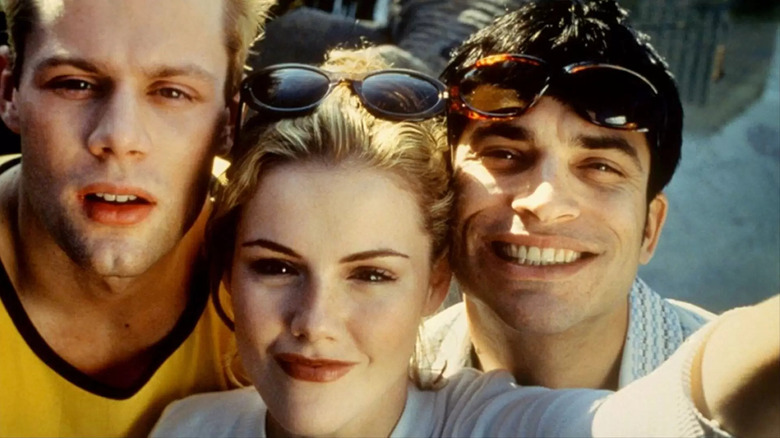
Gregg Araki takes that tack in his 1999 romcom "Splendor," a film about a gorgeous, struggling actress named Veronica (Kathleen Robertson) who cannot choose between the overwhelmingly sexual Zed (Matt Keeslar) and the intellectually stimulating critic Abel (Jonathan Schaech). She continues to date them both, unbeknownst to each other, until logistics make it unfeasible. Rather than choose one, however, the three of them get drunk and have cathartic group sex. This instigates a polycule wherein the three all date one another. The boys aren't expressly bisexual, but then everyone is kind of bisexual in Gregg Araki's universe.
The joke of "Splendor" then becomes Veronica now having to deal with two deadbeat boyfriends instead of one. Who gets to choose the breakfast cereal when they're shopping for three? "Splendor" is a drink of cool water after too many heated love-triangle rom-coms. Why choose, when you can have it all?