

Michael Crichton's Westworld Movie Got A Forgotten TV Sequel That Was Abruptly Canceled
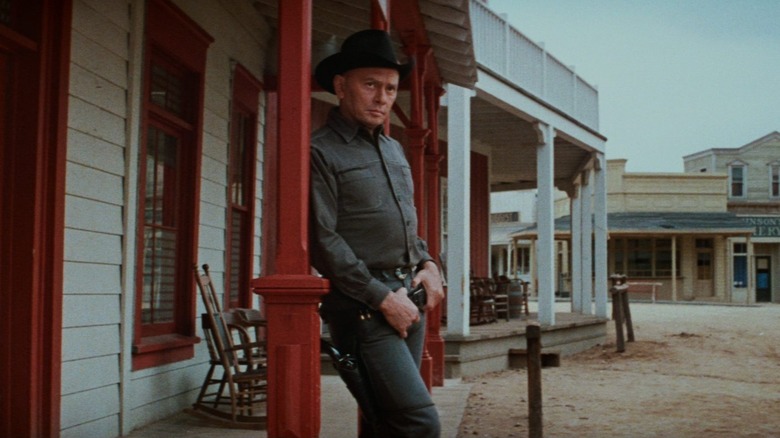
"Westworld," Michael Crichton's 1973 film, is a lot more influential than most people give it credit. It was part of a wave of intellectual sci-fi films that followed in the wake of "2001: A Space Odyssey," transplanting that movie's killer AI into a literal Gunslinger (played by Yul Brynner). The film tackles topics as varied as the irresponsible proliferation of technology, the lax ethics of rich people on holiday, the toxic masculinity of the Western genre, and more. Its premise of a place built for experiential, stakes-free leisure going awry influenced Crichton's "Jurassic Park," while its narrative structure of one person trying to survive a ruthless, silent killer who can't be reasoned with influenced everything from the emerging slasher subgenre to "The Terminator." As you can see, "Westworld" is a load-bearing pillar of the sci-fi and horror genres.
It's possible that "Westworld" hasn't enjoyed as beloved a reputation as other seminal genre films because the initial attempts to turn it into a franchise didn't take. 1976's sequel "Futureworld" introduced a ton of intriguing cyberpunk-style concepts to Crichton's premise, including the cloning of real people and public figures. Unfortunately, Richard T. Heffron lost the propulsive terror and excitement of the original, and the movie performed poorly. However, that didn't stop Metro-Goldwyn-Mayer, the owner of the IP, from trying again on the small screen a few years later. They came up with a series called "Beyond Westworld," which aired on CBS in the spring of 1980.
Sadly, the public wasn't interested in this incarnation, either, and the show was canceled after producing just 5 episodes (with 2 originally unaired). The show is understandably forgotten now, yet its concepts ended up being explored by later, more successful series, including the HBO remake of "Westworld" itself.
Beyond Westworld grafted procedural structure onto a compelling sci-fi concept
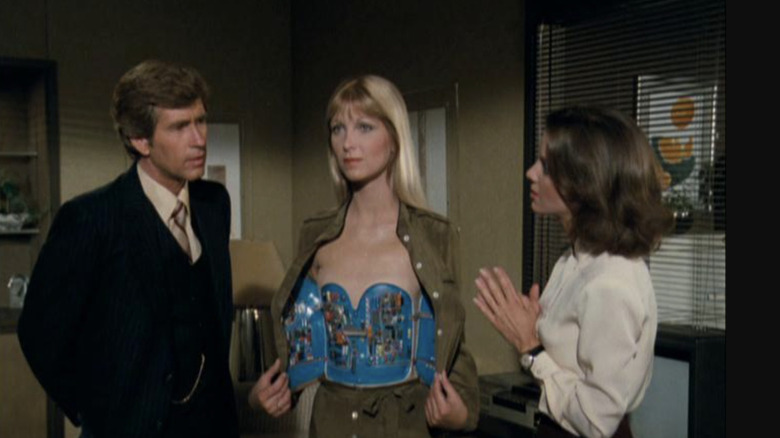
"Beyond Westworld" was developed by Lou Shaw, a veteran of the television industry by 1980. He'd written for dozens of series as varied as "The Munsters," "Have Gun – Will Travel," "Mission: Impossible," and "Get Christie Love!" By the late '70s, he'd created "Quincy, M.E.," and the success of that series is likely a large factor in his getting "Beyond Westworld" off the ground. The series tried to appeal to fans of the films while also offering a fresh start to those unfamiliar with them, which is an awkward way to start a sequel show.
It essentially retconned the events of "Westworld" from being the result of an emerging computer virus to the intentional sabotage of an evil scientist character, Simon Quaid (James Wainwright). The corporate intrigue of the films became less conspiratorial and more heroic, thanks to the protagonists John Moore (Jim McMullan) and Pamela Williams (Connie Sellecca) being Delos employees looking to thwart Quaid's plans of world domination via the company's androids. It's a big difference from the openly devious Delos of "Futureworld," which "Beyond Westworld" all but ignores.
While "Beyond Westworld" replaces the morally murkier concept of a nefarious corporation with an evil mad scientist working for himself, Quaid's scheme of using robot sleeper agents living in secret amongst humans helps make up for it. Shaw marries this Cold War-era paranoia with a procedural structure, in which Moore and Williams investigate a different suspected Quaid android every week. In the first episode, a droid is part of the crew of a submarine; later episodes would see figures like rock musicians and police officers turn out to be secret robots. Sadly, the series was canceled before the show could become either diverting procedural fun or compelling sci-fi.
Battlestar Galactica and Westworld 2016 grabbed Beyond Westworld's baton
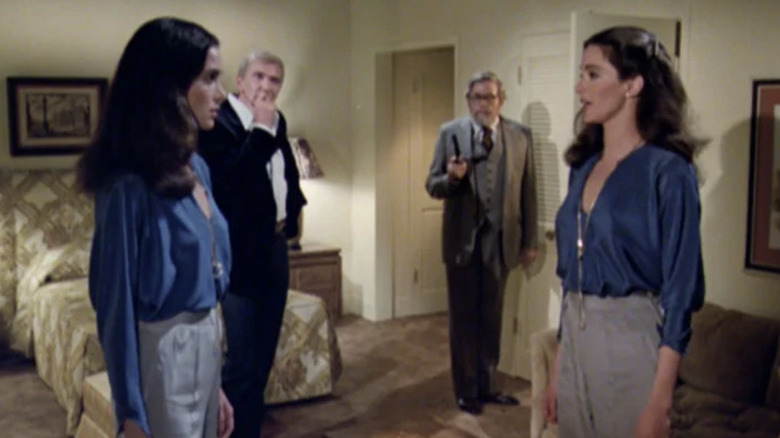
Although "Beyond Westworld" didn't last long enough to be well remembered, let alone live up to its potential, its concept of malicious robot sleeper agents didn't die with it. To be fair, the series likely wasn't a direct influence on future films and shows given its obscurity. Yet it's possible that it could've made an impression on those who happened to see it, as it was a bit ahead of its time. There was certainly an existential anxiety about the replacement of human beings with machines in the air, as seen in "The Stepford Wives" from 1975 (which was likely an influence on "Futureworld"), as well as Ridley Scott's "Alien" and "Blade Runner."
Despite the existence of numerous sci-fi movies and shows that tackle the topic of AI, the echoes of "Beyond Westworld" feel most prominent in a couple of TV remakes: 2004's "Battlestar Galactica" and 2016's "Westworld." The former was heavily influenced by "Blade Runner" in its tale of a man-made race of robots, the Cylons, rising up and overthrowing their human makers. Yet the concept of Cylons who believe themselves to be human feels very "Beyond Westworld," even if the show wasn't directly referencing it. By contrast, Jonathan Nolan and Lisa Joy might certainly have had "Beyond Westworld" on their minds when making their "Westworld" remake for HBO, which itself was prematurely canceled in 2022. Although the series introduced the idea of robots (called Hosts) not knowing their true identities in the first season, the fourth season felt even more explicitly beholden to the 1980 series, as a Host began using sleeper agent Hosts for their own ends, in a manner very similar to Quaid. "Beyond Westworld" may be forgotten, but it may have a legacy nonetheless.