

Quote Of The Day By John Woo: 'Logic Can Be Very Boring...'
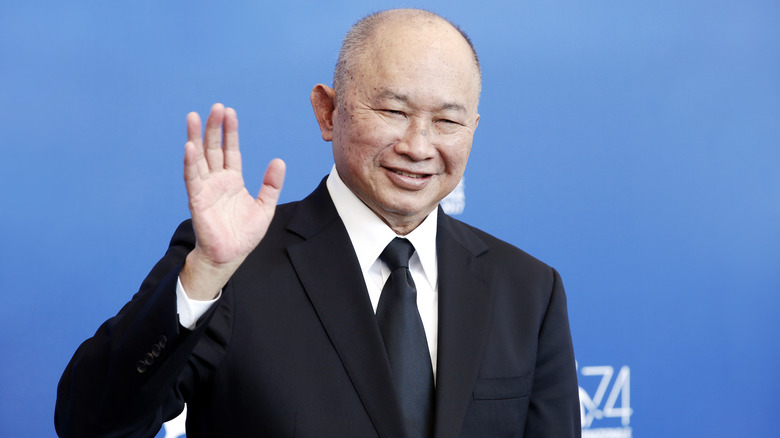
There is and never will be another director like John Woo. The legendary Hong Kong filmmaker is a master of aesthetics and invented gun-fu, the stylized, acrobatic blend of firearm violence and martial arts choreography. Woo uses choreographed shootouts the same way Bob Fosse used choreographed dance to tell a story, which is why his use of "bullet ballet" is so prominent. There must always be a grace and tragedy to the violence depicted on screen, and no one does it like John Woo.
Woo is undoubtedly the most influential living figure in the action film genre, with his iconic double gun shootout scenes, replicated in just about every major action film made today. Woo blended his love of wuxia, film noir, and Westerns to create his signature style, even if most Americans only think of him as "the guy with the guns, doves, and slow motion." To dismiss his heroic bloodshed films is to disregard the poetry at the center of his films — as seen in "The Killer," "Bullet in the Head," the "A Better Tomorrow" series, his magnum opus "Hard Boiled," and even the overly-memed "Face/Off." He's also one of the most awarded filmmakers in Hong Kong, having been honored with Hong Kong Film Awards for Best Picture, Best Director, and Best Editing, as well as a Golden Horse Award, an Asia Pacific Screen Award, and a Saturn Award. And a big part of that success is due to his unique approach to cinematic visual language, best encapsulated in a statement that we're highlighting as our quote of the day.
Quote of the Day by John Woo
"Fortunately, when I'm shooting these action sequences, I never run out of ideas," John Woo has said. "I'm crazy, I don't care about logic. Logic can be very boring. When I'm shooting, I do what I feel."
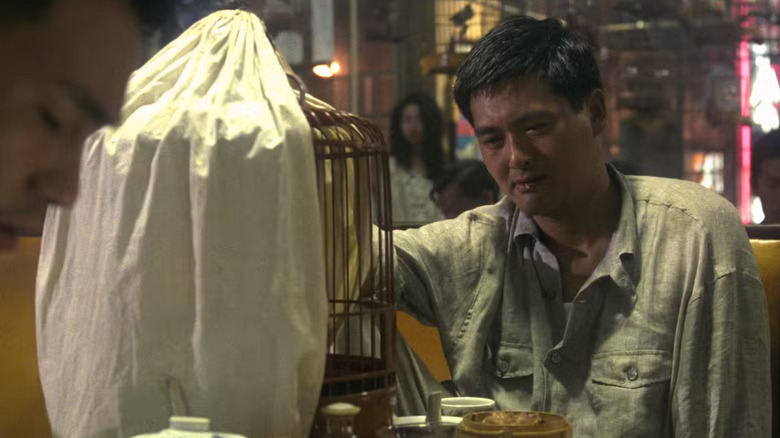
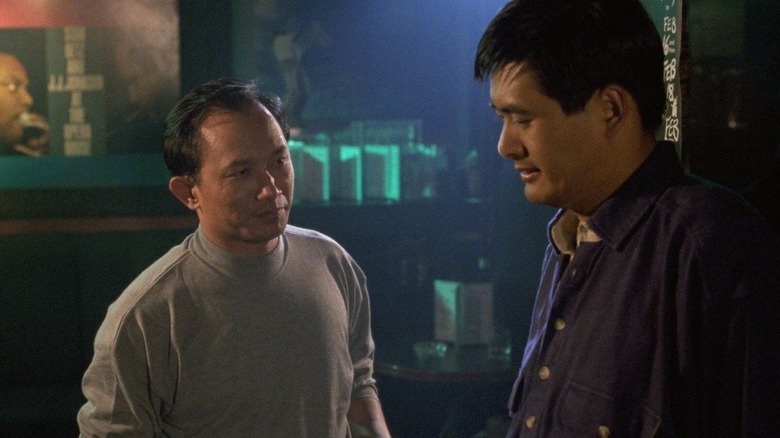
This statement comes from a commentary track John Woo provided for his film "Hard Boiled," during a legendary scene known as "The Tea Room Shootout," which opens the action-packed film starring frequent Woo collaborator Chow Yun-fat. The 1992 Hong Kong action film centers on a cop named Tequila (Chow Yun-fat) who loses his partner in a shootout with gun smugglers and goes on a mission to take them down. To get closer to the leaders of the ring, he joins forces with an undercover cop named Alan (Tony Leung Chiu-wai), who's working as a gangster hitman.
The shootout that kills Tequila's partner is the high-octane battle in the crowded tea house, featuring dual-wielding handguns, furniture exploding from bodies and bullets breaking them, feathers flying from the caged birds hanging above the tables, glass staggering innocent civilians running scared, and the downright iconic image of Tequila running down a staircase and leaning on the banister to better blow bad guys to bits. It is, quite possibly, the greatest practical action sequence ever put to screen — even if it requires an intense suspension of disbelief to believe that it could have gone down like this in real life.
Master John Woo knows that the logic behind this fight sequence is pushing it, but he frankly does not care. This is the same movie that features a scene of people rescuing babies from a hospital by daisy-chaining their bassinets down the side of a burning building. Because as he said, "logic can be very boring."
Deeper Meaning of John Woo's Quote — Creativity
There's been a push in the last decade or so for films, TV shows, and even "influencer content" to all reflect the realms of possibility. The virtual water cooler is plagued with naysayers shaking their fists and crying out, "That's not how it would happen in real life" when discussing films, as if narrative fiction is supposed to abide by the same rules as documentary non-fiction. It's a contributing factor to the increasing levels of media illiteracy currently plaguing our culture, where people are proving that it is possible to be bad at consuming media and completely misunderstanding that depiction is not inherently an endorsement. This demand that art reflect real life with exact precision is killing creativity, and forcing artists to sanitize their vision.
John Woo is right. Logic can be very boring. Sometimes a work of art is not about what it says, but how it makes you feel, and his decision to shoot what he feels rather than what he thinks is why his films are so influential. We do not get "The Matrix" without John Woo's filmography. We do not get the "John Wick" films without John Woo's filmography. And in both cases, the illogical approach to staging violence is precisely what makes the films so cool to watch and feel.
More Quotes From John Woo
-
"I'm not a master; I'm just a hard-working filmmaker. I would like everyone to see me as a friend rather than a master."
-
"I love my actors. I respect my actors. The actors in my films are everything."
-
"The movies I like to make are very rich and full of passion. Some people see me as an action director, but action is not the only thing in my movies. I always like to show human nature – something deep inside the heart."
-
"I have found my heaven in musicals. When I watch a musical, it makes me believe life is still beautiful."
-
"When I was a kid I feel lonely, I have not many friends. If you make a movie, then you can work with different kinds of people and make different kinds of friend. That's very important to me."