

Paul Newman's Only Sci-Fi Movie Was A Legendary Flop With A Fascinating Premise
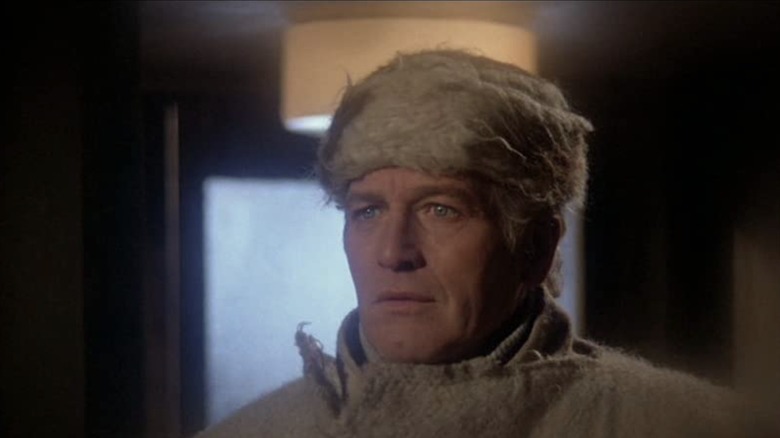
In cinematic terms, science fiction is usually equated with adventure, optimism, excitement, and so on. This is thanks to how popular sci-fi became following the seismic success of George Lucas' "Star Wars." While "Star Wars" helped influence hundreds of adventure-filled sci-fi films that followed, one casualty of its success was the trend of social commentary-heavy, incredibly bleak science-fiction movies that dominated the genre during the first half of the 1970s. Films such as "Silent Running," "Logan's Run," "The Omega Man," "Zardoz," and others presented visions of the future that were as bizarre as they were oppressive, which doubled as a reflection of the social turmoil seen during the 1960s. While films set in a dark post-apocalyptic future have never died out, the tone of these movies unmistakably shifted after "Star Wars," "Close Encounters of the Third Kind," and the like.
That's one big reason why "Quintet" was a massive flop when it was released in theaters in February of 1979. The film was the first and only sci-fi movie to star Paul Newman, and it was only one of two science-fiction films directed by Robert Altman (the other being a pre-moon-landing space-race drama, "Countdown," in 1967). "Quintet" was a failure both critically and commercially, in part because the film is harsh, unpleasant, and grim, with Altman's stylistic choices being as challenging and alienating as ever.
Yet its premise is fascinating: it takes place in a post-apocalyptic ice age where a board game known as Quintet is played by some of the only surviving humans. The rules are simple: if you die in the game, you have to die in real life. Though the film is hard to track down and isn't a breezy watch, it's one of the most underrated sci-fi movies ever made.
If you're a Newman or Altman fan, you should see Quintet
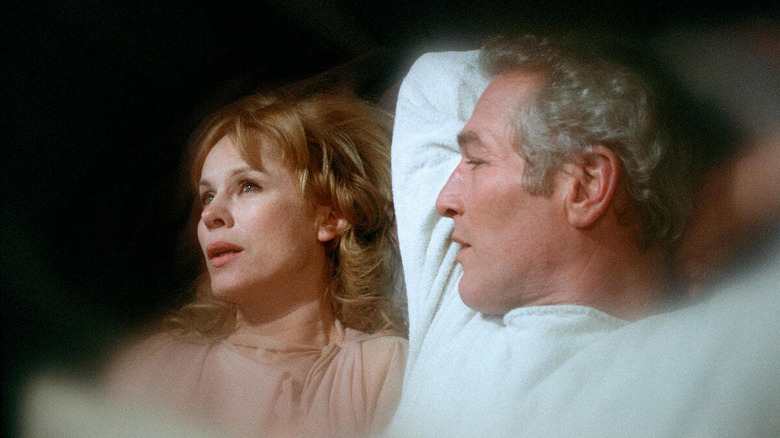
"Quintet" is worth a watch if you're a fan of Paul Newman. The actor was no stranger to the genre, having starred in several excellent (and bold) Westerns as well as several spy movies, detective thrillers, disaster films, and crime dramas. "Quintet" was Newman's second and last movie with Robert Altman, and the actor's work in the film feels very much in conversation with their collaboration, "Buffalo Bill and the Indians, or Sitting Bull's History Lesson." Altman saw Newman as representative of an American ideal whose time had come and gone, and where the actor's Buffalo Bill was a more literal version of that idea, his performance as Essex in "Quintet" is just as thematically rich. Essex is a world-weary survivor who either literally or figuratively remembers when humanity had morals and ideals, causing him to mourn what once was and never will be again.
Newman commits hard to this characterization, and Altman makes the film a genuinely rough ride. Instead of typical post-apocalyptic trappings or even a techno-thriller version of the movie's game-as-life premise (as would be seen in "eXistenZ" or "The Matrix"), Altman makes "Quintet" a literal Cold War parable. The world of "Quintet" is where the remaining human populace are mostly middle-aged or older, no new babies have been born, and packs of hungry dogs routinely eat frozen corpses on the street. Production designer Leon Ericksen turns old Montreal World's Fair structures into an ice palace from Hell, and cinematographer Jean Boffety shoots the whole thing with what looks like Vaseline on the lens.
"Quintet" is a deliberately cold, alienating experience, but if your brand of sci-fi is more of the David Fincher or Claire Denis variety, you need to roll the dice on "Quintet."