

5 Forgotten Historical Adventure Movies That Still Hold Up Today
Cecil B. DeMille was once famously quoted as saying, "Give me any two pages of the Bible, and I'll give you a picture." The Bible, after all, is one of the most dramatic pieces of literature in human history, and DeMille felt that the drama hidden in any two pages of it — the war, the romance, the sacrifice, the nobility — had the makings of the best possible cinematic fodder, at least as outsize Hollywood productions were concerned. DeMille made about 70 movies, and only five of them (including classics like "The Ten Commandments" and "The King of Kings") were direct Bible stories. He also made one of the worst Best Picture winners of all time, so consider that.
Indeed, one might wonder why filmmakers bother to invent fictional stories at all, given that real-world history is as cinematically satisfying as anything anyone would invent. History may be just one damn thing after another, but those damn things are damn exciting. One can delve into the complexities of language and culture, craft and intelligence, but also history's love affairs, betrayals, murders, violence, war, horror, heroism, mad kings, selfish oligarchs, lovers, liars, and clowns. We can read about the rises and falls of empires, the tyrants and queens who have since turned to dust. Historical epics provide drama but also allow modern filmmakers to relitigate history. Sometimes the heroes of our stories were, by changing moral standards, the ultimate villains.
In that spirit, let's look at some of the better, and perhaps not widely known, feature films that looked to ancient history for their dramatic cues. Some are based on actual historical or mythological figures, while others invent their own mythic heroes and insert them into real historical periods. All are definitely exciting and worth a gander.
Captain Blood (1935)
Director Michael Curtiz is perhaps best-known for the 1942 classic "Casablanca," one of the best and most famous Hollywood movies of all time. The odd thing about "Casablanca's" fame, though, is that it wasn't ever meant to be a unique work of art. It was put together by the Hollywood factory, employing stars, settings, and plot elements that were merely hip at the time. Modern war? Desperate freedom fighters? A cynical leading man who eventually succumbs to the caprices of romance? Everything is firing on all cylinders.
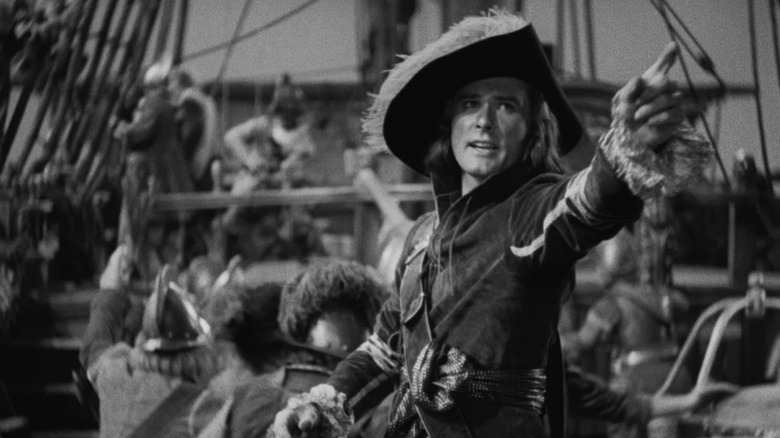
And one of the reasons it may work is because Curtiz spent decades of his career leading up to "Casablanca" making genre pictures and actioners like "Captain Blood." Curtiz is an action director par excellence who knew how to frame up a shot, film fight scenes, and convey powerful characters through casting and well-directed performances. "Captain Blood" stars the ultra-dashing Errol Flynn as Peter Blood, a 17th-century doctor who is wrongfully imprisoned for treason against King James II. Blood is sentenced to slavery in the West Indies but escapes along with multiple other prisoners, seizes a Spanish man-o'-war, and becomes a pirate with his fellow prisoners.
This, after he was briefly owned by a wealthy aristocrat played by Olivia de Havilland, but not before he had a rivalry with a French captain named Levasseur played by Basil Rathbone. The movie climaxes with a ship battle that became the template for all pirate adventure movies thereafter, wherein Captain Blood and his men swordfight on a ship's deck, all while cannons fire. It's all very exciting. Curtiz would eventually make the astonishing "The Adventures of Robin Hood" with Flynn and de Havilland, so that guy knew what he was doing.
Samurai I: Musashi Miyamoto (1954)
Some of the best movies of all time are samurai epics from Japan, and while you like know about Akira Kurosawa's classics like "Seven Samurai" or "Ran," one might have to be a subscriber to the Criterion Channel to know about Hiroshi Inagaki's Samurai Trilogy, made from 1954 to 1956. The trilogy follows the origin of the real-life historical figure Musashi Miyamoto as he grows from a criminal hothead into a noble, self-sacrificing samurai.
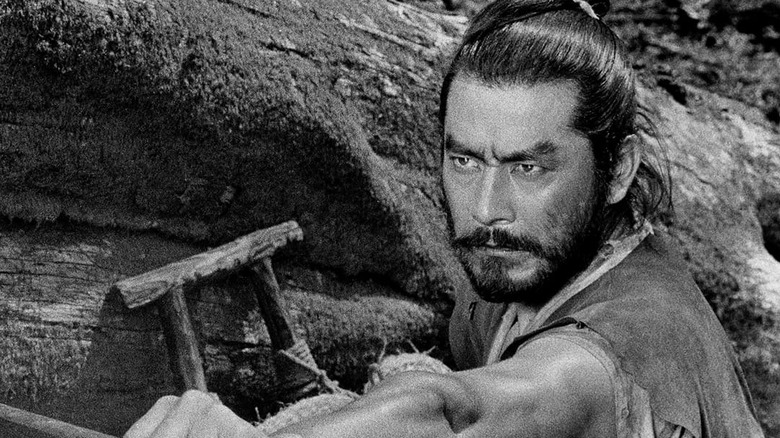
The first part of the trilogy, "Samurai I: Musashi Miyamoto" is the most exciting of the three, and begins in the year 1600, right after the Battle of Sekigahara, a battle in which the historical Musashi Miyamoto, then called Tekuza (superstar Toshiro Mifune, almost in "Star Wars"), was said to have fought ... and lost. Because he was on the losing side, Tekuza becomes a fugitive, and spends a long portion of the movie on the lam, hiding across the Japanese landscape, fighting off attackers with a staff, but not always successfully. After a lot of personal drama, Tekuza finds himself in the charge of a Buddhist priest (Kuroemon Onoe), and the film ends after he has spent three years locked in a castle, finally learning that his emotional turbulence is not going to get him very far. He ends the film having taken on the name Musashi Miyamoto.
"Samurai I" was based on a very long 1935 novel about Musashi Miyamoto called merely "Musashi," which was in itself heavily fictionalized and sensationalized. Inagaki's film adaptation somehow captures, simultaneously, a sense of pulp adventure and a spiritual sense of awakening, making its hero both capable and violent, but also pliably human. All three movies are excellent, and the first is a great opening salvo.
Hercules (1958)
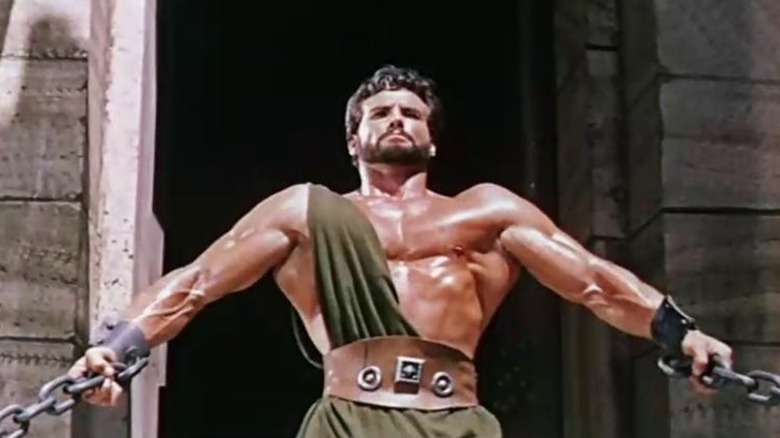
Pietro Francisci's 1958 Italian peplum flick "Hercules" is corny as hell. "Hercules" stars American bodybuilder Steve Reeves as the titular Greek hero, and the movie's plot wanders all over the place, involving a murdered king, a prophecy, and the hunt for the Golden Fleece (Fabrizio Mioni plays Jason). Hercules encounters Amazon warriors, and Jason fights a dragon. The film ends with Hercules being imprisoned, escaping, and throttling hundreds of guards with the chains around his wrists.
"Hercules" was featured on "Mystery Science Theater 3000," but know that the original movie ran for 107 minutes, while "MST3K" always had to edit their movies for time, making Francisci's movie seem disjointed and nonsensical. The complete movie is far more cogent, and actually features some decent, bright cinematography (provided by Mario Bava). It's based on the actual poem about the Argonauts authored sometime in the third century. It's hardly authentic, however. Indeed, it's still plenty silly.
Peplum films like "Hercules," as many film historians will tell you, are often seen as cornerstones of queer cinema. The movies, in depicting muscular heroes like Hercules and Maciste, would necessarily have to fixate on muscular male physiques, often only clad in loincloths or short tunics, and always coated in oil. There was a male eroticism in peplum movies that was lacking in mainstream cinema. There's a reason why Dr. Frank-N-Furter sang about watching old Steve Reeves movies in "The Rocky Horror Picture Show." For a long time, this was the best way for queer audiences to openly ogle hot, half-naked men.
In tone, though, Italian peplum films are cartoony and fun. They may have been occasionally cheap, but they were also earnest. And they employed fun special effects where they could. "Hercules" is a great Saturday matinee.
The Man Who Would Be King (1975)
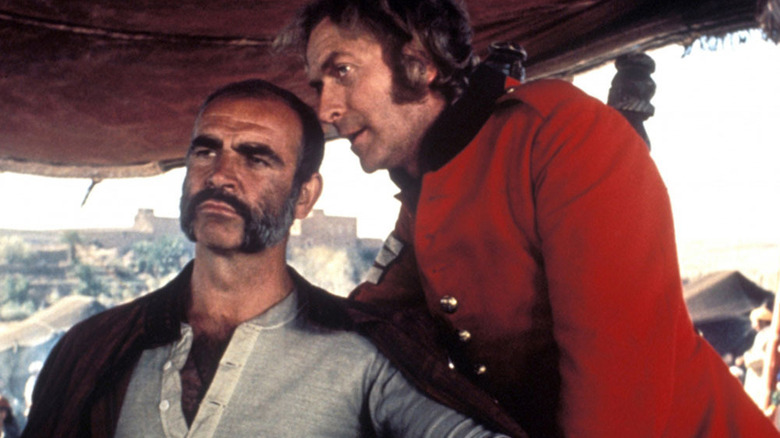
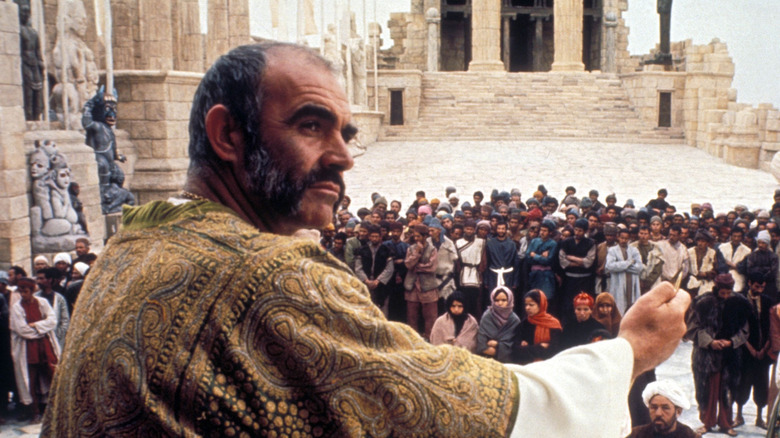
Based on the 1888 novel by Rudyard Kipling, John Huston's 1975 adventure "The Man Who Would Be King" begins with a fun meta-narrative moment about Kipling writing his own book. Kipling (Christopher Plummer) is called to the tableside of an unrecognizable Peachy Carnehan (Michael Caine), who wants to tell Kipling a story of what happened to him and to his compatriot, one Daniel Dravot (Sean Connery in one of his best movies). Carnehan and Kipling had previously tangled over a complex plot to blackmail a local raja, which Kipling had foiled. Carnehan is a conman, as was Dravot. As it so happens, they once tried to pull a very elaborate con.
The film flashes back a few years, and follows Carnehan and Dravot on a trek to Afghanistan, where they planned to find and help a wealthy ruler with local brigands, only to loot their treasure stores. These are not good guys. To keep them on task, they foreswear women, which results in many comedically horny moments. The pair of travelers find a remote village and get involved in local tussles. When Dravot is shot by an arrow and lives (no one knows that it was blocked by his bandolier), the locals declare that Dravot is a god. Dravot suggests that he stay there and, well, live like a god. Yeah, that plan doesn't go very well.
"The Man Who Would Be King" is both an outsize adventure and a cheeky comedy about nihilistic, money-hungry British colonialists. It doesn't vaunt colonialism, but sees the British efforts to occupy the world as little more than an extensive looting campaign, based on the lies of class and station. Also, it stars Connery and Caine, enjoying some excellent chemistry together.
The Pirates! In an Adventure with Scientists! (2012)
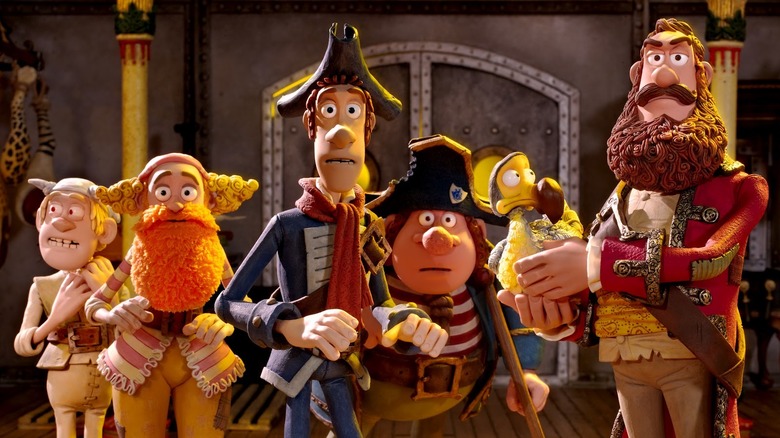
It's 1837, and the Golden Age of Piracy is well underway. Indeed, there are so many wealthy, charismatic pirates in the world, they regularly compete in the Pirate of the Year competition, awarded to whichever pirate can steal the most treasure. The well-named Pirate Captain (Hugh Grant) and his ragtag group of misfits have never won, but they may have an edge in the next competition. Pirate Captain has recently raided the Beagle and kidnapped Charles Darwin (David Tennant), who recognizes that Captain's parrot Polly is actually a very rare, still-living dodo bird.
Sadly, winning Pirate of the Year only grants the winner an audience with Queen Victoria (Imelda Staunton) who hates, hates, hates pirates. The story gets kookier from there. The film's climax features Queen Victoria unsheathing a sword and fighting with our stalwart hero
"The Pirates! In an Adventure with Scientists!," called "The Pirates! Band of Misfits" in the United States, was an unjustly ignored effort from Aardman Animation, the studio behind "Wallace & Gromit" and "Chicken Run." It's just as charming as any of Aardman's efforts, though, and the characters are dazzling and well-animated. And their use of historical figures like Darwin and Victoria is clever and requires at least an elementary school working knowledge of history. The best part of "The Pirates!," though, is that the band of misfits are all pretty upstanding, gentle fellows, and they all kind of like each other. Pirate Captain is a jolly, kind fellow whose ambitions for piracy seem out of character for him. They would love to be hailed as bloodthirsty brigands, but none of them are properly bloodthirsty. There's a fun Monty Python quality to "The Pirates!" that everyone should see as soon as possible.