

Supergirl Doubles Down On The Most Controversial Choice From Superman

Warning: This article contains spoilers for Supergirl.
You didn't expect James Gunn's DC Universe to start backtracking on itself only two movies in, did you? One year after the director/DC Studios co-head debuted his rebooted "Superman" to the world, "Supergirl" seeks to fly even higher and expand this franchise even further. That means broadening the scope of what's already been established, with Milly Alcock's new superhero traveling to much more alien worlds and coming across new characters (*cough* Jason Momoa's Lobo *cough*) that may or may factor into the larger-term plans of this series. But, most importantly, that approach also requires standing by certain creative choices made the first time around — even if they may have proven somewhat divisive.
Fans expecting "Supergirl" to address some of the aftereffects of "Superman" will be pleased to know that it does, though only by channeling its own rebellious title character and doubling down on its most controversial addition involving the parents of Kal-El (David Corenswet): that they were actually disturbing, war-mongering figures who sent their son to Earth in order to subjugate and conquer its people. Given that "Supergirl" was always going to take the flashback route of depicting the destruction of Krypton and the plight of the Kryptonians caught amid the cataclysm, this was the perfect opportunity to dive into the complexities of this super-family and contrast the upbringings of both Kal-El and Kara Zor-El.
Does it work as intended? Reactions will likely end up split, but "Supergirl" does make a strong argument as to why this alteration to the Superman mythos pays off. Rather than retconning things to sand off the rough edges of "Superman," this latest DC movie uses that messiness to its heroine's advantage.
Supergirl's Krypton flashbacks directly compare Kal-El's parents to Kara Zor-El's -- and it works perfectly
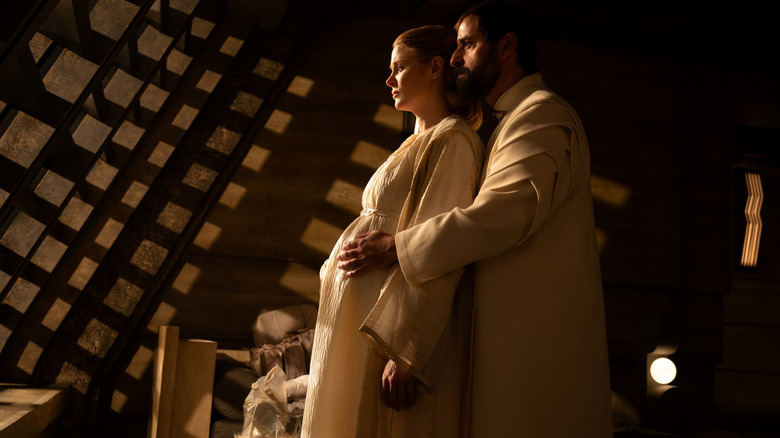
If "Superman" was about how sometimes we need to chart our own paths and find new families to call our own, then "Supergirl" proves the importance of being blessed with parents who instill in us the desire and discipline to "be good." Those dying words by Alura Zor-El (Emily Beecham) provide the emotional backbone for Kara as a young woman, grounding her in a mindset that couldn't possibly be more different from that of her famous relative, the total square and nerd known as Kal-El. Between her mother's earnest pleas and her father Zor-El's (David Krumholtz) willingness to go above and beyond to protect her, Kara's backstory gives her a crucial foundation that Superman never had.
It's a fascinating character choice that helps make sense of one of the more curious choices in "Superman." The early portions of "Supergirl" establish how different Kara is from her goody two-shoes cousin, opting for a galaxy-spanning birthday rager to mask the pain and grief and rage she never learned to control. Much of that stems from her firsthand experience with the dying remnants of Krypton — or, more accurately, the floating refugee city in space known as Argo City. Where Kal-El was rocketed away from the dying planet as a baby and grew up in peace among the Kents on Earth, Kara had no such escape from a relentlessly bleak childhood.
Where she comes out ahead, however, is in her parents. Where Clark experiences a crisis when his biological parents' nefarious intentions come to light, Kara is under no such conflict. Thanks to a loving mother and father, she's given the tools to achieve self-actualization when she needs it most.
Supergirl's most emotional sequence wrestles with Superman's weirdo side of the family
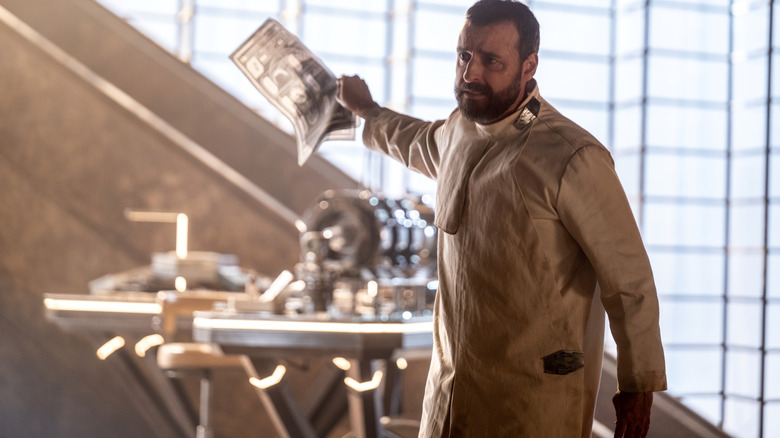
You know, it's somewhat comforting to know that even super-advanced Kryptonians must suffer through awkward family reunions like the rest of us mere mortals. While the relatively brisk runtime of "Supergirl" requires that its Krypton flashbacks are fairly straightforward and to the point, this middle act sequence gives us the House of El family-tree exploration that we never knew we needed. And, as it stands, there's certainly some uncomfortable dynamics between Kara's father Zor-El and her unseen uncle Jor-El (played by Bradley Cooper in "Superman").
Throughout this part of the movie, Zor-El and his wife Alura reference the moral split in their family on Krypton. Years after the destruction of their home world, a very pregnant Alura alludes to Jor-El's more bloodthirsty ambitions for his son and how they simply can't choose a similar path for the unborn Kara. Here, her birth in such a dark place in the universe actually lives up to all the potential for hope and optimism that Kal-El ends up representing on Earth. The only difference is that the worsening kryptonite poisoning forces Kara to flee and make her own way without her role models, while Clark benefits from the continued love and support of his adopted family.
It's no wonder Kara grows up to be such a mess, but "Supergirl" goes a step further and explores how her moral center came to be — in spite of this upbringing. As much as she protests otherwise, she's inherently a hero to her young companion Ruthye (Eve Ridley) and comes to embrace her purpose in life. Two movies into this franchise, fans from all kinds of backgrounds are being well represented.
"Supergirl" is now playing in theaters.