

5 Fantasy Books Every George R. R. Martin Fan Should Read At Least Once
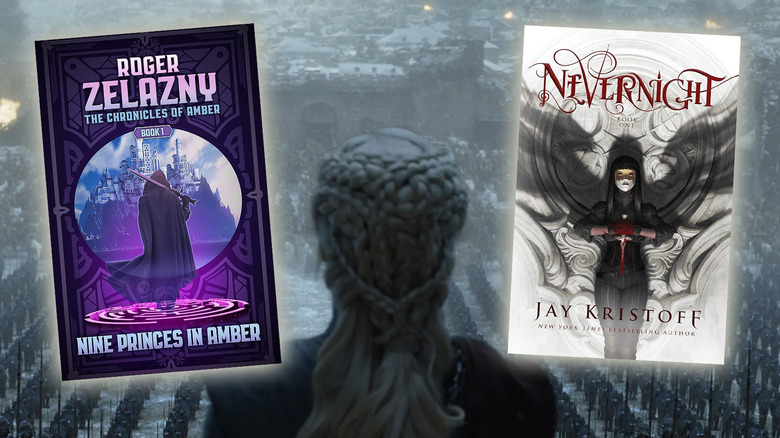
It's no understatement to say that George R. R. Martin is the most influential fantasy author alive. Martin is not only a fantasy author, granted — most of his novels and short stories are science fiction, and his second novel, "Fevre Dream," is historical fiction about vampires in the Antebellum South. But even though his work spans genres, Westeros will go down as his most remembered literary creation.
Time Magazine called Martin "The American Tolkien" in 2005, and this was before HBO made "Game of Thrones" into an international phenomenon that upended non-nerds' expectations of what epic fantasy can be. Pick up any dark fantasy book written after 2011, and you'll doubtlessly find at least a few notes from Martin's "A Song of Ice and Fire."
The elephant in the room that will compromise Martin's legacy, of course, is that the song still remains unfinished. Only five books of the planned seven have been published, and with each passing year, it looks less and less likely Martin will complete his saga. The best solace readers can take is not to wait, but to instead find a new book to fall in love with. Think of Martin's own words: "A reader lives a thousand lives before he dies."
But where to start? Here are five books (many of which begin the series themselves) that offer the same blend of witty, sexy, political, and bloody dark fantasy that Martin writes.
The Blade Itself by Joe Abercrombie
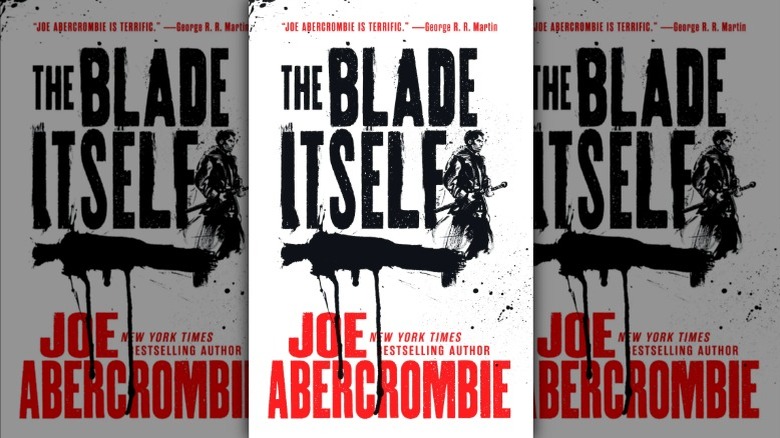
Any list of book recommendations for George R.R. Martin fans would be incomplete without Joe Abercrombie, perhaps the most common name to come up whenever someone, anywhere, asks a group of fantasy fans what to read after they've caught up with "A Song of Ice and Fire." And the best place to start would be the introduction to the English author's sprawling fictional world: "The Blade Itself."
The initial book in the "First Law" trilogy, "The Blade Itself" is often grim enough to make Martin look like Brandon Sanderson. But like Martin's work, it features a sprawling cast of characters in a fantasy world on the verge of total war, relentless schemers climbing the ladders of power, and brutal warriors getting their hands dirty when words fail. And like "A Game of Thrones" and its sequels, Abercrombie is extremely effective at grounding high fantasy elements in mud, muck, blood, and flawed, often reprehensible characters. There is more overt magic and sorcery here than in Westeros, but it feels practical and nasty. It's a really good bad time of a novel.
Being the first chapter in a series, "The Blade Itself" doesn't tell a complete story, so any new reader would be on the hook for the sequels, "Before They Are Hanged" and "Last Argument of Kings." But that's a good problem to have. If that's not enough, there's an entire separate trilogy set in the same world and several standalone novels. Unlike "A Song of Ice and Fire," Abercrombie's tale feels complete. (Jacob Hall)
Daughter of the Empire by Raymond E. Feist and Janny Wurts
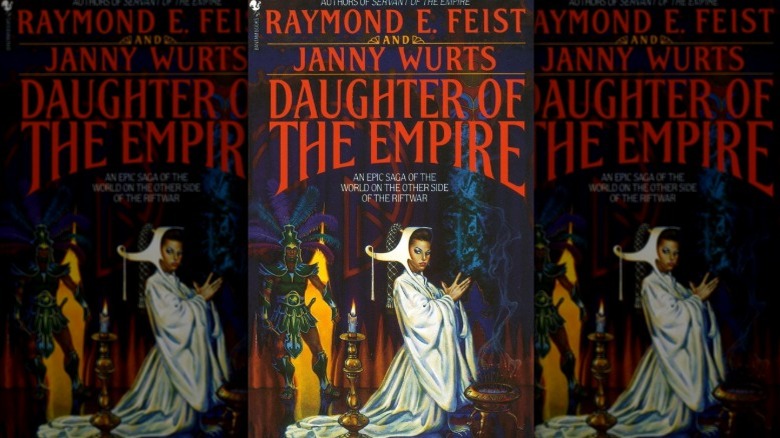
Reading Raymond E. Feist's entire "Riftwar Saga" is a mammoth task, but the "Empire Trilogy" is a great place to start. The first book, "Daughter of the Empire," which Feist co-wrote with Janny Wurtz, is also perfect for fans of great fantasy books reminiscent of George R.R. Martin's tales of merciless political intrigue.
"Daughter of the Empire" follows Mara, a 17-year-old girl who becomes the ruling lady of her royal house after her brother and father get killed in battle. Thus begins a struggle for power, as Mara must compete in the Game of Council, a ruthless political contest where everyone is out for her head. Having no experience in the dirty world of politics, Mara has to quickly adapt to survive the schemers and plotters that want her out of the equation.
"Daughter of the Empire" is a fantasy novel, make no mistake about it. However, it largely forgoes magical elements in favor of a story about noble houses feuding with each other. If you enjoy Martin's "A Song of Ice and Fire" novels, which inspired the "Game of Thrones" franchise, then look no further.
Readers should also check out Feist's "Magician Trilogy." This is more of a Tolkien-esque adventure series, but it's heavily tied to the events of "Daughter of the Empire" and its sequels. Both sagas work as standalone entities, but your experience will be enriched if you consume the lot. (Kieran Fisher)
The Lies of Locke Lamora by Scott Lynch
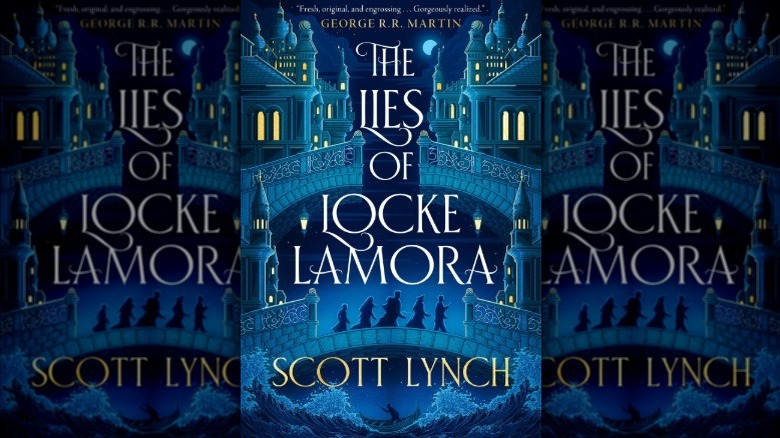
"The Lies of Locke Lamora" has one of the most indelible elevator pitches in all of modern genre literature: What if "Ocean's 11" took place in a fantasy city inspired by Venice? Scott Lynch's novel, the first in his "Gentleman Bastards" series, lives up to that premise with its swashbuckling adventure, first-rate criminal scheming, and, most importantly, ensemble of anti-heroes who make sense as a crew and each bring a unique set of skills to the action. Sometimes, you just want to read about a bunch of cool crooks pulling off a heist and getting revenge against the bad guy in a richly detailed fantasy setting. Simple pleasures.
Lynch has a very different style than Martin. He doesn't revel in misery to nearly the same extent, and "The Lies of Locke Lamora" is a more traditional "fun" book. You read it propelled by sheer excitement rather than a sense of dread. But like "A Song of Ice and Fire," the world Lynch builds throughout the novel is so rich and detailed that you can imagine an HBO adaptation come to life in your head. Few fantasy novels are this inherently cinematic.
And just like Martin's magnum opus, "Gentleman Bastards" remains, as of 2026, very much unfinished, with over a decade having passed since the publication of the third book (with seven planned). That said, the first book functions perfectly well as a standalone adventure and can be enjoyed by itself. Any additional investment in this unfinished world is up to you. (Jacob Hall)
Nevernight by Jay Kristoff
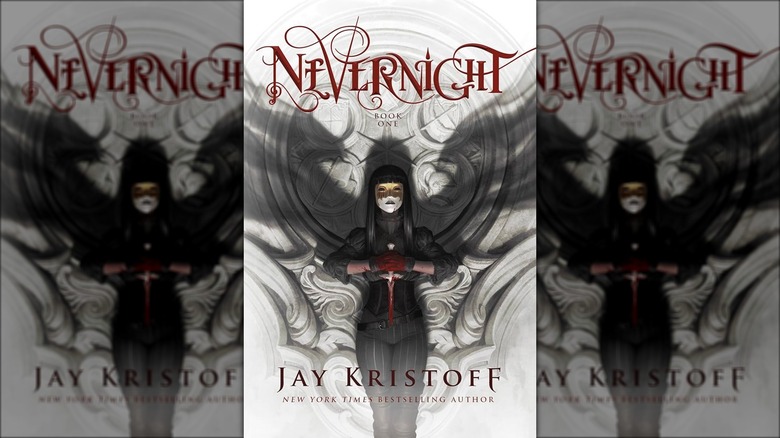
"A Dance with Dragons" leaves off Arya Stark's story in the middle of her training with the Faceless Men. With "The Winds of Winter" still not here, we might never get to read about Arya crossing more names off her vengeance list. But if Arya is one of your favorites in "A Song of Ice and Fire," give Jay Kristoff's "Nevernight Chronicle" a read. Its protagonist, Mia Corvere, is a raven-haired assassin girl in the same vein as Arya. Rather than a dire wolf, Mia's beastly companion is "Mister Kindly," a shadow being who takes the shape of a cat.
The trilogy is set in the Roman Empire-inspired nation Itreya, where the sun literally never sets. The eponymous opening book "Nevernight" sees Mia join the Red Church, an assassins guild that ritualistically reveres death. Mia's reasons are simple: she wants the head of Julius Scaeva, the Itreyan consul who murdered her family and left the Corvere name worth less than mud.
Though Mia is a teenager, "Nevernight" is not YA fiction. It's as gory as Kristoff's later "Empire of the Vampire" books and explicitly links its sex and violence. The opening of the book follows two story strands in parallel: Mia performing an assassination in one and losing her virginity in the other.
Written in witty second person as an in-universe recounting of Mia's story, "Nevernight" includes footnotes fleshing out the setting. This allows for worldbuilding to rival Martin's without the detours or narrative dead ends that've entangled "A Song of Ice and Fire." This chronicle is willing to make some sharp turns, though. The sequel, "Godsgrave," takes Mia out of the Red Church's walls as she poses as a gladiator. The finale, "Darkdawn," grows stranger and more epic still — without ever losing your interest. (Devin Meenan)
Nine Princes in Amber by Roger Zelazny
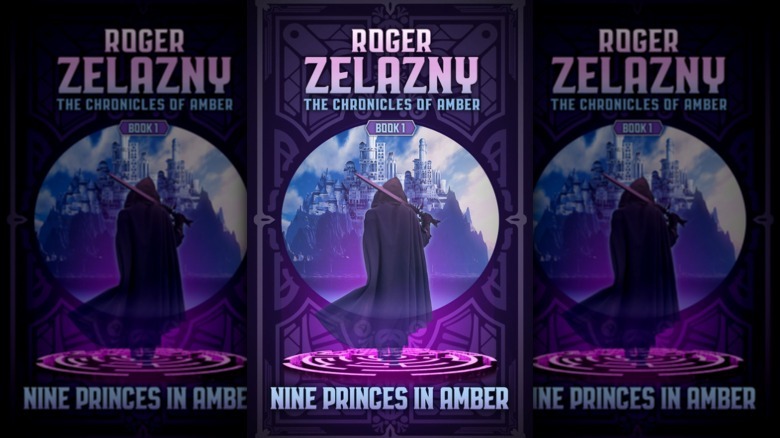
George R.R. Martin might not be the writer he is today if it hadn't been for Roger Zelazny's "Chronicles of Amber" saga lighting up his imagination. The first novel in the series, "Nine Princes in Amber," is one of his favorite books — and it's an obvious influence on "A Song of Ice and Fire."
"Nine Princes in Amber" follows Corwin, a prince born from an otherworldly family who wakes up from a coma in New York City. After learning about his true heritage, he embarks on a quest to claim the throne after his father disappears. However, Corwin's eight brothers also want the power for themselves, forcing our hero to overcome assassins and the cutthroat scheming of his own blood.
Zelazny's novel starts off as a gritty mystery about a man recovering his own memory before segueing into a full-on fantasy yarn with magic, multiverses, and all of that good stuff. However, Martin fans will be drawn to the Machiavellian family drama and games of one-upmanship as the siblings vie for power.
Stephen Colbert and Robert Kirkman began working on an adaptation of Zelazny's "Chronicles of Amber" novels in 2023, with Martin serving as an unofficial consultant. No doubt, the adaptation was informed by the success of "Game of Thrones" and other great fantasy TV series, but it's long overdue. Westeros fans will certainly be drawn toward a show of this ilk, but why not start with the books in the meantime? (Kieran Fisher)