

Clint Eastwood Wishes He Could Have Made Movies With These 3 Legendary Directors
We may receive a commission on purchases made from links.
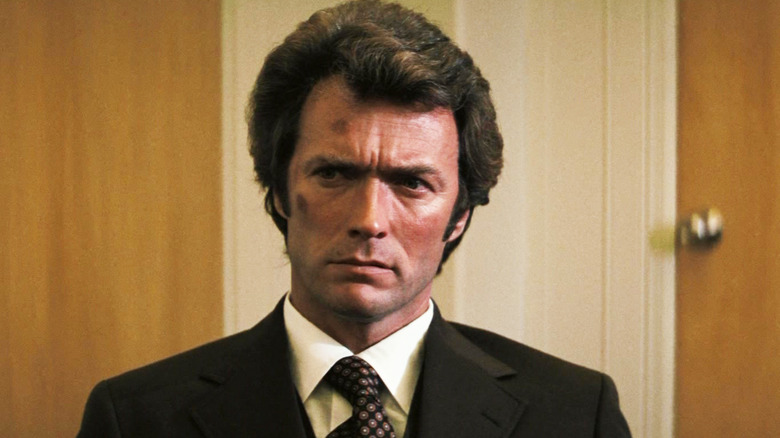
Clint Eastwood's career spans more than 70 years at this point. In that time the man has seemingly done it all, fronting massive blockbuster hits, directing thoughtful dramas, working with influential filmmakers like Sergio Leone and Don Siegel, and winning four Oscars along the way. But even a screen legend like Eastwood has things he wishes he'd done, like, say, working with directors Billy Wilder, Howard Hawks, and Raoul Walsh.
When Clint Eastwood was taking acting classes as part of the Universal talent program in the mid-1950s, Hollywood's golden age was coming to an end. In 1948 Paramount lost a Supreme Court showdown that changed the movie industry forever by forcing studios to sell off their theaters. TV was exploding in popularity, and the days when studios would restrict their performers via rigid contracts were beginning to wane. Amid this shifting cultural landscape, Eastwood started his career by causing director Jack Arnold to have a breakdown on the set of 1955's "Revenge of the Creature."
In many ways, Eastwood himself was somewhat of an avatar for the transformation of the entertainment industry in the mid-20th Century. The same year he sent Arnold into a rage he was let go from his contract at Universal. Four years later he embraced the rising popularity of TV when he was cast as Rowdy Yates on "Rawhide." By 1964, he was fronting the kind of revisionist Westerns that would ultimately bring about the end of the genre altogether. In that way, Eastwood encapsulated the evolution of Hollywood in a single individual. Unfortunately for him, that also meant he arrived too late to work with some of his favorite filmmakers.
Clint Eastwood missed out on working with the director of his favorite movie
In a 2007 interview, The Observer's Philip French asked Clint Eastwood which Golden Age directors he wished he could have worked with. "When I came into the business in the '50s, a lot of those people were starting to retire," he replied. "I knew Billy Wilder socially and would have loved to work with him. I did work with Bill Wellman on the Second World War film Lafayette Escadrille. I would have liked to work with Mr. [Howard] Hawks and Mr. [Raoul] Walsh."
Samuel "Billy" Wilder, Academy Award-winning director of such classics as "Double Indemnity," was also responsible for "Sunset Boulevard," the 1950 classic that also happens to be Eastwood's favorite movie of all time. Evidently it was the melding of "two different styles" that impressed Eastwood (per Esquire): "the style of the silent-movie actress, and then with William Holden's character, someone more contemporary."
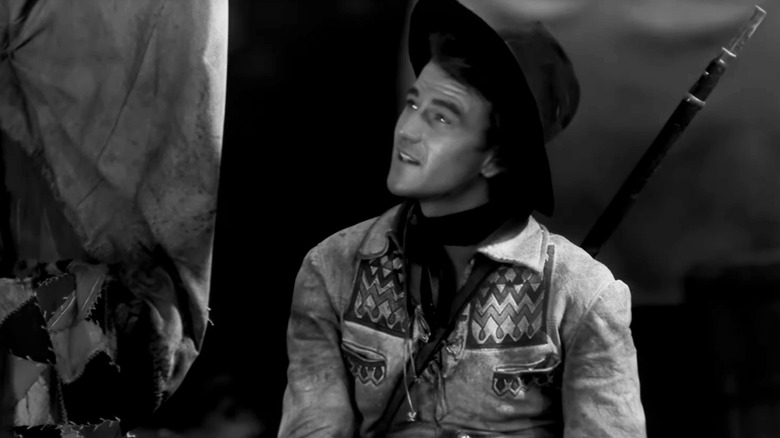
Raoul Walsh, meanwhile, was one of John Wayne's most important collaborators, and is sometimes credited as having given the Duke (real name Marion Michael Morrison) his screen name after reading about American revolutionary general "Mad" Anthony Wayne. Walsh also directed Wayne in his biggest pre-"Stagecoach" role: that of Breck Coleman in 1930's "The Big Trail." That's significant insofar as Eastwood represented the John Wayne of his era: a totemic figure of the Western who also embodied wider cultural attitudes. His appreciation for Walsh represents a heartening link between not only classic Hollywood and Eastwood's era, but between the Duke and his spiritual successor.
Clint Eastwood had an early run-in with Howard Hawks
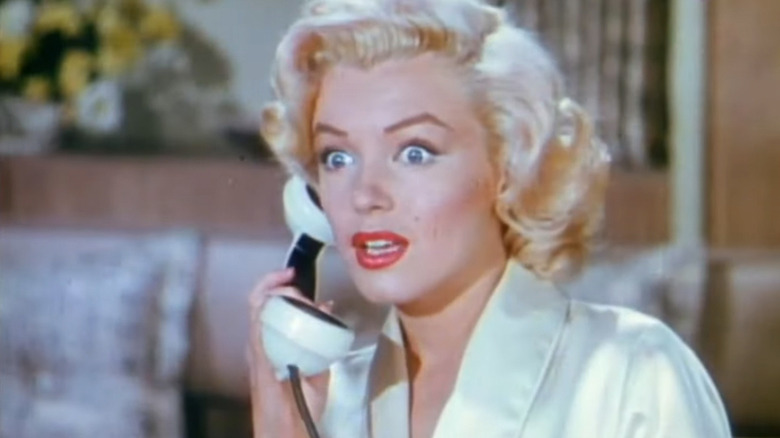
When he wasn't directing John Wayne in 1948's "Red River" or winning Academy Awards for 1941's "Sergeant York," Howard Hawks was cracking the code on making Marylin Monroe a star. The legendary filmmaker's influence can also be seen today in the work of such modern-day greats as Martin Scorsese and Quentin Tarantino. Alas, Clint Eastwood never had the opportunity to work with him. Interestingly enough, however, he did have a brief run-in with the director long before he even considered an acting career.
In "Conversations with Clint: Paul Nelson's Lost Interviews with Clint Eastwood, 1979-1983" Eastwood recounts a time when he was 17 years old and traveled from Oakland to San Luis Obispo with friends. After being invited to a party in Westwood, Eastwood and his pals saw some horses running down the street. "We said, 'God, we've got to catch these horses,'" recalled the actor. "They're just running down the boulevard — Sepulveda." After stopping the escaped steeds and herding them back up the street, Eastwood and his friends saw a man running towards them. "He said, 'Oh God, you got the horses. Thanks, you guys,'" he continued. "The guy who lived down there said, 'That's Howard Hawks, that guy we were just talking to. A big movie guy.' I was really impressed."
Eastwood remembered running into Hawks at a party much later, but he'd long since forgotten the event. That was as close a collaboration as the two ever had. Otherwise, Eastwood told Philip French that he'd come close to working with Alfred Hitchcock but that the British filmmaker was "not physically up to it" at the time — yet another reminder of the massive film industry upheaval amid which Eastwood emerged.