

5 Forgotten '90s Sitcoms That Still Hold Up Today
The 1990s were an interesting epoch for the American sitcom. In the late 1980s, three popular sitcoms charged into the pop consciousness and actively began dismantling all of the decades-old tropes that the genre operated on. There was Fox's "Married... with Children" in 1987, a series that depicted a dark mirror version of the happy sitcom family, showing them as unhappy and hateful. There was "Seinfeld" in 1989, which mandated that the characters never hug or learn lessons and remain selfish and petty. And there was "The Simpsons" later that year, which animated the sitcom and turned traditional characters into unseemly buffoons and underachievers. All three shows, taken together, can be seen as a wholesale deconstruction of TV comedy.
The 1990s, then, tried to grow in two directions at once. Many sitcoms clung to old-world ideas and stuck with the well-worn "happy family" or "single person in the big city" tropes that we had known for ages. Others tried to be slightly more arch and surreal, pointing out the uselessness of sitcoms while living inside of them. In the former category, we had shows like "Friends," which was little more than a relationship-focused, slightly more raucous version of a more traditional sitcom. In the latter we had ... Well, refer to the list below.
Several of them are most assuredly cynical deconstructive shows that might not even look like sitcoms. Most will be wholly obscure to younger audiences. Some may be considered cult favorites, but they're not so popular that they will ever warrant reboots, follow-ups, or late-stage additional seasons. They are, however, still damn funny and worth seeking out. Well, if they can be found. There's one sitcom from the UPN on this list and ... well, do you even remember the UPN?
Get a Life (1990)
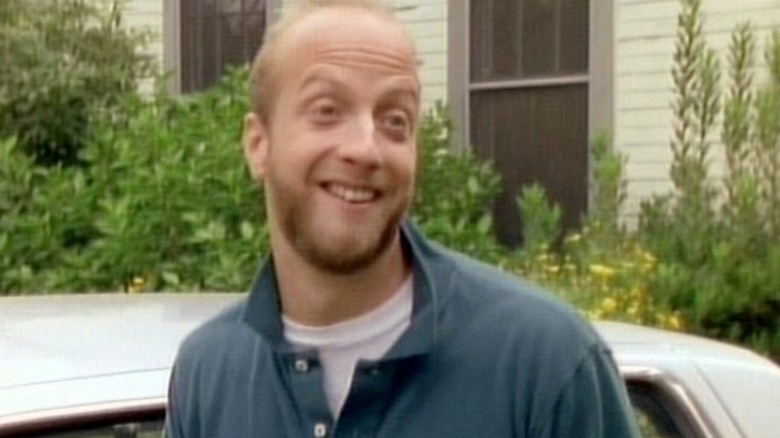
Star Chris Elliott co-created "Get a Life" with Adam Resnick and David Mirkin, and it is most assuredly one of the stranger sitcoms you'll ever see. In its construction, "Get a Life" is a traditional series, following a character named Chris (Elliott) who still lives at home with his parents in the Minnesota suburbs, and who makes money with a paper route. Wholesome enough, until you realize that Chris is a 30-year-old man-child with a serious case of arrested development. He still behaves like a child, doesn't have a driver's license, and may be clinically insane. There are hints that he might have been abused by his parents, such as when his father (Bob Elliott) used to threaten Chris by putting a shotgun in his mouth.
The overall tone of "Get a Life" is one of aggression paired with whimsy. Chris is dumb and reckless and selfish and horrible, but he's always good-natured about it. He sneaks into his friend's house on the regular, as if they were both still 10. The friend is grown and married now, though, so it's not so charming. There is a seething sense of hate underneath everything in "Get a Life."
The series also seems to take place in a surreal fantasy world besides. In the second episode, Chris encounters the Handsome Boy School of Modeling, and it appears to be a fully functioning cult with some very weird beauty standards. "Get a Life" might also be known for its use of R.E.M.'s "Stand," which was only a year old at the time, as its theme song. That's a good sign that the show was also quite hip. It only ran for two seasons in 1990 and 1991, however, so it became a relic quickly. Cultists still love it.
Roc (1991)
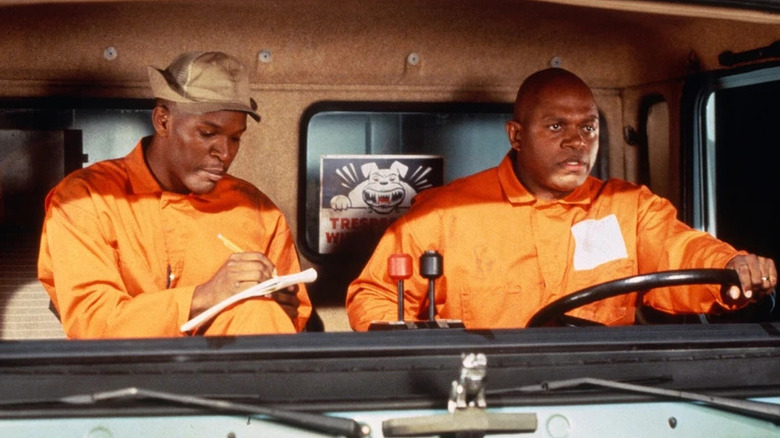
It's a little astonishing how infrequently "Roc" comes up in conversation. The series starred the incomparable Charles S. Dutton as the title character, a garbageman from Baltimore. Ella Joyce played his wife, and the series also starred Rocky Carroll as Roc's brother and Carl Gordon as his father. Garrett Morris, Tone Lōc, Heavy D, and Jamie Foxx also had notable roles on the series.
In its concept, "Roc" wasn't anything special; it told typical sitcom stories. In its execution, though, "Roc" was sharp and witty and a league ahead of its peers. The lead actors were always on their game, and played their parts with more emotional honesty than one is used to seeing on sitcoms. It was still a silly show, but it was simply better than the others.
In 1992, the makers of "Roc" wanted to test the cast, and decided to broadcast one of its episodes live. If any of the cast messed up, that would be what the TV audiences saw. The stunt was so successful that Fox decided to turn "Roc" into a 100% live series. Dutton and all the rest were such skilled actors that there were no notable screw-ups on camera. If you tuned into "Roc" hoping to see people trip or flub their lines or forget their cues, I'm sorry to say that the performances were always impeccable. Dutton, who spent some time in prison, is one of the most dedicated and talented actors you'll find anywhere.
Despite a great cast and a great gimmick, "Roc" seems to have slipped into obscurity. It's time it was rediscovered. It ran for three seasons and 72 episodes from 1991 to 1993. That's a nice, respectable run.
Family Dog (1993)
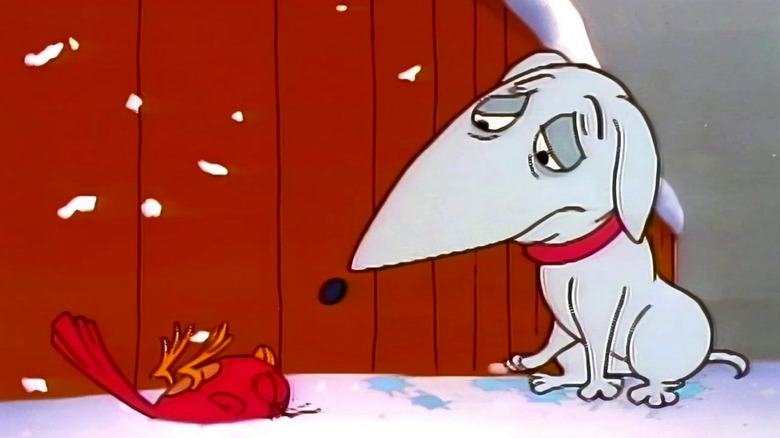
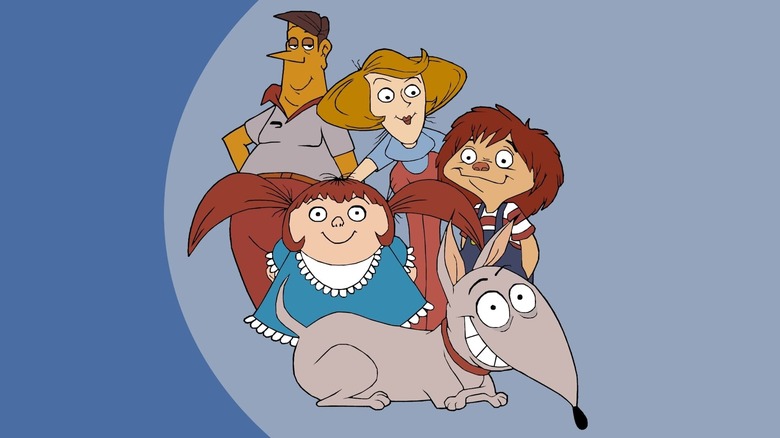
"Family Dog," created by Brad Bird, began its life in 1987 as a one-off episode on the Steven Spielberg-produced anthology series "Amazing Stories." That episode was eventually expanded into a one-season wonder in 1993, produced by Spielberg and Tim Burton, who also worked on some of the show's designs. The show was worked on by animation luminaries like Paul Dini and Sherri Stoner, both known for their work on "Animaniacs" and dozens of others. "Family Dog" was a traditional family sitcom, but its animated medium invited a certain degree of "Simpsons"-like cynicism; the characters were ill-behaved and kind of mean.
The twist was that the entire show was told from the perspective of the family dog, a little white terrier that is never referred to by any name. The family only ever called him "the dog." The series was cute and clever, and its cynicism took it a long way. The dog was, well, just a dog. It didn't narrate. It didn't have human intelligence. It just did doggy things, and caused chaos the way a doggy might.
Sadly, "Family Dog" was canceled before it even started. /Film has written about "Family Dog" in the past, and the series was picked up for series and then canceled before the first episode aired. It became associated with two other animated-animal shows that also bombed around the same time, "Capital Critters" and "Fish Police." 10 of its 13 episodes aired in 1993. Critics didn't like it at the time, but fans of animation, and especially fans of shows like "Animaniacs" and "The Simpsons" dug it. It can be found online, if you're resourceful enough, and it's definitely worth your time.
Platypus Man (1995)
When Paramount finally UPN launched in January of 1995 (after a stalled attempt at a Paramount network in the past) it came with a few new shows that the network hoped would define its tone and carry it to success. Its flagship show, "Star Trek: Voyager," would definitely help the network along in that regard.
Sadly, it also debuted a few sitcoms that failed almost immediately, and that would vanish into obscurity after that. One of the sitcoms was "Pig Sty" (who cares?), but the other was the Richard Jeni vehicle "Platypus Man," a classy, wry sitcom that no one remembers. Jeni played a version of himself who had a job as a TV chef. The title may sound odd, but it was based on one of Jeni's standup routines. He defined a "platypus man," in the show's opening, as an adult male human who attempts to mate frequently, but who spends most of his time alone. Indeed, a lot of Jeni's standup routines made their way into the series, including his hilarious "Bill the Belching Gourmet" bit.
Most of the stories in "Platypus Man" were standard sitcom fare about a single guy in the big city trying desperately to get laid. In one episode, he got locked out of his date's high-rise apartment, leading him to scream her name, "Stella," from the street below in an imitation of "A Streetcar Named Desire." In another, his best friend enlisted him to impregnate her, as she wanted a child but didn't want a husband or boyfriend. That led to a frank bedtime conversation about the nature of their friendship.
"Platypus Man" was canceled after only 13 episodes, and it wasn't widely seen by anyone. These days, resourceful internet hunters can find it. It's pretty dang funny.
Unhappily Ever After (1995)

By the mid-1990s, the aforementioned "Married... with Children" wasn't just cynical. It was caustic. It had leaned further and further into shock humor, and had taken on a misogynistic streak. Al Bundy, played by Ed O'Neill, was cheered when he said something hateful. It was getting dark.
The 1995 sitcom "Unhappily Ever After," which aired on the WB, seemed to pick up that darkness and run with it. The main characters on "Unhappily Ever After" were even more terrible and narcissistic than the "Married" characters, and at least one of them was diagnosably mentally ill. It was a family comedy that starred Geoff Pierson as the horrible alcoholic father, Stephanie Hodge as the selfish mother, Kevin Connolly as the idiot son, and Nikki Cox as the intelligent daughter. Cox, however, looked like a magazine model, so no one took her seriously as a brain.
In a fun character twist, Jack was eventually revealed to be suffering from schizophrenia, and he regularly had hallucinatory conversations with the family's stuffed rabbit, Mr. Floppy. Mr. Floppy was voiced by "Misfits & Monsters" star Bobcat Goldthwait, and he got the lion's share of the show's filthier jokes. "Unhappily Ever After" didn't really have a fourth wall, and the characters regularly seem to realize they were on a show; Cox's character could hear and respond to the audience's sexist hooting. Partway through the series, the Hodge character died, but remained on the cast as a ghost. Later still, a WB exec appeared on the show to explain that mom is no longer dead and things can get back to normal.
It was a bitter, bitter show. Perhaps too bitter for many. But it was successful enough to hang around for five seasons and 100 episodes. Why doesn't anyone refer to "Unhappily Ever After" any more? Who can say?