

Why Is No One Talking About The Best New TV Show Of 2026?
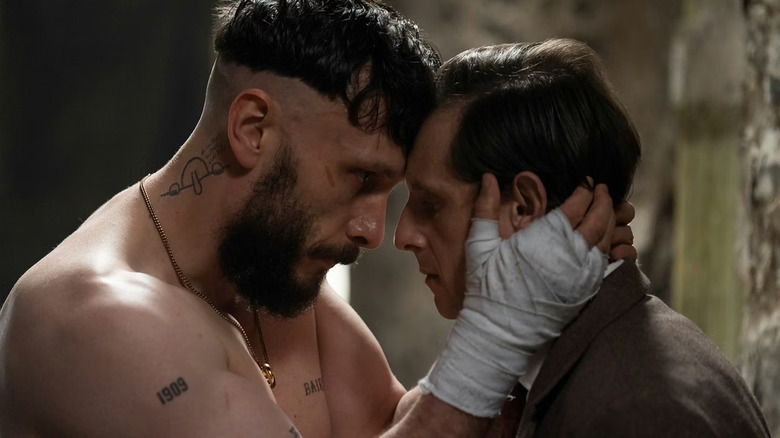
Richard Gadd's "Half Man" is a panic attack disguised as prestige television, so it's no wonder the show has proven to be too intense for the casual viewer. Gadd's insistence on crafting stories that reject clear-cut ethics and force the audience to navigate a moral minefield is precisely why I'm so drawn to his work, and what made "Baby Reindeer," his breakout Netflix series based on his real life, one of the most acclaimed limited series of all time. What's triggering for some is therapeutic for others, and Gadd indisputably writes for the latter. "Half Man" offers six hours of emotional blunt-force trauma: a brutal examination of toxic masculinity, inherited violence, homophobia, and the alarming ways abuse reshapes identity. It also makes for the best new show of 2026 so far.
Created and written entirely by Gadd, the series follows "brothers from another lover" across decades of co-dependency, cruelty, and warped devotion. Niall (Mitchell Robertson as a teen, Jamie Bell as an adult) is a shy outcast raised in a home defined by neglect and humiliation. Ruben (Stuart Campbell in adolescence, Gadd as an adult) arrives fresh out of juvenile detention after mutilating another boy in a fight. Their mothers — who themselves share an undefined queer relationship — move the boys under one roof, and what begins as mutual protection against a vicious small-town culture mutates into a relationship built equally on desire, coercion, fear, and emotional captivity.
The show is compelling on its own, but it's also a vehicle for conversations regarding audience interaction. If "Baby Reindeer" taught us a hard lesson about Netflix's worst impulses, "Half Man" reminds audiences that just because a show features queer men, it doesn't mean it should be engaged with similarly to "Heartstopper" or "Heated Rivalry."
Half Man avoids 'perfect victim' and 'evil perpetrator' tropes
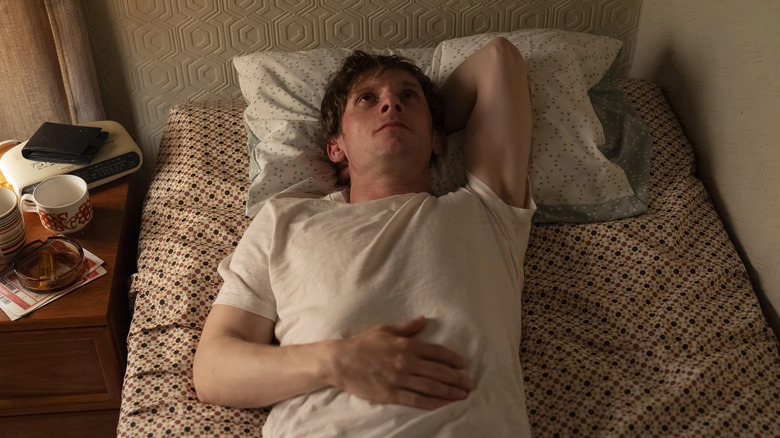
Richard Gadd clearly understands that trauma rarely anchors cleanly labeled. "Half Man" is obsessed with the ways victims become accomplices to their own destruction and how abused children normalize chaos throughout their lives, because at least chaos is familiar. The show's inciting sequence arrives early when Ruben interrupts a hookup with his girlfriend to draw Niall into his first sexual encounter, which permanently alters the balance between them. Gadd refuses easy categorization: the scene contains arousal, coercion, tenderness, humiliation, and terror all at once.
By morning, Niall's emotional fate is sealed. He will spend the rest of his life orbiting Ruben, sacrificing pieces of himself for scraps of approval from the only person who has ever made him feel wanted. And Ruben will never stop pursuing Niall, the one constant source of stability he's ever known. Few recent TV scenes have captured the confusion of trauma with this much precision. And what makes the series so unnerving is how little relief it offers. Gadd's script drags viewers through misogyny, homophobia, addiction, assault, untreated mental illness, and generational cruelty with sadistic thoroughness. At times, the density of suffering becomes overwhelming, but even when the pacing sags or the monologues drift into theatrical excess, the show remains hypnotic because Gadd never loses sight of the emotional logic underneath the misery.
The show demands that the audience sit with discomfort and empathize with characters who commit or permit atrocities, as well as recognize why a seemingly well-adjusted person would continue to run headfirst into their own destruction. Most television asks viewers to understand its characters, but "Half Man" asks whether understanding someone excuses anything at all. It's a miserable, fascinating, and deeply upsetting achievement.
Half Man boasts some of the best performances of the year
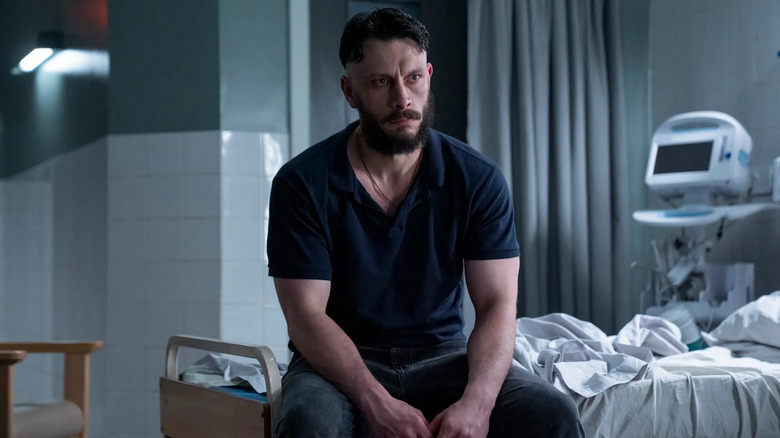
Jamie Bell gives career-best work as the adult Niall, portraying him as a man hollowed out by internalized homophobia and emotional dependence. Bell's exhausted eyes communicate decades of self-loathing before he ever speaks a word. Richard Gadd, meanwhile, is terrifying as adult Ruben, lowering his voice into something animalistic and moving with the heavy menace of a man perpetually seconds away from violence. And yet there's clear agony written all over his face, and an innate softness in his eyes that feels antithetical to Ruben's actions.
Mitchell Robertson and Stuart Campbell bring genuine warmth to the teenage version of the relationship and their chemistry suggests an alternate reality where these boys might have saved each other. Then there's Neve McIntosh as Niall's mother, Lori, one of the most emotionally corrosive parents television has produced in years. Every scene with her feels like watching someone casually poison a child in slow motion. McIntosh plays Lori with such icy normalcy that her cruelty becomes absurdly funny until you remember she's a mother talking with her son.
By Episode 4, Gadd begins subtly destabilizing the audience's understanding of reality itself. A confrontation in a hospital room between Ruben and Niall plays like psychic self-interrogation, suggesting the possibility that the two men may function as fractured halves of a single traumatized psyche. Whether Gadd intends the theory literally almost doesn't matter. This ambiguity is what elevates the story beyond misery bait. Gadd's interrogation of the ways trauma and social pressure rewrite identities until people can no longer distinguish love from possession brings the show's title to the center; nobody here exists as a whole person anymore.
"Half Man" is available on BBC iPlayer in the UK and on HBO Max in the US.