

A Classic Clint Eastwood Western Got A Sequel That Nobody Talks About (And It's Probably For The Best)
We may receive a commission on purchases made from links.
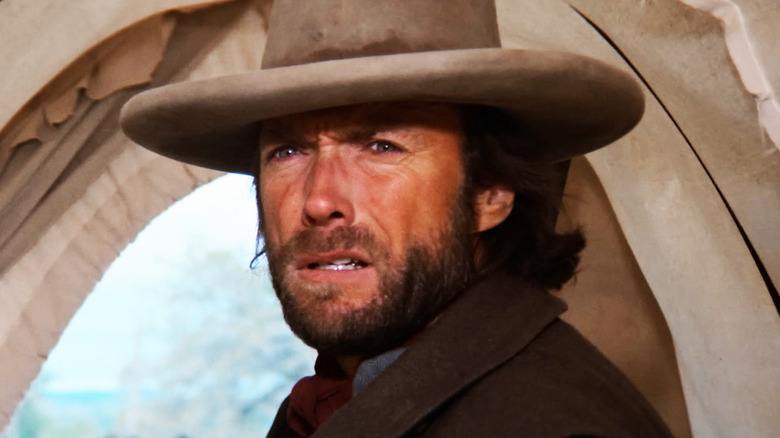
Clint Eastwood made a career out of subverting Western tropes to the extent that he even subverted his own films. 1976's "The Outlaw Josey Wales," easily one of Eastwood's best movies, saw the actor portray another troubled, taciturn loner. But the film also ventured into new territory when that very archetype became the head of a surrogate family. Josey Wales ended up being one of Eastwood's most layered characters, which worked in the film's favor, ensuring it brought in $31.8 million on a $3.7 million budget. Why, then, didn't the star return for the little-known sequel "The Return of Josey Wales?" Well, the answer likely involves a stunning revelation about the author of the book on which the original was based.
Eastwood turned down the opportunity to reprise the role of the titular outlaw in the 1986 follow-up, which ultimately debuted with Michael Parks in the lead. That was the first strike against the film, which promised the return of the outlaw audiences remembered from the 1976 movie but actually introduced a whole new version. That alone goes some way to explaining why the sequel is barely remembered today. But there's more to the story.
During production of "Josey Wales," Eastwood clashed with original director Philip Kaufman, forcing the latter to leave the project and allowing the star to gain control. Even after that debacle, Eastwood had to fight for his ending to the now classic Western, arguing with his editor over how best to close the movie. He won the argument and secured the more ambiguous ending he wanted. With that in mind, a sequel would surely undermine the carefully-crafted climax Eastwood fought so hard to include. Well, Hollywood is gonna Hollywood, and we got a follow-up regardless. By that point, however, Eastwood had moved on.
The Return of Josey Wales was a low-budget sequel that didn't need to happen
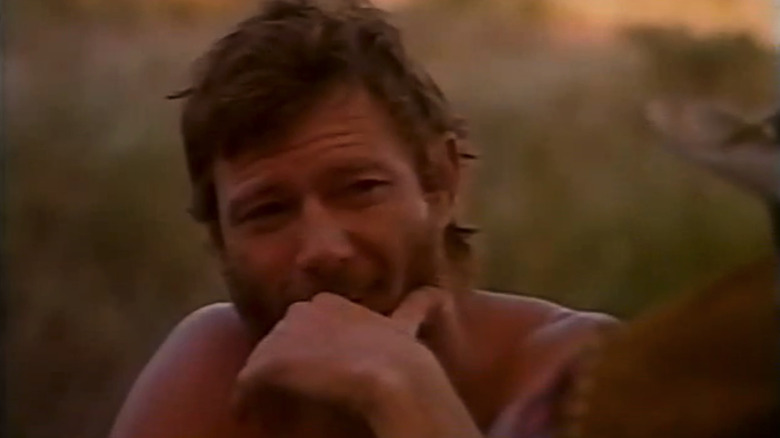
A decade after "The Outlaw Josey Wales" debuted, the gunslinger returned for a sequel. Instead of Clint Eastwood, however, Michael Parks — who later played Texas Ranger Earl McGraw in "From Dusk till Dawn" and appeared in multiple Quentin Tarantino films — was brought in to star and direct. Like the first film, then, "The Return of Josey Wales" had a lead actor/director. Unlike the first, however, the sequel wasn't very good.
"The Return of Josey Wales" once again follows the titular outlaw, who after the events of the first film is now living on a ranch with his wife Laura Lee (this time played by Mary Ellen Averett instead of Sondra Locke). Immediately, the ambiguous ending of "The Outlaw Josey Wales" is undercut, with the outlaw living a quiet life and ostensibly leaving his bloody past behind. But he's quickly drawn back into action after two of his friends are murdered by Mexican rurales working for Everett Sifuentes' Captain Jesus Escobedo. Wales sets out to avenge his friends and save his other compadre, Tenspot (Robert Magruder), all of which results in a surprisingly small-scale Old West adventure.
"The Return of Josey Wales" was a much cheaper production than the original, and without Eastwood's directorial flair it very quickly betrayed its more meager origins. Unlike the 1976 movie, the sequel was also a by-the-numbers affair, presenting a run-of-the-mill Western adventure that wouldn't have been all that out of place in the Poverty Row era of the 1930s. Had Eastwood been involved, however, "The Return of Josey Wales" could have been a big hit. What's more, the first film remains one of Eastwood's two favorite Westerns he directed. Why, then, was he so reluctant to return?
The man behind the Josey Wales stories was not what he seemed
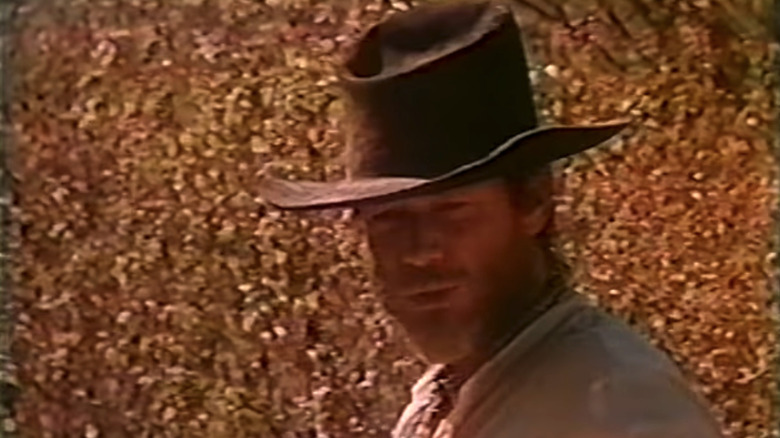
"The Outlaw Josey Wales" was the result of an unsolicited story from an infamous political figure. That is to say it was an adaptation of Asa Earl Carter's 1972 novel "The Rebel Outlaw: Josey Wales." The author wrote the novel under the name Forrest Carter, but a 1976 report from the New York Times revealed his true identity as the writer of Governor George C. Wallace's infamous "Segregation now! Segregation tomorrow! Segregation forever!" speech. What's more, Carter was confirmed to have been a Ku Klux Klan organizer who formed the group known as the Original Ku Klux Klan of the Confederacy. This likely contributed to Clint Eastwood abandoning his plans for a sequel to "Josey Wales."
According to Lawrence Clayton's afterword in "Josey Wales: Two Westerns: Gone to Texas/The Vengeance Trail of Josey Wales," Eastwood did plan on adapting Carter's follow-up novel "The Vengeance Trail of Josey Wales" but gave up. In a 2001 Salon piece, writer Allen Barra recalled interviewing Carter and asking him about an Eastwood-led version of "The Vengeance Trail of Josey Wales." "He looked at me warily from under his hat," wrote Barra, "puffed on a cigarette and said, 'I think Clint's had all he can take 'a me.'" It's not entirely clear from the piece, but the actor was surely wary of touching anything Carter-related after his dark past was revealed.
That didn't stop a "Josey Wales" sequel from materializing, though it probably shouldn't have. Aside from the fact it turned out to be a generic low-budget affair, the film was always going to be inextricably tied to a KKK member and segregationist. In that sense, Eastwood almost certainly did the right thing by abandoning it when he did.